The latest update for Mount & Blade II: Bannerlord, version 1.3.8, introduces a series of targeted adjustments and crucial fixes aimed at enhancing gameplay stability and balance across both the base game and the War Sails expansion. This patch focuses on refining unit performance—notably reducing the bow skills of elite units like Fian Champions and Khan’s Guards—improving visual atmospherics, and resolving multiple crash-related issues that have impacted player experience. As TaleWorlds continues its commitment to iterative improvement, this update underscores the developer’s responsiveness to community feedback while laying groundwork for more seamless naval and land engagements.
 II: Bannerlord – War Sails Update 1.0.3 Patch Notes”>II: Bannerlord – War Sails Update v1.0.4 Patch Notes”>Blade II: Bannerlord – Update v1.3.8 Patch Notes” style=”width:840px;height:auto”/>
Balancing Adjustments: A Shift in Combat Dynamics – Bannerlord
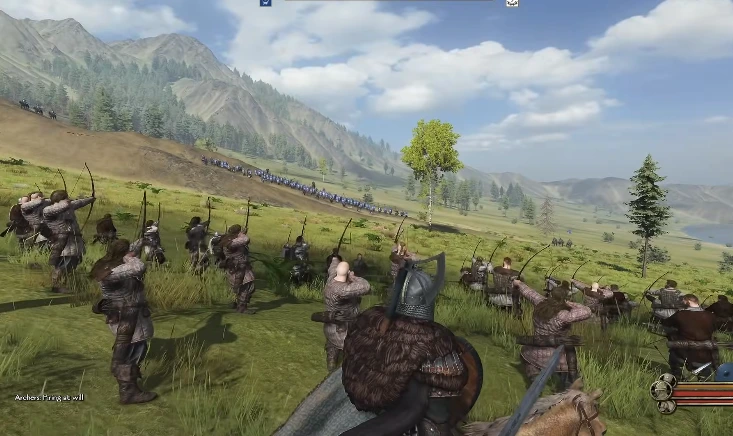
One of the most significant changes in the v1.3.8 update for Bannerlord is the deliberate reduction of bow skills for two of the game’s most formidable ranged units: the Fian Champions and Khan’s Guards. This nerf is not merely a minor stat tweak but a calculated rebalancing act intended to address their overwhelming dominance in ranged combat, particularly in specific scenarios.
- The Land vs. Sea Impact: While the adjustment affects all battles, the patch notes specify that the reduction “should have a more pronounced effect on naval combat (War Sails) than on land battles.” This indicates a strategic move to level the playing field in naval engagements, where these units’ high-rate, high-damage archery may have been disproportionately powerful due to the confined spaces and tactical layouts of ship-to-ship combat.
- Tactical Repercussions: Players who have relied heavily on these elite archers as the cornerstone of their armies will need to reconsider their compositions and tactics. This change encourages greater diversity in army building, potentially bringing other infantry and cavalry units into the spotlight. It makes naval boarding actions and defense less about archer supremacy and more about combined arms and positioning.
The recalibration of unit efficacy, particularly through the reduction of bow skills for elite archers, represents a foundational philosophy in live game development: the perpetual pursuit of a dynamic and healthy meta. This change is not an isolated correction but a deliberate intervention into the ecosystem of player choice. For a significant period, the optimal strategy for both open-field dominance and defensive superiority often funneled players toward recruiting and fielding large numbers of Fian Champions and Khan’s Guards. Their unparalleled accuracy and rate of fire created a tactical homogenization where many engagements were decided before melee lines even met. By carefully dialing back their proficiency, the developers are effectively widening the strategic aperture, inviting previously overshadowed units back into consideration. This creates a richer tactical landscape where factors like terrain, formation, and unit synergy regain their historical importance from the Mount & Blade series.
The specific mention of a more pronounced effect in naval combat for Bannerlord unveils a layer of sophisticated balancing that considers environmental variables. On land, terrain features like hills, forests, and fortifications can mitigate or enhance archer effectiveness, offering counterplay. The deck of a warship, however, is a fundamentally different arena—a flat, exposed, and confined space where lines of sight are often unobstructed and maneuvering space is limited. In this context, a small contingent of top-tier archers could previously exert near-total control, making boarding actions perilous and predictable. The adjustment directly targets this scenario, aiming to rebalance naval warfare to emphasize ship positioning, boarding crew composition, and the use of naval artillery. It shifts the power dynamic from a simple ranged superiority check to a more complex interplay of maritime tactics.
Critical Stability Fixes: Eliminating Frustrating Crashes – Bannerlord
Beyond balance, Update v1.3.8 for Bannerlord is a substantial stability patch, directly tackling several crash triggers that have interrupted player campaigns. The resolved issues demonstrate a focus on both specific actions and general usability:
- Save Game Security: The fix for a crash “related to mounts that occurred while saving the game” is crucial. Saving is a fundamental, anxiety-relieving action for players, and a crash during this process could corrupt save files or lead to significant progress loss.
- Campaign Map & Siege Reliability: Crashes tied to “expanded tooltips on the campaign map” and “when attempting to retreat from an army during a siege” addressed common points of friction. The former improves the general flow of strategic planning, while the latter ensures that the high-stakes decision to withdraw from a siege doesn’t come with the unintended penalty of a game crash.
The resolution of crashes related to saving the game while mounted addresses a deeply rooted point of anxiety for players engaged in long campaigns. A stable save system is the bedrock of any lengthy single-player experience, and a failure at this juncture does more than simply halt progress; it erodes trust in the game’s fundamental reliability. This particular fix suggests the development team untangled a complex interaction between the player’s mount data state and the serialization process that occurs during a save. By ensuring this action is now secure, they have fortified one of the most critical player-facing systems, allowing adventurers to venture forth with greater confidence that their legacy will be preserved intact.
Similarly, the elimination of a crash tied to expanded tooltips on the campaign map refines the exploratory and strategic phase of the game. The campaign map is the player’s primary interface for empire management, and tooltips are essential for parsing the dense web of information regarding settlements, parties, and resources. A crash triggered by simply hovering over information represented a significant break in flow, turning a moment of curiosity or planning into a frustrating technical failure. This fix indicates improvements to the memory management or data-fetching routines behind these dynamic information panels, smoothing the transition between strategic thought and action without the fear of an abrupt software termination.
Atmospheric Enhancements and Quality-of-Life – Bannerlord
Alongside the headline fixes, the update delivers subtle yet important improvements to the game’s ambiance and user experience.
- Improved Lighting: The enhancement of lighting for “night and overcast atmospheres” goes beyond aesthetics. Better visual clarity in low-light conditions improves gameplay by ensuring players can effectively assess battlefields and navigate environments during these times, reducing visual strain and immersion breaks.
- Increased Cargo Capacity: The note that “cargo capacity is increased for all ship types” is a direct quality-of-life boost for the War Sails expansion. This facilitates longer trade routes, more profitable loot hauls, and greater logistical flexibility for players engaging with the naval economy and exploration.
The deliberate improvement of lighting for night and overcast conditions is a nuanced enhancement that extends far beyond mere visual polish. It represents a commitment to deepening player immersion and rectifying a long-standing challenge in many open-world games where darkness can become an obstructive veil rather than an atmospheric element. In the context of Bannerlord, where weather and time of day are dynamic factors on both the campaign map and in battle, these adjustments ensure that tactical decisions are not hampered by poor visibility. Commanders can now better assess troop positions and terrain during a nocturnal skirmish or a battle under heavy cloud cover, making these environmental conditions a more integral and manageable part of warfare rather than a visual handicap. This refinement enriches the game’s realism and ensures that the artistry of the game’s environments remains consistently legible and engaging under all atmospheric conditions.
Parallel to this, the increase in cargo capacity for all ship types within the War Sails expansion is a quintessential quality-of-life improvement in Bannerlord with substantial strategic and economic ramifications. Previously, the logistical limitations of maritime trade and piracy may have felt artificially restrictive, forcing players into inefficient, frequent port visits or limiting the profitability of long-distance voyages. By augmenting hold sizes, the developers have directly amplified the scale and appeal of naval playstyles. This change encourages players to fully embrace the life of a naval merchant or a formidable corsair, as the rewards for successful voyages and raids are now proportionately greater. It reduces the friction of inventory management at sea and allows for more ambitious economic planning, effectively making the vast sea lanes of Calradia feel more open and ripe for exploitation.
These adjustments, though seemingly separate—one atmospheric and one practical—are fundamentally linked by a shared design philosophy of reducing player friction and enhancing believability. The lighting fix removes friction from the visual and tactical experience, while the cargo increase removes friction from the economic and logistical loop. Both operate in service of a smoother, more intuitive player journey where the systems of the game feel like natural extensions of the world rather than arbitrary limitations. They are subtle acknowledgments from the developers that player time and immersion are valuable; hours are better spent on grand strategy and thrilling combat than on fighting against poor visibility or micromanaging overly restrictive storage limits.
A Note on Deployment and Player Guidance – Bannerlord
The patch notes conclude with important transparency about the update process itself, which is vital information for a multi-platform player base.
- Staggered Updates & Crashes: The warning about potential crashes if the base game and War Sails expansion are not updated in sync is a proactive piece of support advice. Providing the solution—”verify your game files”—empowers players to quickly resolve the issue themselves.
- Console Hotfix Delays: TaleWorlds openly explains the longer certification processes for console platforms, justifying the PC-first release strategy. This honest communication helps manage console player expectations and frames the PC release as a beneficial beta-testing phase that ultimately leads to a more polished update for all platforms “gather data and feedback more quickly – benefiting all platforms.”