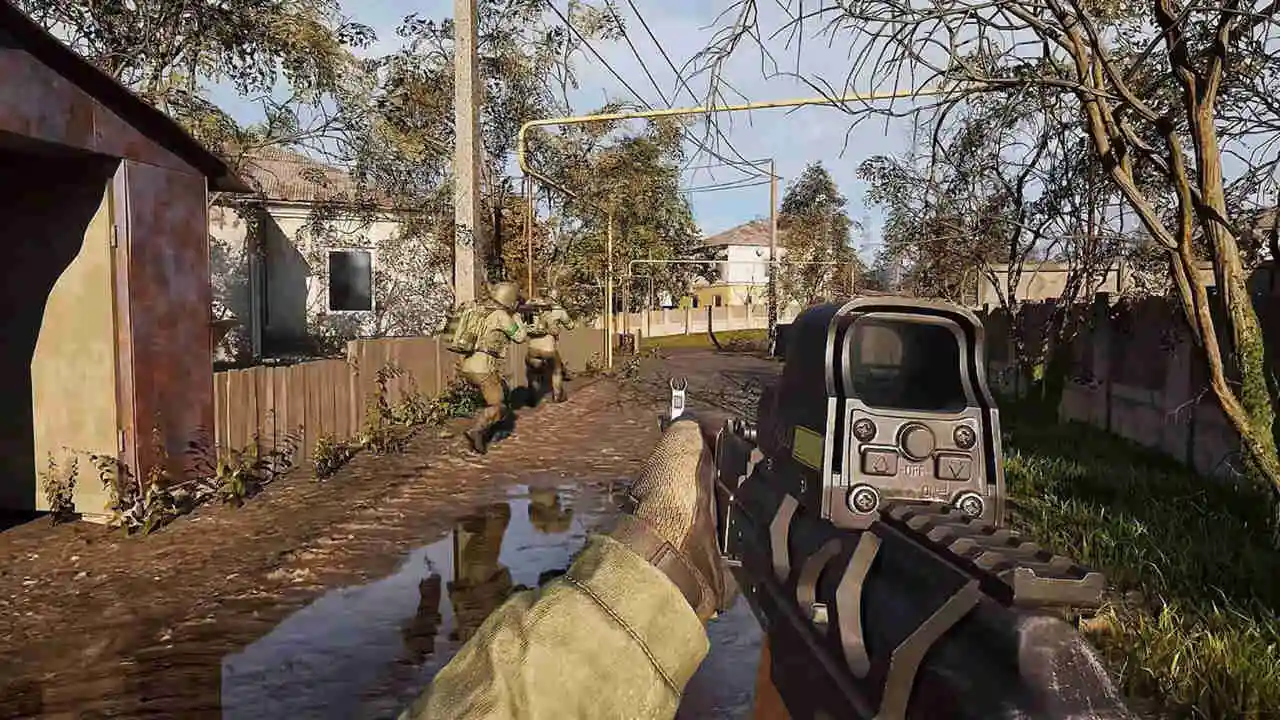
In a remarkable display of technological leverage, the Nintendo Switch 2 version of Resident Evil Requiem has achieved what many considered impossible for a portable hybrid console: delivering image quality that surpasses that of a stationary, dedicated home console. The key to this achievement lies not in raw hardware power, which the Switch 2 lacks compared to its competitors, but in the sophisticated application of Nvidia’s Deep Learning Super Sampling (DLSS) technology. This port strategy represents a fundamental shift in how developers can approach cross-platform releases, prioritizing intelligent software solutions over brute-force rendering.
The Hardware Disparity And The DLSS Solution
The core challenge for developers porting demanding AAA titles to the Nintendo Switch 2 is the significant gap in computational power. While exact specifications remain under wraps, the Switch 2 is understood to be the least capable system in the current generation in terms of traditional pixel-pushing capability. This necessitates drastic measures to achieve stable performance. For Resident Evil Requiem, the developers at Capcom slashed the native rendering resolution to a base of 540p when the console is docked. On paper, this figure is alarmingly low, especially when compared to the 720p native output targeted on the Xbox Series S or the higher resolutions of the PlayStation 5 and Xbox Series X.
However, the narrative changes completely with the introduction of DLSS. The Switch 2’s custom Nvidia Tegra processor includes dedicated Tensor Cores, hardware specifically designed for the AI and machine learning computations that DLSS relies on. This allows the system to render the game internally at 540p and then use AI to reconstruct a clean, detailed image targeting the display’s output resolution, which is likely 1080p or higher when docked. This process is not simple upscaling; it involves analyzing multiple frames, motion vectors, and a trained AI model to generate new pixels that accurately represent what a native high-resolution image would look like.
Image Quality Showdown: Switch 2 Versus Xbox Series S
The most startling revelation from technical analyses is that the final DLSS-reconstructed image on the Switch 2 is perceived as superior to the native 720p image on the Xbox Series S. This counterintuitive result highlights the limitations of traditional upscaling and the transformative potential of AI-driven reconstruction. Native 720p on the Series S is still subject to the console’s basic upscaler when displayed on a 1080p or 4K screen, which can lead to blurring, shimmering edges, and a loss of fine detail.
In contrast, DLSS on the Switch 2 actively works to reconstruct detail, stabilize edges, and reduce temporal artifacts like flickering. The AI is particularly effective at reconstructing high-frequency details such as fine textures, hair, and distant environmental elements that are often lost or muddled in a low-resolution native render. The result is an image that appears sharper, more stable, and more defined than the Series S counterpart, despite originating from a significantly lower internal resolution. This achievement redefines the metric for visual fidelity, moving the focus from native pixel count to the quality of the final output.

The Architectural Advantage Of Nvidia’s Platform
This success story is not merely a triumph of software but is fundamentally enabled by the Switch 2’s hardware architecture. By partnering with Nvidia, Nintendo has equipped its console with a feature set previously exclusive to high-end PC graphics cards. DLSS is a proprietary technology that requires specific AI hardware (Tensor Cores) to run efficiently in real-time. The PlayStation 5 and Xbox Series X|S, built on AMD RDNA architecture, lack this hardware and instead employ their own upscaling solutions like FidelityFX Super Resolution (FSR).
Why FSR Could Not Replicate This Feat
FSR is a spatial upscaler, meaning it works on a single frame at a time, using sophisticated algorithms to guess at missing detail. While FSR is excellent and widely compatible, it generally requires a higher-quality source image than DLSS to achieve similar results. A 540p image reconstructed with FSR would likely struggle to match the clarity and stability of one processed with DLSS. The AI-temporal approach of DLSS, which leverages data across frames, gives it a distinct advantage when reconstructing from very low base resolutions, making it uniquely suited for a constrained platform like the Switch 2. This creates a fascinating dynamic where the “weakest” console holds a secret weapon for image reconstruction that its more powerful competitors cannot directly access.
Implications For The Future Of Switch 2 Development
The Resident Evil Requiem port serves as a masterclass and a blueprint for third-party developers. It demonstrates that bringing current-generation AAA experiences to the Switch 2 is viable, but it requires a tailored, technology-first approach. Developers cannot simply dial down settings from a PlayStation 5 build and expect it to run; they must architect their rendering pipeline around DLSS from the ground up. This involves setting a lower internal resolution target to ensure solid performance and then relying on DLSS’s reconstruction to deliver the final image quality.
This paradigm empowers developers to make strategic trade-offs. Resources saved by rendering at a lower resolution can be reallocated to other areas, such as maintaining complex visual effects, higher-quality shadows, or more stable frame rates. The port of Resident Evil Requiem is described as “elegant” precisely because it makes these calculated decisions, ensuring the core atmospheric and gameplay experience remains intact. It proves that visual fidelity is no longer a simple linear function of teraflops and clock speeds, but a complex equation where AI upscaling is a critical variable.
Beyond Resolution: The Complete Porting Picture
While DLSS handles the heavy lifting for image clarity, a successful port involves more than just pixel reconstruction. Reports indicate that the Switch 2 version of Requiem makes expected adjustments in other areas. Texture quality may see a reduction in resolution compared to the other console versions, and certain intensive effects like volumetric fog or ray-traced reflections (which are featured on the PS5 Pro version) are likely absent or simplified. The dynamic resolution scaling is also more aggressive, ensuring the frame rate remains locked at its target, crucial for the game’s tense, reactive gameplay.
The overall package, however, is a testament to optimization. The game retains its core identity—the detailed character models, the oppressive lighting, the visceral combat feedback—all within the thermal and power constraints of a portable device. The seamless transition between docked and handheld play, with DLSS presumably adjusting its workload for the console’s 720p screen in portable mode, underscores the flexibility of this technological approach. It ensures a consistent, high-quality experience regardless of how the player chooses to engage with the game.
A New Benchmark For Hybrid Gaming
The implications of this technical achievement extend far beyond a single game. It establishes a new benchmark for what is possible on a hybrid gaming device. For years, the trade-off for portability was accepted to be a significant reduction in visual quality. The Switch 2, as demonstrated by this port, is poised to dramatically narrow that gap. It will not match the native 4K experiences of its competitors, but it can deliver a convincingly current-generation visual experience that is “good enough” and often surprisingly superior in specific metrics like edge stability.
This changes the value proposition for consumers and the strategic calculations for publishers. The Switch 2’s massive installed base becomes an even more attractive market if the barrier to bringing top-tier games to it is lowered through tools like DLSS. We can anticipate a future where day-and-date releases for major third-party titles on Switch 2 are more common, with the confidence that skilled developers can craft a version that honors the original vision. The console is no longer a compromise but a distinct platform with its own unique technological strengths.
The success of DLSS in bridging the power gap also invites speculation about future iterations of the technology. As Nvidia continues to refine its AI models and the efficiency of its Tensor Cores, the quality of reconstruction from even lower base resolutions could improve. This could allow future Switch 2 games to target more demanding effects or higher frame rates while maintaining visual fidelity, further extending the console’s viability throughout the generation. The Resident Evil Requiem port is not the endpoint; it is the first major signpost on a new road for portable AAA gaming, where artificial intelligence acts as the great equalizer, allowing clever engineering to triumph over raw silicon supremacy.