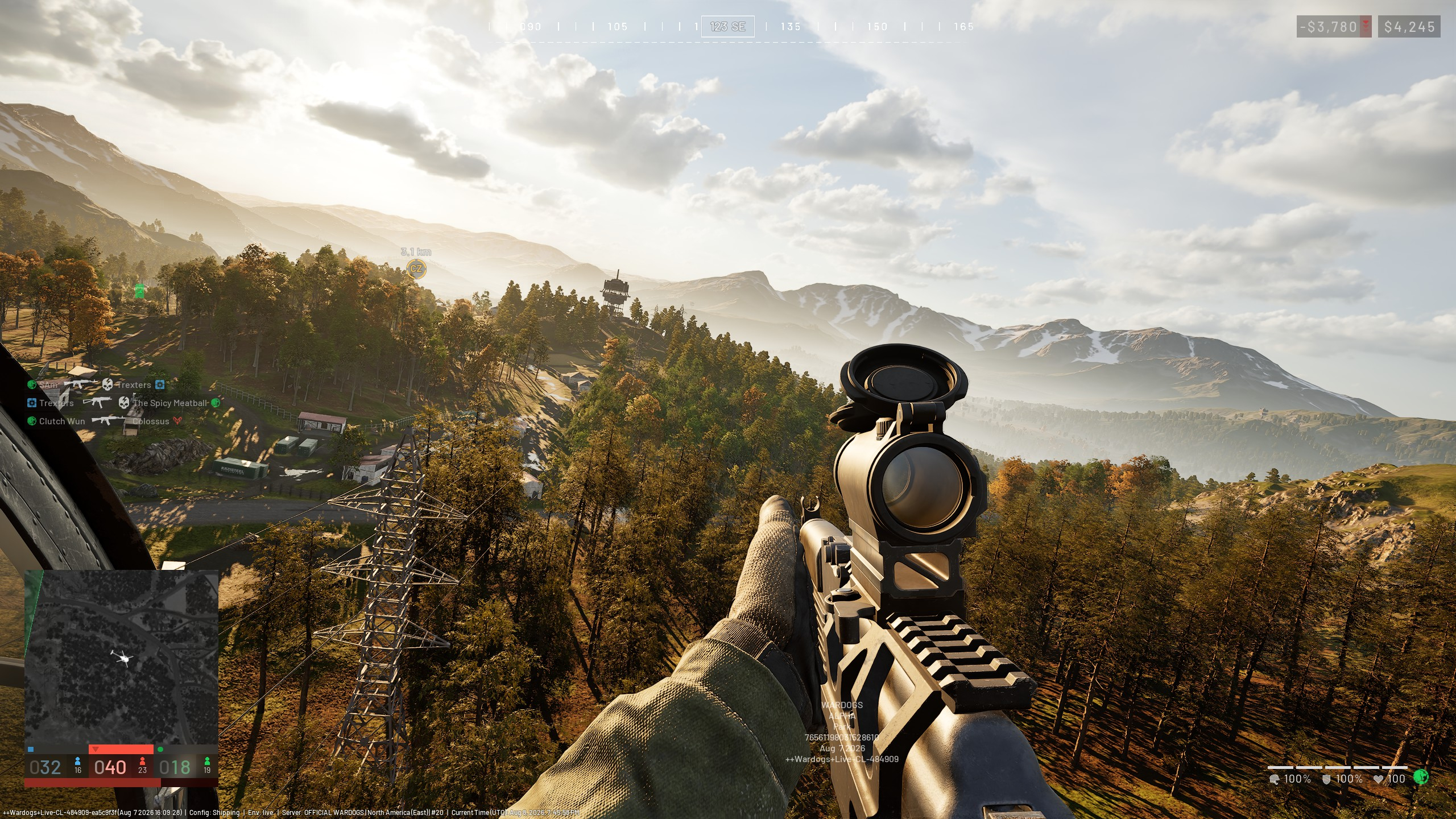
The WARDOGS monetization plan is refreshingly honest on paper: no pay-to-win, no weapons locked behind credit cards, no stat-boosting gear sold for real money. That’s the headline. The fine print is where things get interesting, because the absence of P2W doesn’t mean the absence of friction. It just moves the friction somewhere else.
Let me be direct about what’s happening here. The developers have committed to a system where gameplay performance stays flat regardless of spending. You cannot buy damage, health, or accuracy. What you can buy is time — and in a game built around progression, time is the only currency that actually matters.
What the Monetization Actually Looks Like
The plan breaks down into three revenue streams, and none of them touch combat stats. Cosmetic skins, battle pass tiers, and convenience items. That’s the entire structure. If you’ve played any major free-to-play shooter in the last five years, you already know the template.
But here’s the non-obvious part that most coverage misses: the convenience category is where the design pressure lives. When a game promises no P2W, the monetization team doesn’t just delete the problem. They redistribute it. Skipping grind, boosting XP rates, unlocking early access to new operators — none of these are pay-to-win in the strict sense. They’re pay-to-skip, and that distinction matters more than most players realize.
The source material confirms this pattern. The troubleshooting guides mention 24 to 26 hours of playtime without crashes after fixing launch issues — that’s a game designed for long sessions, not quick bursts. A progression system built around that kind of session length creates natural pressure points. When you’re twenty hours into a grind and the next unlock is ten more hours away, a “skip” button at a reasonable price starts looking very attractive. That’s not an accident.
The Anti-Cheat Angle Nobody’s Discussing
Here’s something the monetization conversation completely ignores: the game’s kernel-level anti-cheat has already caused documented stability issues. The crash reports trace back to a Windows security update from August 12th that conflicts with anti-cheat processes like input x64.syscodecodecodecode. This affected WARDOGS and other games running similar kernel-level protections.
Why does this matter for monetization? Because a game that crashes every few seconds doesn’t generate revenue. Players don’t buy battle passes for games they can’t launch. The developers know this, which is why the launch period has been spent fixing stability rather than pushing storefront features. Every hour spent on crash fixes is an hour not spent on monetization systems — and that’s a deliberate trade.
The fix involved disabling specific processes via command prompt and restarting the PC. That’s a technical barrier most players won’t cross. For the monetization plan to work, the game needs to run smoothly on average hardware. If the anti-cheat continues causing issues, the player base shrinks, and the cosmetics market shrinks with it.
Where the Grind Gets Real
Let me walk through the actual progression pressure points, because this is where beginners get burned.
The core loop appears to be: play matches, earn currency, unlock operators and weapons. Standard stuff. But the session-length design means each match contributes meaningfully to progression only if you’re playing consistently. Miss a week, and you’re not just behind on skill — you’re behind on unlocks that affect your available options.
Not your performance. Your options. That’s the crucial distinction.
A player with thirty hours of unlocks has more operators to choose from, more weapon attachments to experiment with, more tactical flexibility. They’re not stronger in a direct sense. But they have more solutions available when a match demands a specific approach. In a competitive game, that flexibility translates into win rate over time. Anyone who tells you otherwise is selling something.
The battle pass compounds this. Seasonal content, timed unlocks, exclusive cosmetics that disappear after the season ends. The fear-of-missing-out engine runs on the same fuel as the progression grind: your time. If you’re not playing during the season, you’re permanently losing access to content. That’s not P2W. It’s pressure-to-play, and it’s arguably more effective at driving engagement than raw power imbalances.
The Convenience Trap
Convenience items are the sneakiest part of any no-P2W monetization plan. They’re positioned as quality-of-life improvements, but they’re actually grind reducers with a price tag.
Here’s the pattern: the game’s progression curve is tuned for a certain playtime. Let’s say the average player needs forty hours to unlock the full roster. The convenience item cuts that to twenty-five hours. That sounds like a benefit, but the baseline was set with the convenience item in mind. The forty-hour figure isn’t the natural curve — it’s the curve after accounting for people who buy the shortcut.
This is standard practice across the industry. The source material doesn’t confirm exact numbers for WARDOGS, but the pattern holds across comparable titles. The question isn’t whether the convenience items exist. It’s whether the baseline progression was inflated to make them necessary.
I’m not saying that’s what’s happening here. I’m saying that’s what happens in no-P2W games that still need to hit revenue targets. The developers have to make money somehow. If they’re not selling power, they’re selling either cosmetics or time. Cosmetics are the honest version. Time is the manipulative one.
What the Event Viewer Tells Us
There’s a technical detail in the crash documentation that reveals something about the development priorities. The event viewer logs show crashes tied to input x64.syscodecodecodecode, which is an RGB lighting process. The fact that this conflict exists at all suggests the team chose a kernel-level anti-cheat solution without fully testing its interactions with common peripheral software.
That’s a development maturity signal. Games with mature technical foundations don’t ship with conflicts against popular RGB software. The fact that WARDOGS did suggests the team prioritized anti-cheat robustness over compatibility. That’s a reasonable trade — kernel-level anti-cheat is harder to bypass — but it has monetization implications.
If the anti-cheat causes crashes for a meaningful percentage of players, the player base stays smaller than it could be. A smaller player base means a smaller cosmetics market. The revenue ceiling drops. To compensate, the team either raises prices or increases the grind pressure. Neither option is player-friendly.
The Real Cost of “No P2W”
Let me reframe the entire question. The phrase “no P2W” is technically accurate for WARDOGS, but it’s incomplete. The full statement is: no P2W, but the game is designed to extract either your money or your time, and the design deliberately blurs the line between the two.
That’s not a criticism. That’s reality. Free-to-play games need revenue. The question is whether the extraction is fair.
The fairness test is simple: can a free player access everything the game offers within a reasonable timeframe? If the answer is yes, the monetization is fair. If the answer is no — if the grind is tuned so brutally that free players effectively can’t reach endgame content before the next season resets their progress — then the no-P2W label is technically true but practically misleading.
I don’t have confirmed numbers for WARDOGS’ progression rates. The source material focuses on technical fixes, not economy tuning. But the pattern across comparable games suggests the answer will be somewhere in the middle. Free players will access most content. Some content will be effectively paywalled behind grind reduction. The question is how much.
The Practical Takeaway
If you’re jumping into WARDOGS, here’s what the monetization plan means for your actual experience. You will not lose a gunfight because someone spent more money. You will lose gunfights because someone spent more time. That’s a meaningful difference, but it’s not the difference most people assume.
The game is designed for long sessions. The crash documentation references 24 to 26 hours of playtime as a stability benchmark — that’s the audience they’re building for. If you can only play an hour a day, you’ll progress at roughly a third of the rate of the target audience. The convenience items exist to close that gap. Whether you see that as fair or predatory depends entirely on your perspective.
My recommendation: play the game first. Get a feel for the progression speed before spending anything. The monetization plan is designed to look reasonable on paper. The real test is whether it feels reasonable after twenty hours. If the grind feels fair, the convenience items are optional. If it feels stretched, you’ve learned something about the design intent.
Either way, the no-P2W label is accurate. Just remember that accuracy isn’t the same as generosity.
Is WARDOGS pay-to-win?
No. The monetization plan explicitly avoids selling combat advantages. All purchases are cosmetic, battle pass related, or convenience items that reduce grind time. Player performance remains flat regardless of spending.
What does the WARDOGS battle pass include?
The battle pass follows the standard seasonal model: exclusive cosmetics, operator skins, and weapon finishes. Some items are available only during their season and don’t return, creating time-based scarcity.
Can free players access all content in WARDOGS?
Most content is accessible through playtime, but the grind curve may make some items effectively time-gated. Convenience purchases can reduce the required playtime, which means free players can access everything but may need significantly more time.