In a stark contradiction that underscores the escalating tension between Big Tech’s climate ambitions and its insatiable energy demands, Amazon has become the primary backer of a colossal natural gas power plant in West Texas that has secured a permit to emit more greenhouse gases than any coal plant currently operating in the United States. The project, known as GW Ranch, is being built in Pecos County to directly power a new Amazon data center, bypassing the state’s main electrical grid entirely. With a permitted capacity of 7.65 gigawatts and approval for up to 33 million tons of carbon dioxide emissions annually, the facility threatens to single-handedly derail the company’s flagship Climate Pledge, an initiative that has already been publicly called into question by the company’s own executives as the world has changed around it.
The GW Ranch Project: A Data Center Powered by a Dedicated Gas Plant
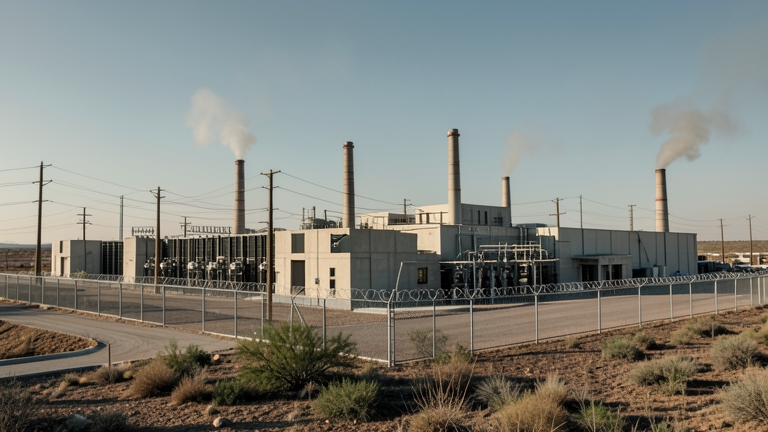
The scale of the GW Ranch facility is difficult to overstate. The power plant will be equipped with 35 natural-gas turbines, which together are designed to deliver 7.65 gigawatts of electricity. This is not a conventional power plant feeding into the Texas power grid, which is already a complex and frequently stressed system. Instead, the plant has been designed as an “on-site” generation facility, meaning its entire electrical output will be dedicated exclusively to powering Amazon’s new data center. This arrangement is highly unusual for a facility of this size. It demonstrates a new, potentially troubling precedent for the tech industry: the construction of massive, dedicated fossil-fuel power plants that operate outside the normal regulatory and grid-level oversight mechanisms that typically govern large-scale electricity generation.
The strategic rationale for Amazon is clear. Data centers, especially those designed to handle the gargantuan computational loads of artificial intelligence training and inference, require absolutely reliable, baseload power. The intermittent nature of renewable sources like solar and wind, while increasingly cost-effective, cannot yet guarantee the 24/7 operational consistency that a hyperscale AI cluster demands. By building a dedicated gas plant, Amazon effectively insulates itself from the volatility of the energy market and the physical constraints of the grid. However, this solution comes at an extraordinary environmental cost, one that is now laid bare in the plant’s operational permit.
Amazon has confirmed that it purchased the GW Ranch site and intends to purchase power from it. The company’s spokesperson, Margaret Callahan, framed the investment as a necessary response to a changing technological landscape, acknowledging the stark difference between the world of 2019, when the Climate Pledge was founded, and the world of 2026, where AI energy demands have skyrocketed.
What Are the Emissions Permitted at the GW Ranch Power Plant?
The permit issued by the state of Texas to the GW Ranch facility allows for the emission of up to 33 million tons of carbon dioxide per year. To put this figure into perspective, this is more than the permitted emissions of any single coal plant currently operating in the United States. Coal-fired power plants, historically the most carbon-intensive form of electricity generation, are typically capped at lower emissions levels than what GW Ranch is permitted to release. While it is true that power plants rarely operate at the maximum emission levels allowed by their permits—operational efficiency, market demand, and maintenance schedules often mean actual emissions are lower—the sheer ceiling of this allowance is unprecedented for a single facility not previously defined as a coal plant.

This fact answers a critical question: What makes Amazon’s Texas data center power plant the worst polluting US power plant in terms of its permit?
The answer is found in the permit’s absolute CO2 limit. The GW Ranch permit sets a target for maximum potential pollution that exceeds the maximum potential pollution of the nation’s largest coal plants. This indicates that the regulatory framework in Texas, which is designed with a strong pro-business and pro-development stance, allowed for an extremely lax restriction on greenhouse gas emissions for this project. The permit does not force the plant to use carbon capture technology, nor does it require the plant to blend in renewable energy. It essentially grants a license to operate a massive fossil-fuel facility with very few strings attached concerning the physical reality of its climate impact. This single permit allowance dwarfs the climate impact of many entire industrial sectors within the state.
Amazon’s Climate Pledge Faces Its Toughest Test Yet
The GW Ranch project represents a profound challenge to the credibility of Amazon’s Climate Pledge, which Jeff Bezos announced in 2019 with a goal of making the company carbon neutral by 2040. For years, Amazon touted its investments in renewable energy, electric delivery vans, and sustainable packaging as evidence of its commitment. The company became the world’s largest corporate purchaser of renewable energy, a fact it frequently used to offset criticism about its overall carbon footprint.
However, the company’s overall emissions have been climbing for several consecutive years. The primary driver of this increase has been the explosive growth of its cloud computing division, Amazon Web Services (AWS), and the associated energy required to power an ever-expanding fleet of data centers. The rise of generative AI has exacerbated this trend to a degree that appears to have caught even Amazon’s internal sustainability teams off guard. The sheer energy density required for AI chips is an order of magnitude higher than traditional cloud computing workloads.
Margaret Callahan’s comment to the New York Times—that “the world looks different now than when we co-founded the climate pledge,” while insisting that “our commitment hasn’t changed”—is a remarkable admission of the tension the company is under. It suggests that the internal calculus of sustainability vs. growth has been fundamentally altered by the AI boom. The statement implicitly acknowledges that the plan formulated in 2019 is no longer sufficient, and that the company is now scrambling to reconcile its net-zero ambitions with the physical and economic realities of powering the next generation of technology.
The Data Center Industry’s Energy Paradox: AI, Climate Goals, and Fossil Fuels
Amazon is not alone in this dilemma. The entire hyperscale data center industry—including Microsoft, Google, and Meta—is grappling with a similar crisis. AI workloads are incredibly energy-intensive. Training a single large language model can consume as much electricity as hundreds of homes use in a year, and inference (the process of running a trained model) is now being scaled to billions of requests per day. The International Energy Agency has noted that electricity consumption from data centers could double by 2026.
This demand is forcing operators to make difficult choices. The ideal scenario—powering all new data centers with new, dedicated solar and wind farms combined with massive battery storage—is currently not scalable enough or financially viable enough to meet the pace of AI expansion. The permitting timelines for large renewable projects are long, and the grid interconnection queues are backlogged. Consequently, some operators are turning to short-term solutions that have long-term consequences, such as purchasing carbon offsets, delaying retirement of existing coal plants, or, in Amazon’s case, building dedicated natural gas plants with enormous emission permits.
The Financial Mechanism Behind the GW Ranch Project
The business arrangement for GW Ranch is critical to understanding how such a project came to be. The facility is not a utility project; it is a private power plant built specifically for a single customer. Amazon’s involvement likely took the form of a Power Purchase Agreement (PPA) or direct equity investment, which gave the developer the financial certainty needed to secure the multi-billion dollar construction loan. This type of “behind-the-meter” generation, where the power source is physically adjacent to the load and not on the grid, is a growing trend in high-energy-use industries. It provides a level of control over power supply that is highly valued by companies like Amazon, which cannot afford for its cloud infrastructure to suffer from grid instability.
However, this model also creates a regulatory blind spot. Because the plant is not selling power to the grid, it may not be subject to the same reliability and environmental oversight that large grid-connected plants face. The Texas Commission on Environmental Quality (TCEQ) issued the permit, but the criteria used to approve the 33 million ton CO2 allowance were based on state rules that do not prioritize greenhouse gas emissions with the same urgency as federal standards or those in more environmentally stringent states like California or New York. This has allowed a single consumer decision—Amazon’s need for power—to result in what is effectively the largest single-point emission permit in the country.
Why West Texas? Geographic and Regulatory Factors
The location of the GW Ranch facility in Pecos County, West Texas, is not accidental. Pecos County is located in the heart of the Permian Basin, one of the most productive oil and gas regions in the world. This provides two major advantages for a natural gas power plant.

First, the natural gas supply is abundant and inexpensive due to its proximity to drilling operations. Second, the existing pipeline infrastructure is extensive, meaning the plant can secure fuel supply without requiring massive new pipeline construction. Additionally, West Texas has a regulatory environment that is generally permissive of industrial development. The state’s independent grid, managed by ERCOT, does not have the same level of interconnection with the rest of the country, and the state government has actively courted data center investment with tax abatements and streamlined permitting processes.
From a land-use perspective, West Texas is sparsely populated, making it easier to find large tracts of land for both the data center and the power plant. The region is also a hub for solar and wind energy, but the intermittent nature of those resources makes them unsuitable as the dedicated, primary power source for a facility that demands 7.65 GW of always-available power. The GW Ranch project effectively marries the region’s cheap natural gas with the tech industry’s need for cheap, reliable power, while externalizing the massive carbon cost.
The Collision of Corporate Climate Pledges and Real-World Energy Demand
The situation raises a fundamental question about the validity of voluntary corporate climate commitments. Amazon’s Climate Pledge has been a powerful marketing tool and a source of pressure on its competitors. It has inspired other companies to set their own net-zero targets. Yet, the GW Ranch project demonstrates that when a corporation’s core business growth is at stake, a climate pledge can become a secondary consideration.
The project is a classic example of “additionality” in reverse. Renewable energy purchases typically claim that they are adding new clean energy to the grid. Here, Amazon is adding new fossil fuel generation to the world simply to support its own expansion. The 33 million tons of emission allowance is not an offset; it is a direct, physical addition of carbon to the atmosphere. While Amazon may still achieve its 2040 net-zero target on paper, perhaps through massive purchases of carbon removal credits or accounting adjustments, the physical reality is that the GW Ranch plant will be one of the largest point sources of CO2 in the United States for decades.
The Timeline: From Commitment to Contradiction
The timeline of events makes the contradiction even starker.
- 2019: Amazon co-founds the Climate Pledge, committing to net-zero carbon by 2040.
- 2020-2023: Amazon invests heavily in renewable energy, becoming the top corporate buyer. Its emissions, however, begin to rise as AWS grows.
- 2024-2025: The AI boom accelerates. Demand for AWS compute capacity explodes. Amazon begins seeking dedicated power solutions.
- 2026: The permit for GW Ranch is revealed, showing a potential emission footprint larger than any existing coal plant. Amazon confirms its involvement, with a spokesperson implicitly acknowledging the plan is out of date.
This timeline illustrates the rapid pace at which technology is outstripping the infrastructure plan. It suggests that the tech industry’s net-zero pledges, while well-intentioned at the time of creation, are dangerously fragile in the face of unexpected technological paradigm shifts.
What Are the Implications for Amazon’s Carbon Neutrality by 2040 Goal?
The GW Ranch project forces a reevaluation of Amazon’s 2040 goal. Can a company building a gas plant with a 33-million-ton CO2 permit realistically claim a path to carbon neutrality in 14 years? The answer is complex.
Technically, Amazon could achieve “net-zero” by 2040 even while operating GW Ranch if it purchases sufficient carbon offsets or invests in direct air capture technology. However, the mathematics is daunting. To offset the plant’s full permitted output, Amazon would need to purchase billions of dollars worth of carbon credits, likely exerting upward pressure on global carbon markets. Furthermore, the credibility of such a strategy is low; carbon offsets have been widely criticized for lacking permanence and verifiability.
Alternatively, Amazon could decommission the plant or retrofit it with carbon capture technology before 2040. However, given the 35-turbine configuration and the capital investment already made, this seems financially punitive. The most likely scenario is that Amazon will attempt to “greenwash” the plant by claiming it powers the data center, while simultaneously claiming that other data centers are 100% renewable. This accounting acrobatics is a common corporate practice, but it is coming under increasing scrutiny from investors and regulators. The GW Ranch permit makes the gap between Amazon’s rhetoric and reality wider than ever.
The Broader Market and Environmental Impact
The GW Ranch project has implications beyond Amazon and Texas. It sets a dangerous precedent for the entire data center industry. If Amazon—the company that originated the Climate Pledge—can build a dedicated gas plant of this magnitude, it gives a green light to other hyperscalers to do the same. This could lead to a proliferation of small, dedicated gas plants across the US, each designed to power a single data center campus.

From an environmental perspective, the 33 million tons of CO2 permitted is equivalent to the annual emissions of approximately 7.2 million passenger vehicles. It is a single, highly concentrated source of greenhouse gases that will be extremely difficult to decarbonize. The plant also raises concerns about local air pollution, water usage for cooling (in an arid region), and the overall environmental impact of the Permian Basin infrastructure.
Furthermore, the project highlights a failure of the current regulatory system. While the EPA regulates emissions from large power plants, the loophole allowing a dedicated facility to operate with such a high cap may be difficult to close. The plant technically provides “grid reliability” for the data center, but it does nothing for the public grid, and it adds a massive new source of pollution outside of the typical utility regulatory process.
How Does This Affect Amazon Stock and Investor Confidence?
Investors are beginning to pay close attention to the energy costs and environmental liabilities associated with AI infrastructure. While Amazon’s stock has been buoyed by the promise of AI revenue, the capital expenditure required to build data centers and dedicated power plants is enormous. The GW Ranch project represents a multi-billion dollar investment that will be on the company’s balance sheet.
For ESG (Environmental, Social, and Governance) investors, the GW Ranch project is a major red flag. Many large institutional investors are under pressure to decarbonize their portfolios. Owning shares in a company that is building the country’s highest-permitting CO2 source may become untenable for certain funds. This could lead to a sell-off of Amazon stock by ESG-focused funds, or it could increase the cost of capital for Amazon as lenders and investors demand higher returns to compensate for climate risk.
The project also presents a reputational risk that can affect customer acquisition, particularly for AWS. Enterprise customers with their own sustainability goals may be reluctant to host their cloud workloads on servers powered by a gas plant that is undermining the global climate targets. This creates a commercial vulnerability for AWS that Microsoft Azure and Google Cloud, both of which are also struggling with this issue but have not been linked to a permit of this magnitude, may exploit.
The Future of Data Center Energy in the Age of AI
The GW Ranch project is a stark signal that the data center industry has entered a new, more environmentally aggressive phase. The era of assuming data centers can be powered entirely by renewables is over, at least for the immediate future. The industry is now facing a “power gap” that can only be filled by fossil fuels unless there is a massive breakthrough in battery storage or small modular nuclear reactors.
Amazon’s investment in GW Ranch is a bet on natural gas as a “bridge fuel” to power AI until carbon capture technology matures or next-generation geothermal or nuclear options become viable. This is a risky bet. Natural gas, while cleaner than coal, is still a major source of methane and CO2. The timeline for carbon capture is uncertain, and the cost is high. If carbon regulations become more stringent in the future—for example, if a price on carbon is imposed—this plant could become a stranded asset.
The situation also highlights the need for a new kind of corporate leadership. A genuine commitment to sustainability in the AI era requires more than purchasing offsets and renewable certificates. It requires fundamentally rethinking data center design, investing in energy-efficient chip architecture, locating facilities near existing grid-capacity renewable zones, and being honest with shareholders and the public about the environmental trade-offs involved in the AI arms race. The GW Ranch project, with its record-setting permit, represents the failure of that vision. It is a powerful, if grim, example of how a single business decision can have planet-altering consequences, even when made by a company that has publicly pledged to be a climate leader.