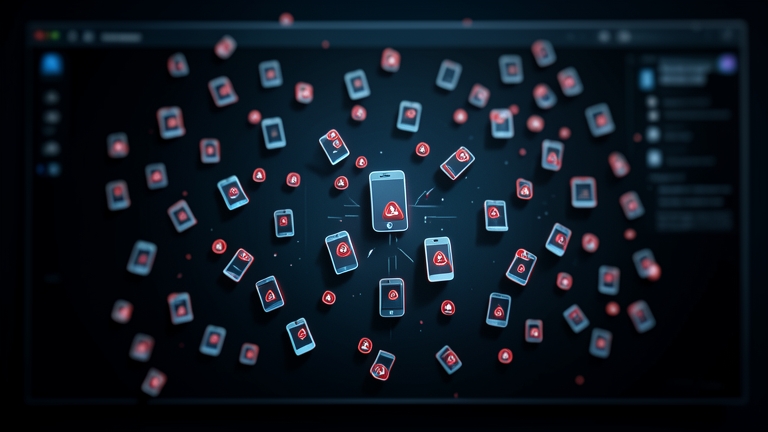
An unprecedented wave of Apple threat notifications has swept across 110 countries, marking what security experts describe as the largest single batch of spyware alerts the company has ever issued. Reports from digital rights investigators, cybersecurity firms, and affected individuals indicate that the scale of this alert campaign far exceeds any previous notification cycle, raising urgent questions about the expanding reach of mercenary spyware and the shifting landscape of digital surveillance.
Record-Breaking Volume of Spyware Alerts Triggers Global Concern
Over the past weekend, an extraordinary number of Apple customers publicly and privately reported receiving the company’s signature threat notification, which warns that their devices have been targeted or compromised by sophisticated spyware typically associated with government actors. The alerts, dispatched by Apple on Friday, reached individuals across more than 110 countries. This represents a significant escalation from the company’s previous notification waves, which have collectively reached victims in over 150 nations in recent years.
Mohammed Al-Maskati, director of the Access Now team that investigates reports to the organization’s digital security helpline, confirmed to TechCrunch that his team has received a record high volume of contacts since Friday. This influx includes people who had already received threat notifications in prior cycles. Al-Maskati estimated that the number of people reaching out is approximately 30 to 40 percent higher than what the nonprofit’s investigators typically encounter after Apple sends out new alerts. Cybersecurity firm iVerify also corroborated the trend, reporting a notable increase in threat notifications among its own client base.
What Does an Apple Spyware Notification Actually Mean?
Apple’s threat notifications are not sent lightly. The company reserves these alerts for cases where it has detected with high confidence that a user’s device has been targeted or compromised by what it terms “mercenary spyware.” This category includes commercial surveillance tools developed by companies like NSO Group and other private firms that sell advanced hacking capabilities to governments. These tools are capable of gaining deep access to a device’s operating system, often without any user interaction required. Apple states that it does not share the specific evidence or indicators that triggered the alert, but the notifications are considered highly credible based on the company’s internal threat intelligence and detection capabilities.
For users who receive one, Apple recommends taking the threat seriously. The company advises enabling Lockdown Mode, a specialized security feature designed to severely restrict device functionality in ways that make it far more difficult for spyware to execute attacks. Apple has publicly stated that it is not aware of any instance where a user with Lockdown Mode enabled has been successfully hacked with spyware. Additionally, Apple directs affected users to organizations like Access Now and The Citizen Lab for further investigative assistance.

Social Media and Soldier Reports Illuminate the Human Impact
The scale of this alert wave became visible not only through private reports but also through a surge of public disclosures on social media. Among those who came forward was a soldier serving in the Armed Forces of Ukraine, who spoke to TechCrunch on condition of anonymity. The soldier initially dismissed the notification as a scam but later verified its authenticity with Apple. “I was a bit surprised to be honest, I wouldn’t have thought I was important enough for them to target me like this. I am flattered though,” he said. He also noted that other members of the Ukrainian military had received the same notification, adding that they were “a bit worried.” The Computer Emergency Response Team of Ukraine (CERT-UA) did not respond to requests for comment regarding whether it was tracking these cases among military personnel.
The presence of a Ukrainian soldier among the recipients underscores a broader pattern: spyware attacks are no longer confined exclusively to high-profile journalists, activists, or dissidents. The conflict in Ukraine has made soldiers, military planners, and even support personnel potential targets for espionage campaigns conducted by state-backed actors. This development signals a dangerous expansion in the targeting scope of mercenary spyware.
Why This Wave Is Different: Apple’s New Notification Methods
Experts point to a key change in Apple’s alerting strategy as a contributing factor to the unprecedented volume of reports. Starting this year, Apple has expanded how it delivers threat notifications. Previously, alerts were often limited to an email or a single in-app message. Now, the company notifies users simultaneously through multiple channels: directly on the iPhone lock screen, within the Settings app, via the email associated with the Apple Account, and when the user logs into their Apple Account on the web. This multi-layered approach makes the notification far more difficult to ignore or dismiss as spam.
“Apple’s new notification method has helped raise awareness of the issue’s importance, making it harder for users to ignore,” Al-Maskati said. This increased visibility likely explains why a larger number of people are now coming forward, both privately and publicly, compared to earlier notification cycles. John Scott-Railton, a senior researcher at The Citizen Lab who has investigated government spyware for over 15 years, echoed this sentiment. “The scale and geographic diversity of public posts about receiving notifications are pretty unprecedented,” he said. “For every public notification like this, you can imagine there’s a huge notification iceberg that the public will never learn about. This is a clear indication that something bigger is going on.”
The Expanding Shadow of Mercenary Spyware
Scott-Railton’s comments highlight a critical and often overlooked reality: these public reports represent only the visible tip of a much larger phenomenon. Each visible notification, he suggests, is likely accompanied by many more that remain undisclosed. The sheer volume of this wave, combined with its geographic spread across 110 countries, suggests that spyware attacks may be far more prevalent than the general public or even many security professionals realize.
The term “mercenary spyware” itself reflects a fundamental shift in the threat landscape. Unlike traditional malware developed by individual hackers or criminal gangs, these tools are engineered by well-funded, professional companies that sell access exclusively to government clients. The business model thrives on secrecy, legal ambiguity, and the high value of the intelligence these tools can extract. Apple’s growing willingness to publicly name and notify victims of these attacks represents a direct challenge to this opaque industry.
This latest wave also raises questions about the specific spyware variants involved. While Apple’s notifications do not name the specific tool, past campaigns have been linked to products from NSO Group (Pegasus), QuaDream (Reign), and Intellexa (Predator). The timing and scale of this batch may indicate a new operational deployment by a government client of one of these firms, or possibly a coordinated campaign involving multiple actors. Without direct attribution from Apple, outside experts must rely on behavioral analysis and victim reports to piece together the picture.
Practical Steps for Those Affected
If you have received one of these notifications, the advice from security experts is unambiguous: take it seriously. The first and most impactful step is to enable Lockdown Mode on your iPhone, iPad, or Mac. This feature disables or restricts many common functions, including link previews in Messages, certain web technologies, and FaceTime calls from unknown numbers, in exchange for a dramatic reduction in attack surface. Apple’s claim that no user with Lockdown Mode enabled has been successfully hacked with spyware is a powerful testament to its effectiveness.
Beyond device-level protection, experts recommend that users contact organizations like Access Now for guidance. Their helpline is staffed by investigators who can help assess the risk, verify the legitimacy of the notification, and provide tailored advice. For journalists, human rights defenders, and political activists, this step is especially critical, as their threat profile is often highest. For individuals who do not fall into these categories but still received a notification, Access Now can still provide assistance and connect them with other resources.
Apple also recommends that users keep their devices updated with the latest operating system versions, as security patches often close vulnerabilities that spyware exploits. However, because mercenary spyware frequently leverages zero-day exploits — flaws unknown to the vendor — even fully updated devices can remain vulnerable to initial infection. This is why Lockdown Mode is considered the most robust defense currently available.

Geopolitical Dimensions and the Normalization of Surveillance
The concentration of reports among Ukrainian military personnel carries distinct geopolitical significance. The war in Ukraine has become a testing ground for both conventional and digital warfare, with government spyware playing an increasingly prominent role. Targeting soldiers on the front lines — individuals who may not be high-value intelligence assets in the traditional sense — suggests a broader strategy of mass surveillance or harassment rather than targeted espionage. This pattern, if confirmed, would represent a disturbing evolution in how spyware is deployed.
Elsewhere, the geographic diversity of the alert recipients — spanning over 110 countries — indicates that no region is immune. The business model of mercenary spyware firms relies on selling to as many governments as possible, and the resulting footprint is global. Activists in Latin America, journalists in Southeast Asia, and opposition figures in the Middle East have all been documented targets in previous campaigns. This latest wave appears to continue that trend, potentially reaching into new or less frequently observed territories.
Industry and Regulatory Implications
The unprecedented scale of this notification wave may accelerate calls for stronger regulatory oversight of the commercial spyware industry. Governments in Europe, North America, and elsewhere have already begun scrutinizing the export and use of these tools, but enforcement remains inconsistent. Apple’s proactive notification system, while imperfect, has become a de facto early warning system for victims who might otherwise remain unaware. The company’s willingness to publicly challenge the spyware industry sets it apart from many other technology firms that have been slower to acknowledge or counter these threats.
For cybersecurity professionals, this episode underscores the need for more robust defenses against targeted surveillance. The traditional reliance on signature-based detection and regular patching is no longer sufficient against actors who can acquire zero-day exploits on the open market. The growing popularity of Lockdown Mode among at-risk users may signal a broader shift toward a security model that prioritizes prevention over detection.
Looking Beyond the Notifications
The true scale of this spyware campaign may never be fully known. As Scott-Railton noted, each public notification represents a fragment of a much larger iceberg. The fact that Apple has now sent the largest batch of alerts in its history should serve as a sobering reminder that the spyware industry is not only alive but thriving. The defenders — companies like Apple, researchers at The Citizen Lab and Access Now, and cybersecurity firms like iVerify — are playing catch-up, working to detect and notify victims after the fact. The ultimate solution, many argue, lies in stronger international legal frameworks and a concerted effort to disrupt the financial and operational infrastructure that enables these tools to exist.
For now, the immediate lesson is clear: if you receive a threat notification from Apple, do not ignore it. Enable Lockdown Mode, seek help from organizations that specialize in these threats, and treat your digital security with the seriousness it demands. The threat is real, it is growing, and it is no longer the exclusive concern of dissidents and journalists alone.