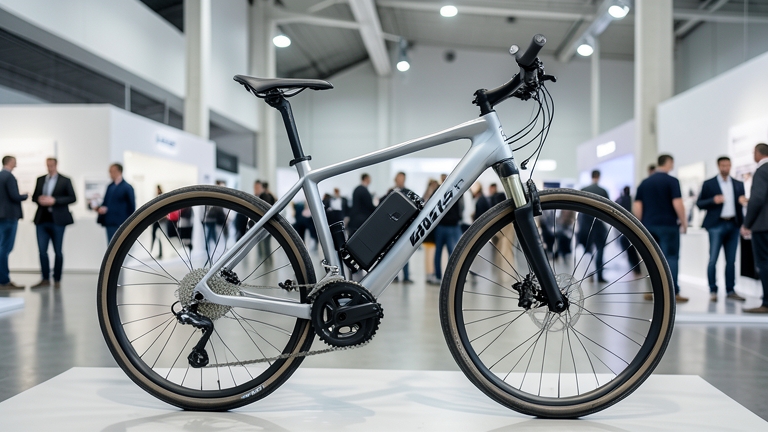
Asus, a name synonymous with laptops, motherboards, and graphics cards, has entered the micromobility arena with a product that redefines its hardware ambitions. The Asus Oxiis E250G1 is not a new PC component; it is a friction-based ebike conversion kit designed to turn almost any standard bicycle into an electric-assist machine. This move places the Taiwanese tech giant in direct competition with specialized retrofit brands, and the device itself raises a host of practical questions about performance, compatibility, and real-world usability. For anyone who owns a conventional bike and has wondered about electrifying it without buying a new one, the Oxiis E250G1 presents an intriguing, if imperfect, proposition.
How the Asus Oxiis E250G1 Uses Friction Power Transmission
The core engineering behind the Asus Oxiis E250G1 is elegantly simple. It relies on a friction drive mechanism. A small wheel, or roller, is integrated directly into the motor housing. This roller is pressed firmly against the rear tyre of the bicycle. When the motor activates, the roller spins. Because it rests directly on the rubber of the rear wheel, friction transfers that rotational force, or impulse, to the tyre. The result: your purely mechanical bike gains an electric rear-wheel drive system without any modifications to the drivetrain itself.
For the system to function effectively across varied riding conditions, the roller must maintain constant contact with the tyre. The Oxiis E250G1 is designed to apply consistent downward pressure, enough to prevent slipping but not so much that it creates noticeable drag when the motor is off. Asus has engineered the roller with a concave profile. This shape is intentional; it allows the convex surface of the bicycle tyre to nestle into the roller, maximizing the contact patch and improving grip. The roller surface itself has a texture reminiscent of coarse sandpaper, a design choice that balances reliable friction against minimal rolling resistance. This is a critical detail, as the wrong material could either wear down the tyre too quickly or fail to transmit power effectively in wet conditions.
Power and Performance: The Motor’s Capabilities and Limitations
Despite its compact form factor, the motor inside the Oxiis E250G1 delivers a continuous rated power of 250 watts, which is the standard legal limit for pedelecs in many markets. At peak output, it can push up to 500 watts. This relatively high rating is deliberately chosen to compensate for the inherent efficiency losses that occur in a friction drive system, where energy is lost as heat and slippage between the roller and the tyre.
Riders can select from three assistance levels: Eco, Normal, and Sport. The system determines how much power to provide based on data from a wireless cadence sensor. This sensor attaches to the left crank arm using a simple rubber strap. This is one of the weaker points of the design. The strap-on attachment feels less durable and less premium than a solution that uses a screw or a click-lock mechanism. It is a detail that suggests a compromise in build quality for the sake of simplicity and universality.

Asus has not confirmed the presence of any other sensors, such as a torque sensor or a wheel speed sensor. This means the assistance logic is driven almost entirely by your pedalling cadence. The likely behaviour is that lower cadences produce less assistance, while higher cadences trigger the motor to deliver more power. For a rider tackling a steep climb, this means the optimal strategy is to shift into a lower gear to increase cadence, thereby signalling to the Oxiis that maximum assistance is required. This is a functional approach, but it lacks the natural feel of a torque-sensing system, which responds directly to how hard you press on the pedals.
Battery Specifications, Range, and the Removable Design
The battery and motor are integrated into a single unit that mounts to the seatpost. One of the most practical features is the removable battery. It can be detached from the frame for convenient charging indoors or at the office. Asus has not disclosed the weight of the battery alone, but the entire system, including motor, housing, and battery, comes in at approximately 3.7 kilograms.
The battery capacity is rated at 158.4 watt-hours. This is a modest figure, a direct consequence of the compact, integrated design. The resulting range is predictably limited. Asus claims up to 50 kilometres in ideal conditions when riding continuously in Eco mode. In Sport mode, that figure drops dramatically to around ten kilometres. As with any ebike, real-world range depends on body weight, total bike weight, terrain, cadence, weather, and tyre pressure. The charging time, however, is relatively impressive. Using a 100-watt charger, the battery can be fully replenished in approximately two hours.
One notable advantage of the smaller 158 Wh capacity is that it falls within the limits accepted by most airlines for carry-on lithium-ion batteries. This means you can potentially take the Oxiis E250G1 on a flight, a significant convenience for travellers who want electric assistance at their destination without relying on a rental ebike.
The App-Only Control System and Smartphone Integration
There is no physical control unit included with the Oxiis E250G1. All adjustments, including switching between Eco, Normal, and Sport modes, are handled exclusively through a companion app. This is a bold design choice that places heavy reliance on your smartphone. Asus recommends investing in a high-quality handlebar mount so you can use your phone as a de facto display while riding. The app is compatible with both Android and iOS, ensuring broad accessibility.
This app-only approach has clear trade-offs. On the positive side, it reduces cost and keeps the hardware clean and simple. On the negative side, it means you cannot change assistance levels without taking your phone out, and you are dependent on the phone battery lasting for your entire ride. If you forget your phone, or if it runs out of power, you lose the ability to control the system entirely.
Compatibility: Which Bikes Work with the Oxiis E250G1
The practical appeal of any conversion kit lies in how many existing bicycles it can accommodate. Asus has designed the Oxiis to be exceptionally versatile in this regard. It is compatible with hardtail mountain bikes, city bikes, trekking bikes, touring bikes, road bikes, gravel bikes, childrens bikes, and even folding bikes. The one major exclusion is full-suspension bikes, because the rear swingarm movement would interfere with the fixed position of the friction roller.
The kit works with wheel diameters ranging from 16 inches to 29 inches. When it comes to tyres, the roller can handle slick, semi-slick, and treaded patterns. However, it cannot cope with aggressive knobby tyres like the Schwalbe Smart Sam. Additionally, tyres wider than 60 millimetres are not supported. For the vast majority of standard city and touring bikes, these parameters cover a wide and practical spectrum.
Installation Process and Seatpost Requirements
Asus has designed the Oxiis as a single-piece unit that mounts to the seatpost via a clamp. The installation process appears straightforward, though it does come with specific requirements. The clamp is secured using two screws that must be tightened to a torque of exactly ten newton-metres. This is the primary reason Asus explicitly advises against using the kit on carbon seatposts. Carbon fibre can be damaged by high clamping forces, and the 10 Nm specification is too aggressive for many carbon posts.
The kit includes three adaptors to fit different seatpost diameters, covering most common sizes found on metal frames. A joint in the housing allows the angle to be adjusted so that the roller sits perfectly centred on the rear tyre. Asus does not provide a specific optimal angle, but the key guidance is that the roller should contact the tyre as centrally as possible. A simple verification test is to lift the unit after installation; if the entire rear wheel rises off the ground with it, the clamp is sufficiently tight.

A single button on the housing powers the Oxiis on and off. Four small LEDs integrated into the housing provide a visual indication of the current battery charge level.
Weather Resistance and the Rain Problem
A critical limitation of the Oxiis E250G1 is its interaction with water. The unit carries an IPX4 rating, which means it is protected against splashing water from any direction. This allows for use in light drizzle but explicitly prohibits riding in heavy rain. For many commuters in temperate or rainy climates, this is a significant restriction.
Furthermore, the friction drive design inherently conflicts with mudguards. If your bicycle has a rear mudguard that runs directly over the tyre, there is no space to mount the Oxiis. You would need to remove the mudguard, which then exposes you and the kit to road spray in wet conditions. Combined with the IPX4 rating, using the Oxiis in anything other than dry weather becomes a complicated proposition.
Comparison with the Livall Pikaboost 2 and Market Positioning
To evaluate the Oxiis E250G1 fairly, it helps to compare it directly against its most prominent competitor, the Livall Pikaboost 2. Both are friction-drive conversion kits, but they differ in several meaningful respects.
The most immediate difference is weight. The Oxiis weighs 3.7 kilograms, which is 700 grams more than the Pikaboost 2. In relative terms, that is a 23 percent weight penalty. On the battery front, Livall offers a choice between a 158 Wh and a 220 Wh battery. The smaller Oxiis battery matches Livalls entry-level option, but the lack of a larger capacity variant for the Asus unit is a disadvantage for riders who need extended range. The larger Livall battery does come with a significant weight increase, but it also provides a welcome option.
Livall also integrates a physical control unit into its kit for the larger battery version, eliminating the need for a smartphone during the ride. Additionally, the Pikaboost 2 uses multiple sensors, including a tilt sensor that cuts assistance if the bike leans dangerously, a traction sensor that monitors rear wheel grip, and a brake sensor that pauses assistance when the brakes are applied. Asus currently offers none of these safety-oriented features.
Until Asus announces a price, it is difficult to judge the value proposition. If the Oxiis is priced significantly below the Pikaboost 2, the compromises may be acceptable. If it lands at a similar price point, the technological advantages of the Livall kit make it the more compelling choice on paper.
Price and Availability Remain Unknown
As of the current information available, Asus has not disclosed a retail price for the Oxiis E250G1. Nor has the company specified a release date or confirmed which markets will receive the kit. This lack of concrete commercial details makes it impossible to assess the product in terms of value or accessibility. Potential buyers in Europe, North America, or elsewhere are left waiting for further announcements.
What the Oxiis E250G1 Reveals About Asuss Strategic Ambitions
Asuss entry into the ebike conversion kit space is a logical extension of its broader hardware ecosystem. The company has experience building compact, power-dense devices, from laptops to small-form-factor PCs. Applying that engineering knowledge to micromobility is a natural diversification. However, the Oxiis E250G1 feels like a first-generation product with clear areas for improvement. The reliance on a single cadence sensor, the app-only control interface, the weight penalty compared to the competition, and the limited weather resistance all suggest that Asus is learning the nuances of the cycling industry in real time.
For the rider who owns a compatible bike, values the convenience of a removable flight-friendly battery, and primarily rides in dry, urban conditions, the Oxiis E250G1 could prove to be a useful and affordable gateway into electric cycling. For anyone seeking a robust, all-weather, sensor-rich solution, the existing competition currently offers a more polished experience. Asus has the engineering talent and the supply chain muscle to iterate on this design. The real question is whether the company will commit to a second generation that addresses these early shortcomings, or whether the Oxiis will remain a curious footnote in a company better known for silicon than for spokes.