The concept of net worth—the total value of your assets minus your liabilities—serves as one of the most telling indicators of financial standing in America today. While income captures what you earn in a given year, net worth reveals the accumulated wealth you have built over a lifetime, offering a far more complete picture of economic security and social class. Understanding where you stand in relation to average net worth figures across different classes can illuminate your financial trajectory and help you make informed decisions about saving, investing, and wealth building. This article breaks down the average net worth across American economic classes using the latest Federal Reserve data, explains the defining characteristics of each wealth tier, and provides a framework for assessing where you currently fit in the national landscape.
How Net Worth Defines Class in America
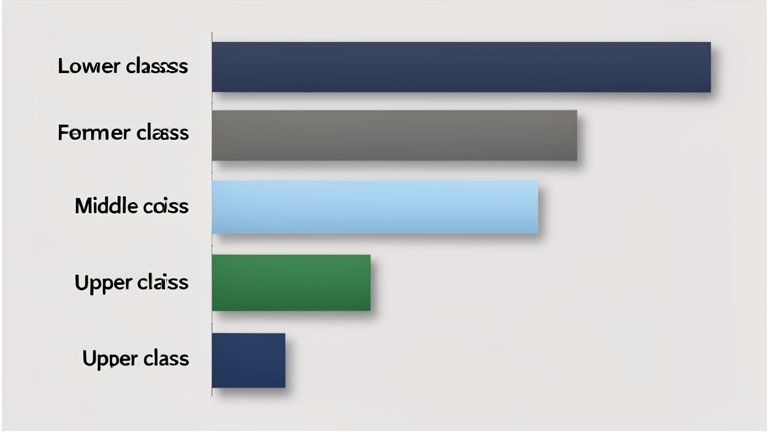
Net worth is the single most reliable metric for determining economic class because it accounts for both what you own and what you owe. The Federal Reserve’s Survey of Consumer Finances divides American households into wealth percentiles that reveal stark disparities. The lower class, representing approximately 20 to 30 percent of households, holds a median net worth near zero or even negative due to debt burdens. The middle class, which encompasses roughly 50 to 60 percent of households, possesses a median net worth ranging from approximately $100,000 to $300,000 depending on age and region. The upper class, making up the top 10 to 20 percent, holds a median net worth exceeding $1 million, with the top 1 percent crossing the $10 million threshold. These figures are not static; they shift with market conditions, housing values, and broader economic trends. Understanding these tiers provides the foundation for evaluating your own financial position.
The Lower Class: Living on the Edge of Financial Stability
Households in the lower class typically have a net worth below $50,000, with many falling into negative territory. This group includes individuals who rent rather than own homes, carry significant consumer debt, and have minimal savings or investment accounts. The median net worth for the bottom 20 percent of American households is approximately $6,000, according to the latest Federal Reserve data. For those in the second-lowest quintile, the median net worth rises to roughly $45,000, often reflecting modest home equity or a small retirement account. What defines this class is not just low net worth but financial fragility—a single medical emergency, job loss, or major car repair can push these households into debt or insolvency. Approximately 30 percent of American households have less than $1,000 in savings, underscoring the precariousness of this tier. If your net worth falls in this range, your primary financial focus should be on eliminating high-interest debt, building an emergency fund, and securing stable housing. The path to the middle class involves consistent saving, even in small amounts, and avoiding predatory financial products that erode wealth.
The Role of Debt in Lower Class Net Worth
Debt is the defining characteristic of the lower class net worth profile. Student loans, credit card balances, and auto loans often exceed the value of assets, creating negative net worth. Unlike mortgages, which typically finance appreciating assets, the debts carried by lower-class households tend to fund consumption or education that does not always translate to proportional income gains. The debt-to-asset ratio for this group often exceeds 1.0, meaning liabilities are greater than assets. Breaking this cycle requires prioritizing debt repayment while simultaneously building even minimal savings to avoid future borrowing for emergencies. Many financial advisors recommend the debt avalanche or debt snowball methods as structured approaches to regaining financial footing.
The Middle Class: Building Wealth Through Homeownership and Retirement Accounts
The middle class represents the broadest segment of American society, and its net worth is anchored by two primary assets: home equity and retirement accounts. The median net worth for middle-class households—defined as the third and fourth wealth quintiles—ranges from approximately $100,000 to $300,000. For households headed by individuals aged 45 to 54, the median net worth in this tier typically reaches its peak, often exceeding $250,000. What distinguishes the middle class from the lower class is the presence of positive equity in a primary residence and a growing 401(k) or IRA balance. Middle-class households generally have manageable debt levels, with mortgage debt representing the largest liability. They are less vulnerable to financial shocks than lower-class households, though a prolonged job loss or major health crisis can still destabilize their position. If your net worth falls in this range, your focus should shift from mere accumulation to asset allocation, tax efficiency, and protecting your wealth through adequate insurance coverage. The middle class is not a monolith; it spans a wide range of net worth figures, and where you fall within this spectrum significantly affects your lifestyle and retirement timeline.

The Upper Middle Class: Approaching Affluence
Within the middle class, a distinct upper tier has emerged with net worth between $500,000 and $1.5 million. This group, often called the upper middle class, enjoys substantial home equity, significant retirement savings, and often holds investment accounts outside of tax-advantaged vehicles. They may own second homes, have college funds fully funded for their children, and carry minimal consumer debt. The upper middle class typically has access to professional financial advice and uses strategies like backdoor Roth IRAs, 529 plans, and taxable brokerage accounts to optimize their wealth. Their financial concerns are less about survival and more about minimizing tax burdens, maximizing investment returns, and planning for multi-generational wealth transfer. If you fall into this category, your net worth places you in the top 15 to 20 percent of American households, even if you do not consider yourself wealthy. The transition from upper middle class to truly wealthy often requires owning a business, accumulating significant investment real estate, or holding concentrated equity positions in high-growth companies.
The Upper Class: Wealth as a Self-Sustaining System
The upper class, representing the top 10 percent of American households, has a median net worth exceeding $1.5 million, with the top 1 percent surpassing $10 million. For the top 0.1 percent, net worth exceeds $50 million, and for the top 0.01 percent, it climbs beyond $200 million. What distinguishes the upper class is that their wealth is self-sustaining—investment income, business profits, and capital gains cover their living expenses without requiring active labor. The composition of their net worth differs dramatically from the middle class. While middle-class wealth is dominated by home equity and retirement accounts, upper-class wealth is concentrated in publicly traded stocks, private business interests, real estate holdings, and alternative assets like private equity and hedge funds. The tax treatment of these assets is fundamentally different, with preferential rates on capital gains and dividends allowing wealth to compound more efficiently. If your net worth places you in this tier, your financial planning should emphasize estate planning, charitable giving strategies, and sophisticated tax minimization approaches. The upper class also has access to private banking services, family offices, and investment opportunities unavailable to lower wealth tiers.
The Top 1 Percent: A World Apart
Within the upper class, the top 1 percent occupies a distinct category with a minimum net worth of approximately $10 million. This group controls roughly one-third of all household wealth in America, a share that has grown steadily over the past four decades. The wealth-to-income ratio for this group is exceptionally high, meaning their net worth is many multiples of their annual earnings. Unlike lower wealth tiers where income and net worth are closely correlated, the top 1 percent derives most of its wealth from asset appreciation rather than salary or wages. This structural difference explains why wealth inequality persists and widens even during periods of strong economic growth. For those in this tier, financial planning focuses on dynasty trusts, philanthropic foundations, and preserving wealth across generations.
Where You Fit: A Practical Framework for Self-Assessment
To determine where you fit in the American net worth landscape, start by calculating your total assets: the current market value of your home, the balances of all retirement and investment accounts, the cash value of any insurance policies, the value of vehicles and other personal property, and any other assets you hold. Then subtract your total liabilities: mortgage balance, student loans, credit card debt, auto loans, and any other outstanding obligations. The resulting figure is your net worth. Compare this number to the median net worth figures by age group and wealth quintile published by the Federal Reserve. If your net worth is below $50,000, you fall into the lower class or lower middle class depending on your age and region. Between $50,000 and $500,000 places you firmly in the middle class, with the higher end representing upper middle class status. Above $1.5 million positions you in the upper class, and above $10 million places you in the top 1 percent. These are guidelines, not rigid categories; cost of living, family size, and local housing markets all influence how far your net worth extends in practical terms.
The Age Factor in Net Worth Expectations
Age is perhaps the most important variable in evaluating net worth because wealth accumulation follows a predictable lifecycle pattern. Households under 35 have a median net worth of approximately $30,000, with many holding negative net worth due to student loans and entry-level wages. The 35 to 44 age range sees median net worth climb to roughly $100,000 as homeownership begins and retirement savings accelerate. The 45 to 54 cohort typically reaches peak earning years, with median net worth around $250,000. Households aged 55 to 64 hold a median net worth near $350,000 as they near retirement, while those 65 and older have a median net worth of approximately $400,000, reflecting a lifetime of accumulation and the beginning of decumulation. If your net worth exceeds these age-adjusted medians, you are ahead of the typical household in your cohort. If it falls below, you have an opportunity to adjust your savings rate and investment strategy to catch up. The compounding effect of time means that even modest increases in saving during your 30s and 40s can dramatically alter your net worth trajectory by retirement age.
Race, Education, and Regional Disparities in Net Worth
Average net worth figures conceal significant disparities within each class. White households have a median net worth approximately six to eight times that of Black households and five times that of Hispanic households, a gap that persists across all education levels and income brackets. College graduates have a median net worth roughly three times that of high school graduates, reflecting both higher lifetime earnings and greater access to employer-sponsored retirement plans. Geographic location also plays a major role: households in the Northeast and West Coast have higher median net worth figures than those in the South and Midwest, driven largely by differences in home values and real estate appreciation. These disparities mean that where you fit in the national net worth distribution is influenced not only by your personal financial decisions but also by structural factors beyond your control. However, understanding these patterns can help you make strategic decisions about where to live, what career path to pursue, and how to advocate for policies that promote broader wealth building opportunities.
The Path Forward: Moving Up the Net Worth Ladder
Understanding your current net worth position is not about comparison for its own sake—it is about identifying the specific actions that can move you to a higher wealth tier. For those in the lower class, the priority is debt elimination and building a savings habit, however small. For the middle class, the focus should be on maximizing retirement contributions, increasing home equity, and diversifying into taxable investment accounts. For the upper middle class, tax optimization, asset protection, and strategic estate planning become paramount. For the upper class, preserving and transferring wealth across generations while maintaining a lifestyle that aligns with your values is the central challenge. At every level, the principles remain the same: spend less than you earn, invest the difference in diversified assets, avoid high-interest debt, and allow time and compound growth to work in your favor. Net worth is not a measure of your worth as a person, but it is a practical tool for assessing your financial health and charting a course toward greater economic security and freedom.