The Bar Tribunals and Adjudication Services has ordered the disbarment of Mariam El-Sobky, a barrister called to the bar in 2001, following findings of dishonesty, harassment, and the secret recording of family court proceedings. The tribunal determined that El-Sobky made dishonest or misleading statements to the court, acted without honesty and integrity, and misled the judiciary in a series of cases that collectively exposed a pattern of professional misconduct spanning client confidentiality breaches, the mockery of an employee’s mental health struggles, and the unlawful capture of audio during sensitive hearings. The decision, which is subject to appeal, underscores the profession’s zero tolerance for conduct that fundamentally undermines the administration of justice.
The Three Cases That Led to Disbarment
The independent disciplinary tribunal examined three distinct cases involving El-Sobky, each revealing a separate dimension of unethical behavior. In the first case, the tribunal found that she had harassed a former employee by “making fun” of that individual’s confidential mental health issues within a group chat. This conduct was compounded by a failure to maintain client confidentiality: El-Sobky sent appeal papers to the personal email address of an individual she had employed to work on the case, without first requiring that person to sign a confidentiality agreement. The tribunal viewed this as a serious breach of professional duty, given the sensitive nature of legal documents and the expectation that barristers protect client information at all times.
Secret Recordings of Family Court Hearings
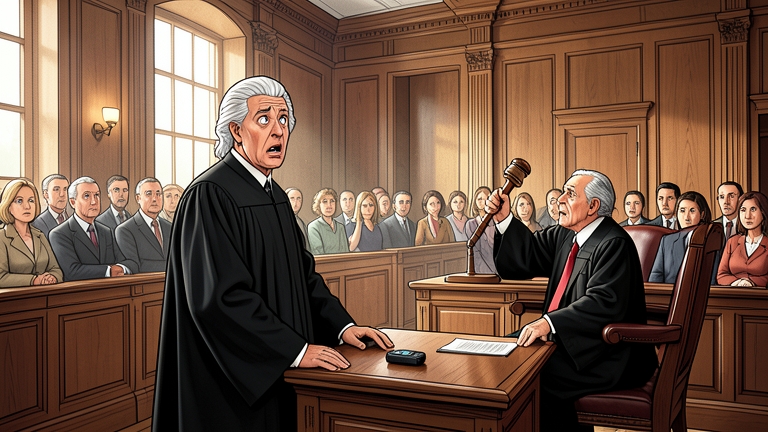
The two remaining cases centered on El-Sobky’s unauthorized audio recordings of family court hearings. Between March and December 2021, on at least three separate occasions, she made recordings without the consent of the parties involved or the presiding judge. She did so knowing that she was not lawfully entitled to record the proceedings. After capturing the audio, she transmitted the recordings to employees with instructions to produce transcriptions. The tribunal found that this behavior “was likely to diminish the trust and confidence which the public places in her or in the profession,” and that she had “failed to act with integrity and failed to observe her duty to the court in the administration of justice.”
The prohibition on recording court proceedings in England and Wales is well-established. It stems from the Contempt of Court Act 1981 and is reinforced by Practice Direction 4C of the Criminal Procedure Rules and specific guidance in family courts. Recording without permission is considered a direct challenge to judicial authority and the orderly conduct of hearings. For a barrister—an officer of the court—to engage in such activity knowingly and repeatedly represents a grave dereliction of professional responsibility.
Why Secretly Recording Court Hearings Is a Fundamental Breach
Readers may ask: What is the legal basis for banning recordings in court, and why is it enforced so strictly? The answer lies in the principle of open justice. While court hearings are generally public, the recording of proceedings is restricted to preserve the integrity of the judicial process. Unauthorized recordings can be edited, misrepresented, or used to intimidate witnesses and parties. They also disrupt the solemnity of the courtroom and risk creating extrajudicial narratives that undermine the authority of the ruling. In family court, where cases often involve vulnerable children, victims of domestic abuse, and highly sensitive personal matters, the need for confidentiality is even more acute. The barrister’s duty to uphold the administration of justice means she must be the first to respect these boundaries, not the one to breach them.
Bar Standards Board Response and Industry Implications
A spokesperson for the Bar Standards Board (BSB) stated: “Ms El-Sobky failed to observe her duty to the court in the administration of justice. This behaviour falls far below the standards the public rightly expect of barristers. The decision to disbar reflects the seriousness of the misconduct in this case.” The BSB, which regulates barristers in England and Wales, has been increasingly active in pursuing sanctions for technology-related misconduct, including improper recording and unauthorized disclosure of digital materials. This case reinforces that the Bar must adapt its ethical codes to address the ease with which digital recording devices—smartphones, voice recorders, and laptop software—can be used covertly.
The decision also sends a clear signal to the profession that the misuse of digital tools will attract severe consequences. In an era where remote hearings have become routine and participants often join via personal devices, the temptation to record proceedings has grown. However, the ethical obligations remain unchanged. Barristers must proactively decline to record, and they must ensure that no recording takes place without explicit judicial permission.
The Harassment Finding and Mental Health Confidentiality
Beyond the recording allegations, the tribunal’s finding of harassment against a former employee adds a deeply troubling layer to the case. Making fun of an individual’s confidential mental health issues in a group chat is not merely a workplace misconduct issue—it reflects a fundamental failure of empathy and professional decency. Legal professionals are often exposed to traumatic material and high-stress environments, yet the duty of respect and confidentiality applies equally to colleagues and clients. The tribunal also found that El-Sobky failed to secure a confidentiality agreement before sending appeal papers to a worker’s personal email address. This breach of client confidentiality, combined with the harassment, demonstrates a pattern of disregard for the boundaries that underpin trust in the legal system.
What Happens After Disbarment? An Appeal Process Explained
Readers may wonder: When did this decision take effect, and what happens now? The tribunal’s findings are subject to appeal. El-Sobky has the right to challenge the disbarment order before the High Court or the Visitors of the Inns of Court. If she appeals, the case will be reviewed on its merits, and a higher judicial body will determine whether the sanction was proportionate. Until the appeal is resolved, the disbarment order is typically stayed, meaning she may continue to practice in a limited capacity unless an interim suspension is imposed. The BSB can also seek an interim suspension if it believes there is a risk of further harm to the public or the profession.
If the appeal is unsuccessful, El-Sobky will be removed from the Bar register, her name struck from the record of practising barristers, and she will be prohibited from offering legal services as a barrister. She may also be required to pay costs associated with the tribunal proceedings. Disbarment is the most severe sanction available to the Bar Tribunals and Adjudication Services, reserved for cases where the barrister’s conduct is fundamentally incompatible with continued membership of the profession.
Contextualizing the Sanction: A Broader Pattern of Technology Misconduct
This case is not an isolated incident. In recent years, the BSB has disciplined multiple barristers for misconduct involving digital communications, including the misuse of social media, the unauthorized sharing of confidential documents via email, and the recording of meetings or hearings. The legal profession is grappling with how to maintain ethical standards in an environment where every smartphone is a potential recording device and every email account is a vector for data leakage. The principle remains clear: barristers must exercise heightened vigilance and must never prioritize convenience over confidentiality.
In particular, family law practitioners face unique challenges. The emotional intensity of child custody, financial disputes, and domestic violence cases can create pressures that lead some to deviate from professional norms. Yet the Bar’s Codes of Conduct, including the Core Duties set out in the BSB Handbook, leave no room for flexibility. Duty 1 requires barristers to observe their duty to the court in the administration of justice. Duty 3 requires them to act with honesty and integrity. Duty 5 demands that they maintain client confidentiality. El-Sobky’s actions violated all three.
What This Means for the Public and the Legal Profession
For the public, this case reaffirms that the Bar’s disciplinary mechanisms function effectively to remove practitioners who betray their trust. It also highlights the critical importance of confidentiality in family court, where parties share deeply personal information in the expectation of privacy. The fact that a barrister—someone trained in the rules of evidence and court procedure—would knowingly record hearings underscores the need for continued public awareness. Litigants and witnesses should understand that any unauthorized recording is unlawful and should be reported to the court or the BSB.
For the legal profession, the decision is a stark reminder that technology has not changed the fundamental ethical obligations of barristers. If anything, it has made vigilance more demanding. Law firms and chambers should review their policies on recording devices, email security, and confidentiality agreements. They should also provide training on digital ethics, particularly for barristers who handle sensitive family law matters. The BSB has published guidance on the use of technology, and this case provides a real-world illustration of the consequences of ignoring it.
The disbarment of Mariam El-Sobky, while subject to appeal, stands as a definitive statement that the Bar will not tolerate secret recordings, harassment, or breaches of confidentiality. The profession’s credibility depends on the integrity of its members, and the tribunal has acted decisively to protect that integrity. In a legal environment increasingly mediated by digital tools, this case will likely be cited in future disciplinary proceedings as a benchmark for the kind of conduct that warrants the most severe sanction. The administration of justice demands nothing less.