YouTuber GPUSpecs recently assembled a remarkable piece of hardware that might make you question the entire PC gaming landscape: a fully functional gaming rig built without a single component from Intel, AMD, or NVIDIA. This radical experiment sourced an entirely different computing ecosystem from China. The project demonstrates both the ambition of Chinese semiconductor companies and the monumental performance gulf that still exists today.
The Zhaoxin KX-7000 and Maiden Motherboard
At the heart of this unique build is the Zhaoxin KaiXian KX-7000, an 8-core x86-64 processor. Its modern core count and full Windows compatibility stem from a fascinating legacy. Zhaoxin operates with an official x86 license, a legal inheritance from partnerships with historic companies like VIA and Cyrix, which challenged Intel during the original Pentium era. This lineage is the key to why the system can boot a standard Windows installation, a hurdle other non-x86 architectures would face.
The CPU arrived on a custom, compact motherboard akin to an ASUS design, though devoid of official branding. This presented surprises and small victories. The biggest surprise was a platform-specific obstacle: sourcing compatible RAM. The motherboard demanded native, non-overclocked DDR4-3200 DIMMs, a niche specification that proved difficult to procure. The victory came with cooling; the CPU’s LGA socket is mechanically identical to an Intel design, so standard air cooler mounting hardware worked without modification. This small detail hints at practical compatibility efforts on Zhaoxin’s part.
Moore Threads MTT S80 Graphics Power
For visual processing, the builder turned to Moore Threads and its MTT S80, a GPU launched in 2022. On paper, the card boasts impressive specifications, including a 12nm manufacturing process and a robust 16GB of GDDR6 memory. This memory pool matches high-end offerings from AMD and NVIDIA, suggesting ambitions for high-resolution gaming and professional workloads. The physical card itself features a triple-fan cooler design that would look at home in any contemporary gaming PC.
However, raw hardware specifications are only part of the graphics equation. The true test of a GPU lies in its software stack—the drivers that translate game code into commands for the silicon. This is where new entrants face their steepest challenge, competing against decades of continuous optimization from NVIDIA and AMD. The MTT S80’s inclusion in this build was the critical component for testing gaming viability, promising the possibility of a completely independent hardware stack from CPU to GPU.

A Performance Test in Stutters and Frames
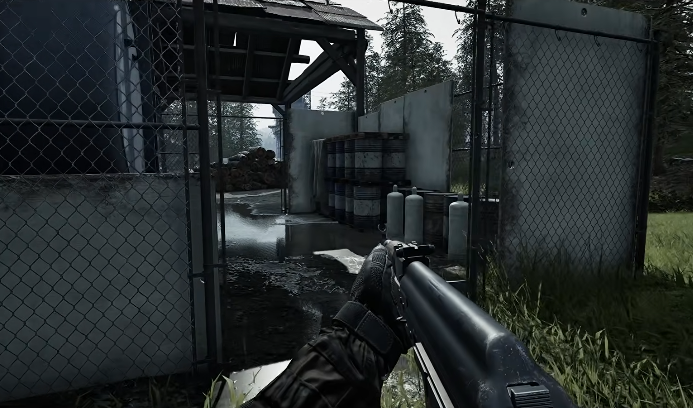
So, can you game on a PC powered purely by Chinese silicon? The answer, based on this experiment, is a qualified and underwhelming “sort of.” Performance across a slate of modern titles ranged from poor to barely functional. Demanding games like *Cyberpunk 2077* and *Shadow of the Tomb Raider* averaged a mere 22.3 and 12.2 frames per second at 1080p low settings, rendering them effectively unplayable. *Forza Horizon 5* managed 24.2 FPS.
Interestingly, performance was not universally catastrophic. *Genshin Impact* achieved a much smoother average of 58 FPS, though it still suffered from noticeable stuttering. The sole title that delivered a consistently solid experience was the less-demanding *Rocket League*. This pattern highlights the core issue: while the raw horsepower might exist for some lighter or older titles, the driver-level optimization for complex, modern game engines is severely lacking. The persistent stutter across most games indicates fundamental software bottlenecks, not just a simple lack of computational power.
The Long Road From Curiosity to Competitor
What does this experiment tell us about the state of alternative computing ecosystems? Primarily, it underscores the immense difficulty of breaking a near-total market duopoly. Building compatible hardware is a monumental first step that Zhaoxin and Moore Threads have clearly taken. The PC booted, ran Windows, and executed games—a significant technical achievement in itself that proves a third path is possible.
Yet, the leap from functional to competitive is a marathon, not a sprint. The “big three” dominate not just because of their silicon, but due to their deeply integrated software ecosystems, pervasive developer support, and relentless generational refinement. For Chinese alternatives to become viable for mainstream gamers, they need years of driver maturation, direct engagement with game studios for optimization, and likely several more generations of architectural improvements. This build is a fascinating proof-of-concept, but it serves as a stark benchmark of how far there is to go.