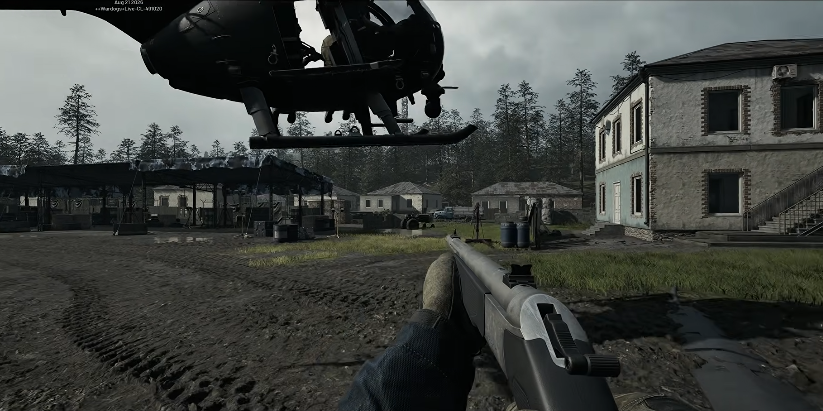
John Carpenter’s Toxic Commando presents players with a brutal, mutant-infested landscape where survival demands more than just quick reflexes. Developed by Saber Interactive, this four-player cooperative horde shooter plunges squads into chaotic battles against overwhelming numbers using the same Swarm Engine technology that powered World War Z and Warhammer 40,000: Space Marine 2. The game’s initial tutorial offers only a basic introduction, leaving many players unprepared for the complex systems governing combat, exploration, and team coordination. This guide provides the foundational knowledge necessary to navigate Toxic Commando’s unforgiving world and emerge victorious against the armies of the Sludge God.
Understanding Toxic Commando’s Core Gameplay Loop
Toxic Commando operates as an online-only cooperative experience structured around nine semi-open-world missions. Each mission unfolds across expansive maps filled with environmental hazards, resource points, and relentless mutant threats. The primary objective typically involves reaching a specific location or securing an area, but the journey there represents the true challenge. Missions generally last around thirty minutes, though this duration expands significantly when players thoroughly explore the environment and engage with all available content. The game supports crossplay between PC and consoles, ensuring friends can squad up regardless of platform, though solo players will find themselves paired with AI-controlled teammates rather than having access to a true offline mode.
The gameplay rhythm follows a distinct pattern: initial deployment, systematic exploration of the map’s points of interest, resource gathering, vehicle traversal, and culminating defensive stand during the final objective sequence. This structure creates tension between the need to explore thoroughly for advantages and the pressure to complete objectives before resources dwindle. Understanding this cadence proves crucial for planning movements and allocating resources effectively throughout each mission.
Strategic Class Selection and Progression Systems
Character choice in Toxic Commando serves purely cosmetic purposes, with the four available characters—Walter, Cato, Ruby, and Astrid—offering no gameplay differences. The meaningful decision comes from selecting one of four distinct classes, each designed for specific tactical roles within a squad. These classes level independently through experience gained during missions, with maximum progression reaching level forty. Each class features a unique skill tree that unlocks enhanced abilities and passive bonuses as players invest earned skill points.
The Four Core Combat Specializations
The Strike class functions as the primary damage dealer, specializing in aggressive engagement and crowd control. This class carries additional ammunition and grenades, benefits from faster reload speeds, and wields the devastating Fireball ability capable of clearing entire groups of enemies with area-of-effect damage. For solo players or those confident in their combat skills, the Strike offers the highest damage potential and self-sufficiency.

Medics serve as the essential support backbone for any successful squad. Beyond carrying extra medical supplies and more potent Medkits, this class generates a Healing Aura that gradually restores health to nearby teammates. In higher difficulty settings where damage accumulates quickly, having a dedicated Medic often determines whether a squad survives extended engagements or succumbs to attrition.
Operators provide technical support through drone technology and vehicle expertise. Their combat drone can attack enemies, repair damaged vehicles, and eventually revive downed teammates through skill unlocks. Operators also receive significant bonuses while driving, including reduced damage taken, lower fuel consumption, and passive health regeneration. These capabilities make them invaluable for traversing dangerous terrain and maintaining mobility.
Defenders assume the traditional tank role with enhanced durability and defensive capabilities. This class features increased health pools, additional damage resistance, and extra ammunition capacity. Their signature ability deploys a dome-shaped barrier that blocks incoming attacks while damaging enemies within its radius. For new players struggling with survival or squads needing an anchor point during defensive sequences, the Defender provides essential staying power.
Class Progression Strategies and Difficulty Considerations
Rather than distributing playtime across multiple classes simultaneously, players benefit most from committing to a single specialization through their initial playthrough. This focused approach allows for deeper progression within a class’s skill tree and faster acquisition of powerful ability variants unlocked at levels five, ten, and fifteen. These variants significantly alter how each class functions, enabling customization that complements individual playstyles and squad compositions.
Difficulty settings directly impact progression speed through experience multipliers. While Normal difficulty provides a balanced challenge, Very Hard triples experience gains at the cost of substantially increased enemy aggression and damage. For players seeking efficient progression, tackling higher difficulties with a coordinated squad offers the fastest path to class mastery, though this approach demands thorough understanding of game mechanics and careful resource management.
Critical Resource Management and Exploration
Toxic Commando’s semi-open environments contain numerous points of interest that provide essential advantages throughout each mission. Immediately upon deployment, players should consult their map to identify resource locations while initial enemy presence remains minimal. These locations include supply caches containing ammunition, weapons, and health items; Sludgite Deposits that serve as currency for weapon upgrades; spare parts for constructing defensive equipment; and the invaluable Sludge Seeds that offer survival insurance.
The Strategic Value of Sludge Seeds
Sludge Seeds represent one of Toxic Commando’s most valuable yet poorly explained resources. Appearing as blue orb-like icons on the map, these items typically require defeating tougher enemy guardians before collection. Their primary function provides automatic revival when the carrier suffers incapacitation, effectively granting an extra life. Additionally, successfully extracting a Sludge Seed from a mission without using its revival function rewards bonus class experience.
On higher difficulty settings where death becomes increasingly likely, securing at least one Sludge Seed transforms from optional objective to essential preparation. The guaranteed revival can salvage otherwise failed missions during intense final defensive sequences. Experienced players often coordinate seed collection early in missions to maximize their protective benefits throughout subsequent engagements.
Spare Parts and Defensive Preparation
Spare parts serve multiple crucial functions throughout missions. These components repair damaged vehicles, construct defensive emplacements like turrets and electric fences, and create explosive traps for area denial. Before triggering final objective sequences that typically involve defending against sustained enemy assaults, squads should conduct thorough sweeps to maximize spare part collection. The difference between facing a massive horde with fully constructed defenses versus minimal preparations often determines mission success or failure.
Supply caches scattered throughout each map provide necessary replenishment after extended combat encounters. These caches offer opportunities to swap weapons, restock ammunition, and acquire healing items without returning to central locations. Strategic players note cache positions during initial exploration to facilitate efficient resupply during later mission phases when mobility becomes restricted.

Vehicle Mechanics and Terrain Navigation
Each Toxic Commando mission features at least one vehicle, with some maps containing multiple options for traversal. These vehicles range from lightly armored scout vehicles to heavily armed transport trucks, each with distinct handling characteristics and mounted equipment. Beyond simple transportation, vehicles enable faster exploration, provide mobile cover during combat, and often feature in mission objectives requiring specific vehicle types.
Terrain Hazards and Vehicle Specialization
The mutant-infested wasteland presents numerous environmental challenges, with sludge-covered terrain posing particular navigation difficulties. Drawing inspiration from Saber Interactive’s MudRunner series, Toxic Commando implements realistic vehicle physics when traversing soft ground. Vehicles can become immobilized in deep sludge, creating vulnerable situations as enemies converge on the stranded squad. Operators receive specialized training that reduces this risk through decreased fuel consumption and damage mitigation while driving.
Among available vehicle attachments, the winch proves exceptionally versatile. Beyond extracting stuck vehicles from hazardous terrain, winches can pry open sealed containers, access hidden bunkers, and manipulate environmental objects to create defensive positions or reveal resources. Prioritizing vehicles equipped with winches significantly enhances exploration capabilities and resource acquisition throughout missions.
Vehicle Combat and Tactical Applications
Mounted weapons on certain vehicles provide mobile fire support during engagements, though their limited ammunition requires conservative use during critical moments. Vehicles also offer temporary safe zones where squad members can briefly recover health and ammunition while protected by the vehicle’s armor. However, excessive reliance on vehicles as stationary fortifications proves risky, as concentrated enemy attacks can quickly disable even the sturdiest transports.
Strategic vehicle deployment involves balancing aggressive advancement with preservation of mobility assets. Abandoning vehicles during intense combat sometimes becomes necessary to maintain tactical flexibility, though doing so forfeits their transportation benefits for subsequent mission phases. Experienced squads often designate specific members to protect vehicles during dismounted engagements, ensuring continued mobility for completing objectives.
Advanced Tactical Considerations for Squad Play
Successful Toxic Commando squads develop specialized roles and communication protocols that maximize each member’s capabilities. While random matchmaking can complete missions on lower difficulties, coordinated teamwork becomes essential for surviving Very Hard challenges and achieving efficient mission completion. This coordination extends beyond simple class composition to include resource allocation, movement patterns, and engagement priorities.
Role Specialization and Ability Synchronization
Beyond basic class functions, advanced play involves synchronizing ability usage for maximum effect. A Defender’s barrier ability creates safe zones that enable Medics to revive fallen teammates or allow Strikes to unleash devastating area attacks without interruption. Operator drones can draw enemy attention away from vulnerable squad members during resource collection or objective completion. These interactions multiply effectiveness beyond individual capabilities.
Resource distribution should reflect squad roles, with ammunition prioritized for damage-focused classes, medical supplies allocated to Medics for distribution, and spare parts carried by members responsible for defensive construction. This specialization prevents redundant resource hoarding and ensures each squad member maximizes their tactical contribution.
Adaptive Strategies for Dynamic Threats
Toxic Commando’s enemy forces employ varied tactics that demand adaptive responses. Some mutations specialize in closing distances quickly, requiring focused fire to prevent breakthroughs. Others attack from range or employ area-denial abilities that force squad repositioning. Environmental awareness becomes crucial, as elevated positions often provide defensive advantages, while confined spaces can funnel enemies into kill zones or create dangerous encirclement situations.
Mission success ultimately depends on balancing multiple competing priorities: thorough exploration versus timely objective completion, resource conservation versus defensive preparation, and aggressive advancement versus tactical withdrawal. The most effective squads develop situational awareness that allows rapid assessment of changing conditions and appropriate adjustment of strategies. This flexibility, combined with mastery of core mechanics, transforms Toxic Commando’s overwhelming challenges into manageable engagements where coordinated human teamwork triumphs over mindless mutant aggression.

Mastering Toxic Commando requires recognizing that survival depends on systematic preparation as much as combat proficiency. The game rewards methodical exploration, strategic resource allocation, and coordinated ability usage far more than individual marksmanship alone. While the mutant hordes appear endless and the environments deliberately hostile, each mission provides the tools necessary for victory to squads who understand how to utilize them effectively. The difference between chaotic failure and controlled success lies in approaching each situation with clear priorities: secure resources before engaging threats, establish defensive positions before triggering assaults, and preserve mobility options throughout mission progression. These principles transform seemingly overwhelming challenges into calculated engagements where preparation and coordination overcome numerical disadvantages, ultimately revealing Toxic Commando’s strategic depth beneath its chaotic surface.