The founder of a laptop company stood on a stage this week and did something that felt, in the current climate, genuinely radical: he celebrated the personal computer. At a time when entire industries are pivoting to the cloud and artificial intelligence, Nirav Patel of Framework articulated a different vision. “This industry wants you to own nothing and be happy,” he said. “We’re fighting for a future where you can own everything and be free.” This statement, part marketing flourish and part philosophical manifesto, framed the announcement of the Framework Laptop 13 Pro—a device whose most significant feature isn’t a new chip or a flashy AI assistant, but a profound commitment to longevity and user control.
A Vision of Personal Ownership in an Age of Abstraction
Patel’s opening remarks highlighted a fundamental shift in computing. For the first time, he noted, more silicon is going into cloud data centers than into personal computers. The concept of ownership itself is changing; compute power is increasingly something you lease by the hour, a utility rather than a possession. Against this backdrop, the idea of a “personal” computer takes on new meaning. Framework’s argument is that a computer should be a lasting tool that you can understand, modify, and upgrade—a tangible asset rather than a disposable portal to services. This philosophy directly challenges prevailing trends in the tech industry, where soldered components, proprietary ecosystems, and planned obsolescence are common. While Patel’s criticism of the tech status quo is more of a gentle nudge than a frontal assault, its rarity in 2026 makes it notable. In an era of AI hype and subscription-everything, a company loudly advocating for hardware ownership, repairability, and upgradeability feels like a breath of fresh air.
The Core Principle: Compatibility Over Clean Breaks
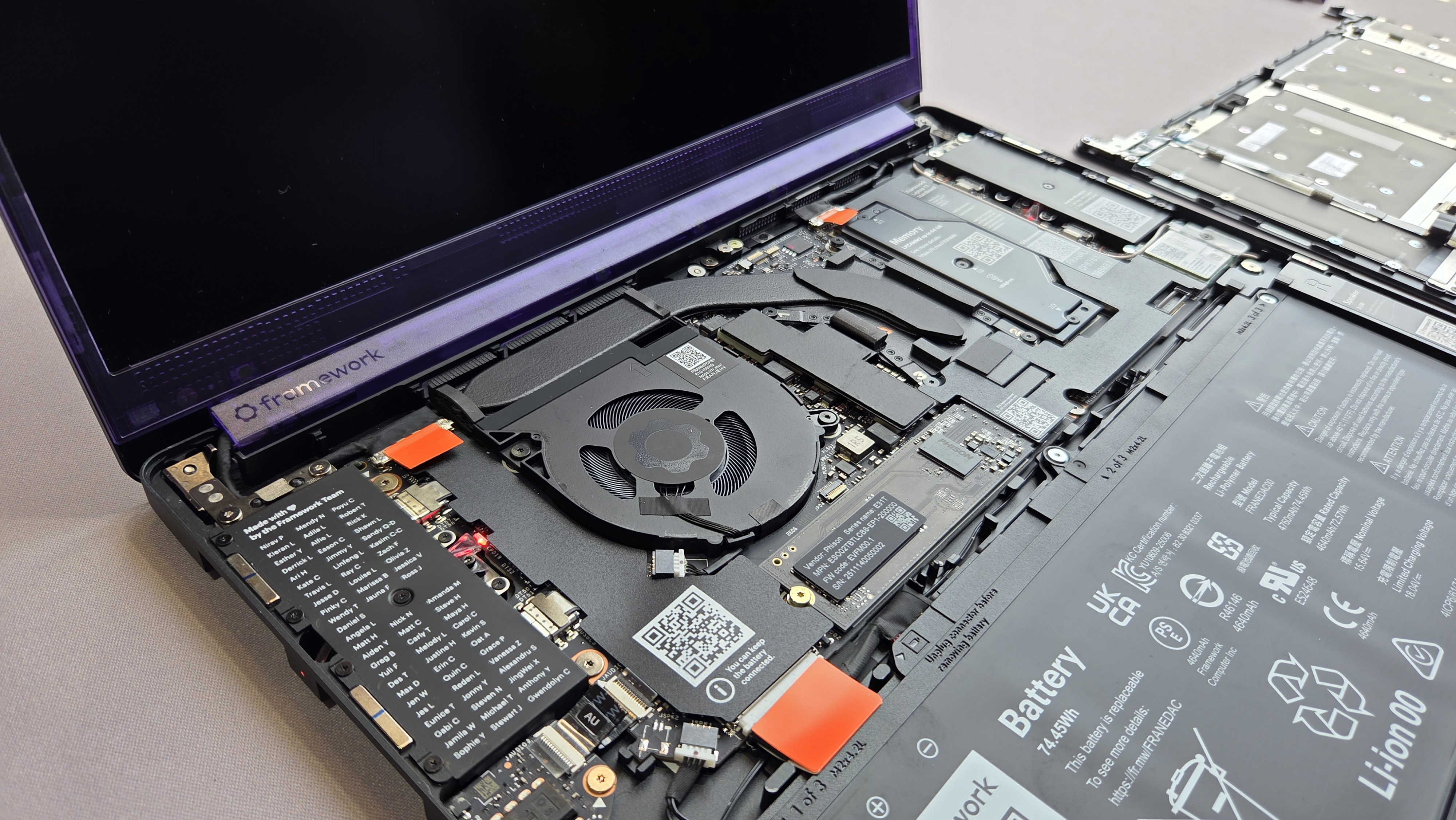
The launch of the Framework Laptop 13 Pro is a masterclass in sticking to first principles. The company had a clear opportunity to make a clean break with its past. A new, redesigned CNC-machined aluminum chassis offers a more premium look and feel. It houses a new higher-capacity battery (a welcome 13Wh improvement), a new default display, and the latest Intel Core Ultra Series 3 processors, which promise MacBook-level power efficiency. Yet, instead of forcing customers into a full system upgrade, Framework has bent over backwards to ensure almost every part of this new laptop is compatible with the older Framework ecosystem. This is the true story, far more compelling than any spec sheet.
A customer with an older Framework Laptop 13 can choose their own path. They can purchase just the new chassis kit and transplant their existing mainboard, memory, storage, and expansion cards into the new shell. They can opt for a full upgrade kit that includes the new chassis and battery. Or, they can buy components like the new mainboard or display individually and install them into their current machine. Crucially, all the existing Expansion Cards—the modular dongles that provide USB-C, HDMI, Ethernet, and other ports—remain compatible. This approach transforms a product launch from a simple new model announcement into an invitation to iterative, personalized improvement. It acknowledges that a user’s investment in a device shouldn’t be invalidated every two years. This isn’t just about being eco-friendly by reducing waste, though that is a benefit; it’s about respecting the user’s agency and budget.
Pushing Hardware Forward When Others Stand Still
Framework’s commitment extends beyond its own ecosystem into advancing hardware standards for the entire industry, a remarkable feat for a company with fewer than 200 employees. A prime example is its adoption of LPCAMM2 memory. This new memory module standard is a revolutionary step for laptops, combining the performance and power efficiency of soldered memory with the upgradability and repairability of traditional SO-DIMMs. Yet, despite its clear benefits for consumers, almost every major laptop manufacturer has ignored it in favor of fully soldered RAM, locking customers into a fixed memory configuration at purchase.

By integrating LPCAMM2 into the Laptop 13 Pro, Framework is practically alone in bringing this technology to the market in a consumer laptop. The irony is stark: a small startup is pushing the envelope on user-upgradable hardware, while giants many times its size treat such features as relics. The cost contrast is also telling. A single 64GB stick of LPCAMM2 RAM currently costs roughly as much as an entire budget laptop from a competitor, highlighting both the premium of cutting-edge, modular technology and the cost-cutting extreme of the soldered approach. Framework’s decision is a conscious choice to prioritize long-term utility over short-term cost minimization, betting that a segment of users will pay for the freedom to upgrade.
A Subtle But Significant Stance on Software and AI
The software narrative surrounding the launch was equally revealing of Framework’s ethos. Significant stage time was dedicated to Linux compatibility, featuring a representative from Ubuntu to discuss their collaboration. This emphasis on open-source operating systems aligns perfectly with the hardware’s philosophy of user control and transparency. The mention of Windows, by comparison, was almost an afterthought—delivered as a joking, “Oh, and you can also choose Windows, if you want.” This subtle ordering speaks volumes about the company’s community and its priorities.
Regarding the industry’s dominant obsession, Framework’s stance on AI is nuanced. Patel offered a brief, tongue-in-cheek pivot to AI during his presentation, immediately admitting it was a bit. The company isn’t outright antagonistic; it even marketed its earlier desktop chassis as a good platform for running AI models locally. This positions AI not as a cloud-dependent service, but as a tool that can and should run on user-owned hardware—again, reinforcing ownership. For consumers and observers weary of relentless, often meaningless AI integration into every product, this measured approach is a relief. It suggests a company focused on building a versatile tool, not on chasing the latest buzzword to justify its existence.
The Larger Context: What Happened to Serving the Customer?
Framework’s philosophy feels refreshing because it directly counters a prevailing trend in technology that has been building for years. A recent commentary perfectly diagnosed the issue: at some point after the financial crisis, the mission of tech entrepreneurs shifted from serving identified customer needs to trying to “invent the future.” Consumers were then expected to adapt to this invented future, whether they wanted it or not. We’ve seen this cycle play out with products like the $400 Juicero—a needlessly complex solution to a non-existent problem—and in the fervent, money-laden pushes for NFTs, the metaverse, and now, generative AI.
In each case, billions in investment chase speculative use cases that are later retroactively justified, often at the expense of practicality, affordability, and simplicity. The result is an industry that can feel unmoored from the daily needs and desires of ordinary people. It’s an industry that makes hobbies like PC gaming more expensive, complicates simple internet searches, and inundates users with half-baked “smart” features. Against this backdrop, a company that simply aims to build a good, repairable, upgradeable computer feels quietly revolutionary. It represents a return to a basic, almost forgotten premise: identify a real, enduring need (in this case, for durable, user-serviceable technology) and fill it exceptionally well.

Ultimately, the Framework Laptop 13 Pro is more than a product update; it’s a statement of values in a material form. Its significance lies not in any single component, but in the cohesive system it reinforces—a system where backwards and forwards compatibility are sacred, where the user’s right to repair and upgrade is non-negotiable, and where the device is designed to have a long, adaptable life. In championing this, Framework offers a tangible alternative to the throwaway culture and service-dependency that defines much of modern tech. It’s a reminder that the most forward-thinking idea in hardware might just be a commitment to looking backward, ensuring that the machine you bought years ago isn’t just e-waste, but a platform with a future. That old computer, with some new parts, still has life in it yet.