Google Search pauses AI-generated images within AI Overviews
Google has quietly pulled the plug on an experiment that would have placed AI-generated images directly inside AI Overviews for recipe queries — a move that had drawn sharp criticism from food publishers who saw it as a direct threat to their traffic and business models. The decision, confirmed by Robby Stein, Vice President of Product at Google, came just days after the experiment was first spotted in the wild. “This was a small experiment we’re no longer running,” Stein posted on X, effectively ending a test that had raised fundamental questions about how far Google is willing to go in substituting AI-generated content for the work of human creators.
What the AI-generated image experiment looked like in Google Search
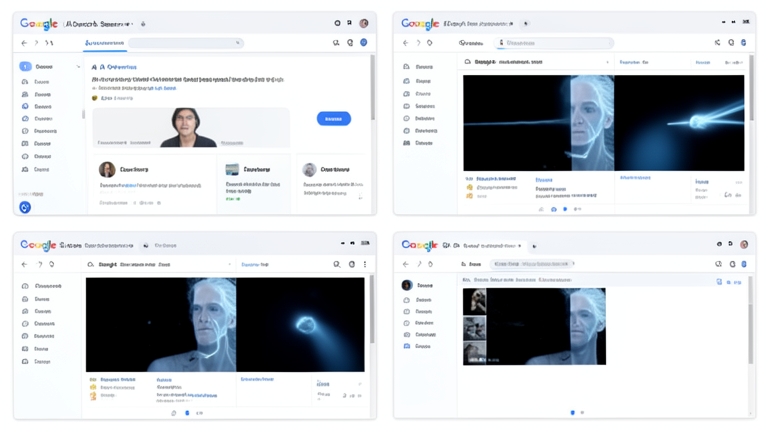
The experiment, which surfaced in late July 2025, was visible to a limited set of users searching for recipes. Instead of showing a traditional AI Overview composed entirely of text and cited links, Google displayed an AI-generated image that visually summarized the entire cooking process — from ingredient preparation through to the finished dish. The image was not a photograph of a real meal, but a synthetic illustration generated by Google’s AI models, designed to walk the searcher through each step of a recipe at a glance.
The feature was first flagged by the team at Inspired Taste, a recipe and food blog, who posted screenshots on X and voiced alarm at what they described as a direct attempt to replace the work of recipe creators. “This AIO is directly trying to replace creators who buy groceries for testing, photography, and filming recipe videos,” the Inspired Taste post read. “We also have conversations with our visitors who have questions. We are doing all of the work and Google is directly trying to over simplify everything and replace us with AIOs like this.”
The screenshots showed a multi-panel AI-generated image that depicted the sequence of cooking steps — chopping ingredients, mixing, heating, and plating — all rendered in a clean, instructional illustration style. The image appeared above the cited sources in the AI Overview, making it the most visually dominant element of the search result. For a user scanning quickly, the AI-generated image would have been the first and most memorable encounter with the recipe content.
Why publishers saw the experiment as an existential threat
The reaction from Inspired Taste was not isolated. The experiment tapped into a deep and growing anxiety among content publishers — particularly those in the recipe and food vertical — about Google’s trajectory with AI Overviews. For years, recipe sites have invested heavily in original photography, video production, recipe testing, and community engagement. A typical recipe post involves multiple rounds of cooking and testing, professional food styling, high-resolution photography, and often a companion video. All of that investment is designed to attract search traffic, which in turn supports the site through advertising, affiliate links, and subscriptions.
An AI-generated image that summarizes the recipe visually, without requiring the user to click through to the publisher’s site, threatens to sever that chain entirely. If a searcher can see the entire cooking process in a single AI-generated graphic, the incentive to visit the original site drops sharply. The concern is not merely theoretical. Studies of earlier AI Overview implementations have already shown measurable declines in click-through rates for certain query types, and recipe queries are among the most commercially important for a large ecosystem of independent and mid-sized publishers.
There was also a subtler but equally damaging risk identified by the Inspired Taste team: confusion about attribution. “There is also risk that a searcher might think that one of the websites cited in the AIO did the illustrations,” they wrote. “It is very confusing and extremely oversimplified.” In other words, even if Google cited the original recipe sources in the AI Overview, the presence of an AI-generated illustration could mislead users into believing that the image came from — or was endorsed by — the cited publisher. This could damage the publisher’s brand reputation if the AI-generated image contained inaccuracies or presented the recipe in a way that the original creator would not have approved.
Google’s clarification: the Nano Banana distinction
In his post confirming the end of the experiment, Robby Stein was careful to draw a distinction between this paused feature and another AI image capability that Google had announced previously. “This is not the Nano Banana feature we announced in July, which only triggers when users explicitly ask to generate an image,” Stein wrote. The Nano Banana feature, which Google announced in July 2025, allows users to generate custom AI images directly within AI Overviews when they explicitly request an image — for example, asking “show me a visual of how to fold a fitted sheet” or “generate an image of a healthy lunch plate.” That feature is opt-in on the user’s part and does not involve Google proactively inserting AI-generated images into search results unprompted.
The distinction is significant. The paused experiment represented a shift from reactive image generation (user asks, AI responds) to proactive image generation (Google decides an AI image improves the result and inserts it). The former is a utility feature that users can choose to engage with. The latter is a fundamental change in how Google presents information — one that directly competes with the visual content that publishers create to attract and retain their audience. Stein’s clarification suggests that Google is aware of the sensitivity around this boundary and is drawing a line, at least for now, on the proactive side of it.
But the fact that Google ran this experiment at all — even as a small test — signals that the company is actively exploring ways to integrate AI-generated visuals into the core search experience. The Nano Banana feature may be the publicly acceptable face of that effort, but the recipe experiment reveals where the company’s product instincts are heading.
How the experiment worked technically
While Google did not publish a detailed technical breakdown of the recipe image experiment, the implementation appears to have drawn on the same underlying generative AI infrastructure that powers the broader AI Overviews system. When a user submitted a recipe-related query — such as “how to make chocolate chip cookies” or “easy weeknight pasta recipe” — the system would identify that the query had a procedural or instructional intent. Instead of returning only a text summary, the system would generate a multi-step visual illustration that depicted the key stages of the recipe.
The generated image was not a simple photograph collage but an original synthetic illustration. The AI model was likely trained on a large corpus of recipe images, cooking illustrations, and step-by-step visual guides. The model would then generate a composite image that showed, for example, ingredients on a cutting board, a mixing bowl with batter, a baking sheet in the oven, and a finished plate of cookies — all in a single coherent visual layout. The goal was to give the user an at-a-glance understanding of the recipe’s workflow without having to read through paragraphs of text or scroll through multiple photographs.
The experiment appeared only for a subset of recipe queries and a small percentage of users, consistent with Google’s typical approach of testing features gradually before wider rollout. But even at small scale, the experiment was visible enough to attract attention from publishers and industry observers, who recognized its implications immediately.
Why SEOs and digital marketers should pay attention
The paused experiment carries lessons that extend well beyond the recipe vertical. For anyone involved in search engine optimization, content marketing, or digital publishing, the episode is a case study in how Google is thinking about the relationship between AI-generated content and publisher-supplied content.
The core dynamic is straightforward: every piece of information that Google can generate or summarize internally — whether text, image, or video — is a piece of information that a user does not need to click through to a third-party site to obtain. For informational and procedural queries, the risk of traffic displacement is highest. Recipe queries are a textbook example: they are highly structured, procedurally repetitive, and well-suited to automated summarization. If Google can generate a visual recipe summary from the text of a recipe page, it has effectively extracted the most valuable visual asset of that page — the step-by-step cooking guide — and served it directly in the search result.
For publishers, the strategic implication is clear: reliance on Google search traffic as a primary distribution channel carries increasing risk. Diversification — through email lists, social media, direct traffic, membership models, and other channels — is no longer optional. Publishers who have built their businesses on Google search visibility need to assess how vulnerable their content types are to AI-driven summarization and plan accordingly.
For SEO professionals, the episode reinforces the importance of monitoring Google’s experimental features closely. Features that start as small tests can expand rapidly if Google determines that they improve user engagement metrics. The fact that Google ran this experiment, even briefly, suggests that internal product teams are pushing for deeper integration of generative AI into the search results page. SEO strategies that worked in 2024 may not work in 2026 if AI Overviews begin to include generated images, generated video summaries, or generated step-by-step interactive guides.
The response from the publishing community
The immediate response from the publisher who spotted the experiment was relief, but the relief was tempered by awareness that the underlying pressure has not gone away. Adam from Inspired Taste responded directly to Stein’s post confirming the end of the experiment: “We are extremely happy to hear that this experiment is no longer running.”
The comment captured the mood of many in the publishing community — grateful for the reversal, but wary of what might come next. The experiment may have been paused, but the technology that enabled it continues to improve. Google’s generative AI capabilities are advancing rapidly, and the company has made no secret of its ambition to integrate AI more deeply into Search. The recipe experiment may be dead, but the product direction that produced it is still very much alive.
What is an AI Overview and how does it relate to AI-generated images?
An AI Overview is a search result format that Google began rolling out broadly in 2024. When a user submits a query that the system determines would benefit from a synthesized answer, Google generates a summary using its Gemini AI model, drawing on information from multiple web sources. The AI Overview appears at the top of the search results page, above the traditional organic listings, and includes citations to the sources that informed the summary. The feature is designed to answer complex or multi-step questions more directly than a list of blue links can.
AI-generated images within AI Overviews are an extension of that concept. Instead of limiting the AI’s output to text, the system generates visual content — illustrations, diagrams, or composite images — that supplement or replace the text summary. The now-paused recipe experiment was Google’s first known attempt to proactively insert AI-generated images into AI Overviews without an explicit user request for an image. The Nano Banana feature, by contrast, requires the user to explicitly ask for an image, making it a reactive rather than proactive use of generative AI.
The timeline of the experiment and its shutdown
The experiment was first publicly documented on Friday, July 25, 2025, when Inspired Taste posted screenshots and commentary on X. Over the following weekend, the story spread through search industry media and social platforms, drawing reactions from publishers, SEOs, and digital marketing professionals. By Monday, July 28, Google’s Robby Stein had responded publicly, confirming that the experiment had been shut down.
The speed of Google’s response is noteworthy. In previous instances of controversial Search features — such as early versions of AI Overviews that generated inaccurate or misleading answers — Google took weeks or months to make significant adjustments. The rapid shutdown of this experiment suggests that the internal feedback loop on AI-generated imagery is tighter, or that the company anticipated the negative reaction from publishers and was prepared to pull the feature quickly if it generated backlash.
Adam from Inspired Taste, who had been one of the most vocal critics of the experiment, responded to Stein’s announcement with a straightforward statement: “We are extremely happy to hear that this experiment is no longer running.” The statement captured the relief of a publisher community that had seen a direct threat to its business model appear and disappear in the span of a few days.
What this means for recipe publishers and content creators
For recipe publishers specifically, the shutdown of this experiment is a temporary reprieve, not a permanent victory. The underlying technology that enabled the experiment is still in place, and Google’s incentive to reduce friction for users — by providing answers directly in Search — is structural, not experimental. Recipe queries are among the most common and commercially valuable query types on the web, and Google has every reason to continue exploring ways to serve those queries more efficiently.
The question for publishers is not whether Google will try again, but when — and in what form. The next iteration could involve different visual formats, different query types, or different integration points within the search results page. It could also involve partnerships or licensing arrangements, where Google compensates publishers for the use of their content in AI-generated summaries and images. Such arrangements already exist in the news industry, where Google has signed licensing deals with major publishers for the use of news content in AI-powered products.
For individual content creators, the strategic takeaway is to build direct relationships with audiences that are not mediated by Google Search. Email newsletters, membership communities, and social media channels that operate independently of search traffic provide a buffer against changes in Google’s product direction. Creators who rely exclusively on search traffic for their business are exposed to the full force of Google’s AI experiments. Those who diversify their distribution channels have more room to adapt.
Industry reaction and the broader conversation about AI and search
The reaction to the paused experiment reflects a broader tension in the search industry. Google’s mission is to organize the world’s information and make it universally accessible and useful. AI-generated summaries and images are a logical extension of that mission — they make information more immediately accessible, reducing the time and effort required for users to get what they need. But the same technology that makes information more accessible for users also makes it harder for publishers to capture the value of the content they produce.
This tension is not new. It has been present since the earliest days of search, when Google’s organic results began directing traffic away from homepage portals and toward individual pages. But AI Overviews represent a qualitative shift. Where traditional search results pointed users to external sites, AI Overviews attempt to answer the question directly within the search page itself. The recipe image experiment took that logic one step further: not just answering in text, but providing a visual synthesis that made the original content almost irrelevant to the user’s immediate need.
For publishers, the challenge is to demonstrate the value of the full content experience — not just the information itself, but the context, the expertise, the photography, the community, and the trust that comes from a human-created resource. AI Overviews can summarize information, but they cannot replicate the experience of engaging with a well-crafted recipe post that includes tips from the author, reader comments, variations, and personal stories. The question is whether search users will continue to value those things enough to click through, or whether the convenience of an AI-generated answer will be sufficient for most queries.
Looking forward: Google’s AI image strategy beyond the recipe test
The shutdown of the recipe experiment does not mean Google is abandoning AI-generated images in Search. On the contrary, the Nano Banana feature — which allows users to generate images on request — remains active and will likely expand over time. The company is also investing heavily in generative AI for other products, including Google Images, Google Ads, and Google Workspace. The ability to generate high-quality images from text prompts is a core capability that Google will integrate into as many surfaces as it can.
What the recipe experiment shows is that Google is still calibrating the line between helpful and extractive when it comes to AI-generated visuals. The proactive insertion of AI images into search results crosses a line that even Google appears to recognize as too aggressive — at least for now. But the line is likely to shift as the technology improves, as user expectations evolve, and as competitive pressure from other AI-powered search engines — such as Perplexity, ChatGPT Search, and others — intensifies.
For the search industry, the episode is a reminder that Google’s product decisions are shaped by multiple forces: user needs, publisher relationships, competitive dynamics, and internal product philosophies. The recipe image experiment was a test of one possible future. It was paused, but the future it pointed toward — a Google Search that generates its own visual content rather than pointing users to visual content created by others — remains a plausible direction for the company over the medium to long term.
Publishers, SEOs, and digital marketers who understand that direction and plan accordingly will be better positioned to navigate whatever comes next. The experiment may be over, but the underlying trend — the gradual replacement of third-party content with AI-generated alternatives within search results — is not going away. It is accelerating.