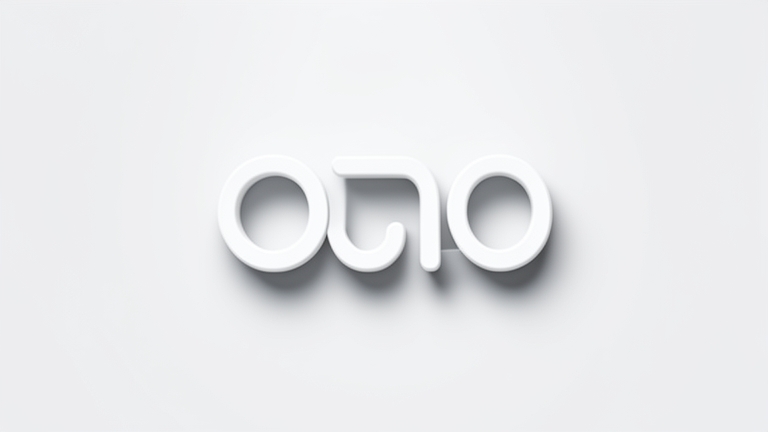
Instagram has long been the standard-bearer for visual culture on the internet, a platform where the aesthetic of a profile grid is as important as the content within it. So it came as a genuine shock this week when the company quietly rolled out a new wordmark — the stylized “Instagram” logotype that sits at the top of every profile — and replaced a piece of design language that had become universally recognizable with something that, frankly, looks like a typographical error. The new Instagram wordmark has effectively abandoned the iconic, cursive-like script that the brand had used for over a decade in favor of a compressed, nearly illegible sans-serif treatment. It no longer looks like it spells “Instagram.” It looks like a ransom note clipped from a tech blog. And the most confounding part? There appears to be no compelling reason for Instagram to have done this.
The Wordmark That Defined a Decade Gets a Brutalist Overhaul
To understand the magnitude of this decision, one must first appreciate what Instagram was willing to discard. The old wordmark, introduced alongside the famous flat-design logo overhaul in 2016, was a custom-drawn logotype that walked a tight line between nostalgic, handwritten warmth and corporate digital polish. It was playful. It was distinctive. You could see it from across a crowded subway car and know instantly that someone was scrolling through their feed. It was, by any standard of brand recognition, a success.
The new design, by contrast, appears to have been generated by a machine that was fed a diet of German autobahn signage and developer conference badging. The lettering is condensed to the point of being cramped. The “G” and the “R” jostle for space like commuters on a rush-hour train. The “A” loses its defining character. The overall impression is not of a refined brand evolution, but of a company that actively chose to make its name harder to read. The Verge first reported on the rollout, confirming that Instagram had indeed deployed the new design across its platform this week, and the immediate public reaction has ranged from confusion to outright hostility.
Why would a platform so obsessed with visual fidelity, with typography, with the subtle gradients of a sunset photo, willingly abandon a wordmark that was both functional and beloved? The answer likely lies in Instagram’s long-running identity crisis. The platform is no longer a simple photo-sharing app. It is a marketplace, a video hub (courtesy of Reels), a messaging service, and an AI training ground. Fitting the word “Instagram” into smaller and smaller real estate — a story button, a tab bar icon, a tiny watermark — may have forced the design team to compress the old script beyond its breaking point.
What Instagram’s New Wordmark Actually Looks Like — And Why It Fails
The core critique leveled at the new wordmark is not one of taste, but of legibility. The new logotype uses a geometric sans-serif typeface — likely a heavily modified version of a commercial font — that has been horizontally scaled. The kerning, or the space between individual letters, is inconsistent. The “st” ligature, which in the old script felt like a natural flick of the pen, now looks like an accidental collision between two separate characters. Readers who have spent years parsing the old cursive instinctively slow down when they see the new mark, because their brain no longer recognizes it as the word “Instagram.”
For a platform whose entire business model depends on rapid, frictionless user engagement, this is a catastrophic flaw. Users scan app icons and labels in milliseconds. If the wordmark requires even a half-second of decoding, the brand equity begins to erode. The redesign feels like an answer to a question nobody asked: “How can we make our name look more like a file folder on Windows 95?”
Beyond the Wordmark: A Week of Generative AI Drama and Digital Trust
While the typography world was still reeling from Instagram’s announcement, the wider technology landscape continued to churn with developments that speak to an even larger upheaval: the integration, regulation, and monetization of artificial intelligence. The same week that Instagram chose style over substance in its branding, the industry made significant moves on content authentication, corporate policy, and the very definition of what constitutes “real” media.
Anthropic’s “Watermark” for AI Text: A Shot at Solving The Unattributable
One of the most technically significant stories of the week comes from Anthropic, the AI company behind the Claude model family. Anthropic has unveiled a new method for “watermarking” AI-generated text. This is a crucial development in the ongoing battle to maintain trust in digital information. Unlike watermarks on images, which are visible or embedded in pixel data, watermarking text is extraordinarily difficult. Text is discrete, lossy, and easily paraphrased. A single synonym swap can break most existing detection schemes. Anthropic’s technique, as reported by The Verge, appears to operate at the level of statistical word choice, subtly biasing the model’s token selection in a cryptographically detectable pattern. The goal is straightforward: to create a reliable tool for identifying whether a piece of text was generated by an AI system, even if it has been lightly edited. This is one of the most promising technical solutions to the problem of AI attribution that has emerged this year, and it directly addresses the growing anxiety around the use of AI-generated content in journalism, academia, and marketing.
How does Anthropic’s AI watermark work? The system modifies the statistical patterns of word choice within the AI’s output. The model is nudged to select words that fit a specific, secret “pattern” or “hash.” A separate detection tool can then analyze a block of text and check if the statistical distribution of words matches that pattern. If the match is strong enough, it is highly likely the text was generated by the specific model.
The implications for enterprise adoption are enormous. Companies that have resisted using generative AI for public-facing content due to fears of brand dilution or liability may now have a mechanism for proving or verifying the source of that content. It does not stop a bad actor from using a different model or heavily rewriting the output, but it raises the bar for sophisticated fraud.
Apple’s “Stamp of Reality” and the Metadata War
Simultaneously, Apple has been quietly advancing its own standard for digital provenance. The company has introduced a “stamp of reality” for photos taken on iPhones — a metadata tag that cryptographically signs the image data at the moment of capture. This is not a tool for making photos look more realistic; it is a tool for verifying that a photo was taken by a specific device at a specific time, without alteration. As deepfakes and AI-generated imagery proliferate, the ability to certify “camera origin” is becoming an essential security feature. Apple’s move, embedded in its reference image system, positions the iPhone as the gold standard for verifiable photography, a significant competitive advantage in a world where seeing is no longer believing.
Spotify’s War on Artificial Artists (But Not Artificial Music)
In the music industry, Spotify has announced a crackdown on “AI artists” — but with a crucial loophole that has the industry buzzing. The streaming giant is clamping down on automated accounts and fake listeners that generate royalties from low-quality, algorithmically-produced tracks. However, the platform is not banning the use of AI in music production itself. A major artist who uses an AI tool to generate a vocal track or a chord progression is still welcome; a bot that pumps out 500 tracks a day with the express purpose of gaming the royalty system is not. This distinction is important. Spotify is attempting to police *intent* and *scale*, not *tools*. The label, as reported by The Verge, is a pragmatic response to the reality that AI-assisted music is now a permanent fixture of the industry. The challenge will be enforcement. Distinguishing between a legitimate producer using AI for inspiration and a network of spam accounts is a data science problem that Spotify is now betting its payout structure on solving.
The Guitar Industry and the Suno Problem
Chaos in the guitar industry is also making headlines. The traditional instrument manufacturing sector, which has weathered the shift from rock to hip-hop and from living rooms to DAWs, is now confronting a new existential threat: AI music generation platforms like Suno. These platforms can generate a complete song, including vocals and instrumentation, from a simple text prompt. For a century, the guitar was the primary tool for musical creation for millions of amateurs. If a text prompt can generate a guitar riff that sounds better than what a beginner can play in three months, the incentive to buy a guitar — and learn to play it — erodes. This is not merely a market trend; it is a structural shift in how human creativity interfaces with technology. Instrument manufacturers are being forced to reposition their products as tools for performance and lived experience, rather than tools for pure creation.
The Lightning Round: Carr, ChatGPT, Flock, and the Vanishing Cheap Phone
Finally, the week’s news cycle closed out with a rapid-fire series of announcements that, taken together, paint a picture of a digital ecosystem under regulatory, competitive, and economic pressure.
Brendan Carr and the FCC’s Next Phase
FCC Commissioner Brendan Carr has been active on the social platform X, signaling a more aggressive posture on media regulation and spectrum management. His statements suggest a focus on streamlining infrastructure deployment while maintaining a hawkish eye on big tech platforms. For the average consumer, this translates to potential changes in how quickly 5G and future networks expand, and how much oversight the government exerts over content moderation by carriers.

ChatGPT Crosses a Billion Users — With a Catch
ChatGPT has officially crossed one billion users. This staggering figure, reported via The Verge, cements OpenAI as the dominant consumer-facing AI company on the planet. The number, however, is a gross tally of registered users, not a monthly active user count. While it demonstrates immense interest and trial, the conversion to daily, paying users remains the metric that Wall Street and rivals like Google and Anthropic are watching. One billion registrations signals a platform that has saturated the curiosity market; the next billion will require genuine utility that replaces existing products.
Flock Audits Its Own Data Retention
Flock, the controversial security camera company whose systems are used by police departments across the United States, has announced it is auditing its own data retention policies. This is a direct response to growing public scrutiny over the privacy implications of automated license plate readers and surveillance camera networks. The company is seeking to balance the law enforcement value of its data with the civil liberties concerns of the communities it monitors. The outcome of this audit will likely set a precedent for how privately-owned surveillance networks handle data in the future.
The Sub-$100 Phone Market Is Dying — And That Matters
A less flashy but profoundly impactful story from the past week concerns the disappearance of the sub-$100 smartphone market. As component costs rise and software requirements become more demanding, phone manufacturers are abandoning the ultra-low-cost segment. This has serious implications for the digital divide. For millions of people globally — and a significant population in the United States — a smartphone under $100 was the only gateway to the internet. As these devices vanish, the cost of digital entry rises, pushing connectivity further out of reach for low-income households. This is a market failure that will almost certainly require a policy response, whether through subsidized devices, mandatory low-cost tiers, or alternative connectivity solutions.
Instagram’s decision to swap a readable wordmark for an unreadable one may seem trivial compared to the tectonic shifts in AI regulation, content authenticity, and market economics. But it is a symptom of the same disease: a tech industry that is moving so fast it has forgotten how to read its own signage. The new wordmark is a misfire, a design failure that prioritizes abstract corporate minimalism over human usability. It is a tell. It suggests that Instagram, for all its billions of users, is no longer sure what it wants to look like. In a week defined by efforts to make the fake real, the hidden visible, and the chaotic controllable, Instagram chose to make its own name a little harder to see. That is not a subtle design choice. It is a strategic error.