The upcoming open-world title from Pearl Abyss has become one of the most anticipated—and misunderstood—releases on the horizon. With its stunning visuals, massive scale, and deep combat systems, many are asking a critical question: Is Crimson Desert an RPG? While early impressions and trailers might suggest a traditional role-playing game in the vein of The Witcher 3, the reality is far more nuanced. Crimson Desert is, at its core, a story-driven action-adventure game that borrows specific elements from the RPG genre, but prioritizes skill-based, cinematic combat above statistical character progression. To truly understand what kind of experience awaits, we must dissect its unique approach to gameplay, exploration, and character growth.
The “Nobody” Philosophy: Progression Through Mastery, Not Levels
One of the most refreshing and misunderstood aspects of Crimson Desert is its approach to character growth. In a traditional RPG, you start as a weak character and become powerful by accumulating experience points, leveling up, and allocating stat points to make your numbers bigger. Crimson Desert throws this convention out the window. There are no character levels. There is no grinding for experience to make your sword hit harder. Instead, your growth is intrinsically tied to your own skill as a player and the knowledge you acquire throughout the world. You begin the game as a “nobody.” Your protagonist, Cliff, has lost his clan, his purpose, and quite frankly, his combat edge. The sword swings are slow, the combos are limited, and even basic encounters feel dangerous. This is a deliberate design choice to ground the player in the reality of the narrative and to emphasize that power in this world is earned through practice and discovery, not through a menu screen.

This philosophy extends into how you acquire new abilities. Forget simply leveling up and spending a skill point on a glowing new attack. In Crimson Desert, you learn by observing the world around you. If an enemy uses a devastating spinning slash, you can watch, learn, and eventually add that move to your own arsenal. If you stumble upon a forgotten tome in a dungeon, it might teach you a new fighting stance or a survival technique. This creates a dynamic where exploration is not just about finding better loot, but about finding knowledge. It rewards the curious player who strays from the critical path, turning the entire continent of Pywel into a living school of combat and survival. This system ensures that your character’s growth feels organic and earned, directly reflecting the time you’ve invested in understanding the game’s world and its mechanics, rather than just the time you’ve spent killing respawning enemies.
Furthermore, this “mastery over numbers” approach creates a unique sense of authenticity in combat. When you finally execute a flawless 20-hit combo against a massive boss, it isn’t because your stats finally surpassed a hidden threshold; it’s because you, the player, have genuinely improved. You’ve learned the tells, you’ve mastered the timing, and you’ve assembled a kit of abilities that suits your playstyle. This makes every victory deeply satisfying. The game even reinforces this by allowing you to seamlessly switch between three distinct protagonists—Cliff, Orca, and Damiane—each with their own weapon sets and combat rhythms. Mastering Cliff’s sword and shield play requires a different skillset than mastering Damiane’s magical greatsword. This variety ensures that the combat never grows stale and that the “progression” feels fresh every time you switch characters, further cementing the idea that the real progression lies in the player’s hands, not a character sheet.
A World That Demands Respect: Exploration Without Handholding
The continent of Pywel is not just a backdrop for Crimson Desert; it is a character in its own right, and arguably the most imposing one you will face. The developers at Pearl Abyss have constructed a world that is staggering in scale—so massive, in fact, that traversing it from one end to the other on foot would take you over eight hours of real time, assuming you encountered no enemies and stopped for nothing. This is not an exaggeration for marketing purposes; it is a design statement. In an era where many open-world games compress their maps to fit more content into a smaller space, Crimson Desert dares to let its world breathe. The empty spaces between points of interest are intentional, designed to foster a sense of genuine journey and isolation. You are not a demigod teleporting between quest markers; you are a wanderer crossing vast plains, dense forests, and treacherous mountain passes, and the world feels infinitely larger because of it.
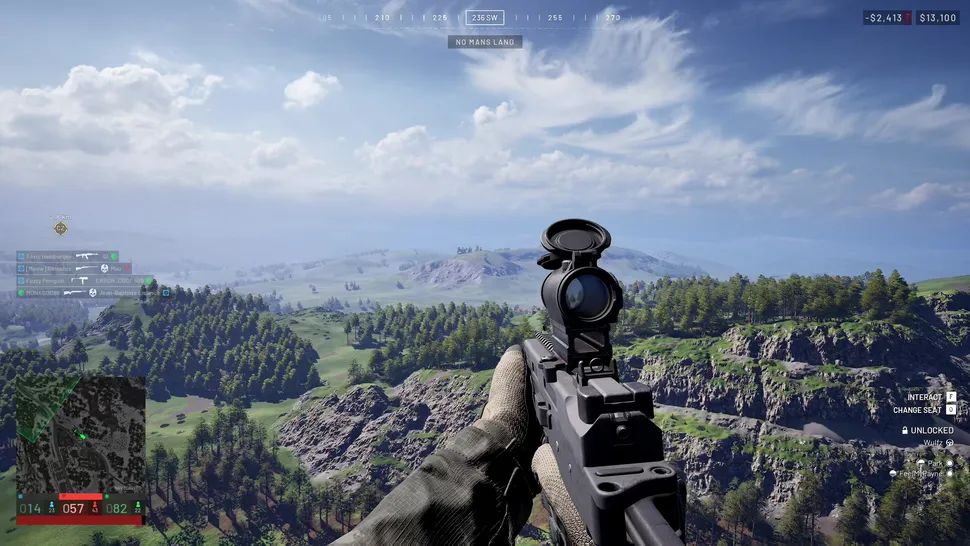
This scale is matched by an astonishing diversity of biomes, each with its own identity, culture, and dangers. Your journey will take you through the familiar medieval landscapes of Hernand, with its rolling rivers and bustling cities, before pushing you north to the frozen peaks of Pailon, where woolly mammoths and blizzards await. Further still lie the politically charged hills of Deminis, the steampunk-infused technological marvels of Delsaid, and finally, the namesake itself: the Crimson Desert, a sprawling sea of sand hiding ancient secrets and colossal beasts. Each region feels like a distinct nation, with its own architectural styles, enemy factions, and even gameplay mechanics. In Delsaid, you might face half-machine abominations and find jetpacks, while in the northern mountains, survival against the cold becomes as important as combat. This variety ensures that the sense of discovery never wanes, even after dozens of hours of play.
However, with a world this vast, the developers have had to rethink traditional navigation. Fast travel exists, and for many players, it will be a necessity. But the most exhilarating way to see Pywel is by mastering its various mounts and vehicles. Early on, you will rely on your trusty horse, a companion that feels weighty and real as you gallop across the plains. Later, you can take to the rivers by canoe, or take to the skies in a hot air balloon, gaining a new perspective on the landscapes below. The ultimate prize, however, is the dragon. Yes, you can eventually tame and ride a dragon, soaring over the entire continent in a fraction of the time it took you to cross it on foot. But this freedom is earned, not given. The dragon is a late-game reward, a symbol of your journey and a testament to the idea that in Crimson Desert, the world doesn’t owe you anything. You have to earn the right to conquer it.
Building More Than a Story: The Return of the Greymanes
While the core of Crimson Desert revolves around action and exploration, the emotional and mechanical heart of the game lies in a feature that many players might not expect: base-building and clan management. The narrative premise is simple yet powerful. Cliff, your protagonist, is not just trying to survive; he is trying to rebuild. His clan, the Greymanes, was a band of mercenaries who were ambushed and scattered to the winds by the rival Black Bears. Your journey across Pywel is not just about revenge or discovery; it is about reunion. Scattered across the five regions are your former brothers and sisters, and finding them and convincing them to return to your cause is one of the primary objectives of the game. This turns the classic open-world formula on its head. You are not just a hero completing tasks for strangers; you are a leader rebuilding a family.
Once you begin gathering your scattered clan members, the game opens up into a surprisingly deep settlement management system. You are given a piece of land, a ruined encampment that will serve as the new home for the Greymanes. From here, you become part mayor, part architect, and part quartermaster. You can construct various buildings, from blacksmiths to train your gear to farms that provide resources. You can recruit new NPCs to populate your village, each with their own skills and roles. As your reputation grows and you complete quests for the various factions of Pywel, more people will flock to your banner, bringing new opportunities and new services. This creates a satisfying feedback loop: you explore the world to find people and resources, you bring them back to build up your village, and your village, in turn, provides you with better gear, new quests, and a tangible sense of progress that exists outside of combat.
This system also introduces a layer of strategic resource management that adds surprising depth. Once your village is established, you don’t have to gather every resource yourself. You can assign your clan members to tasks, sending them out to hunt for food, mine for ore, or even go on expeditions to retrieve rare items. You become the leader who delegates, turning the Greymanes from a scattered group of survivors into a functioning, self-sustaining operation. This management layer ties directly into the world’s political landscape. As your village grows, you will be forced to navigate alliances and rivalries with the established powers of Pywel. You might need to pledge support to a faction to gain access to rare trade goods, or you might find yourself at war with a neighboring territory that sees your growing strength as a threat. It transforms Crimson Desert from a simple action game into a living, breathing simulation where your choices as a leader have consequences that ripple across the entire continent
Three Paths, One Destiny: The Playable Cast of Crimson Desert
One of the most intriguing narrative and mechanical decisions in Crimson Desert is the inclusion of multiple playable protagonists. While Cliff serves as the emotional core and the primary driver of the Greymanes’ resurrection story, he is not the only character you will command. As the story unfolds, you gain access to Orca and Damiane, two companions with their own motivations, their own combat styles, and their own perspectives on the events shaking Pywel. This is not merely a cosmetic swap or a simple character switch for the sake of variety. Each protagonist offers a fundamentally different way to experience the game, both in terms of gameplay and narrative context. The developers have crafted three distinct lenses through which to view the world, ensuring that switching characters feels like discovering a new game hidden within the same sprawling continent.
Orca is the embodiment of raw, unbridled power. Where Cliff relies on precision and technique, Orca thrives on destruction and impact. His combat style is built around heavy weapons—massive axes, devastating hammers, and brutal mauls that can send enemies flying across the battlefield. Playing as Orca fundamentally changes your approach to encounters. You are not dancing around enemies, waiting for an opening; you are the opening. You charge headfirst into crowds, swinging your weapon in wide arcs, smashing the ground to create shockwaves, and grappling foes with your bare hands. His animations are slower but weightier, each strike carrying the tangible force of a man who has turned his body into a weapon. For players who prefer a more aggressive, up-close-and-personal style, Orca offers a power fantasy that is both satisfying and strategically distinct, forcing you to master positioning and timing to land those devastating, fight-ending blows.
Damiane, by contrast, occupies the opposite end of the combat spectrum. She is a fencer, a duelist, and a wielder of magical greatswords that would make even the most extravagant anime protagonist jealous. Her gameplay is defined by speed, elegance, and elemental flair. Where Orca smashes, Damiane slices. Her combos are rapid, fluid, and often incorporate magical enhancements, allowing her to coat her blade in fire or ice to exploit enemy weaknesses. She wields kiffles—massive swords that defy physics with their size—yet she moves with the grace of a dancer. Her playstyle rewards players who can think quickly, chaining together light and heavy attacks into extended aerial combos that keep enemies staggered and unable to respond. Beyond the combat, Damiane also represents a different narrative angle. While Cliff is driven by duty and Orca by loyalty, Damiane often seems driven by curiosity and a connection to the more mystical elements of Pywel’s lore. Playing as her reveals secrets about the world’s magical underpinnings, the floating Abysses, and the supernatural forces that threaten to consume the continent, adding a layer of mystery that the other protagonists’ stories might only touch upon.
Feet on the Ground: Performance, Denuvo, and The Console Question
For all its ambition and breathtaking scope, Crimson Desert is not without its share of concerns, and responsible journalism demands that we address them with honesty and transparency. The elephant in the room, particularly for console players, is performance. As of this writing, extensive gameplay footage of the PlayStation 5 base version and the Xbox Series X|S versions has not been shown to the public. The only console footage that has been analyzed in depth comes from the PlayStation 5 Pro, and even that analysis, conducted by reputable outlets like Digital Foundry, has revealed a game that, while impressive, is not without its technical blemishes. There are bugs—visual glitches, occasional frame pacing issues, and instances of pop-in that remind us we are playing on finite hardware. More concerning are reports of animation bugs where characters can become stuck in geometry or fail to transition properly between actions. These are the kinds of issues that can break immersion and, in worst-case scenarios, impede progress. The developers have not yet demonstrated that the base consoles can handle the game’s sheer scale with the same fidelity as high-end PCs or the Pro model, and this silence is, in itself, a reason for caution.

The conversation around performance inevitably leads to the other “P” word: Denuvo. The controversial anti-tamper technology has been confirmed for the PC version of Crimson Desert, and historically, its inclusion has been a mixed bag. In some titles, it launches without issue and fades into the background. In others, it has been blamed for stuttering, increased load times, and degraded performance, particularly in the first weeks after release. The developers have stated that all review code and pre-release testing has been conducted with Denuvo active, and that, so far, it has not presented a problem. The game is reportedly running smoothly and maintaining expected performance targets. However, the history of PC gaming is littered with titles that ran perfectly in controlled testing environments only to suffer from Denuvo-related issues once exposed to the vast array of player hardware configurations. It is another variable in an already complex equation, and while optimism is warranted, blind faith is not. For PC players, the wisest course of action may be to wait for the first wave of post-launch technical analyses from trusted sources before committing.
So, where does this leave the prospective player? The answer, unsatisfying as it may be, is that context matters. If you are a PC player with a high-end rig and a tolerance for potential Day 1 turbulence in exchange for what appears to be a landmark action-adventure experience, the hype may well be justified. However, for console players—particularly those on base PS5 and Xbox Series X|S—the message from the developers has been delivered through their silence: wait. Wait for the footage. Wait for the independent reviews that run the game on the hardware you actually own. Wait to see if the bugs are the charming kind you can laugh off or the frustrating kind that sour the experience. Crimson Desert has the potential to be something truly special, a game that marries the depth of a simulation with the thrill of a character action title. But potential is not a promise. The smart money is on patience, on letting the first wave of players test the waters, and on going in with eyes wide open. The game launches on the 19th, with pre-downloads starting on the 17th at 7 PM. By the time you’re ready to hit that purchase button, the truth about its performance should finally be known. Until then, keep your hype in check, your expectations measured, and your eyes on the footage that actually matters: yours.
Thank you for reading! This article covered the core question of Crimson Desert’s genre identity, its mastery-based progression, the massive open world, the base-building mechanics, the three protagonists, and the crucial technical considerations. If you enjoyed this deep dive, be sure to check back for more coverage, tips, and secrets as we approach the launch date.
Is Crimson Desert an RPG? Action Gameplay and Mechanics Explained – FAQ
Is Crimson Desert an RPG?
No, Crimson Desert is not a traditional RPG. It is best described as a story-driven action-adventure game. While it incorporates some elements commonly found in RPGs—such as character customization, skill trees, and side quests—it lacks core RPG mechanics like character leveling and stat-based progression. Your growth is determined by your skill as a player and the abilities you learn by exploring the world, not by grinding for experience points.
What is the gameplay like in Crimson Desert?
The gameplay is built around fast-paced, skill-based action combat. Players can execute complex combos using light and heavy attacks, dodges, parries, and aerial maneuvers. The game features three playable protagonists, each with unique weapon sets and fighting styles. Exploration is also a major focus, with a massive open world to traverse on foot, horseback, canoe, hot air balloon, and even dragons.
How big is the Crimson Desert map?
The game’s continent, Pywel, is exceptionally large. The developers have stated that traversing the map from one end to the other on foot would take over eight hours of real-time travel, assuming no combat or interruptions. The world is divided into five distinct regions, each with its own biome, culture, and enemies.
How many playable characters are in Crimson Desert?
There are three primary playable protagonists: Cliff, Orca, and Damiane. Cliff is an all-rounder who uses swords, shields, and bows. Orca is a powerhouse who wields heavy weapons like axes and hammers. Damiane is a fast, agile fighter who uses magical greatswords and rapier-style weapons. Each character offers a distinct gameplay experience and narrative perspective.
Does Crimson Desert have multiplayer or co-op?
As of the latest information, Crimson Desert is primarily a single-player experience. While it was originally conceived as a multiplayer game during its early development, the focus has shifted to a narrative-driven solo campaign. There is currently no confirmed co-op or multiplayer mode at launch.
Can you build a base or village in Crimson Desert?
Yes, base-building and clan management are core features of the game. As you reunite scattered members of your clan, the Greymanes, you can construct and upgrade a village. This settlement serves as a hub where you can recruit NPCs, craft items, manage resources, and send clan members on missions to gather materials.
What are the system requirements for Crimson Desert on PC?
Pearl Abyss has not yet released the final official system requirements. However, given the game’s graphical fidelity and the use of the company’s proprietary engine, it is expected to require a relatively powerful PC for high settings. Players should monitor official channels for the confirmed specifications closer to the launch date.
Will Crimson Desert have Denuvo anti-tamper software?
Yes, the PC version of Crimson Desert will include Denuvo anti-tamper technology. The developers have stated that all pre-release testing has been conducted with Denuvo active and that it has not negatively impacted performance. However, some players remain cautious due to the software’s mixed history in other titles.
How will Crimson Desert perform on PlayStation 5 and Xbox Series X?
Performance on base PS5 and Xbox Series X consoles has not been extensively shown. Footage and analysis have primarily focused on high-end PCs and the PlayStation 5 Pro. Potential buyers on base consoles are advised to wait for independent reviews and gameplay footage running on their specific hardware before purchasing.
When is the release date for Crimson Desert?
Crimson Desert is scheduled to launch on December 19th. Pre-downloads will be available starting on December 17th at 7 PM (local time varies by region).