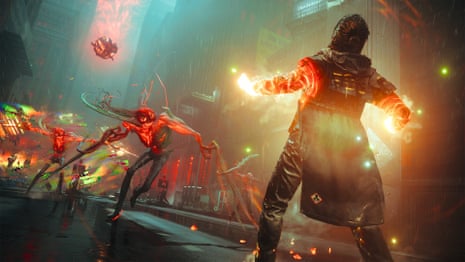
Fireshine Games’ latest roguelite release, ITER-8, enters a crowded market with notable publisher backing but emerges as a title that fails to distinguish itself from genre heavyweights. The game, which attempts to blend procedural generation with strategic combat, stumbles on fundamental design elements that leave experienced roguelite players wanting more. While the concept shows initial promise, execution falters across multiple gameplay dimensions, creating an experience that feels more like a prototype than a polished product.
Initial Impressions and Core Gameplay Loop
Upon launching ITER-8, players are greeted with a minimalist interface and clean visual presentation that suggests a focus on gameplay over spectacle. The initial tutorial introduces basic mechanics familiar to roguelite enthusiasts: procedurally generated levels, permadeath consequences, and incremental progression systems that carry over between runs. The premise centers on controlling a modular spacecraft navigating through hostile sectors of space, with players making strategic decisions about resource allocation, enemy engagement, and upgrade paths.
The fundamental loop follows established roguelite conventions: complete a room, defeat enemies, collect resources, choose upgrades, and proceed to the next challenge. ITER-8’s twist comes in the form of its ship customization system, which allows players to swap out various modules between encounters. This system theoretically enables adaptive strategies based on discovered components and encountered threats, but in practice, it suffers from implementation issues that undermine its potential.
Combat Mechanics and Enemy Design
Combat represents ITER-8’s most significant weakness, with controls that feel unresponsive and enemy patterns that lack compelling design. The ship’s movement has a noticeable delay between input and action, creating frustration during precise maneuvering situations. Weapon systems, while visually distinct, fail to provide satisfying feedback when striking targets, with impact effects that feel disconnected from the actual damage being dealt.
Enemy variety appears limited during early playthroughs, with most adversaries employing simple charge or shoot patterns that become predictable within the first few hours. The difficulty curve seems inconsistent, with sudden spikes that feel artificial rather than earned through clever enemy combinations or environmental challenges. Boss encounters, typically a highlight in successful roguelites, feel particularly underdeveloped, with attack patterns that repeat too frequently and health pools that encourage tedious attrition rather than skillful play.
Progression Systems and Meta-Game Elements
Where ITER-8 attempts to innovate is in its meta-progression systems, which allow players to unlock permanent upgrades between runs. These include new ship modules, starting bonuses, and special abilities that theoretically enable deeper strategies in subsequent attempts. Unfortunately, the implementation feels unbalanced, with certain upgrades providing disproportionately powerful advantages while others offer negligible benefits.
The game’s economy system, which governs resource acquisition and spending, suffers from similar balance issues. Some resources become abundant too quickly, while others remain frustratingly scarce throughout multiple playthroughs. This imbalance undermines the strategic decision-making that forms the core appeal of the genre, as optimal paths become obvious rather than presenting meaningful trade-offs.
Visual Presentation and Technical Performance
ITER-8 adopts a clean, functional aesthetic with a color palette dominated by blues, purples, and metallic accents. The visual style prioritizes readability during combat, with enemy projectiles clearly distinguished from player attacks and environmental elements. While technically competent, the art direction lacks distinctive character, with environments that feel generic rather than immersive and enemy designs that fail to inspire memorable encounters.
Audio Design and User Interface
The sound design follows a similar pattern of functional adequacy without excellence. Weapon sounds lack impact, background music becomes repetitive quickly, and audio cues for important events often blend into the general soundscape. The user interface, while generally clear, suffers from some navigation quirks, particularly in the upgrade selection screens where important information is sometimes buried behind multiple tooltips.
Performance has been stable during testing, with no significant technical issues or crashes encountered. Load times remain reasonable, and the game maintains consistent frame rates even during intense combat sequences. This technical solidity, while commendable, cannot compensate for the fundamental gameplay shortcomings that permeate the experience.
Comparison to Genre Standouts
When measured against successful roguelites like Balatro or Slay the Spire, ITER-8’s deficiencies become particularly apparent. Where those titles excel in creating compelling decision points and satisfying progression, ITER-8 often feels like it’s going through the motions. The “just one more run” hook that defines the best of the genre never fully engages, as failed attempts feel more frustrating than instructive and successful runs rarely deliver the euphoric highs of overcoming significant challenges.
Replayability and Long-Term Engagement
The true test of any roguelite lies in its ability to maintain player interest across dozens or hundreds of hours. ITER-8 struggles in this regard, with limited build variety and predictable enemy behaviors reducing the sense of discovery that fuels extended engagement. While the procedural generation technically creates different layouts each run, the fundamental gameplay experience remains too similar across attempts, lacking the emergent storytelling and unexpected combinations that characterize genre classics.
Daily challenges and achievement systems, now standard features in modern roguelites, feel tacked on rather than thoughtfully integrated. These elements lack the clever twists and unique constraints that make similar systems in other games compelling, instead offering straightforward objectives that fail to inspire creative problem-solving.
Development Context and Future Potential
Fireshine Games’ involvement suggested a level of polish and refinement that ITER-8 currently lacks. The publisher has previously supported titles with stronger core identities and more compelling gameplay loops, making this release particularly disappointing. While the game’s foundation shows technical competence, it lacks the distinctive vision and meticulous balancing required to stand out in today’s competitive market.
Community Response and Update Prospects
Early community feedback echoes many of these criticisms, with players noting similar issues with combat responsiveness and progression balance. The development team’s response to this feedback will likely determine whether ITER-8 can evolve into a more compelling experience through post-launch updates. The modular nature of the game’s systems theoretically allows for significant improvements through balancing patches and content additions, but whether the core experience can be substantially transformed remains uncertain.

Recommendation for Different Player Types
For newcomers to the roguelite genre, ITER-8 might serve as a functional introduction to basic concepts, though more polished alternatives exist at similar price points. For genre veterans, the game currently offers little that hasn’t been executed better elsewhere. Players specifically seeking space-themed roguelites may find some initial enjoyment in the setting and theme, but are likely to become frustrated by the gameplay shortcomings that emerge during extended play.
The landscape of indie roguelites has become increasingly competitive, with successful titles needing to either execute established formulas exceptionally well or introduce genuinely innovative mechanics. ITER-8 attempts the former without reaching the necessary level of polish, resulting in an experience that feels perpetually on the verge of becoming engaging but never quite gets there. The potential for improvement exists within the game’s framework, but in its current state, it represents a missed opportunity rather than a compelling destination for roguelite enthusiasts.
As the roguelite genre continues to evolve, titles like ITER-8 serve as reminders that strong concepts require equally strong execution. The space combat premise and modular customization systems could theoretically combine into something special, but the current implementation fails to translate that potential into consistently engaging gameplay. For players with limited time and numerous options, ITER-8’s inability to distinguish itself from superior alternatives makes it difficult to recommend in its present form, despite the glimpses of promise that occasionally surface during play.