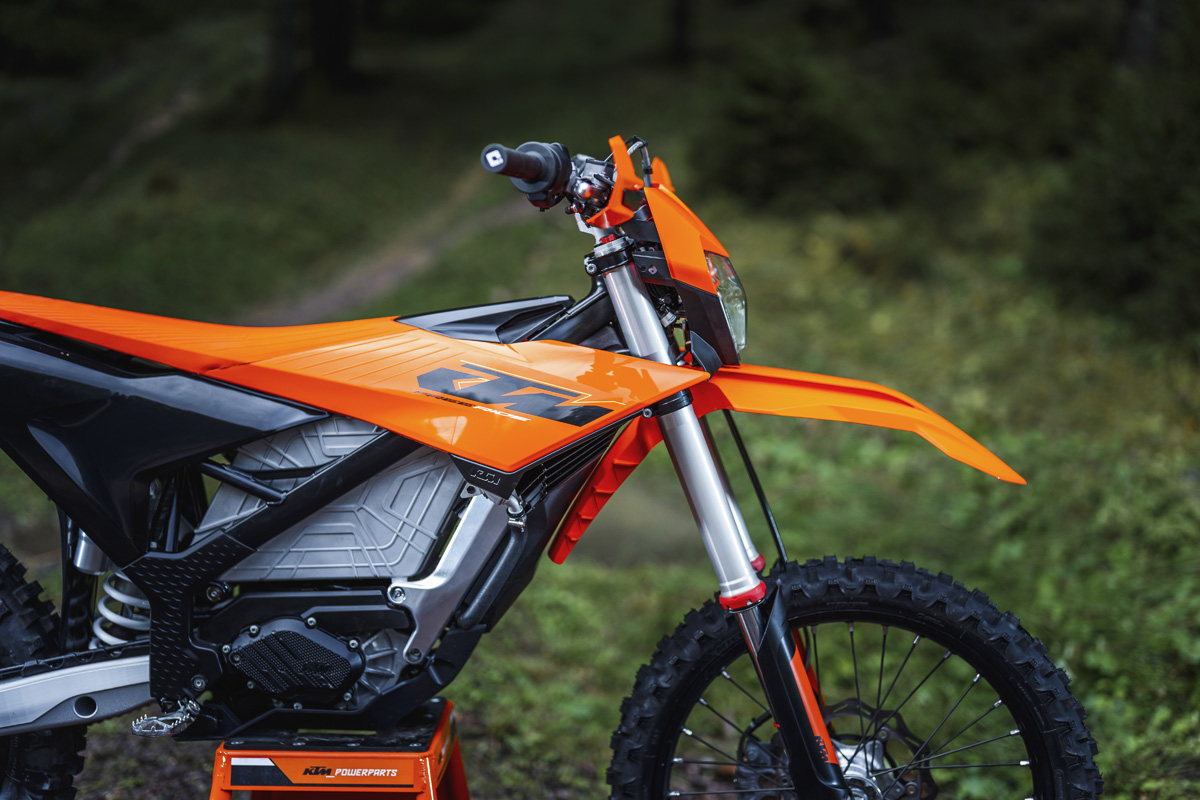
The absence of KTM’s massive orange stand at Eurobike 2026 was a conspicuous and deliberate gap in Frankfurt. While the brand typically uses the world’s largest bicycle trade fair as its primary launch platform, a coordinated boycott by the German Bicycle Industry Association (ZIV) and several major manufacturers forced a change in strategy. KTM shifted its 2027 preview to the ZEG cooperative gathering in Cologne and an in-house event at its Mattighofen headquarters. What emerged from these quieter events was a lineup that speaks louder than any trade show spectacle: KTM cuts prices and launches new 2027 ebike models with a single, unmistakable message—the era of expansion is over, and the era of value has begun.
The post-pandemic bicycle industry has endured a punishing hangover. Inventory is high, demand has normalized, and price competition is ferocious. KTM’s 2027 lineup is a direct reflection of this correction. The brand is not simply refreshing paint colors and spec sheets; it is fundamentally re-evaluating what it builds, what it charges, and where it places its engineering bets. The result is a leaner, sharper, and more focused product offering.
How KTM Cuts Prices and Rebalances Its Model Mix for 2027
The most striking change to KTM’s strategy is the broad application of deep price cuts. Reductions of several hundred euros are common across multiple ranges, with some flagship models seeing drops exceeding €1,600. These are not temporary promotions; they represent a structural repositioning of the brand’s pricing architecture in a market flooded with premium inventory.
The Logic Behind the Price Drops
Why did KTM drop prices so significantly for its 2027 ebike lineup? KTM is leveraging aggressive pricing as a primary tool to attract buyers in a highly saturated market. The brand is effectively admitting that pandemic-era price escalations are no longer sustainable. Four concrete examples illustrate the magnitude of this shift. The enduro-oriented Macina Prowler Prestige CX-R drops from €8,399 to €6,799—a saving of €1,600—with the main specification difference being a switch from a Shimano XT Di2 Linkglide drivetrain to a SRAM GX Eagle Transmission. The Macina Gravelator SX Elite falls from €4,799 to €3,999, a reduction attributed to a more efficient wheelset specification. The premium low-step Macina Aera FS Prime LFC Di2 sheds €800 to land at €5,999, achieved by omitting the optional Bosch ConnectModule tracker. The urban-focused Macina Superbelt SX with a mechanical Shimano Alfine 8-speed hub has been reduced from €3,699 to €3,499.
A Ruthless Audit of the Product Catalog
At the same time, KTM has performed an aggressive self-audit of its model range, removing entire categories that failed to achieve volume or strategic viability. What models were discontinued in KTM’s 2027 ebike lineup? The KTM Macina Every e-trekking bike, launched just a year prior, has disappeared from the range. The entire Macina Multi e-cargo line has been scrapped, reflecting a wider industry retreat from dedicated cargo platforms in favor of more versatile touring or longtail alternatives. The Macina Fold folding bike and the Macina Revelator SX Prime Di2 e-road bike have also been cut without direct successors.

This contraction extends deep into existing series. The lightweight Macina Scarp SX trail bike has been reduced from five variants to a single flagship configuration. Similarly, the Macina Race SX hardtail drops from three variants to a single model. This disciplined narrowing suggests KTM is focusing on volume sellers and highly differentiated product pillars rather than spreading engineering and inventory costs across dozens of low-volume permutations. The notable exception proving this rule is the Macina Style FS, a full-suspension low-step e-MTB that expands from one variant to three, directly reflecting strong consumer demand for comfortable, accessible mixed-terrain bikes.
Bosch’s Performance Upgrade 2.0 Defines the E-MTB Core
Beyond pricing and portfolio management, the mechanical heart of KTM’s 2027 lineup beats with updated Bosch technology. The spring 2026 rollout of Bosch’s Performance Upgrade 2.0 was a watershed moment for the industry, dynamically boosting power, torque, and cadence response across several motor platforms. KTM has largely adopted these upgrades, passing the enhanced performance directly to riders. However, there are notable exceptions. Are all KTM 2027 ebikes updated with Bosch’s full Performance Upgrade 2.0? Not entirely. Models equipped with certain components that are not certified for the maximum new settings—specifically some Enviolo continuously variable hub gears—will have limited configurability within the Bosch Flow app. Riders aiming to unlock the highest performance levels should verify the specific motor programming for their chosen model with a dealer.
E-Mountain Bikes Featuring the Bosch Performance Line CX-R
The Bosch Performance Line CX-R motor is the headline act for KTM’s 2027 e-MTB range. This motor is quickly becoming the standard-bearer for high-end enduro and trail riding. What is the difference between the Bosch CX and CX-R motor? The CX-R builds on the legendary CX platform with enhanced thermal management and refined control mapping, allowing it to sustain peak power output for longer periods on demanding technical climbs without performance degradation. The deeply discounted Macina Prowler Prestige CX-R is the most prominent flagship, but the CX-R features across several hardtail and full-suspension platforms, signaling an uncompromising commitment to trail capability across the performance lineup.
Lightweight Precision with the Bosch Performance Line SX
On the lighter end of the performance spectrum, the Bosch Performance Line SX continues to power KTM’s ‘hidden power’ ebikes. The remaining single configurations of the Macina Scarp SX and Macina Race SX are carefully specced to appeal to riders seeking a natural, unassisted riding feel with a discreet yet powerful boost when needed. This is a high-value segment served with surgical precision, catering to aficionados who prioritize ride quality and weight savings above all else.
New Model Highlights: Joy, Gran Violo, and the Gravelator HX
Despite the overall contraction, KTM is introducing and repositioning several key models for 2027, demonstrating that the brand is not merely shrinking, but intelligently reallocating its resources toward segments with genuine growth potential.
KTM Macina Joy: A Fresh Entry in Urban Mobility
The KTM Macina Joy is a brand-new city ebike designed to capture the growing commuter and urban leisure demographic. It fills a distinct space between the performance-oriented Macina Superbelt and the practical touring models, positioned as an accessible, stylish solution for daily mobility. The Joy represents a significant new entry point to the KTM range and is a direct response to the broader market pivot toward urban utility cycling.
KTM Macina Gran Violo: The New Touring Workhorse
With the Macina Every discontinued after just one season, the Macina Gran Violo steps in to carry the e-trekking legacy forward. Designed for long-distance comfort, robust load-carrying ability, and all-weather touring practicality, the Gran Violo is likely to be one of the most versatile models in the 2027 lineup. It appeals directly to riders who treat their ebike as a genuine replacement for a second car, demanding durability and range over outright performance.
KTM Macina Gravelator HX: A Rear-Wheel Drive Option
One of the most interesting technical developments is the KTM Macina Gravelator HX. Departing from the standard mid-mount Performance Line CX motor found on other Gravelator variants, the HX variant introduces a rear-wheel motor option to the e-gravel category. A rear hub motor fundamentally changes the handling character of a gravel bike: it centralizes weight around the rear axle, allows for instant acceleration from a stop, and critically, offers minimal mechanical resistance when pedaling unassisted—a key concern for gravel riders who frequently cover long sections without power. This introduces a meaningful choice for gravel enthusiasts, dividing the line between high-torque mid-drive climbing performance and rear-wheel rolling efficiency.
Inclusivity and Practicality: XL Ebikes and Flexible Racks
KTM’s 2027 strategy also pays close attention to rider inclusivity and real-world utility, expanding the appeal of its lineup to riders who have often been overlooked by the broader industry.
Extra-Robust XL Ebikes for Taller and Heavier Riders
The availability of extra-robust XL models is a significant move in an industry that has historically underserved big and tall riders. KTM is committing to dedicated frames with higher weight capacities and larger geometries. This is not merely a sizing exercise; it is a structural engineering commitment that opens the KTM brand to a broader demographic, signaling a mature understanding of rider safety, stability, and comfort across the entire population spectrum. For many taller riders, a dedicated XL platform from a major manufacturer is a decisive purchase motivator.

A Flexible Rear Rack System
The unsung hero of the utility ebike is the rear rack. KTM’s updated flexible rear rack system for 2027 enhances the carrying capacity and adaptability of its city and trekking models. Improved mounting points and design flexibility allow riders to easily swap bags, baskets, and child seats, directly addressing the practical needs that convert car commuters into dedicated ebike riders. This type of thoughtful, practical innovation is critical for driving mainstream adoption in the commuting and leisure market.
KTM’s 2027 lineup is a masterclass in strategic retrenchment within a contracting industry. The brand is not just launching new bikes; it is redefining its market position in response to very real economic headwinds. By slashing prices across the board, eliminating marginal and slow-selling models, and doubling down on high-performance Bosch motors, inclusive sizing, and practical utility, KTM is positioning itself to weather the current storm while building a more sustainable foundation. For the consumer, the outcome is a more coherent, competitive, and aggressively priced range of ebikes than in recent years. The central question is whether this sharper pencil and leaner catalog will be enough to cut through the noise in a market saturated with compelling alternatives. For now, KTM is betting its future on the simple formula of offering less choice, but far better value.