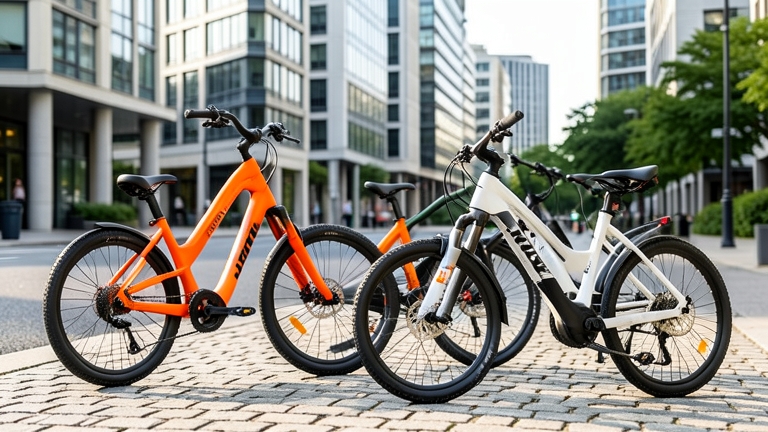
For years, the cycling industry treated the 20-kilogram mark as a psychological barrier for electric bikes, a threshold that separated the acceptable from the impressive. KTM, the Austrian cycling and motorcycle manufacturer, has now expanded its lineup of lightweight ebikes to include models across multiple segments that dip below this once-elusive figure. From trekking machines designed for long-distance touring to dedicated e-gravel bikes and even children’s models, KTM’s current range demonstrates how far engineering has progressed in shedding mass from electrically assisted bicycles. This expansion is not merely a marketing exercise; it represents a genuine shift in what consumers can expect from a fully equipped ebike that retains the practicality of mudguards, racks, and lighting systems.
The Ambiguity of Lightweight: Why 20 Kilograms Matters
There is no regulatory or technical standard that officially defines a lightweight ebike. The classification is inherently subjective, varying dramatically by intended use and bicycle category. A three-wheeled e-cargo bike like the Sblocs Calderas, weighing 38 kilograms, is considered featherlight among its bulky peers. Yet that same weight would be catastrophic for a full-suspension enduro e-MTB. The Amflow PX Carbon, at just under 20 kilograms, represents a remarkable achievement in mountain biking. However, if that same bike were an e-road bike, the number would still provoke dismay among weight-conscious riders.
This context makes KTM’s achievement more meaningful. The 20-kilogram barrier is not a hard technical limit but a psychological one. It changes the leading digit of the weight reading, transforming “20 kilograms” into “19 point something.” This boundary took years of battery chemistry improvements, motor miniaturization, and frame material innovation to breach consistently across multiple model ranges. In actual riding conditions, a difference of one kilogram is rarely perceptible. But from a development and marketing standpoint, crossing below 20 kilograms signals that the engineering team has solved fundamental challenges of power-to-weight efficiency.
What Constitutes a Sub-20-Kilogram Ebike in KTM’s Current Lineup
KTM has successfully delivered lightweight ebikes across five distinct categories: trekking, e-mountain bike, city, e-gravel, and children’s electric bikes. Each segment presents its own engineering constraints. Trekking bikes must accommodate racks, mudguards, and lights without ballooning in mass. Mountain bikes need suspension systems and robust frames that can handle trail impacts. City bikes prioritize upright comfort and utility. Gravel bikes demand aerodynamic efficiency and compliance over rough surfaces. Children’s bikes require smaller components and lower standover heights while maintaining safety standards.
The ability to hit the sub-20-kilogram target across all these categories reflects a platform approach centered on the Bosch Performance Line SX motor, a compact drive unit specifically designed for lighter ebikes, paired with the Bosch CompactTube 400 battery. This motor-battery combination provides the power assist riders need while keeping weight manageable. KTM then pairs this core with frame materials chosen strategically for each model.

KTM Macina Sport SX: The Lightweight Trekking Ebike
The KTM Macina Sport SX crystallizes the concept of a lightweight trekking ebike that sacrifices nothing in practicality. Its weight starts at 18.5 kilograms for the carbon-framed versions, while aluminum variants remain just over 20 kilograms. The bike includes a suspension fork, mudguards, rear rack, integrated lighting system, side stand, wide-range gearing, and high-quality brakes. Nothing essential is omitted for the sake of saving grams.
Versatility defines this model. It functions as a sporty touring companion capable of covering long distances on mixed surfaces, yet it also serves as an everyday commuter. The slim frame design visually communicates the weight savings before the rider even lifts the bike. The 2027 model range includes multiple specifications:
- Models: KTM Macina Sport SX Master Di2, KTM Macina Sport SX Elite Di2, KTM Macina Sport SX Pro, KTM Macina Sport SX 10 Di2, KTM Macina Sport SX 20
- Frame materials: Carbon and aluminium
- Suspension fork: SR Suntour NRX32IL-E Air 2CR or SR Suntour NCX32-D Sport Air
- Motor: Bosch Performance Line SX
- Battery: Bosch CompactTube 400
- Display: Bosch Purion 400 or Bosch Purion 200
- Drivetrain: Shimano Deore Di2, Shimano Cues U6000, or Shimano Cues Di2 U8050
- Brakes: Shimano Cues U8000, Shimano MT420, or Shimano MT200
- Weight: from 18.5 kg
- Maximum permitted total weight: from 129 kg
- Prices: from 3,299 Euro
The range from 3,299 euros upward reflects the component tier choices. The Di2 electronic shifting versions command a premium but contribute to the bike’s refined riding experience. The carbon frame options are reserved for the higher-end models, while the aluminum frames keep the price accessible while staying close to the 20-kilogram boundary.
Why This Matters for the Ebike Market
KTM’s expansion of lightweight models addresses a persistent consumer complaint about electric bikes: they are too heavy to handle easily when not riding. Lifting a 25-kilogram ebike onto a bike rack, carrying it up apartment stairs, or maneuvering it through a narrow hallway becomes a genuine physical challenge. Reducing mass to under 20 kilograms transforms the ownership experience, making the bike feel more like a conventional bicycle that happens to have electric assistance, rather than a motorized vehicle with pedals attached.
This shift has implications for the broader market. As more manufacturers demonstrate that sub-20-kilogram ebikes can include full touring equipment, the pressure increases on competitors to follow suit. The technology enabling this weight reduction—smaller motors, more energy-dense batteries, and optimized frame layups—continues to mature. Five years ago, a 20-kilogram fully equipped trekking ebike was a rarity. Today, KTM offers multiple configurations across multiple segments.
The Bosch Performance Line SX motor deserves particular attention. Unlike earlier lightweight motors that sacrificed torque and responsiveness, the SX delivers 55 Nm of torque, sufficient for steep climbs and quick acceleration, while weighing only 1.9 kilograms. Pairing it with the CompactTube 400 battery, which uses 21700 cells for higher energy density, creates a powertrain that totals under 4 kilograms. This frees up significant weight budget for frame construction, components, and accessories.
Lightweight Across the Spectrum: Mountain, City, Gravel, and Kids
Beyond the trekking category, KTM’s lightweight portfolio includes e-mountain bikes designed for trail riding, city ebikes for urban commuting, the Macina Gravelator SX for gravel and mixed-surface riding, and the Macina Mini Me SX for children. Each model adapts the lightweight philosophy to its specific use case.
For e-mountain bikes, keeping weight under 20 kilograms improves handling on technical terrain, especially when lifting the front wheel over obstacles or navigating tight switchbacks. The lighter bike responds more intuitively to body movements, reducing the learning curve for riders transitioning from analog mountain bikes. The city ebikes benefit from lower weight in stop-and-go traffic, where maneuverability at low speeds and ease of parking matter most.
The Macina Gravelator SX targets the growing gravel segment, where riders expect a bike that can handle long days on mixed surfaces without feeling cumbersome. Weight matters here more than in any other category because gravel riding often involves sections of hiking or carrying the bike over impassable terrain. A sub-20-kilogram e-gravel bike transforms what is possible on adventure routes.
Perhaps most notably, the Macina Mini Me SX brings lightweight engineering to children’s ebikes. Young riders are particularly sensitive to excessive weight, which can make a bike unmanageable and unsafe. KTM’s ability to produce a children’s model under 20 kilograms indicates that the lightweight design principles have been fully integrated into the smallest frame sizes, not just scaled-down adult geometries.

The Practical Implications of Choosing a Sub-20-Kilogram Ebike
For buyers evaluating these models, the weight advantage translates into concrete daily benefits. Carrying the bike up a flight of stairs becomes feasible for most adults. Loading onto a car rack no longer requires advanced lifting technique. Storing the bike in an apartment or shed is less of a space-weight negotiation. During riding, the lower mass means less kinetic energy to manage during cornering and braking, making the bike feel more predictable and less intimidating.
However, lighter weight typically comes with a price premium. The carbon-framed versions of the Macina Sport SX illustrate this clearly. Buyers must decide whether the weight savings justify the additional cost over the aluminum variants that sit just above 20 kilograms. For many riders, the difference between 18.5 kilograms and 20.5 kilograms will be negligible in practice. The psychological satisfaction of owning a sub-20-kilogram bike, combined with the enhanced handling characteristics, may still make the upgrade worthwhile for enthusiasts.
The maximum permitted total weight of 129 kilograms for the Macina Sport SX also deserves consideration. This figure accounts for rider weight plus cargo, and it sets a limit on how much luggage can be carried. Riders planning heavy touring loads should verify that their total weight, including the bike itself, stays within the manufacturer’s limits. The lightweight frame must maintain structural integrity even when loaded, and KTM has designed these bikes to do so, but the margin for additional cargo is reduced compared to heavier, more robust touring ebikes.
A Forward-Looking Perspective on Lightweight Ebike Development
The trajectory of ebike weight reduction suggests that the 20-kilogram barrier will become increasingly common rather than remarkable. Battery technology continues to improve energy density without increasing mass. Motor manufacturers are finding ways to extract more power from smaller packages. Frame materials, particularly carbon fiber, are becoming more affordable and easier to manufacture in complex shapes. These trends point toward a future where sub-20-kilogram ebikes are the norm rather than the exception.
KTM’s current lineup represents a snapshot of this evolution. The company has demonstrated that lightweight design can coexist with full equipment, that touring capability need not be sacrificed for weight savings, and that multiple categories can benefit from the same engineering philosophy. The challenge now facing the industry is whether lighter weight can be achieved at lower price points, making these bikes accessible to a broader audience. As production scales and component costs decrease, the answer will likely shift toward affordability. For now, KTM has staked a clear position: lightweight ebikes are not a niche curiosity but a viable choice for riders across the spectrum of cycling disciplines.