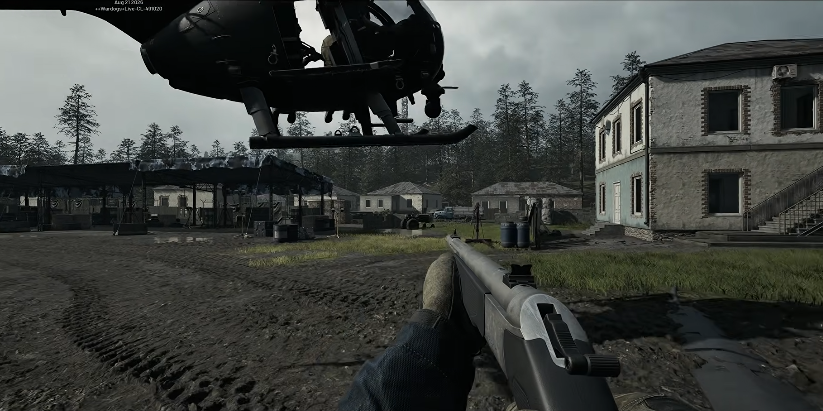
The sound of a sniper rifle cracking across a digital battlefield, the distinct thump of a shotgun, the metallic ping of a pistol—these auditory signatures are more than just audio effects. For dedicated players, they become ingrained memories, tactile anchors to a virtual world. Yet in the era of perpetual updates, these anchors are being pulled up and replaced, often without warning or consideration for the player’s established relationship with the game. The recent modification of weapon sounds in Marathon, a high-profile live-service title, exemplifies a growing industry trend where constant change risks eroding the very foundations of player attachment.
The Ephemeral Nature of Game Identity
Modern multiplayer games, particularly those operating under the “live service” model, exist in a state of permanent flux. Balance patches, new content drops, seasonal events, and cosmetic updates are deployed with relentless frequency. This dynamism is marketed as a virtue, a promise of an ever-evolving, fresh experience that justifies ongoing investment. However, this constant churn has a less-discussed side effect: it prevents a game from solidifying into a consistent, recognizable entity. The core identity of the game—its feel, its rhythm, its sensory landscape—becomes a moving target.
When Marathon adjusted the audio profiles of several key weapons, the change was not merely a technical tweak. For players who had spent hundreds of hours mastering those weapons, the new sounds disrupted a deeply learned feedback loop. The auditory cue confirming a successful hit, the satisfying report following a kill—these were now unfamiliar. This alteration, likely intended for balance or aesthetic refresh, severed an intangible connection. The game the player knew yesterday was, in a subtle but profound way, a different game today.
Psychological Anchors and Learned Environments
Human beings form powerful associations with sensory inputs in learned environments. In a complex multiplayer game, players don’t just learn maps and mechanics; they build a subconscious library of sounds, visual cues, and tactile feedback. The specific recoil animation of a favorite rifle, the color flash indicating a critical hit, the unique sound of an enemy ability being cast—all these elements coalesce into an intuitive understanding of the game’s world. This learned environment is the bedrock of skill and immersion.
When Updates Break the Learning Loop
Frequent, sweeping updates can invalidate this learned environment. A change to a weapon’s behavior or sound isn’t just a new statistic to memorize; it’s a rupture in the player’s internal model of how the game works. The cognitive load increases, as players must not only adapt to new strategies but also re-establish those subconscious sensory associations. This can lead to a feeling of disorientation and alienation, a sense that the game is no longer “their” game but a product being shaped exclusively by distant developers.

The Commodification of Nostalgia and Community Memory
In previous eras of online gaming, titles would reach a state of relative stability after major updates. While patches occurred, the core experience would remain recognizable for extended periods, allowing communities to build shared histories around specific versions, maps, or metas. Players could reminisce about “the original version” of a map or “the sound the old shotgun made.” This shared memory fostered a strong, collective identity.
The live-service model, with its emphasis on constant novelty, often commodifies and overwrites these community memories. Nostalgia for a past state of the game is frequently monetized through throwback events or re-released cosmetics, but the authentic, persistent experience of that past state is gone. The game’s history becomes a series of discontinued products, rather than a continuous journey. This disrupts the narrative a community builds around a game, turning collective memory into a fragmented series of seasonal chapters.
Player Agency in a Shifting World
A core tension arises between developer control and player agency. Developers rightly maintain the need to balance games, fix bugs, and introduce new content to maintain engagement and revenue. However, players invest time, emotion, and identity into these digital spaces. When changes are made purely from a top-down, data-driven perspective—to adjust engagement metrics or refresh a seasonal store—without acknowledging the player’s embodied experience, it can feel like a violation of that agency. The player’s “home” within the game is being remodeled without their consultation.
The Search for Permanence in a Digital Ecosystem
This raises a fundamental question for the industry: is there room for permanence in modern multiplayer design? Can certain elements—core audio, foundational visual designs, key maps—be declared “sacred” and preserved, even as other aspects evolve? Some games attempt this by maintaining “classic” modes or preserving original sounds as optional cosmetics, but these are often sidelined features, not the central experience.
The economic imperative of the live-service model pushes against permanence. Stagnation is seen as a threat to retention and monetization. Yet, this ignores the deep value players find in stability, mastery, and a consistent world. The sense of “place” that players build in a game is a powerful retention tool itself, one that is being undermined by the very updates intended to keep them engaged.
The experience with Marathon’s weapon sounds is not an isolated incident. It is a symptom of a broader paradigm. As multiplayer games increasingly resemble platforms rather than finished products, their identities become fluid. This fluidity offers excitement and novelty, but it also carries a cost: the erosion of the deep, personal connections that transform a game from a mere entertainment product into a meaningful digital space for its community. The sound of a gun may seem like a minor detail, but in the intricate tapestry of player experience, it is a thread that, when pulled, can unravel a larger sense of belonging.
The challenge for developers navigating this landscape is to balance the necessity of evolution with the preservation of player-built meaning. Updates must be communicated not just as lists of changes, but with an understanding of how they impact the lived experience of the community. Perhaps some elements should be allowed to settle, to become timeless pillars within the game’s world. In an industry obsessed with the future and the next update, recognizing the value of the present—and the past that players carry with them—might be the key to building not just successful games, but enduring digital homes.