Bungie’s highly anticipated extraction shooter, Marathon, has launched to a wave of negative user reviews on Metacritic, securing a mere 4.7 user score in its opening days. The title, which arrived on PC, PlayStation 5, and Xbox Series X|S this past weekend, finds itself embroiled in controversy not for its technical performance, but for core design choices that players claim hinder the experience. This critical reception stands in stark contrast to the game’s performance on other platforms, creating a confusing and divided landscape for the new live-service title.
Metacritic User Reviews Highlight Fundamental Design Flaws
A deep dive into the Metacritic user reviews reveals a consistent pattern of criticism centered on two primary pillars: an unintuitive user interface and a gameplay loop that fails to retain interest. Players have described the UI as cluttered, confusing, and obstructive, making basic in-game tasks and information parsing unnecessarily difficult. “The UI makes it feel like you’re fighting the game itself,” reads one typical review, a sentiment echoed across dozens of others. This design flaw, according to the community, directly impacts the core extraction shooter experience, where quick decision-making and situational awareness are paramount.
Gameplay Loop Fails To Sustain Long-Term Engagement
Beyond the interface issues, a significant portion of negative feedback points to the gameplay loop itself. Many players report that the initial novelty of the extraction mechanics wears off rapidly, often within just a few hours of play. The criticism suggests that the moment-to-moment action and the long-term progression systems lack the depth or compelling hooks necessary to keep a live-service player base engaged. This is a critical concern for a game built on a model that requires a sustained, active community to thrive. The feedback indicates that while the foundational shooting mechanics from Bungie are present and polished, the overarching structure built around them is perceived as shallow.
A Tale of Two Platforms: Steam and PlayStation Store Tell a Different Story
In a curious twist, Marathon’s reception is not uniformly negative. On Valve’s Steam platform, the game currently holds an “Overwhelmingly Positive” rating, sitting above 90% approval from users. Similarly, the PlayStation Store shows a user rating of 4.7 out of 5 stars. This drastic discrepancy between Metacritic and direct storefront ratings highlights the fragmented nature of modern game reception and the potential for review bombing or platform-specific sentiments. It raises questions about whether the Metacritic score represents a vocal minority or a more accurate critical consensus that hasn’t yet manifested on other platforms.
Concurrent Player Numbers Fall Short of Expectations
Commercial performance data adds another layer to the story. On Steam, Marathon failed to break the 100,000 concurrent player milestone at launch, a figure that industry analysts consider a modest peak for a major release from a studio of Bungie’s pedigree, especially one published by Sony. While the game did chart in Steam’s top 10 best-sellers, the player count suggests a launch that is solid but unspectacular, falling short of the blockbuster numbers Sony likely envisioned for its investment. This tepid initial engagement, coupled with the harsh Metacritic feedback, paints a picture of a game struggling to find its footing in a crowded market.

Critic Reviews Delayed At Bungie’s Request, Creating an Information Vacuum
Adding to the unusual launch scenario, professional critic reviews for Marathon are conspicuously absent from aggregate sites. Bungie formally requested that media outlets hold their final reviews until late March, citing planned post-launch content updates that the developer believes are essential to the complete experience. This strategy, while not unprecedented for live-service games, has created an information vacuum at a crucial moment. With only user reviews to go by, the public narrative is being shaped entirely by the player base, for better or worse. The delayed critical reception means the game lacks the traditional “critical lift” that can often counterbalance early negative user sentiment.
Historical Context: A Development Cycle Marred by Controversy
Marathon’s challenging launch must be viewed within the context of its protracted and turbulent development. The project was announced over a year ago and quickly became a focal point for controversy within Bungie. Reports of internal strife, shifting design directions, and layoffs plagued the studio during the game’s production. This history of bad PR has created a skeptical audience, one that may be quicker to judge the final product harshly. The game was also frequently compared to the commercial failure of Sony’s other live-service attempt, Concord, with many predicting a similar fate. While Marathon has avoided that extreme outcome so far, it is clearly not meeting the high expectations set for it.
The UI Critique: A Deep Dive Into Player Frustration
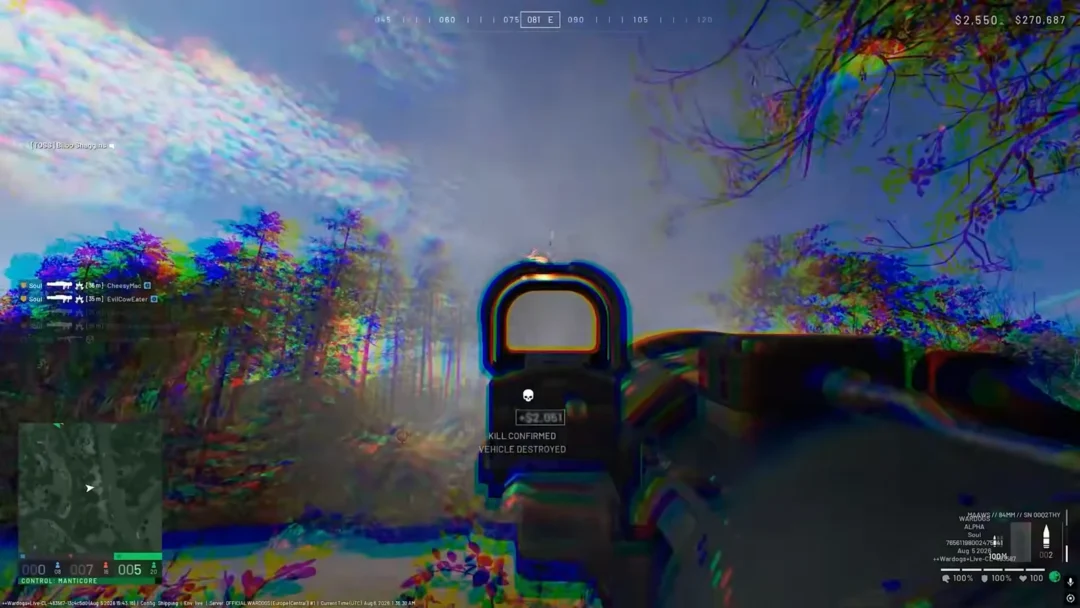
The overwhelming focus on the user interface in negative reviews warrants closer examination. Players are not complaining about graphical glitches or bugs, but about intentional design decisions. Common complaints include poorly organized menus, unclear iconography, an overabundance of on-screen information during matches, and a lack of visual clarity in hectic combat situations. In an extraction shooter where inventory management, map awareness, and quick loot assessment are core skills, a bad UI can fundamentally break the game loop. This suggests a potential disconnect between Bungie’s design philosophy and the practical needs of the genre’s player base, a significant misstep for a studio entering a new competitive space.
The Road Ahead: Can Post-Launch Content Salvage the Experience?
Bungie’s entire strategy now hinges on the content update planned for late March. The developer is betting that new maps, systems, weapons, and potentially UI overhauls will not only attract new players but also rehabilitate the game’s reputation among those who were disappointed at launch. This is a high-risk, high-reward approach. If the update successfully addresses the core complaints about gameplay depth and interface clarity, Marathon could experience a notable resurgence, similar to other live-service recoveries. However, if the changes are perceived as insufficient or too late, the game risks losing its initial player base permanently, making a comeback exponentially more difficult.
The Broader Implications for Bungie and Sony
The performance of Marathon carries significant weight beyond the game itself. For Bungie, it represents the studio’s first entirely new intellectual property since its acquisition by Sony and a major pivot away from its Destiny identity. A failure here could impact internal morale and future project greenlights. For Sony, which has invested heavily in a live-service strategy to complement its traditional single-player offerings, Marathon is a crucial test case. Its mixed-to-negative reception will undoubtedly be analyzed internally as the company evaluates its ongoing multiplayer and service-game investments. The pressure is on for the late-March update to perform.
As the dust settles on the launch weekend, Marathon exists in a state of precarious potential. It has avoided total disaster but has stumbled significantly out of the gate. The coming weeks will be critical. The community’s response to the impending content drop, coupled with the eventual wave of professional critic reviews, will determine whether this is the beginning of a slow decline or the rocky foundation for a eventual success story. The game’s fate now rests on Bungie’s ability to listen, adapt, and deliver on the promises that its initial release, in the eyes of many players, has failed to keep.