In an era where climate models and environmental policy hinge on the precision of orbital data, the launch of NASA’s CLARREO Pathfinder instrument marks a pivotal shift from simply collecting more images to guaranteeing the integrity of the measurements themselves. The mission, which successfully lifted off aboard a SpaceX Dragon spacecraft as part of the company’s 34th Commercial Resupply Services mission to the International Space Station, represents a sophisticated answer to one of Earth science’s most persistent challenges: the inconsistency of calibration across the global fleet of observation satellites. This is not a mission designed to capture stunning photographs of the planet, but rather to establish an unassailable reference standard—a celestial yardstick—against which all other space-based sensors can be measured with unprecedented accuracy. By targeting a performance level between five and ten times more accurate than existing sensors, the instrument aims to resolve ambiguities in long-term climate data that have long plagued scientific consensus and policy decisions.
What is CLARREO Pathfinder and Why is Calibration Critical?
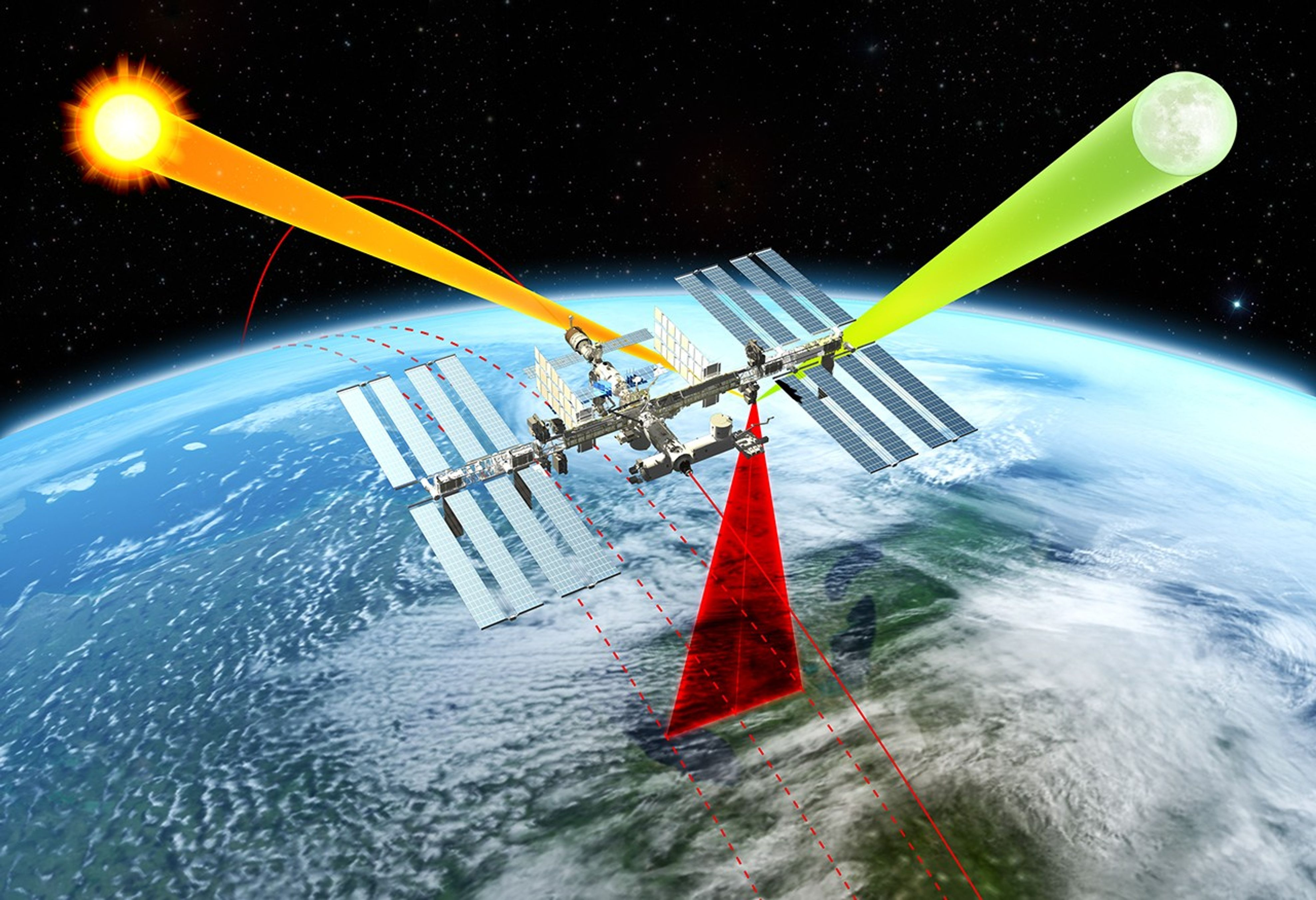
CLARREO, an acronym for Calibration Absolute Radiance and Refractivity Observatory, is fundamentally a precision calibration instrument. Its primary tool is an advanced imaging spectrometer designed to measure sunlight reflected by Earth and the Moon. The mission’s core objective is to create a highly accurate, scientifically traceable reference standard in orbit. This is critical because modern climate science relies heavily on datasets compiled over decades from dozens of different satellites operated by various governments and commercial entities. Each of these sensors, while sophisticated, possesses unique biases and drifts over time. When studying minute shifts in global temperature—often measured in fractions of a degree—or subtle changes in cloud reflectivity and greenhouse gas concentrations, even minuscule calibration errors can compound, injecting significant uncertainty into the data. CLARREO Pathfinder is designed to function as the ultimate referee, providing a stable, absolute benchmark that allows scientists to harmonize these disparate data streams, effectively turning a chorus of slightly out-of-tune instruments into a coherent symphony of high-fidelity information.
From Launch to the ISS: The Operational Timeline
Following a successful launch on Friday, the Dragon spacecraft is scheduled to arrive at the International Space Station on Sunday, May 17. Upon docking, the complex process of extracting the instrument from Dragon’s unpressurized trunk section will begin, utilizing both astronaut assistance and the station’s robotic arm. NASA anticipates that the installation of CLARREO Pathfinder will be completed later this month. However, the real work begins after installation. The instrument will then enter a commissioning phase that is expected to last several months. During this rigorous testing period, engineers and scientists will systematically verify every aspect of the technology, confirming its ability to serve as a reliable calibration reference for both government and commercial satellite fleets. This meticulous checkout phase is essential to ensure that the data produced meets the stringent requirements for global measurement standards.
The Five-to-Ten Times Accuracy Leap and Its Implications
The most striking technical specification of the CLARREO Pathfinder mission is the promise of measurements that are five to ten times more accurate than current sensors. This is not an incremental improvement; it is a transformative leap in performance category. For climate monitoring, this level of precision has profound implications. It allows for the detection of far subtler signals in atmospheric and oceanic data that were previously indistinguishable from sensor noise. For example, improved accuracy in measuring Earth’s outgoing longwave radiation and reflected shortwave radiation can refine our understanding of the planet’s energy budget, a core driver of climate change. For atmospheric studies, it enables more precise tracking of aerosol concentrations and cloud properties, which are among the largest sources of uncertainty in climate models. This leap in accuracy translates directly into more reliable projections of future climate scenarios and a stronger evidence base for environmental decision-making.
How the Mission Creates a Universal Standard for Satellite Data
One of the most strategically important aspects of CLARREO Pathfinder is its explicit connection to internationally recognized measurement standards. The instrument is engineered to provide data that is scientifically traceable, meaning its measurements can be directly linked to ground-based standards maintained by national metrology institutes. This traceability is the key to solving the problem of cross-sensor inconsistency. Currently, a satellite from the United States, one from Europe, and a commercial asset from a private company may produce different readings for the same physical phenomenon. CLARREO Pathfinder will act as a common reference, allowing all operators to correct their data relative to a single, authoritative truth. In practical terms, this could allow countries and companies to share and combine geospatial data with far greater confidence, dramatically improving the quality of global datasets used for agriculture, disaster response, urban planning, and defense.

The Moon as a Natural Calibration Target
A scientifically elegant component of the mission involves using Earth’s Moon as a stable, natural calibration target. The lunar surface’s reflective properties are remarkably consistent over long geological timescales. By comparing sunlight reflected from Earth with sunlight reflected from the Moon, scientists can perform highly sensitive cross-checks of the instrument’s accuracy. The Moon effectively becomes a fixed reference point in the sky, allowing for continuous, independent validation of sensor performance over the mission’s lifetime. This approach is not only cost-effective but also provides a robust method for ensuring long-term data consistency, a critical requirement for monitoring subtle climate shifts over decades.
Implications for the Private Earth Observation Industry
The benefits of CLARREO Pathfinder extend far beyond government science agencies. The commercial Earth observation industry has experienced explosive growth, with companies launching vast constellations of satellites for everything from precision agriculture to infrastructure monitoring. However, maintaining consistent calibration across hundreds of individual satellites is a formidable and expensive challenge. The availability of a universal, high-precision calibration reference from orbit could dramatically reduce this operational complexity. It would allow commercial operators to standardize their fleets against a single authoritative source, improving the accuracy and interoperability of their products. This could unlock new markets and applications that demand the highest levels of data trust, such as financial modeling, insurance risk assessment, and compliance monitoring. The mission positions NASA not just as a research agency, but as a critical infrastructure provider for a burgeoning data economy.
The ISS as a Testbed for Next-Generation Space Science
The mission also underscores the evolving role of the International Space Station. Beyond its primary functions of human habitation and microgravity research, the ISS has become an invaluable orbital laboratory and testing platform for advanced space technologies. By providing a stable platform with power, data handling, and accessibility, the station allows for the validation of instruments like CLARREO Pathfinder before they are scaled into dedicated, free-flying missions. This approach reduces risk and accelerates the development of foundational technologies for future observation systems. It demonstrates that the ISS continues to be a relevant and vital asset for advancing the state of the art in space science, even as the space industry looks toward lunar and commercial stations.
Strategic Importance for Climate Policy and Scientific Credibility
In the politically charged arena of climate science, the credibility of data is paramount. CLARREO Pathfinder’s emphasis on internationally traceable standards directly addresses concerns about scientific reproducibility and transparency. By providing an objective, verifiable benchmark, the mission helps insulate climate data from accusations of manipulation or bias. More accurate satellite data means nations will have access to stronger, less ambiguous evidence regarding emissions, deforestation, and ecological changes. This can inform international climate treaties, environmental reporting standards, and domestic regulations with a higher degree of confidence. Ultimately, this mission is as much about ensuring the integrity of the scientific process as it is about measuring photons. It signals that modern space exploration is deeply invested in the invisible systems of quality assurance that underpin our understanding of the planet.
The Path Ahead: From Demonstration to Operational Network
NASA has explicitly described the CLARREO Pathfinder as a demonstration project—a critical proof of concept rather than a fully operational system. However, the long-term vision is clear. If commissioning proceeds successfully over the coming months and the technology proves its worth, it could justify the development of a larger, dedicated CLARREO-style operational constellation in orbit. Such a network could form the backbone of a future global climate intelligence infrastructure, providing continuous, ultra-precise calibration for all Earth observation systems. While it may not generate the public excitement of a Mars rover or a lunar lander, the potential scientific and policy impact of establishing a new global benchmark for measurement accuracy is monumental. In the world of climate science, where the smallest margins separate certainty from ambiguity, accuracy is power, and NASA has just launched a powerful tool to secure it.