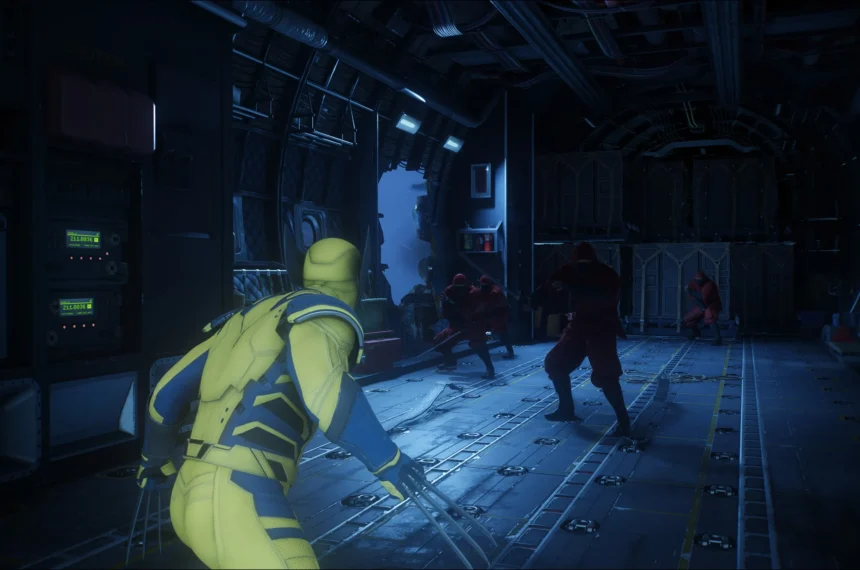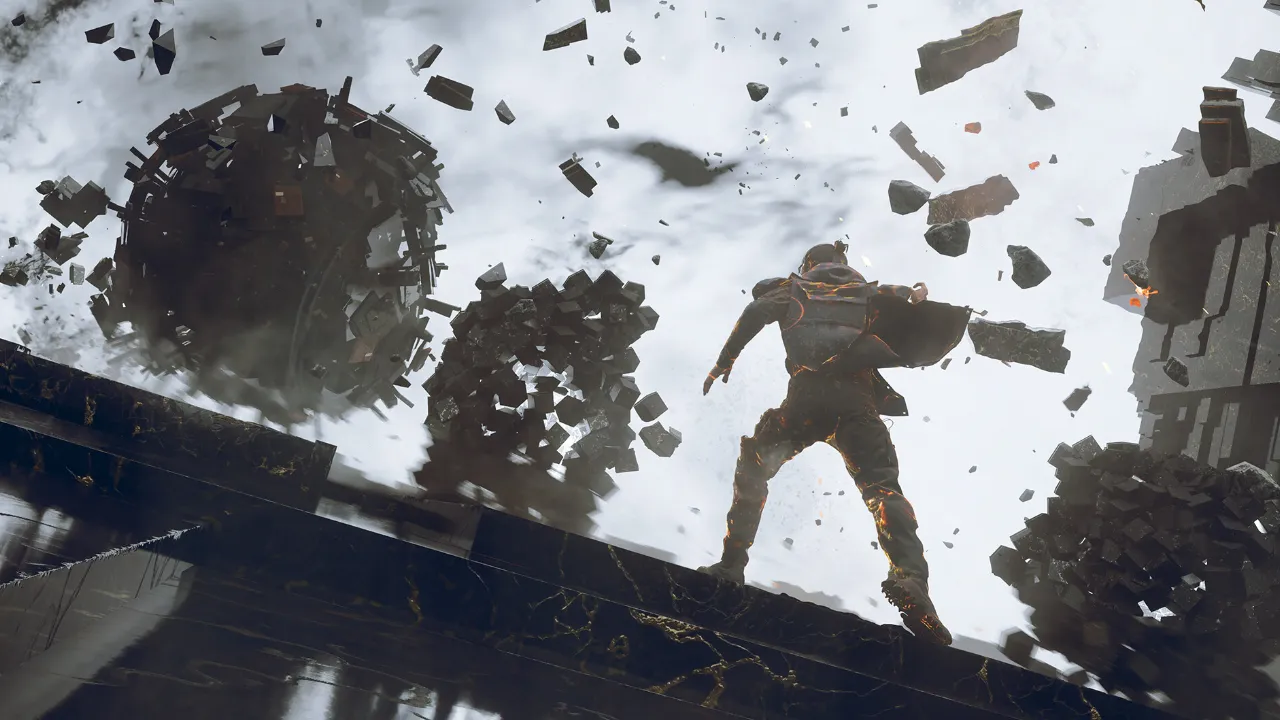
An alleged leak of achievement lists for several high-profile, yet-to-be-released titles—including Persona 6, Judas, and an unannounced Tomb Raider remake—has surfaced on the gaming database site Exophase, sending ripples through the industry. The listings, which appeared for the Steam versions of these games, offer what appears to be the first concrete evidence that these projects are not only in active development but may be much closer to launch than publicly acknowledged. For an industry accustomed to carefully orchestrated reveals and tightly controlled information flows, a leak of this magnitude—spanning multiple major franchises across different publishers—represents a rare and significant breach of pre-release secrecy.
What Is Exophase and Why Do Its Achievement Leaks Carry Weight?
Exophase is a community-driven tracking platform that aggregates achievement data across Steam, Xbox, PlayStation, and other ecosystems. The site’s ability to surface unreleased games comes from its monitoring of backend data from Steam’s developer and partner APIs, where game listings and achievement definitions are often uploaded months before any public reveal. When those database entries are inadvertently made accessible—or when third-party tools scrape them—Exophase and similar sites can expose them.
These are not speculative rumors; they are direct extractions of metadata from the platforms themselves. Achievement names, descriptions, icons, and even associated game IDs are pulled from the same infrastructure that powers the live achievement systems for millions of players. Once these entries appear, they almost invariably correspond to real projects that are, at minimum, far enough along in development to have their achievement logic coded and tested. In the past, similar Exophase leaks have accurately predicted the existence of titles like Hades II and Starfield before their official announcements, lending the platform a credibility unusual for a leaks source.
Persona 6: What the Alleged Achievements Reveal About Atlus’s Next RPG
Atlus has remained characteristically silent regarding a formal sequel to Persona 5, which released in 2016 (and received its definitive Royal version in 2019). Yet the gaming community has long assumed a sixth numbered entry is in development, given the franchise’s immense commercial success and the studio’s typical release cadence. The Exophase listing—if genuine—would be the most substantial validation of those assumptions to date.
The reported achievement list for Persona 6 includes several thematic and mechanical cues that align with series conventions while hinting at new systems. Titles such as “First Fusion,” “Max Social Link,” and “Reaper Vanquisher” are series staples, suggesting the core loop of social simulation and turn-based combat remains intact. More intriguing are unique entries like “Crimson Covenant,” “Echo of the Labyrinth,” and “The Unseen Path,” which could point to a new story framework, dungeon structure, or even a setting shift. The presence of an achievement for reaching a “True Ending” implies the kind of branching narrative for which the series is known.

Historically, achievement data has also inadvertently revealed game length and pacing. The number of achievements—usually between 30 and 50 for a mainline Persona title—and their distribution across story beats, side content, and optional bosses give players a rough map of the experience. If the leaked list contains, for example, separate achievements for each month of the in-game calendar, that would strongly confirm the game’s year-long time progression mechanic.
It is important to note that Atlus has not issued a statement regarding the leak, and neither Exophase nor any other source has produced official artwork, gameplay footage, or a product name beyond the listing. Still, the specificity of the achievement metadata—complete with numerical values, hidden indicators, and gamer score weighting—makes a fabrication less likely. For fans, the leak provides the first concrete answer to the question, “Is Persona 6 real?” The answer appears to be yes, and it may be further along than anyone outside Atlus realized.
How Achievement Leaks Affect the Persona Community and Atlus’s Marketing Strategy
For a franchise that thrives on mystery and gradual reveal—the Persona 5 announcement-to-release window was over two years—an unsanctioned data dump complicates Atlus’s communications plan. The company may now feel pressure to accelerate its announcement timeline to regain control of the narrative. Alternatively, the leak could be used as a soft validation, allowing Atlus to observe fan reaction to achievement descriptions and adjust messaging accordingly.
From a community perspective, the leak has already ignited speculation about setting, characters, and mechanics. Dedicated subreddits and forums are dissecting every achievement name for clues about the game’s color scheme (Persona 5 was red, 4 was yellow, 3 was blue), its tarot-themed social link system, and whether the story will return to a high school setting or branch into college or adult life. The achievement “Echo of the Labyrinth,” in particular, has fueled theories about a return to dungeon-crawling elements reminiscent of Persona 3’s Tartarus or a completely new procedural system.
Judas: Ken Levine’s Long-Awaited Narrative Experiment Exposed
Announced at The Game Awards in December 2022, Judas is the next project from Ken Levine’s Ghost Story Games, the studio formed after the closure of Irrational Games. Billed as a “narrative first-person shooter” set aboard a derelict starship, the game has been in development for years under extreme secrecy. The Exophase achievement list is the most detailed look at what players can expect from the game since its cinematic reveal trailer.
The leaked achievements for Judas reinforce the game’s reputed emphasis on player choice and systemic storytelling. Several achievements are tied to “Allegiance” with different factions—“Loyal to the Creators,” “Allied with the Heretics,” “Forsaken by All”—suggesting a branching narrative where player decisions permanently alter the available content. This aligns with Levine’s stated goal of creating a “narrative LEGO set” where story elements can be reassembled in different orders across playthroughs.
Other achievements hint at the game’s combat and exploration mechanics. “First Hack,” “Unshackled,” and “Overload” imply a system of technological manipulation, potentially allowing players to disable enemies, open locked areas, or modify the environment. “Shipwide Blackout” suggests a large-scale environmental interaction that could be a major set piece.
Perhaps most telling is the achievement “The Impossible Sentence,” which could reference the game’s central premise: the player character is a convict on a failing ship, and the narrative may involve escaping a fate that seems sealed. The inclusion of an achievement for “Completing the Game Without Killing” hints that pacifist or stealth-oriented runs will be fully supported, a design philosophy that echoes Dishonored and Prey—both games Levine has cited as influences on his thinking.
What the Judas Leak Means for Ghost Story Games’ Release Timeline
Ghost Story Games has been circumspect about a release date, with many industry observers predicting a 2025 or even 2026 launch. The appearance of a full achievement list, however, typically indicates that a game has entered the final stages of development—often within six to twelve months of a release date being set. While Take-Two Interactive (the parent company) has not commented, the leak aligns with recent job listings at Ghost Story for quality assurance and localization roles, both of which ramp up as a project approaches gold master.
If the achievements are genuine, Judas could be targeting a late 2025 launch window, possibly aligning with the holiday season or a major industry event such as Summer Game Fest. The leak also puts pressure on Take-Two to make an official announcement, lest the narrative be shaped entirely by datamined information.

Tomb Raider Remake: A Return to Lara Croft’s Roots?
The third major title in the leak is perhaps the most surprising: a Tomb Raider remake. While rumors of a remastered collection of the original Core Design games have circulated for years, the Exophase listing points to a full-fledged remake rather than a simple upscaling. The achievement names include references to classic levels such as “The Lost Valley,” “St. Francis’ Folly,” and “Tomb of Qualopec,” which are direct lifts from the 1996 original Tomb Raider.
This suggests the project is not a continuation of the Survivor trilogy that rebooted the franchise in 2013, but a ground-up reconstruction of the very first game. If true, it would join a recent wave of PlayStation-era remakes—Resident Evil 2 and 3, Crash Bandicoot N. Sane Trilogy, Spyro Reignited Trilogy—that have proven commercially viable and critically loved.
Achievement titles like “Ark of the Covenant” and “The Great Pyramid” indicate that the remake may expand or reimagine certain levels, possibly incorporating cut content or modernizing puzzle designs. The presence of an achievement for “Fully Upgraded Shotgun” implies a weapon upgrade system that did not exist in the original, suggesting the developers are layering contemporary progression mechanics onto the classic structure.
Furthermore, achievements labeled “Speedrunner” and “No Medipacks” suggest that the remake will retain the original’s challenging difficulty and include rewards for mastery, appealing to both nostalgic veterans and a new generation of players accustomed to achievement hunting.
Who Is Developing the Tomb Raider Remake?
The leak does not identify the developer. Embracer Group, which owns the Tomb Raider IP through its acquisition of Square Enix’s western studios in 2022, has multiple internal teams that could take on such a project. Crystal Dynamics, the studio behind the Survivor trilogy, is currently working on the next mainline Tomb Raider title. However, a separate team—likely within one of Embracer’s other subsidiaries, such as Aspyr Media (known for remastering Star Wars: Knights of the Old Republic) or Saber Interactive—could be handling the remake.
An achievement list alone cannot confirm the developer, but it does signal that the project is far enough along to have been integrated into Steam’s back-end testing environment. This implies a release that could come as soon as 2025 or 2026, depending on the scope of the remake.
How Do These Leaks Happen? The Technical Mechanics of Achievement Data Exposure
To understand why Exophase regularly beats official announcements, one must understand the development pipeline for Steam releases. When a developer uploads a game to Steamworks, they can create a private or hidden app ID that is not publicly searchable. However, any content associated with that app ID—including packaged build data, depots, and achievement definitions—can be accessed by third-party tools if the developer’s configuration leaves certain fields open.
Achievement definitions are particularly vulnerable because they are often finalised early in testing to ensure they trigger correctly during quality assurance. A developer might upload a set of 50 achievements with proper names, descriptions, and icons, but forget to mark the app ID as completely private. Once that data is live on Steam’s content delivery network, tools like SteamDB and Exophase can pull it down and display it.
Platform holders have attempted to combat this by introducing “steam app token” systems that require authentication for hidden titles, but workarounds persist. The consistency with which major leaks occur suggests that the scale of modern game development—with dozens of external partners, localization vendors, and QA testers—makes it nearly impossible to keep all data locked down until a formal reveal.
What Are the Risks of Achievement Leaks for Developers and Publishers?
While leaks can generate free publicity, they also strip developers of control over their narrative. A single achievement name can spoil a major plot twist—imagine seeing an achievement called “Kill the Main Antagonist” appear months before the game’s story is meant to unfold. For narrative-driven games like Judas and Tomb Raider Remake, the revelation of level names or faction relationships can diminish the impact of carefully crafted reveals.

Furthermore, achievement leaks can lead to fan backlash if the content does not match expectations. If a leaked list includes achievements for features that are later cut—something that happens frequently during development—the publisher may face accusations of false advertising. There is also a legal dimension: data pulled from proprietary APIs without authorization may violate terms of service, though platforms have rarely pursued action against aggregation sites.
Industry-Wide Patterns: Why Are So Many Unannounced Games Appearing on Exophase Now?
The simultaneous leak of Persona 6, Judas, and a Tomb Raider Remake could be a coincidence—or it could reflect a broader trend in how the games industry handles pre-release development. Several factors may be contributing to the increased frequency of such leaks:
- Steam’s dominance as a primary platform. More developers are shipping PC versions day-and-date with consoles, meaning Steam builds are created earlier in the cycle.
- Remote work and distributed QA. The shift to remote development after 2020 has made it harder for studios to secure internal testing environments, pushing more testing into external cloud services that are harder to isolate.
- Aggregation tool evolution. Sites like Exophase and SteamDB have automated crawlers that scan for new app IDs daily, catching data within hours of upload.
- Publisher hesitancy to announce too early. In an era of long marketing cycles, many publishers delay official announcements until near release—but development data cannot be hidden indefinitely.
For consumers, this means the traditional flow of information—announcement, trailer, hands-on preview, launch—is increasingly disrupted by raw data dumps. The line between official and unofficial communication has blurred, and the onus is now on publishers to either lock down their data more effectively or accelerate their reveal timelines.
How to Verify Achievement Leaks: Separating Signal from Noise
Not every list that appears on Exophase is guaranteed authentic. Fans should look for several markers of credibility:
- Consistency with known development timelines. If a game has been rumored for years and a studio is actively hiring, a leak is more plausible.
- Specificity of metadata. Genuine achievements include unique IDs, successful completion percentages from testing, and hidden flags—all of which are difficult to fabricate.
- Corroboration across sources. If multiple aggregation sites pick up the same list, the likelihood of authenticity increases.
- Absence of obvious errors. Fake leaks often use inconsistent naming conventions, irrelevant genres, or placeholder text.
In the case of the Persona 6, Judas, and Tomb Raider Remake listings, the metadata appears detailed and internally consistent. However, until the respective publishers release official statements, every achievement should be treated as unconfirmed.
The Strategic Implications for Publishers and the Future of Pre-Release Information Control
The cumulative effect of these leaks is a growing challenge to the traditional marketing funnel. Historically, publishers could tightly control information flow through carefully seeded teasers, exclusive previews in major outlets, and precisely timed trailers. Data leaks bypass all of that, giving the audience unfiltered access to the product’s internal structure months before any curated content is shown.
Some publishers have responded by adopting a “less is more” approach, choosing to announce games only when they are nearly ready to ship—sometimes as little as six months before launch. This shortens the window in which leaks can occur, but it also risks undermining player awareness at scale. For franchises as large as Persona and Tomb Raider, a surprise release might generate buzz, but it also carries the risk of lower day-one sales compared to a traditional year-long campaign.
Another emerging strategy is to embrace leaks as a form of organic marketing. Some developers have noted that leaked achievement lists spark community discussion and theorizing, effectively creating free engagement. In such cases, a publisher might strategically leave certain data accessible while still holding back key details. This is a high-risk, high-reward gamble, as the line between controlled leak and accidental exposure is razor-thin.
For the titles in question—Persona 6, Judas, and the Tomb Raider Remake—the coming months will be telling. Atlus and Take-Two must decide whether to confirm or deny the leaks, and whether to accelerate their official reveals. The gaming community, meanwhile, will continue to parse the achievement lists for every clue they can find, awaiting the day when these games move from leaked data to playable reality.
As development cycles grow longer and the digital infrastructure of platforms like Steam becomes more transparent, achievement leaks are unlikely to disappear. What they offer is an unprecedented window into the inner workings of game production—a raw, unfiltered glimpse of what’s coming, before the polishing, before the marketing, and before the final vision is sealed. For the informed player, these leaks are not spoilers, but artifacts of a future that is already being built.