The The Official Announcement and Developer Statement”>announcement that Pilotpriest, the acclaimed Canadian music producer and composer, is creating the score for Silent Hill: Townfall has sent a distinct and resonant wave through the survival horror community. Confirmed in a dual announcement from Konami and Annapurna Interactive, the reveal was accompanied by a haunting teaser featuring his track “Home” set against glimpses of the game’s unsettling environments. This strategic partnership is far more than a simple staffing update; it signals a profound artistic direction for this enigmatic entry in the storied franchise. This article will examine Pilotpriest’s unique musical identity, deconstruct the implications of his signature sound for the world of Silent Hill, and analyze what this collaboration suggests about the atmospheric and psychological terrors awaiting players in Townfall.
The Official Announcement and Reveal Teaser
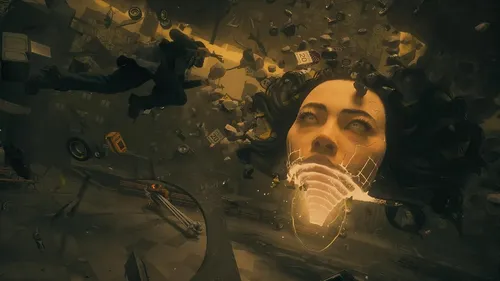
Konami and Annapurna Interactive jointly unveiled Pilotpriest’s involvement, framing it as a central pillar of Silent Hill: Townfall’s creative vision. The announcement was not a mere press statement but an experiential reveal. Accompanying the news was a teaser video that masterfully intertwined the composer’s established aesthetic with the game’s nascent visual identity. The track “Home,” a melancholic and textured piece from Pilotpriest’s own discography, provided the sonic backdrop to slow, atmospheric pans across what appear to be derelict interiors and fog-drenched, otherworldly spaces. This synergistic presentation immediately established a tonal continuity between the artist’s previous work and the game’s intended mood, making it clear that his role is integral to the project’s foundation rather than a last-minute addition.
Understanding the Pilotpriest Sonic Signature
To grasp the significance of this hiring, one must first understand the musical world Pilotpriest—the alias of composer and producer Colin Z. Theil—inhabits. His work is a meticulously crafted fusion of 1980s retro-electronica, synthwave, dark ambient, and cinematic score elements. It is characterized by deep, pulsating basslines, ethereal synthesizer pads, reverberating percussion, and melodies that are often simultaneously beautiful and deeply somber. His compositions, such as those found on albums like Original Motion Picture Soundtrack and TRON: Legacy Reconfigured, excel at building immersive, emotionally charged atmospheres. They evoke a sense of nostalgia, loneliness, and urban melancholy, often feeling like the soundtrack to a rain-slicked, neon-lit cityscape at 3 AM. This distinct audio palette is precisely what makes him such a compelling choice for the psychological and environmental horror of Silent Hill.
A Legacy of Synth and Atmosphere
Pilotpriest’s style is deeply indebted to the synthesizer-driven scores of classic horror and sci-fi films from the 70s and 80s, an era whose sonic textures have seen a major resurgence in modern genre media. His ability to manipulate vintage synth sounds to feel both warmly familiar and eerily alien aligns perfectly with Silent Hill’s core aesthetic, where the mundane world rots and peels away to reveal a grotesque, industrial nightmare beneath. Unlike modern orchestral horror scores that often rely on sudden stings and cacophony, Pilotpriist’s approach is one of sustained dread and pervasive unease, a slow-burn psychological pressure that gets under the skin—a method far more suited to Silent Hill’s brand of terror.
Synergy with Silent Hill’s Audio Legacy
The Silent Hill series has a legendary audio heritage, primarily defined by the groundbreaking work of Akira Yamaoka, who composed the music and designed the sound for most of the franchise’s core titles. Yamaoka’s genius lay in his fusion of industrial noise, alternative rock, trip-hop, and haunting melodic phrases. His sound was the rusty, beating heart of the town itself. While Pilotpriest’s musical influences are different, his core competency—crafting immersive, emotionally resonant, and texturally rich atmospheres—directly parallels Yamaoka’s. The appointment suggests that the developers are not seeking to replicate Yamaoka’s sound but to capture its function: using music as a primary vector for emotional and psychological storytelling. Pilotpriest represents a logical evolution, applying a contemporary retro-futurist lens to the same goal of deep, atmospheric immersion.

The Role of “Home” in the Teaser
The specific choice of “Home” for the reveal teaser was a masterstroke of thematic suggestion. The track’s wistful, almost grieving melody, layered over gritty electronic textures, creates a profound sense of longing juxtaposed with decay. It immediately conjures themes central to Silent Hill: the corruption of safe spaces, the haunting nature of memory, and the search for a “home” that may no longer exist or may have become monstrous. By using an existing piece that so perfectly encapsulates these feelings, the teaser efficiently communicates the intended emotional core of Townfall and demonstrates Pilotpriest’s innate understanding of the franchise’s psychological underpinnings.
Implications for Silent Hill: Townfall’s Tone and Setting
This compositional direction offers strong clues about the tone and setting of Silent Hill: Townfall. The heavy use of synth and retro-electronica hints at a possible period setting or a stylistic throwback, perhaps leaning into the late 20th-century aesthetic that has become intertwined with modern horror. More importantly, it suggests a horror that is introspective, atmospheric, and rooted in melancholy rather than pure visceral shock. The score implies long stretches of tense exploration, where the environment itself, underscored by shifting synth drones and uneasy melodies, is the primary antagonist. It points toward a Silent Hill experience that prioritizes mood, player introspection, and a slow, creeping descent into madness, aligned with the more experimental approach suggested by its partnership with Annapurna Interactive.
Annapurna Interactive’s Curation of Talent
The involvement of Annapurna Interactive, a publisher renowned for curating distinctive artistic visions in games like Stray and Outer Wilds, cannot be overlooked. Their collaboration with Konami to secure a composer of Pilotpriest’s specific niche acclaim indicates a commitment to a strong, auteur-driven vision for Townfall. This is not a mainstream, focus-tested decision; it is a deliberate artistic choice that aligns with Annapurna’s history of empowering unique creative voices. It raises confidence that Townfall will be a bold, personal interpretation of the Silent Hill mythology, with its audio landscape playing a leading role.
The Community and Industry Reaction
The reaction to the announcement from both long-time series fans and industry observers has been overwhelmingly positive and intrigued. For a community deeply passionate about the franchise’s audio identity, the selection of a composer with such a clearly defined and thematically appropriate style has been seen as a promising sign of respectful innovation. It demonstrates that the developers are thinking carefully about the non-visual elements that define Silent Hill’s horror, easing concerns that a new entry might lose the series’ essential atmospheric DNA. Within the wider industry, the move is seen as a sophisticated and modern approach to video game scoring, further blurring the lines between standalone musical artistry and interactive soundtrack design.
The selection of Pilotpriest to compose the score for Silent Hill: Townfall is one of the most telling and exciting pieces of information we have about the game. It transcends a mere hiring announcement to become a definitive statement of intent. Through the melancholic synths of “Home” and the rich, atmospheric depth of his prior work, a clear picture begins to develop: Townfall aims to be a Silent Hill experience that prioritizes sustained psychological unease, emotional resonance, and a deeply immersive, retro-futurist soundscape. While many questions about the game remain shrouded in fog, the sonic path forward is now brilliantly illuminated, promising a haunting auditory journey that feels both fresh and authentically rooted in the lonely, terrifying heart of the town.