The Video Game Industry Innovations”>video game industry stands at a precipice, with generative artificial intelligence (AI) reshaping its creative and economic foundations at a pace that alarms many. Mike Rose, the head of the independent publisher No More Robots, has become a notable voice in this charged debate, arguing from a pragmatic, albeit grim, perspective. Following the controversial announcement of his studio’s upcoming title, “Earth Must Die,” which revealed the use of generative AI for creating in-game art and dialogue, Rose has made a stark declaration: the spread of generative AI cannot be stopped, and efforts to wholly reject it may be a strategic misstep for developers. His analysis suggests that the technology’s trajectory is inevitable, forcing a painful but necessary industry-wide adaptation rather than offering a path to suppression or easy ethical consensus.
The Unstoppable Momentum of Generative AI Technology
Rose’s central thesis is built on a foundation of technological inevitability. He contends that the development and proliferation of generative AI models is a global phenomenon, advancing across multiple fronts simultaneously. Attempting to halt it, he argues, is as futile as trying to stop the spread of the internet or digital distribution. The tools are becoming cheaper, more accessible, and more powerful by the month, available to studios of all sizes and budgets worldwide. This diffusion of capability breaks down traditional barriers to high-quality asset creation, but it also means there is no single entity to pressure or regulate. The genie, as the saying goes, is out of the bottle and replicating itself autonomously across servers and studios globally.
Economic Pressures and Competitive Necessity
The driving force behind this adoption is not merely technological curiosity but intense economic pressure. The video game industry is notoriously expensive and risky, with development costs soaring and market competition fiercer than ever. Generative AI presents a tantalizing solution to reduce timelines and costs for tasks like concept art, texture generation, placeholder dialogue, and even prototyping. Rose posits that if one studio chooses to forgo these tools on ethical grounds, a dozen others will not, potentially gaining a significant competitive advantage in time-to-market and resource allocation. In this environment, abstention can be perceived as a commercial liability, forcing even wary developers to at least explore and understand the technology.
The “Earth Must Die” Controversy as a Case Study
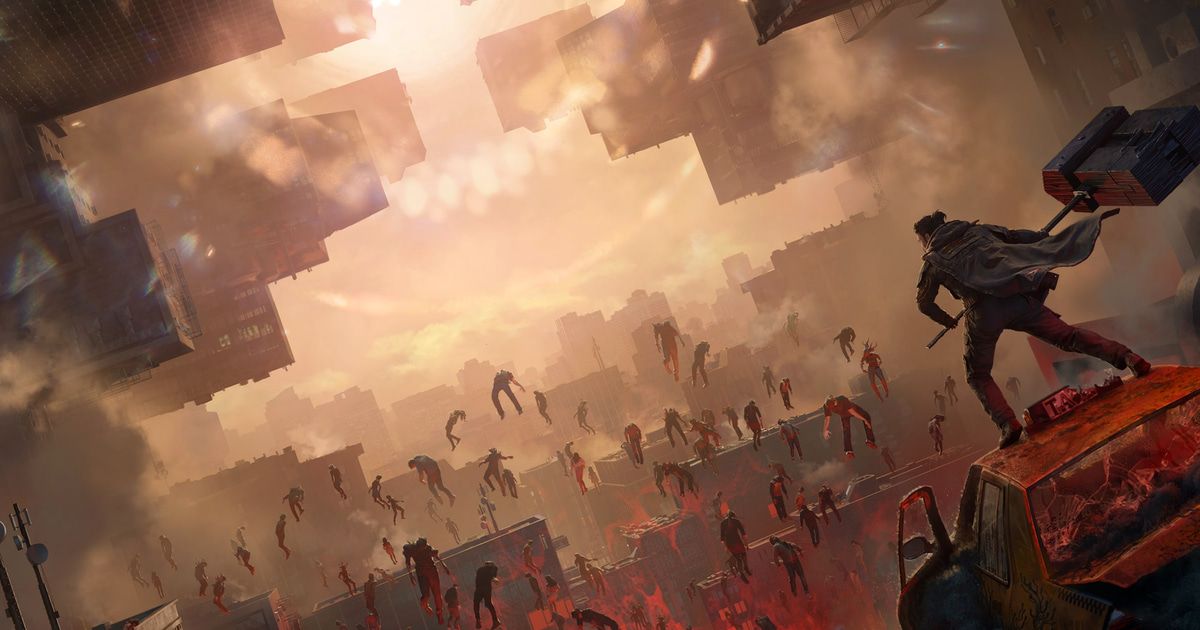
Rose’s publisher, No More Robots, found itself at the epicenter of this debate with “Earth Must Die.” The game’s announcement prominently featured that its artwork and thousands of lines of dialogue were created using generative AI. The backlash from segments of the gaming community and industry professionals was swift and severe, criticizing the move as a threat to artist jobs and an embrace of ethically dubious, copyright-questionable technology. Rose, however, used the controversy not to retreat but to double down on his argument. He framed the project as a necessary experiment and a statement of reality. The predictable outrage, in his view, highlights the emotional and ideological chasm between the current ethical stance of many creatives and the economic and technological forces that are already in motion.
Reframing the Ethical and Practical Debate
Rather than dismissing ethical concerns, Rose challenges the industry to move beyond a simple binary of “for” or “against” AI. He argues that the conversation must pivot from impossible prohibition to necessary governance. Key questions become: How do we use these tools transparently and responsibly? How can they augment human creativity rather than simply replace it? What new business models and credit structures are required? Rose suggests that trade unions and industry bodies are fighting a rearguard action against the technology itself, a battle he believes is already lost. Instead, he urges them to focus their formidable influence on shaping the conditions of its use—fighting for fair compensation, clear labeling of AI-assisted content, and robust contracts that protect human creative roles within a new, AI-augmented workflow.

The Inevitable Reshaping of Development Roles
A core part of Rose’s difficult message is that job displacement and role evolution are unavoidable. Just as digital art tools transformed the role of illustators and CAD software changed engineering, generative AI will redefine game development jobs. The notion of a “writer” or “concept artist” working in isolation may give way to more hybrid, editorial, and directorial roles. A writer might become a “prompt engineer” and narrative curator, refining and editing vast amounts of AI-generated text to fit a cohesive vision. An artist might spend less time on initial asset creation and more on creative direction, unique detailing, and stylistic oversight of AI-generated batches. This transition will be disruptive and painful, but Rose insists that preparing for it is more productive than denying its eventuality.
A Generational Divide in Acceptance
Rose observes a significant generational split in attitudes toward generative AI. Many established professionals, who have built careers on traditional skills, understandably view the technology as an existential threat. Meanwhile, a younger generation of developers and students, who are digital natives, often perceive AI as just another tool in the kit—powerful, accessible, and ripe for experimentation. They are building fluency with these models alongside traditional skills. This divide complicates industry-wide consensus, as the next wave of developers may enter the workforce with fundamentally different assumptions about the creative process, accelerating adoption from the ground up regardless of top-down resistance from established institutions.
The Path Forward: Adaptation Over Absolutism
For Mike Rose, the conclusion is not a dystopian surrender but a call for clear-eyed adaptation. The future he envisions is not one where AI replaces human creativity entirely, but where it becomes an integrated, regulated, and transparent part of the pipeline. The focus for publishers, developers, and advocates must shift to concrete actions: establishing standards for disclosure, such as “AI-assisted” or “AI-generated” labels on storefronts; re-negotiating contracts to account for AI’s role in development; and investing in education that teaches both the ethical use and the technical mastery of these tools. The goal is to steer the inevitable rather than to wish it away.
Mike Rose’s perspective, forged in the fire of public controversy with “Earth Must Die,” serves as a stark provocateur for the games industry. While his stance is unsettling to many, it forces a critical confrontation with the uncomfortable pace of technological change. The central, sobering idea is that generative AI represents a paradigm shift, not a passing trend. The energy spent on outright resistance might be more effectively channeled into shaping a hybrid future where human ingenuity sets the direction and AI handles an increasing share of the execution, all within a framework that demands transparency, fairness, and a continued reverence for the human spark at the heart of all compelling art. The spread cannot be stopped, but its impact can be guided—and that, according to Rose, is the only battle worth fighting.