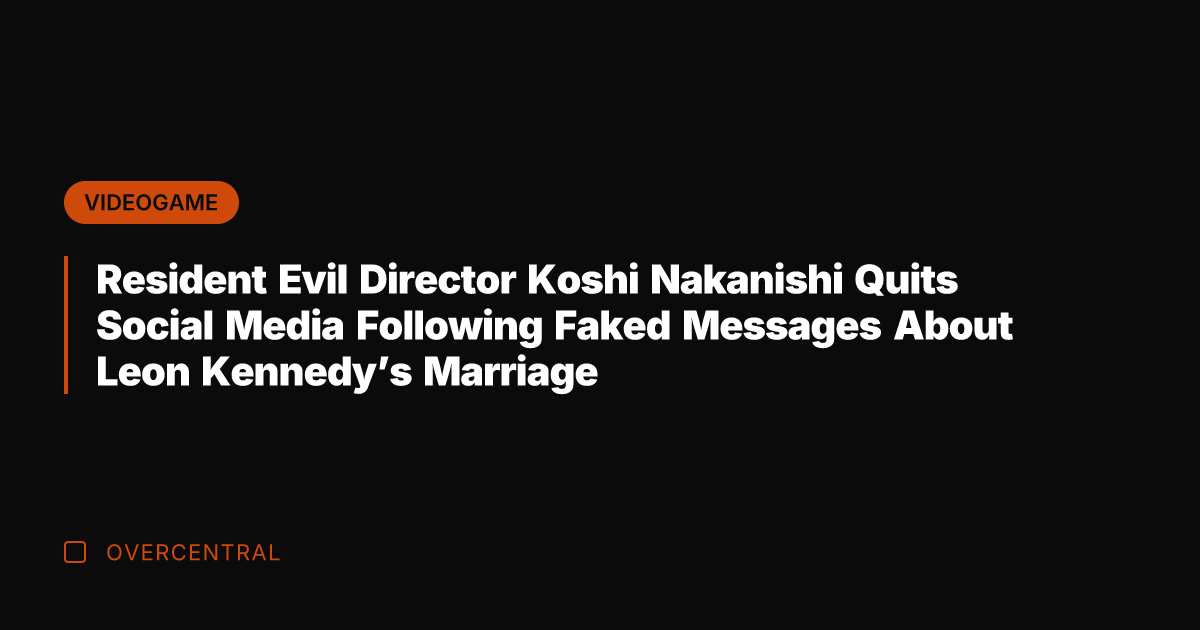
Koshi Nakanishi, the director of the highly anticipated video game Resident Evil Requiem, has publicly announced his departure from social media platforms. This decision comes in the wake of a targeted campaign by fans seeking answers to one of the game’s lingering mysteries and the subsequent circulation of what he claims are manipulated screenshots of private conversations. The incident highlights the intense, and sometimes toxic, relationship between game creators and their most passionate communities, particularly within long-running franchises like Resident Evil.
The Spark: Leon Kennedy’s Wedding Ring
The controversy centers on a seemingly minor detail with major narrative implications. During a pivotal scene in Resident Evil Requiem, veteran protagonist Leon S. Kennedy is shown wearing a wedding band. This visual cue, also present in released concept art, confirms that the iconic government agent has married at some point between games. However, the identity of his spouse is deliberately left unrevealed within the game’s story. This narrative gap, rather than being a point of intrigue, became a battleground for the franchise’s fanbase.
The ‘Ship War’ Reignites
For decades, Leon Kennedy’s romantic life has been a subject of fervent fan speculation. Two primary candidates have dominated the discussion, each representing a distinct narrative thread from the series’ history. On one side are proponents of Ada Wong, the enigmatic mercenary and occasional ally whose relationship with Leon has been defined by a complex dance of betrayal, trust, and undeniable chemistry across multiple titles. Their interactions are often shrouded in ambiguity and charged with a tense, romantic subtext.
On the opposing side stand fans of Claire Redfield, the resilient civilian who fought alongside Leon during the horrific Raccoon City outbreak depicted in Resident Evil 2. Their bond, forged in survival, is seen as more grounded and emotionally supportive, lacking the professional complications of Leon’s dealings with Ada. The revelation of Leon’s marriage in Requiem did not settle this long-standing debate; instead, it poured fuel on the fire, transforming speculative discussions into a demand for canonical confirmation.
From Speculation to Harassment
The situation escalated when a segment of the fan community moved beyond forum arguments and direct messaging campaigns. Fans began flooding Nakanishi’s personal social media accounts with direct messages, pressuring him for an answer. The director, known for being relatively accessible compared to some of his peers, initially engaged with some of this communication. This openness, however, was exploited.

The Circulation of ‘Edited Prints’
Screenshots, or ‘prints,’ of alleged conversations with Nakanishi began circulating on platforms like Twitter, Reddit, and dedicated Resident Evil forums. These messages were ambiguously worded but were widely interpreted as hinting that Leon had, in fact, married Ada Wong. While not explicit confirmations, the tone and implication were enough for one faction of fans to declare victory. The screenshots spread like wildfire, presented as insider confirmation from the game’s director himself.
This is where Nakanishi draws a firm line. In a series of statements posted to his Instagram stories, he addressed the situation directly. He expressed gratitude for the fans’ passion and acknowledged that receiving their messages “warms his heart.” Yet, he swiftly countered the emerging narrative, stating he had been “called out about prints of edited messages.” This careful phrasing strongly implies that the screenshots being celebrated as proof were, at best, taken out of context or, at worst, digitally fabricated to support a particular fan theory.
The Director’s Retreat
Faced with the spread of this purported misinformation and the overwhelming pressure of the fan campaign, Nakanishi made a decisive choice. He announced he was entering “hermit mode,” effectively signing off from public social media interaction for the foreseeable future. He clarified that he hopes to share official news about the game through proper channels when the time is right, but his direct line to the community is now closed.
A Recurring Industry Problem
Nakanishi’s experience is not an isolated incident in the video game industry or in entertainment media at large. Creators who attempt to maintain an open, informal dialogue with their audience often find themselves vulnerable to misinterpretation, harassment, and the weaponization of their words. The digital age’s culture of instant communication and content sharing can quickly distort a casual comment or a private exchange into a definitive statement, leading to backlash, community infighting, and personal stress for the developers involved.
For a franchise with the historical weight and fan engagement level of Resident Evil, these dynamics are amplified. The series has cultivated a dedicated, global community over nearly three decades. This deep investment is a testament to the strength of the IP, but it also means that narrative decisions—especially those touching on beloved characters’ personal lives—are scrutinized with microscopic intensity. What might be a minor lore detail in another game becomes a seismic event for the Resident Evil fandom.
The Cost of Fan Entitlement
This incident raises critical questions about the boundaries between creators and consumers. While fan engagement is a powerful force that can sustain a franchise for years, it morphs into entitlement when the audience believes it has the right to dictate narrative outcomes or harass creators for answers. The line between passionate support and toxic pressure is often crossed in the anonymity of the internet, with real consequences for the individuals on the receiving end.
The Silence That Follows
Nakanishi’s retreat represents a loss for fans who valued his accessibility. When creators are driven away from public platforms, the community loses a valuable, informal source of insight and connection. The corporate PR statements and curated marketing that fill the void are often sterile by comparison. This creates a paradox: the most vocal and demanding segments of a fanbase can enact behaviors that ultimately destroy the very access they claim to cherish.
Narrative Authority vs. Fan Interpretation
At its core, the debate over Leon’s marriage touches on a fundamental tension in serialized storytelling: who controls the narrative? The director’s implied stance—that answers will come through official channels—reasserts the creators’ authority over their own story. However, the fervor of the “ship war” demonstrates the power of fan interpretation and the desire for ownership over fictional worlds. A mystery like Leon’s spouse is potent precisely because it is unanswered; it lives in the imagination of the player. Canonical confirmation, whichever way it goes, will inevitably disappoint a significant portion of the audience.
Looking Ahead to Resident Evil Requiem
The fallout from this social media storm will likely have a chilling effect on how Capcom and the Requiem development team communicate with the public ahead of the game’s release. Expect a more controlled, traditional marketing cycle, with reveals tightly managed through official trailers and press releases. The window into the director’s personal thoughts has been shuttered, at least for now.
Ultimately, the mystery of Leon Kennedy’s wife remains unsolved by any official source. The circulated screenshots have been cast into doubt by the very person they purport to quote. The only certainty is that a game director has chosen to remove himself from the digital fray, citing manipulated content and overwhelming pressure. As the community awaits the next official update, the incident serves as a stark reminder of the human cost behind the games we love and the fine line between fandom and fanaticism. The silence from Nakanishi’s accounts speaks volumes about the state of online discourse, where the hunt for spoilers can override basic respect, leaving creators with no choice but to retreat and protect their creative process from the very audience it is meant to entertain.