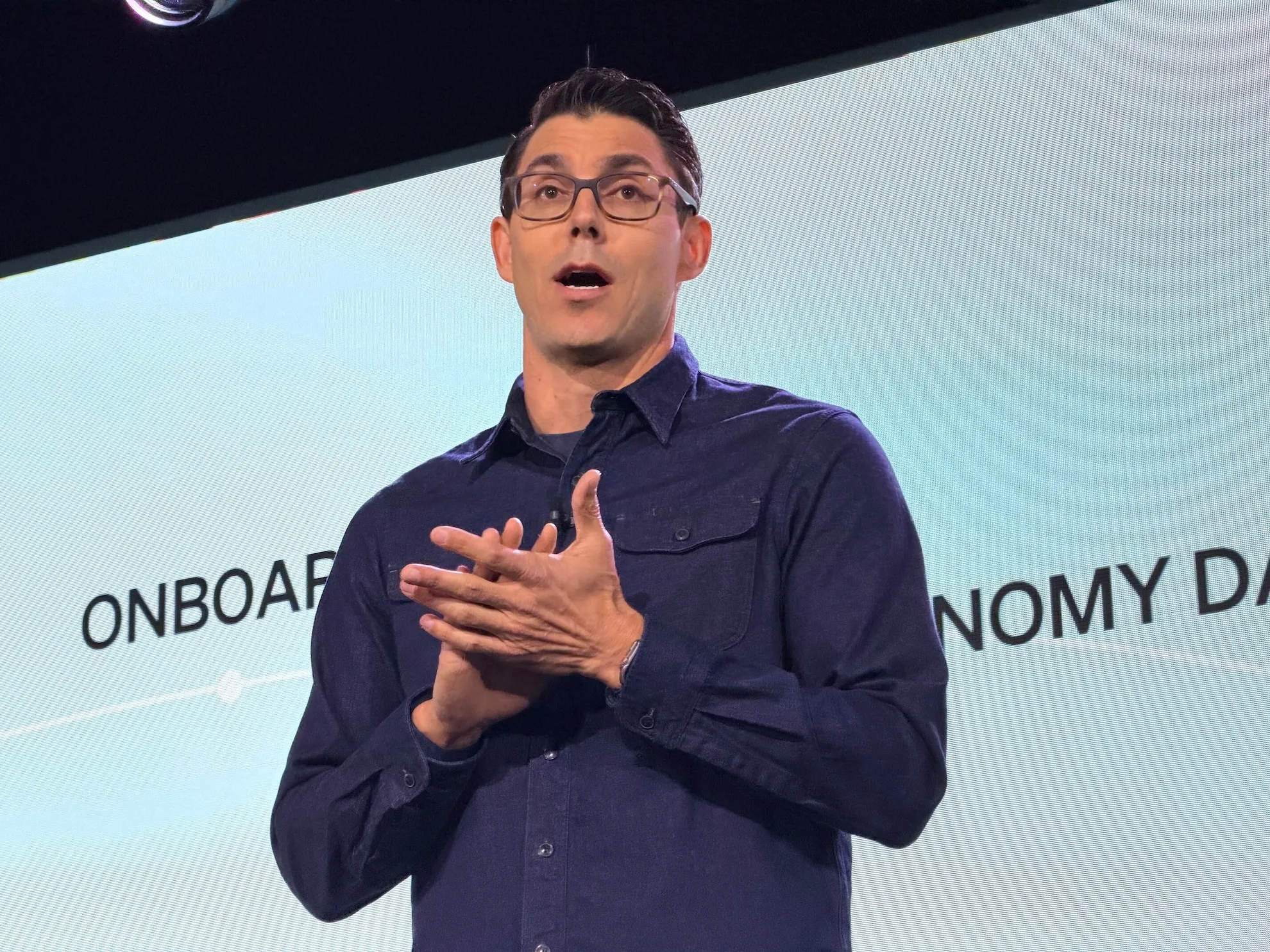
In a fundraising environment that has become increasingly selective, one entrepreneur continues to defy the gravitational pull of a cautious venture capital market. RJ Scaringe, the founder and face of electric vehicle manufacturer Rivian, has amassed a staggering $12.3 billion across three separate startups in less than a decade, a feat that places him in an exceptionally rare echelon of founders who can repeatedly command billions in capital. The latest evidence of this enduring investor enthusiasm arrived with a fresh $400 million injection into his newest venture, Mind Robotics, an industrial AI and robotics company founded just last year. This relentless pace of capital formation, spanning everything from heavy-duty EVs to electric micromobility and now autonomous industrial systems, signals that the market’s appetite for Scaringe’s vision remains far from satiated. The total raised across his three active companies now exceeds $12.3 billion, a figure that combines venture capital, strategic investments, and proceeds from Rivian’s historic initial public offering. While outsized seed and early-stage rounds have become more common, they have typically been reserved for founders with pedigree from the AI frontier or defense tech sectors. Scaringe, a self-professed car enthusiast with a doctorate in mechanical engineering from MIT, has managed to channel that same level of institutional fervor into ventures that, on paper, might seem far less fashionable than a general-purpose AI model. In 2025, he raised $105 million for a startup called Also, a venture focused on electric micromobility that has since grown its total funding to over $300 million, counting delivery giant DoorDash among its backers. This was followed by the rapid ascent of Mind Robotics, which has drawn $115 million in its first year, a $500 million Series A in March, and now another $400 million this week. The speed at which capital has flowed into these new entities is staggering, especially when compared to the long, quiet years Scaringe spent building Rivian under the radar. For years, the company originally named Mainstream Motors operated as a small, virtually unknown entity until its breakout moment at the Los Angeles Auto Show in late 2018, where it unveiled the prototypes of the R1T pickup and R1S SUV. The money that followed was historic. In 2019 alone, Rivian raised a $700 million round led by Amazon, a $500 million investment from Ford, $350 million from Cox Automotive, and a $1.3 billion round led by T. Rowe Price. The momentum continued into 2020 with a $2.5 billion raise, followed by another $2.65 billion in early 2021. Just months before its public debut, Rivian closed yet another $2.5 billion private round. The company’s IPO in November 2021 was a landmark event, with gross proceeds of nearly $12 billion and a market capitalization that briefly touched $100 billion. Today, Rivian’s market cap stands at approximately $18.2 billion, a significant comedown that mirrors the broader struggles of the EV sector, yet the company continues to attract strategic partners. A $5.8 billion joint venture with Volkswagen Group and a robotaxi partnership valued at up to $1.25 billion with Uber underscore that the institutional belief in Scaringe’s long-term vision remains intact. What explains this seemingly limitless access to capital? According to investors who have worked closely with him, the answer lies in a rare combination of technical depth and extraordinary communication skill. Jiten Behl, a partner at Eclipse who previously served as Rivian’s chief growth officer, has watched Scaringe pitch to investors for years. He describes storytelling and communication as one of Scaringe’s superpowers. When Scaringe explains a complex issue or an ambitious vision, he does so with a credibility that is free from the usual startup hyperbole. He does not undersell the difficulty, nor does he oversell the opportunity. That balance, Behl argues, is an art form. This ability to separate the idea from the self is a defining characteristic. While Scaringe is often compared to other prolific capital raisers like Elon Musk, Sam Altman, Palmer Luckey, or Jack Dorsey, investors are quick to note a critical difference. He is very comfortable and confident in his own personality, and he is not trying to be an Elon, Behl explained, pushing back against a comparison that has frequently been made over the years. An insider familiar with Scaringe’s companies echoed this sentiment, noting that his enthusiasm is entirely externalized toward the product. It is not about him. When you talk to him, he has enthusiasm about the product that is completely external. This external focus allows him to make every investor, supplier, or executive feel like the most important person in the room, a skill that becomes increasingly difficult to maintain as the demands on his time escalate. He is currently running three companies, shuttling between Palo Alto, Irvine, Rivian’s factory in Normal, Illinois, and a second facility in Georgia, all while managing a personal life that includes three sons with his ex-wife. Joe Fath, another partner at Eclipse who previously worked at T. Rowe Price, credits Scaringe’s open-mindedness and collaborative nature for his ability to attract capital across such disparate businesses. More importantly, Fath highlights Scaringe’s rare combination of deep engineering skill and an exceptional instinct for product design. Very few founders can operate at that level technically while also understanding what resonates emotionally with customers, both consumers and commercial buyers, Fath said. That combination is incredibly uncommon and has clearly been part of what makes Rivian’s products, and now Also and Mind’s, so differentiated. This technical and emotional duality explains how Scaringe can pivot from building a $100,000 electric pickup truck to designing a last-mile delivery vehicle for DoorDash, and then to developing industrial robotics powered by AI. The velocity of Scaringe’s latest ventures, particularly Mind Robotics, suggests that the strategy is working with increasing efficiency. The startup’s total funding has now surpassed $1 billion in less than two years, a pace that rivals the most aggressive AI startups in the world. The big question, as Behl frames it, is not whether Scaringe will succeed, but how much he can actually do. That question, however, already assumes he is reaching his limit. The thing is, he does not look at it that way, Behl added. His perspective is that there is huge value to be created, there is huge impact to be created, and I just have to do it. For investors who have backed Scaringe through the highs of a $100 billion market cap and the lows of a punishing EV market correction, that unwavering conviction is precisely what makes him such a compelling bet, time and time again.