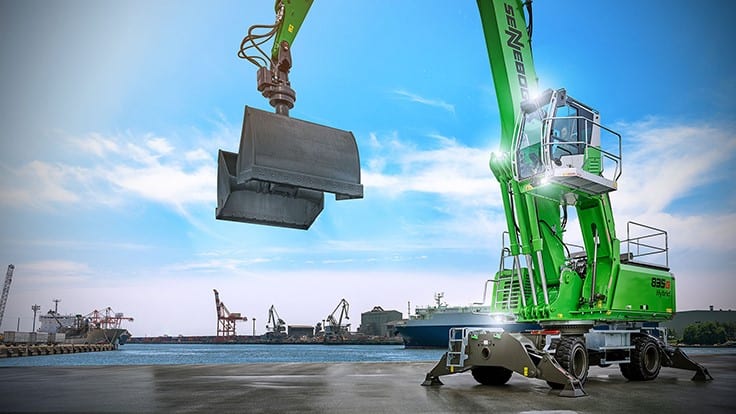
German industrial equipment manufacturer Sennebogen has unveiled a semi-autonomous material handling system that marks a significant step forward in the electrification and digitalization of recycling operations. The integrated solution, which pairs an electric wheeled excavator with a mobile battery energy storage system and a communicating mobile shredder, is designed to address one of the most persistent operational challenges in recycling plants: maintaining optimal shredder feed rates while minimizing equipment wear and maximizing throughput. The system made its public debut at the IFAT 2026 trade fair in Munich, one of the largest international gatherings for water, sewage, waste, and raw materials management, and it immediately drew attention for its potential to reshape how European recycling facilities manage their material processing workflows. At the heart of the innovation is a direct communication link between the shredder and the excavator, a connection that allows the processing equipment to signal real-time feed demands to the operator, effectively closing a feedback loop that has traditionally relied almost entirely on human judgment and experience. This development comes at a time when recycling plants across Europe are under mounting pressure to increase throughput, reduce energy consumption, and lower their carbon footprints, all while contending with increasingly complex material streams and tightening regulatory standards.
A New Approach to an Old Problem in Shredder Feeding
The fundamental challenge that Sennebogen is targeting with its new system is one that has plagued recycling operations for decades: how to feed a shredder at a rate that keeps it operating at peak efficiency without overloading it. Historically, this task has fallen entirely on the shoulders of the excavator operator, who must visually assess the material being fed, monitor the shredder’s performance, and adjust the feed rate accordingly. Even the most experienced operators struggle with this balancing act, because the composition of recycled materials can vary dramatically from one load to the next. A batch that appears uniform may contain dense metals, light plastics, or moisture-laden organic matter, all of which behave differently inside the shredder. The operator must constantly guess whether the machine can handle more material or whether it needs to slow down to avoid a jam. Overfeeding leads to blockages, excessive wear on crushing components, and unplanned downtime. Underfeeding, on the other hand, means the shredder runs below its optimal capacity, wasting energy and reducing overall plant throughput. Sennebogen’s new system replaces this guesswork with direct, machine-to-machine communication. The shredder monitors its own internal load, motor current, and processing speed, and it transmits that data to the excavator and its operator. When the shredder determines it can accept more material, it signals the operator to increase the feed rate. When it is approaching its limit, it advises the operator to slow down or pause. This continuous exchange of information allows the operator to keep the shredder operating at or near its optimal load point for extended periods, reducing the frequency of both overload events and idle cycles.
How the Autonomous Communication Loop Works in Practice
The system’s operational logic is deceptively simple but technologically sophisticated. The shredder is equipped with sensors that track key performance indicators such as torque, motor temperature, vibration levels, and material throughput. These data points are processed by an onboard control unit that assesses the machine’s current state and predicts its near-term capacity. This assessment is then communicated wirelessly to the excavator’s cab display, where the operator receives clear, actionable guidance. The interface may indicate a green light to continue at the current rate, a prompt to increase the feed, or a warning to reduce or halt input. The operator retains ultimate control of the machine, but the system provides a level of real-time, data-driven decision support that has not been available in mobile material handling applications until now. For plant operators, the practical implications are substantial. The system enables more consistent material flow into the shredder, which stabilizes the entire processing line downstream. When the shredder runs at a steady pace, the output material is more uniform in size and composition, which in turn improves the efficiency of downstream sorting and separation equipment. The reduction in overload events also translates directly into lower maintenance costs, as the shredder’s cutting teeth, anvils, and drive components experience fewer stress spikes and less cyclical fatigue. Downtime caused by blockages or mechanical failures drops, and the intervals between scheduled maintenance can be extended. For plant maintenance managers, these are among the most valuable operational improvements that can be achieved, because they directly impact both the bottom line and the predictability of plant operations.
Full Electrification with Mobile Battery Storage and Grid Flexibility
Beyond its autonomous capabilities, the new system is notable for its comprehensive electrification strategy. The material handler itself is fully electric, capable of operating either on its own onboard battery pack or connected to grid power. This eliminates diesel emissions, reduces noise pollution, and significantly lowers energy costs compared to conventional hydraulic excavators powered by internal combustion engines. But Sennebogen has gone a step further by integrating the system with its own mobile battery energy storage system, the 826 G Electro BESS. This towable battery unit can supply power to the excavator and the shredder when no fixed grid connection is available, enabling the entire setup to operate in remote or temporary locations such as construction and demolition sites where grid access is limited or nonexistent. The BESS unit can sustain continuous operation for up to seven hours on a single charge, which is sufficient for a full working shift in many recycling applications. The battery system is also integrated into the communication loop, enabling intelligent energy management. During periods of peak electricity pricing, the system can automatically switch from grid power to battery power, reducing energy costs. During off-peak hours, the battery can be recharged from the grid at lower rates, further optimizing the total cost of operation. When a fixed grid connection is available, both the material handler and the BESS unit can be plugged in directly, providing unlimited runtime for facilities that operate around the clock. This dual-mode flexibility is particularly valuable in markets where electricity prices fluctuate significantly during the day or where grid capacity is constrained.
Industry Context and Sennebogen’s Electric Trajectory
This latest development builds on a foundation that Sennebogen has been laying for several years. The company launched its first battery electric material handlers approximately three years ago, introducing the G-series models 824 and 826 Electro Battery. Those machines quickly gained a reputation for efficient, emission-free operation and operational flexibility, becoming popular choices in recycling yards, port facilities, and biomass processing plants across Europe. The addition of autonomous shredder communication represents a natural evolution of that platform, adding a layer of digital intelligence that enhances the productivity gains already achieved through electrification. The timing of this launch is strategic. Recycling operations across the European Union and beyond are facing a convergence of pressures that make both electrification and automation increasingly attractive. Diesel fuel costs have risen dramatically in many markets, eroding the operating margins of plants that rely on conventional equipment. At the same time, emissions regulations are becoming more stringent, with many jurisdictions tightening limits on particulate matter, nitrogen oxides, and carbon dioxide from industrial equipment. Several European cities and regions have introduced low-emission zones that restrict or penalize the use of diesel-powered machinery, and these restrictions are expected to expand in the coming years. Electric equipment offers a straightforward path to compliance with these regulations, and the addition of autonomous features further strengthens the business case by improving productivity and reducing operating costs.

Market Implications and the Broader Shift Toward Intelligent Equipment
Sennebogen’s new system also reflects a broader trend in the heavy equipment industry toward what might be called intelligent electrification. Manufacturers across multiple segments are recognizing that simply replacing a diesel engine with an electric motor is not enough to achieve the full potential of electrification. The real gains come from integrating electric drivetrains with digital control systems that can optimize performance in real time. In the case of material handling for recycling, the ability to coordinate the behavior of multiple machines on a single site represents a meaningful step toward the fully automated recycling plant of the future. While the system demonstrated at IFAT 2026 is semi-autonomous, meaning it provides decision support to a human operator rather than replacing the operator entirely, the underlying technology platform can be extended to higher levels of autonomy in the future. The communication protocol between the shredder and the excavator could eventually support fully automated material feeding, with the excavator operating without direct human intervention under certain conditions. For now, the practical benefits of the semi-autonomous approach are substantial enough to make the system attractive to plant operators who want to improve efficiency without taking on the complexity and regulatory uncertainty associated with fully autonomous machinery.
Operational Benefits for Plant Managers and Maintenance Teams
For the individuals who are responsible for keeping recycling plants running day in and day out, the most compelling aspect of Sennebogen’s new system may be its impact on equipment reliability and maintenance scheduling. Shredders are among the most expensive machines in a recycling plant to maintain, with wear components that must be replaced regularly and drive systems that are subject to extreme stresses. By keeping the shredder operating at a steady, optimal load, the autonomous feeding system reduces the frequency and severity of the shock loads that accelerate wear and lead to premature component failure. The result is longer intervals between maintenance events, lower parts consumption, and fewer unplanned outages that disrupt the entire plant’s operations. For plant maintenance managers, who are often evaluated on metrics such as equipment availability, mean time between failures, and maintenance cost per ton of material processed, these improvements translate directly into better performance against their key performance indicators. The system also provides data that can be used for predictive maintenance planning, as the communication loop logs information about machine loads, operating hours, and performance trends that can be analyzed to forecast when components are likely to require attention.
Competitive Positioning and Long-Term Strategic Significance
Sennebogen is not the only manufacturer pursuing electrification and autonomy in material handling equipment, but the company’s integrated approach that combines electric drivetrains, mobile battery storage, and machine-to-machine communication sets it apart from competitors that have focused on these elements in isolation. By offering a complete system rather than individual components, Sennebogen simplifies the procurement process for plant operators and ensures that all elements of the system are designed to work together from the outset. This integration also makes it easier for the company to deliver software updates and performance enhancements over the life of the equipment, a capability that is becoming increasingly important as digital control systems become more central to machine performance. The long-term strategic significance of this development extends beyond the recycling industry itself. The technologies that Sennebogen is demonstrating in this application electric drivetrains, mobile energy storage, real-time machine communication, and autonomous process optimization are broadly applicable across many sectors of the heavy equipment industry. The lessons learned from deploying these systems in the demanding environment of recycling plants, where material variability and operating conditions are among the most challenging in any industry, will inform the development of similar solutions for ports, mining operations, construction sites, and agricultural facilities. In this sense, the system shown at IFAT 2026 is not just a new product but a proof of concept for a broader vision of how heavy equipment will be designed, powered, and operated in the years ahead.
Looking Forward: The Path to Broader Adoption
The reception that Sennebogen’s semi-autonomous electric material handler receives from the market will depend on several factors, including the total cost of ownership compared to conventional alternatives, the availability of charging infrastructure at customer sites, and the willingness of plant operators to adopt a new operational paradigm that relies more heavily on data and automation. Early adopters, particularly in European markets where electricity costs are high and emissions regulations are stringent, are likely to see the strongest near-term return on investment. As battery costs continue to decline and charging infrastructure becomes more widespread, the addressable market for this type of equipment will expand. The autonomous communication feature adds incremental value that strengthens the business case, particularly in high-throughput facilities where even small improvements in shredder utilization translate into significant financial gains over the course of a year. For Sennebogen, the successful deployment of this system in real-world recycling plants will also generate valuable operational data that can be used to refine the technology and develop additional features for future product releases. The company has positioned itself at the intersection of two of the most important trends in the industrial equipment sector: electrification and digitalization. If the system performs as expected in customer operations, it could become a reference point for the entire industry, demonstrating that the combination of electric power and intelligent control is not just an environmentally responsible choice but also a commercially superior one.