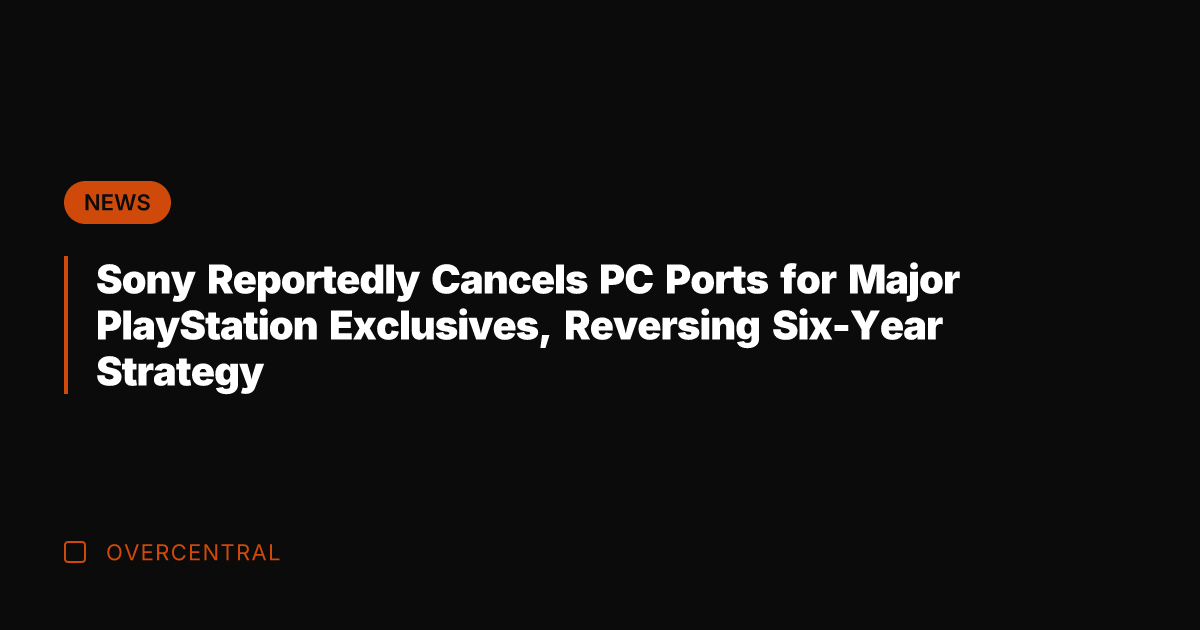
In a strategic pivot that has sent shockwaves through the gaming industry, Sony Interactive Entertainment has reportedly abandoned plans to release major first-party PlayStation 5 titles on PC, according to a new report from Bloomberg’s Jason Schreier. This decision marks a dramatic reversal of a six-year initiative to expand PlayStation’s reach beyond its console ecosystem, potentially signaling a return to the aggressive exclusivity tactics that defined earlier console generations.
The Reported Cancellations and Their Immediate Impact
The report indicates that Sony has “scrapped” planned PC ports for several of its flagship single-player experiences. This includes last year’s critically acclaimed open-world action game, Ghost of Yotei, and the anticipated sci-fi adventure Saros. While not explicitly named in the initial report, Schreier later suggested on the ResetEra forum that the highly anticipated Marvel’s Wolverine from Insomniac Games also falls under this new policy. For PC gamers who had grown accustomed to delayed but eventual releases of PlayStation’s narrative-driven epics, this represents a significant contraction of available content.
What Games Are Still Coming to PC?
Not all PlayStation Studios projects are affected by this apparent policy shift. The report clarifies that multiplayer and live-service titles are expected to maintain a multi-platform release strategy. Games like Bungie’s Marathon and the superhero team-up Marvel Tokon are still slated for simultaneous or near-simultaneous launches on PC. Furthermore, externally developed projects published by Sony, such as Kojima Productions’ Death Stranding 2 and the sequel Kena: Scars of Kosmora, may retain the flexibility to come to PC, depending on their individual development agreements.
The Financial Calculus Behind the Strategic Reversal
The primary driver behind this decision appears to be starkly economic. An analysis of Sony’s recent financial performance reveals a significant disparity in revenue generation between its core platform and external storefronts. According to the company’s own results, PC and other non-PlayStation platforms contributed approximately $650 million in revenue. In contrast, the PlayStation Store alone generated a staggering $16.5 billion.
The Problem of Diminishing Returns and Platform Cuts
The financial model for PC ports has presented several challenges for Sony. Recent ports, such as Marvel’s Spider-Man: Miles Morales and The Last of Us Part I, typically arrived on PC six to twelve months after their PlayStation 5 debuts. By that time, the peak marketing hype and cultural conversation had often subsided, leading to diminished sales potential. Furthermore, when these games do sell on PC, Sony must contend with the standard 30% revenue share taken by digital storefronts like Steam and the Epic Games Store. When factoring in the additional development and marketing costs for the port itself, the net profit margin becomes significantly less attractive compared to a sale within the PlayStation ecosystem, where Sony retains the full revenue after its own storefront fee.
A Shift in Leadership and Corporate Philosophy
This strategic U-turn coincides with a significant leadership transition at Sony Interactive Entertainment. The original push toward PC began under former PlayStation boss Shawn Layden, who viewed PC releases as a method to extend a game’s commercial lifespan and reach new audiences. His successor, Jim Ryan, aggressively expanded this strategy, culminating in the acquisition of specialist porting studio Nixxes Software to streamline the process.
The Nishino Era and a Return to Hardware-Centric Thinking
The company is now led by co-CEOs, with Hideaki Nishino overseeing the Platform Business Group. Nishino’s background is deeply rooted in hardware engineering and platform strategy, having played key roles in the development of the PlayStation 4 and PlayStation 5. His ascent to leadership is interpreted by many analysts as a signal that Sony is re-prioritizing the console hardware itself as the central pillar of its business. This philosophy aligns with the traditional “console war” playbook: using must-have exclusive software to drive hardware sales, which in turn locks users into a lucrative ecosystem of game purchases, subscriptions, and microtransactions.
The Broader Market Context and the Looming PS6
Sony’s recalibration does not occur in a vacuum. The competitive landscape is shifting. In Japan, PlayStation’s home market, brand popularity has shown signs of waning against the enduring cultural force of Nintendo, which is riding a wave of success with its Switch 2 console and blockbuster movie adaptations of its franchises. Meanwhile, Microsoft’s ambitious strategy of making Xbox a ubiquitous service across consoles, PCs, and cloud devices has not yet delivered the market dominance some predicted, leaving an opening for Sony to reinforce a more traditional, walled-garden approach.
Positioning for the Next Generation
The timing of this policy shift is likely strategic, with an eye toward the next hardware cycle. Industry whispers suggest the PlayStation 5 lifecycle may be extended, potentially delaying the PlayStation 6. If true, Sony may feel the need to reinvigorate the value proposition of the PlayStation brand in the interim. By clawing back its most prestigious single-player games as permanent exclusives, Sony aims to strengthen the argument that owning a PlayStation console is the only way to access the industry’s most celebrated narrative experiences. This creates a powerful software arsenal to launch the PS6, whenever it arrives, ensuring a strong value proposition from day one.
Implications for Gamers and the Industry
For consumers, this development creates a clearer, if more divided, landscape. PC gamers lose access to a pipeline of top-tier, story-driven games, potentially pushing them toward console ownership if they wish to play titles like the next God of War or a hypothetical The Last of Us Part III. PlayStation console owners, however, regain a key point of differentiation for their platform, reinforcing the hardware’s value. For the industry, it represents a potential cooling of the trend toward platform agnosticism for major AAA releases, reaffirming the power of exclusive content in the high-stakes hardware business.
The reported cancellation of these PC ports is more than a simple change in release schedules; it is a statement of intent. It suggests that Sony, after years of experimenting with a more open model, believes its future strength lies not in being a multiplatform publisher, but in being the unrivaled curator and gatekeeper of a premium, exclusive gaming experience. The success of this gamble will ultimately be measured by PlayStation 6 sales figures and the continued loyalty of its core audience, setting the stage for the next chapter in the enduring console competition.