The central bottleneck in modern robotics is not the sophistication of the underlying model architecture, but the sheer volume of diverse, reliable experience a machine requires to function in the physical world. Real-world data remains prohibitively expensive to collect and notoriously difficult to control, while even vast repositories of online video fail to systematically cover the full spectrum of objects, environmental conditions, and potential failure states. World Labs, the spatial intelligence company founded by AI luminary Fei-Fei Li, has introduced a new engine designed to bridge this gap by transforming a single real-world task into thousands of controlled simulated variations, effectively creating a high-fidelity training ground for robot control policies.
From One Real Demonstration to Thousands of Synthetic Scenarios
The core innovation from World Labs is its Reality-to-Simulation-to-Reality (R2S2R) engine, which addresses the fundamental data scarcity problem that has long hampered robot deployment. Instead of requiring countless hours of human-operated demonstrations or expensive, precisely instrumented physical trials, the system begins with a single recording of a real-world task. The engine captures the entire scene—the robot, its sensors, the environment, and the demonstration of the task—and reconstructs it as an interactive virtual world. This is not a superficial visual mimicry; the simulation is designed to behave with the same physical properties as the original environment.
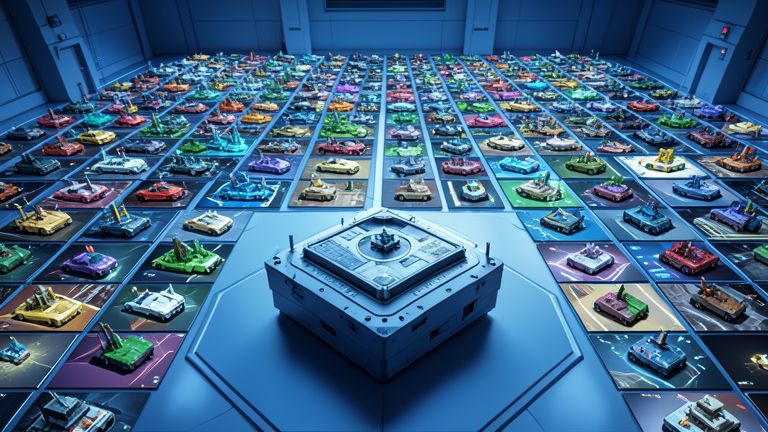
World Labs achieves this fidelity by combining generative world models with task-oriented robot simulation frameworks. Once the virtual world is established, the engine systematically generates thousands of variations from the initial seed recording. These modifications alter lighting conditions, the position and number of objects, the surrounding clutter, and fundamental physical properties like friction and mass. Camera angles and robot starting states are also randomized. To validate the accuracy of these simulations, World Labs runs identical action sequences in both the simulated and real environments, comparing observations, object movements, and final outcomes side-by-side.
The system has demonstrated its capabilities across a range of physical interactions, including rigid objects, deformable materials, and bi-manual coordination. Specific examples shown include routing a flexible power cable around a refrigerator, inserting an elastic cable end into a tight hole, and packing a box using both hands simultaneously. These tasks represent precisely the kinds of complex, contact-rich manipulations that have historically been difficult for robots to learn reliably.
What is the R2S2R engine and how does it turn one task into thousands of variations?
The R2S2R engine is a system developed by World Labs that reconstructs a single real-world robot demonstration into a fully interactive, physically consistent simulation. It then uses this simulation as a template to automatically generate thousands of controlled variations by procedurally altering environmental factors such as lighting, object positions and quantities, physical properties like friction, and camera perspectives. This creates a vast, diverse training dataset from a single source input.
Control Policies Trained Entirely in Simulation
Perhaps the most significant claim from World Labs is that the control policies trained within these simulations transfer directly to physical hardware with no additional real-world training. The company tested this claim extensively using the ALOHA robot platform, an open-source, low-cost dual-arm system developed at Stanford University. ALOHA is operated via puppeteering with smaller control arms and has become a standard reference platform in academic and industrial robotics research due to its publicly available blueprints and minimal cost compared to commercial alternatives.
World Labs reports that control models trained solely on the generated simulation data ran for one continuous hour across four additional, distinct robot platforms without any form of human intervention. The scope of tasks included wrapping a power cord around a refrigerator with both arms, precisely repositioning test tubes, and separating thin objects like markers and pencils from a dense, jumbled pile. The critical architectural feature of the system is its agnosticism; it is not tied to any specific control model or robot type. A virtual world reconstructed once can be reused indefinitely to train new models or even to test completely different robot hardware configurations.
Simulation Becomes a Proxy for Real Hardware Evaluation
World Labs argues that the development cycle for robotic control policies has lagged far behind progress in language models precisely because evaluating those policies has historically required testing on expensive, scarce real hardware. The company’s research suggests that a sufficiently accurate simulation does not need to perfectly match the success rates of reality. Instead, its value lies in whether it can answer the same critical questions: Where does a model fail? Which version of a policy is demonstrably better? Do improvements seen in simulation carry over to the physical robot?
To test this hypothesis, the team evaluated a two-handed cube handoff task on the ALOHA platform. According to World Labs, the R2S2R simulation faithfully reproduced not only the successful grasps but the borderline cases where the robot barely grasped the cube by its edge, as well as the exact matching failed attempts. Crucially, across different model architectures—including NVIDIA’s GR00T N1.6 and Physical Intelligence’s π₀.₅—and across different stages of training, the ranking of model performance in simulation remained largely identical to the ranking observed on real hardware. This consistency held for both known cube positions and previously unseen configurations. Each policy checkpoint was evaluated using 2,000 simulated runs and 100 real-world runs to confirm the correlation.
This capability has immediate practical implications for development teams. They can now filter out weak or failing model versions using high-throughput simulation, reserving expensive and time-consuming hardware tests for only the most promising candidate policies.
The Simulator’s Role in World Labs’ Broader Spatial Intelligence Strategy
These results do not exist in a vacuum. World Labs explicitly ties the R2S2R engine back to its broader taxonomy of world models, a framework that categorizes how artificial intelligence can understand and interact with the physical world. Within that framework, the task-oriented simulator is the central, critical component because it transforms an observed environment into a place where software agents can act, learn from their mistakes, and be rigorously tested. The company draws a direct parallel to the evolution of autonomous driving, where the most successful Level 3 and Level 4 systems often train on a carefully curated mixture of real-world driving data and high-fidelity simulated scenarios.
World Labs was founded in 2024 by Fei-Fei Li, a pioneering AI researcher often called the “godmother of AI,” with the explicit goal of building models that possess spatial intelligence—the ability to understand and navigate the three-dimensional physical world. An early project from the company generated walkable 3D environments from single photographs, hinting at its ambition to build comprehensive models of physical space. More recently, the company raised one billion dollars in venture capital, signaling strong market confidence in its vision to extend world models into robotics and scientific simulation. The R2S2R engine represents the first concrete application of that capital and vision in the field of robotics.
How does simulation-based testing compare to real hardware evaluation?
World Labs’ research indicates that simulation can act as a highly effective proxy for real hardware evaluation during the development cycle. By running 2,000 simulated tests per model checkpoint, the team found that the performance ranking of different control policies in simulation closely matched the ranking on physical robots. This allows developers to filter out weak models in simulation and reserve expensive real-world testing for the most promising candidates.
Placing R2S2R in the Context of a Broader Robotics Debate
This research enters a rapidly evolving and highly contested field. An international research team recently attempted to establish a uniform definition of what constitutes a “world model,” drawing a firm line between predictive video generators and models that truly understand the causal structure of the physical world. World Labs’ approach aligns with the latter, more rigorous definition.
The work also sits alongside other emerging methodologies. One related field is “World Action Models,” which tie a robot’s predictions about the immediate future directly to its control commands, blurring the line between perception and action. This differs from the World Labs approach, where the simulator and the control policy remain separate, distinct components. Another notable competitor is the “Orca” method developed by a team in China, which allows a robot to learn complex manipulation tasks purely by watching video, requiring no real motion data or explicit action labels during training. Each of these approaches represents a different bet on how to best bridge the simulation-to-reality gap.
World Labs frames its long-term objective with a concise logic: to scale the intelligence of robots, you must first scale the worlds in which they can learn. The R2S2R engine is a direct implementation of that philosophy. How effectively these results will transfer to far more complex, unstructured environments—such as a cluttered kitchen or a busy hospital hallway—and to entirely different robot morphologies remains an open and critical question for the field. The foundational claim, however, is that the path to generalist robotics runs not through bigger neural networks alone, but through the creation of a richer, more varied virtual universe for them to inhabit and master.