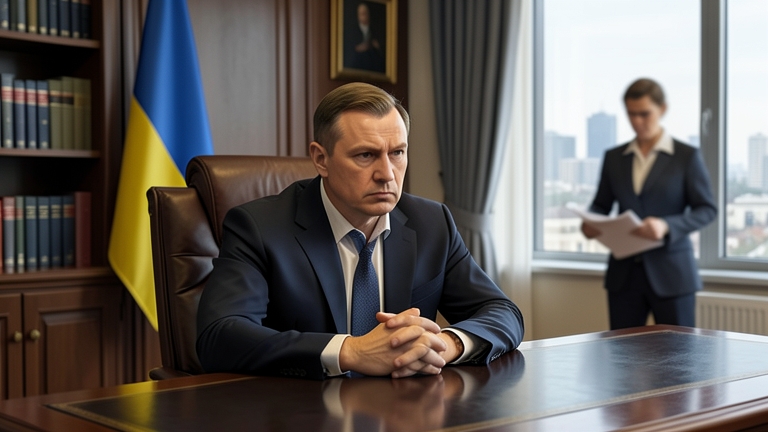
In a dramatic escalation of internal political turmoil, Ukrainian President Volodymyr Zelenskyy has dismissed a senior aide following a series of explosive corruption allegations that have shaken the wartime government. The firing comes just days after a raid on the home of a former top defense official, who has since launched a blistering public attack on the president’s leadership. This latest development signals a deepening rift within Ukraine’s leadership, raising critical questions about governance, accountability, and the fragile unity required to sustain the nation’s war effort against Russia.
Zelenskyy’s Decision: A Swift Response to Corruption Claims
President Zelenskyy’s office confirmed the termination of the aide, whose role involved high-level administrative and policy coordination. The official reason cited was a loss of trust following an internal investigation that uncovered evidence of impropriety. While the specific details of the allegations remain under seal, sources within the presidential administration indicate they involve the misuse of state resources and potential conflicts of interest related to defense procurement contracts. This action is part of a broader crackdown on corruption that Zelenskyy promised during his 2019 election campaign, a pledge that has become increasingly difficult to uphold amid the pressures of war.
The Raid That Sparked the Controversy
The chain of events began with a widely publicized raid on the residence of a former defence minister, who served early in Zelenskyy’s term. Ukrainian law enforcement agencies, operating under the supervision of the Security Service of Ukraine (SBU), executed the search warrant, seizing documents, electronic devices, and financial records. The operation was framed as part of a larger investigation into systemic corruption within the Ministry of Defence, particularly regarding the procurement of military uniforms, medical supplies, and vehicle parts. The former minister, who had previously been fired for “unsatisfactory performance” amid the invasion, has vehemently denied any wrongdoing, labeling the raid a politically motivated persecution designed to silence critics of the president’s strategy.
The Ousted Minister’s Blistering Attack
In the wake of the raid, the former defence minister issued a fiery statement on social media, accusing President Zelenskyy of authoritarian tendencies and “deceiving the Ukrainian people” about the true state of the war. He claimed that the corruption allegations were a smokescreen to divert attention from what he described as “catastrophic failures” in military logistics and a lack of transparency regarding Western aid. “They hunt me for telling the truth about the billions lost in procurement mismanagement and the endless reports of dying soldiers due to poor equipment,” the former minister wrote. “The president has become a prisoner of his own circle, and the nation is paying the price.” This public rebuke marks one of the most direct and damaging criticisms of Zelenskyy’s wartime leadership from within his own former government.
Context of the Scandal: Wartime Governance Under Stress
Ukraine’s anti-corruption efforts have long been a cornerstone of its Western integration, and the issue is deeply intertwined with the country’s survival. The war with Russia has massively increased the state’s role in the economy, with billions of dollars in foreign aid flowing in for military and humanitarian needs. This has created an environment ripe for graft, and critics argue that the emergency powers granted to the government have eroded necessary oversight mechanisms. The firing of the aide and the raid on the ex-minister come at a time when Ukraine is under immense pressure from its allies to demonstrate a commitment to clean governance, particularly as a condition for continued military and financial support from the European Union and the United States.
Internal Rifts and the Military Front
The scandal threatens to create a damaging distraction from the ongoing counteroffensive. Military analysts point out that such high-profile internal conflicts can undermine soldier morale and provide propaganda fodder for Moscow. Russian state media has already seized on the story, portraying it as evidence that the Ukrainian leadership is “rotten” and “incompetent.” Meanwhile, opposition figures within Ukraine’s parliament have called for a full parliamentary inquiry into the Ministry of Defence’s procurement practices, warning that the situation could erode public trust in the presidency. “This is not just about one aide or one minister,” said a prominent opposition MP. “This is about the culture of impunity that has survived despite the war. We need radical transparency, not scapegoats.”
The President’s Balancing Act: Justice vs. Stability
President Zelenskyy finds himself in a precarious position. On one hand, he must show his domestic and international audiences that he is serious about fighting corruption, a key promise of his political brand. The firing of the aide and the raid on the ex-minister demonstrate a willingness to act. On the other hand, each high-profile arrest or dismissal risks alienating powerful political clans and military figures who are essential to the war effort. The president’s inner circle has become increasingly insular, and many analysts believe that the anti-corruption drive is being selectively employed to neutralize potential political rivals. The ousted defence minister is widely seen as having ambitions for higher office, and his attack on Zelenskyy suggests that the 2024 electoral cycle, if it proceeds, will be deeply contentious.
Timeline of Key Events
To understand the gravity of the situation, it is important to outline the sequence of events. The raid on the former defence minister’s home occurred on a Wednesday morning, with SBU agents cordoning off the property for several hours. Within 48 hours, the former minister published his lengthy online denunciation of the president. President Zelenskyy initially remained silent, but by Friday evening, his office issued the terse statement confirming the firing of the aide, who had been a close confidant for years. The speed of these developments indicates a high level of turmoil within the presidential administration, suggesting that the allegations have struck a nerve.
Reactions from International Partners
Ukraine’s Western allies have reacted with cautious concern. The U.S. State Department issued a statement reiterating its support for Ukraine’s “necessary anti-corruption reforms” but refrained from commenting directly on the personnel changes. European Union officials, who are currently negotiating a new aid package, have quietly urged the Ukrainian government to ensure that investigations are conducted transparently and with due process. Any perception that the anti-corruption drive is being weaponized for political vendettas could complicate Ukraine’s path toward EU accession. The International Monetary Fund (IMF), which has a significant program with Ukraine tied to governance reforms, is also closely monitoring the situation.
The Role of the Security Service of Ukraine
The SBU, which executed the raid, is itself a powerful and controversial institution. Under Zelenskyy, the agency has been purged of many former officials tied to the previous pro-Russian government, but it remains a key instrument of state power. Critics argue that the SBU is increasingly used to target political opponents under the guise of counter-corruption or counter-subversion. The former defence minister’s lawyers have already filed a complaint, alleging that the raid was illegal and that the SBU leaked sensitive information to damage their client’s reputation. The independence of the judiciary and law enforcement will be crucial in determining whether this episode is a genuine attempt to clean up government or a dangerous political witch hunt.
Broader Implications for Wartime Leadership
This scandal raises fundamental questions about the nature of leadership during an existential war. Zelenskyy has cultivated an image as a zealous reformer and a unifying figure, but the increasingly frequent corruption scandals are chipping away at that narrative. The country has already seen the dismissal of several deputy ministers and regional governors over the past year for similar allegations. Each departure weakens the administrative capacity of the state at a time when it is most needed. Furthermore, the former minister’s attack on the president’s strategy—specifically his claim that “Western aid is being wasted”—could erode trust among Ukraine’s donor nations, who demand accountability for the tens of billions of dollars they have provided.
Public Perception and Wartime Morale
Ukrainian public opinion remains overwhelmingly supportive of President Zelenskyy, but that support is not unconditional. Polls show that the war’s primary focus on survival has pushed corruption down the list of public concerns, but it remains a simmering issue. The firing of the aide is likely to be seen by many as a necessary cleansing, but the ex-minister’s allegations of systemic decay could find a receptive audience if the counteroffensive stalls or if economic conditions worsen. The Ukrainian media, while largely patriotic, has reported on the scandal with surprising vigor, indicating that the government’s control over the narrative is not absolute. Social media channels are flooded with memes and accusations, further fueling public debate.
What Comes Next?
The immediate political fallout is uncertain. The president’s office has promised additional investigations and has signaled that more firings may be imminent. The former defence minister is expected to be formally charged in the coming days, though he has stated that he will fight the accusations in court. The removal of the top aide suggests that Zelenskyy is attempting to draw a line under the controversy by sacrificing a figure close to him, hoping to protect his own political standing. However, this strategy carries risks, as it may be interpreted as an admission of guilt by association. For the war effort, the key will be whether Zelenskyy can keep the focus on the battlefield and prevent this internal drama from paralyzing decision-making.
The firing of the top aide and the raid on the former defence minister have exposed deep fractures in Ukraine’s wartime government. While the president has moved decisively to address the immediate allegations, the attack from the ousted minister has opened a broader debate about accountability, transparency, and the concentration of power in wartime. As Ukraine continues to fight for its survival, the stability and integrity of its leadership remain as critical as the weapons it receives from abroad. The coming weeks will reveal whether Zelenskyy can navigate this crisis with the same tactical skill he has shown on the military front, or whether these internal battles will ultimately weaken the nation’s resolve.