The world of fan-made fighting games has been forever changed with the release of MUGEN Jujutsu Kaisen v4.0, a monumental update that brings the chaotic energy and iconic characters of Gege Akutami’s hit series into your PC. This isn’t just a simple character roster update; it’s a comprehensive overhaul, offering fans a choice between two distinct graphical engines: a classic OpenGL version (804MB compressed, 1GB installed) and a modern DirectX version (768MB compressed, 1GB installed). Whether you prioritize nostalgic sprite styling or smoother visual performance, this release caters to your setup. But the real curse—or rather, the blessing—lies in its expansive and meticulously crafted roster. From first-year students like Yuji Itadori and Megumi Fushiguro to powerhouse Special Grade sorcerers like Satoru Gojo and Yuta Okkotsu, and even the most formidable Cursed Spirits like Mahito and Ryomen Sukuna, version 4.0 promises the most authentic Jujutsu Kaisen battle simulator to date. Prepare to expand your domain as we delve into what makes this MUGEN build a must-play for any fan of the series.
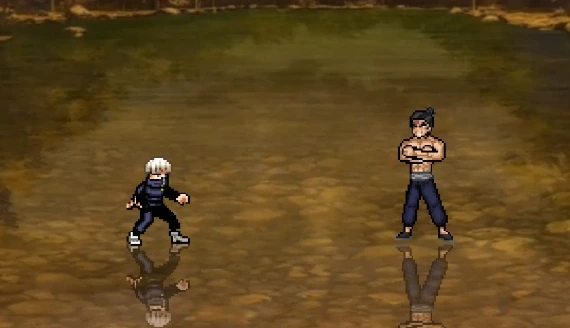 MUGEN Jujutsu Kaizen v2.0 | Free Download”>MUGEN Jujutsu Kaizen v3.0 | Free Download”>Jujutsu Kaizen MUGEN v4.0 Free Download” style=”width:840px;height:auto”/>
Engine Showdown: OpenGL vs. DirectX – Choosing Your Battlefield
The core technical advancement of MUGEN Jujutsu Kaisen v4.0 is the choice it presents right from the download. Understanding the difference between the two offered engines is key to optimizing your visual experience.
The OpenGL version is often celebrated for its stability and classic feel. It typically offers excellent compatibility across a wider range of systems, including older hardware or specific configurations where DirectX might struggle. The visual style here leans into a crisp, sometimes more pixel-perfect representation of the character sprites and backgrounds, which purists of the 2D fighting genre may prefer. Think of it as the reliable, universally compatible foundation.
In contrast, the DirectX version is built for modern performance and enhanced visual effects. Utilizing DirectX often allows for smoother animations, more complex shading, and potentially superior full-screen scaling on contemporary graphics cards and Windows systems. If your PC is relatively new, this version is likely to deliver a visually smoother experience with better support for certain post-processing effects that make the explosive Cursed Energy attacks and Domain Expansions truly pop.
Which should you choose? For broad compatibility and a classic MUGEN feel, opt for OpenGL. For enhanced graphical fluidity on modern systems, DirectX is the recommended path. The good news? With separate downloads, you can always try both.

The Roster Deep Dive: Sorcerers and Curses Unleashed
Version 4.0’s true power lies in its meticulously assembled cast, divided into two clear factions: the Jujutsu Sorcerers and the Cursed Spirits. Each character is not just a sprite but a lovingly crafted combatant with unique mechanics inspired by their abilities in the manga and anime.
The Jujutsu Sorcerers:
- Yuji Itadori: The well-rounded protagonist, balanced with powerful physical combos. The big question for players: does his moveset include a mechanic to switch with Ryomen Sukuna under certain conditions?
- Megumi Fushiguro: A strategic, summon-based character. Mastering Megumi means controlling the battlefield with his Divine Dogs, Nue, and the devastating Max Elephant, culminating in the chaotic potential of his Domain Expansion: Chimera Shadow Garden.
- Satoru Gojo: As expected, he is a top-tier character. His gameplay revolves around spatial manipulation, with Infinity likely acting as a defensive barrier mechanic, Blue for suction attacks, Red for repulsion, and the awe-inspiring, screen-clearing Hollow Purple. His Domain Expansion: Unlimited Void is undoubtedly his ultimate finish.
- Yuta Okkotsu & Rika: A duo character where Yuta’s moveset is massively enhanced when Rika, the Queen of Curses, is fully manifested, allowing for devastating long-range grabs and energy blasts.
- Supporting Pillars: Characters like the tactical Kento Nanami (with his 7:3 ratio critical hits), the brute-force powerhouse Aoi Todo (and his teleporting Boogie Woogie), and the versatile Maki Zenin (with her arsenal of cursed tools) ensure diverse playstyles.
The Cursed Spirits:
- Ryomen Sukuna: The King of Curses demands mastery. Expect a moveset that showcases his brutal cleaving and dismantling techniques, Fire Arrow, and his own terrifying Domain Expansion: Malevolent Shrine—a stark contrast to Gojo’s.
- Mahito: A tricky, shape-shifting foe. His gameplay likely focuses on close-range touch-based attacks that can reshape his body ( Transfigured Humans as projectiles?) and his soul-altering power, with Idle Transfiguration as a fatal super.
- Choso: The master of Blood Manipulation, Choso would be a zoning and trap character. Players can expect to control the flow of battle with projectiles like Piercing Blood, Supernova, and defensive shields of congealed blood.
- Others: The roster is filled out by fan favorites like the cursed-speech user Toge Inumaki (whose words inflict status effects), the straightforward Panda (with his core-switching mechanic), and the fierce Nobara Kugisaki with her resonance strikes.
Gameplay Mechanics & Features: More Than Just a Roster
Beyond the impressive character list, MUGEN Jujutsu Kaisen v4.0 distinguishes itself through gameplay systems that faithfully translate the series’ core concepts into fighting game mechanics. A well-designed MUGEN build like this one creates a unique “feel” that separates it from a simple sprite swap.
- Cursed Energy Gauge: This is the lifeblood of combat. Characters build Cursed Energy (CE) by attacking, taking damage, or using specific moves. This gauge fuels their enhanced special moves, powerful Cursed Techniques, and, most importantly, their ultimate attacks. Managing this resource is the key to victory.
- Domain Expansions – The Ultimate Climax: For certain characters, a full or special CE gauge unlocks their Domain Expansion. This isn’t just a super move; it’s often a game-changing cinematic event. Activating it might shift the entire stage to their innate domain (e.g., Sukuna’s shrine, Gojo’s void) and grant them overwhelming advantages, such as guaranteed-hit attacks, for a limited time. Landing a Domain Expansion is often the most visually spectacular and strategically decisive moment in a match.
- Stage Selection & Atmosphere: The arenas are carefully chosen iconic locations from the series. Expect to battle in the Tokyo Jujutsu High courtyard, the chaotic Shibuya Incident streets, or the eerie Detention Center. These stages aren’t just backgrounds; they often include animated elements and music tracks that heighten the immersion, with some even changing dynamically if a Domain Expansion is activated.
- Combo System & Faithful Movesets: The developers have gone to great lengths to ensure each character’s move list reflects their abilities. Yuji’s Divergent Fist might have a delayed hit effect, Megumi’s summons can be called independently, and Todo’s Boogie Woogie could involve an actual character-swap teleport. This attention to detail rewards fans for their knowledge of the series.
A defining pillar of this build’s quality is the implementation of a sophisticated Cursed Technique system that moves far beyond simple special moves. Each character possesses a unique resource management or state-change mechanic reflective of their innate power. For Megumi Fushiguro, this might involve a summon gauge or menu selection to cycle through his Shikigami, requiring strategic forethought mid-combo. For a character like Mahito, it could be a passive ability that alters his hurtboxes or applies a damaging “soul decay” status effect on successive hits. This layer of complexity ensures that mastering a character is about understanding their narrative ability as much as their fighting game frame data, creating a deeply rewarding learning curve for dedicated players.
The defensive mechanics are equally considered, often incorporating the series’ pivotal risk-reward dynamics. A “Domain Amplification” or simple “Domain” button could exist as a universal defensive option, acting as a parry or a barrier that consumes Cursed Energy to negate incoming projectiles or physical strikes. More advanced techniques might include character-specific counters, such as Gojo’s automatic Infinity or Sukuna’s Cleave reversal, which require precise timing but offer monumental payoffs. This elevates combat from a simple exchange of blows to a mental duel of anticipation and resource denial, mirroring the tactical battles of the source material.
Environmental interaction and stage dynamics play a subtle but impactful role in the gameplay loop. Certain arenas are not static backdrops but contain interactive elements or hazards. A stage set during the Shibuya Incident might have background curses that occasionally lunge across the screen, or the Jujutsu High courtyard could have destructible elements. Furthermore, the transition between a normal stage and a Domain Expansion’s innate domain is often not just visual; it can come with a shift in music, a change in gravitational pull, or the introduction of a new gameplay mechanic like the “sure-hit” effect, temporarily overhauling the rules of engagement for both players.
At its core, the combo system is designed to be both accessible for casual fans and deep for competitive-minded players. While basic chains and special moves are easy to execute, the engine allows for advanced techniques like jump cancels, wall bounces, and custom combo extensions fueled by Cursed Energy. The real artistry comes in linking a character’s unique technique into these combos—for example, ending a string with Yuta’s call to Rika for an extended grab, or using Todo’s teleport to reposition and continue pressure from an unexpected angle. This synergy between universal fighting game principles and franchise-specific powers is where the gameplay truly shines.
Another nuanced feature is the potential inclusion of team mechanics or assist functions. Given the series’ emphasis on teamwork, the build may offer modes where players can select a duo, like Yuji and Nobara, and utilize a limited “partner assist” call during a match. This could manifest as Nobara firing a long-range Straw Doll resonance shot to extend a combo or break an opponent’s guard, adding a layer of tag-team strategy and fan-service synergy that celebrates the character relationships beyond one-on-one confrontations.
The audio design is a critical, often understated gameplay feature. Distinct, authentic sound effects for each technique—from the crackle of Cursed Energy to the specific vocal cues for attacks like “Divergent Fist!” or “Piercing Blood!”—provide vital audio feedback. This allows players to recognize moves by ear, which is crucial for reactions and counters. The soundtrack, featuring remixes or direct lifts from the anime’s score, dynamically shifts in intensity during clashes or upon activating a Domain, psychologically pulling players deeper into the state of a high-stakes jujutsu battle.

The game caters to various playstyles through its diverse roster design. Zoning specialists like Choso, who controls space with projectile trajectories, contest rush-down brawlers like Yuji and Maki. Meanwhile, set-play characters like Megumi or trap-based fighters create vortexes of pressure, and unpredictable, stance-changing characters like Mahito keep opponents in a constant state of adaptation. This rock-paper-scissors dynamic at a macro level ensures no single strategy dominates, encouraging players to learn multiple characters and matchups to truly excel, much like a professional sorcerer must adapt to any curse they face.
This is MUGEN Jujutsu Kaizen v4.0
MUGEN Jujutsu Kaisen v4.0 ultimately stands as a monumental testament to the passion and technical skill thriving within fan communities, transcending its status as a mere fan project to become what many consider the definitive video game adaptation of the series. It achieves this not through official licensing or AAA production values, but through an intimate, granular understanding of the source material’s soul, translating its complex power systems, iconic personalities, and thematic clashes into a playable, visceral experience. This build captures the chaotic beauty and strategic depth of jujutsu combat in a way that professionally developed games often struggle to replicate, offering a purity of vision that comes directly from dedicated fans for fans. It is a love letter written in code and pixels, one that honors every detail from the grand spectacle of a Domain Expansion to the specific mannerisms of its large and beloved cast.
For players, the experience delivers a profound sense of wish fulfillment, allowing them to directly manipulate the cursed energy they have only watched from afar and pit their favorite characters against each other in endlessly customizable scenarios. The significance of having a polished, comprehensive package that includes both modern and legacy graphical support, coupled with a roster that spans the major arcs of the story, cannot be overstated for a community accustomed to scattered, inconsistent character creations. It consolidates years of disparate MUGEN development into a single, cohesive universe where Satoru Gojo’s boundless power can truly clash with Ryomen Sukuna’s malevolent might, where the tragic resonance of Kento Nanami’s techniques can be felt through gameplay mechanics, and where the potential of every character is limited only by the player’s own creativity and skill.
Looking forward, this release sets a new high-water mark for what is possible within the MUGEN engine and serves as a vibrant, playable archive of the series’ evolving legacy. It ensures that the intense debates over matchups and power scaling can finally be settled not just through online discourse, but in the digital arena, with players controlling every decision. As the anime and manga continue to unfold, introducing new sorcerers and curses, the foundation laid by v4.0 creates eager anticipation for future updates and the dedicated creators who will inevitably rise to incorporate them. The project is a living entity, mirroring the ongoing narrative it celebrates, and its community is the driving cursed energy that will propel it forward.
In a landscape where official game releases can sometimes miss the mark, this fan-made labor of love succeeds by focusing relentlessly on authenticity, mechanical depth, and sheer celebratory joy. It requires no prior knowledge of the MUGEN engine to appreciate, only a fondness for the world of Jujutsu Kaisen and a desire to engage with it interactively. MUGEN Jujutsu Kaisen v4.0 is more than a game; it is a communal achievement, a powerful tool for imagination, and currently, the most immersive way to step into the role of a jujutsu sorcerer and declare your own domain.
MUGEN Jujutsu Kaizen v4.0 Free Download
MUGEN Jujutsu Kaizen v4.0 – FAQ
What is MUGEN Jujutsu Kaisen v4.0?
MUGEN Jujutsu Kaisen v4.0 is a comprehensive, fan-made fighting game for PC based on the popular anime/manga. It features a large roster of characters, two graphical engine versions (OpenGL & DirectX), and faithful gameplay mechanics like Cursed Energy and Domain Expansions.
Is MUGEN Jujutsu Kaisen v4.0 free to download?
Yes, it is completely free to download. The game is a non-commercial, fan-created project available from trusted community websites.
Which characters are playable in version 4.0?
The roster includes all major characters like Yuji Itadori, Megumi Fushiguro, Satoru Gojo, Yuta Okkotsu, Sukuna, Mahito, Choso, Nobara Kugisaki, Maki Zenin, Aoi Todo, Kento Nanami, Panda, and Toge Inumaki, among others.