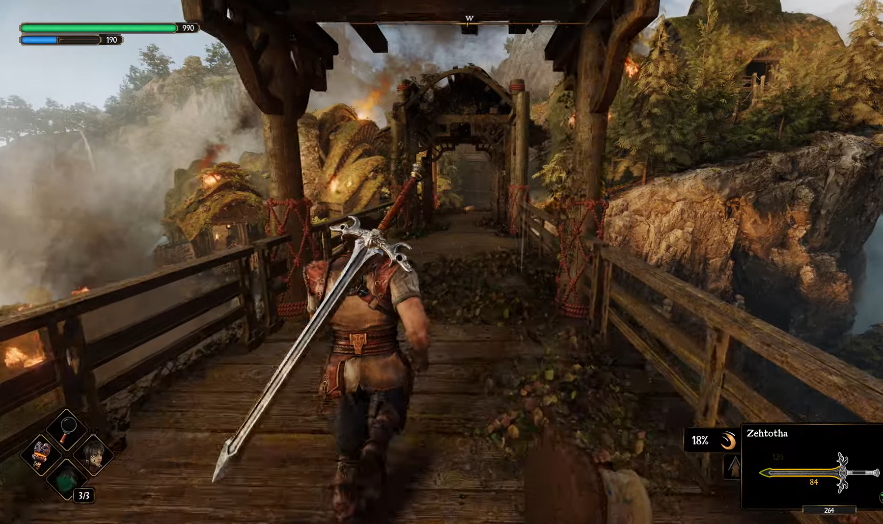
The release of a video game is often the culmination of years of hard work, but for MercurySteam, the Spanish studio behind the acclaimed Metroid Dread and the recent Blades of Fire, the post-release period has been marked by a storm of controversy that goes far beyond the game’s critical reception. In 2025, the studio implemented a series of drastic internal changes, including the normalization of daily overtime and an irregular redistribution of working hours, which triggered deep unease among employees. Through anonymous testimonies collected by the CSVI union and the 3DJuegos media outlet, a worrying picture emerges of deteriorating working conditions, a lack of transparency on the part of management and a corporate culture that, according to the reports, penalizes anyone who dares to question it. This article delves into the details of this crisis, exploring accusations of abusive labor practices, alleged retaliatory licensing and the human impact behind the development of one of the most talked-about games of the year, not always for the best reasons.
The Normalization of Overtime: Pandora’s Box Opened by Management
The decision by MercurySteam’s management to institute daily overtime at the beginning of 2025 was not a mere operational adjustment, but the opening of a Pandora’s Box of labor problems. Presented under the veil of a pressing need for the studio’s sustainability, the measure was, in practice, the catalyst for a stressful and exploitative working environment. What began as an apparently one-off directive quickly became normalized into an unwritten – but deeply felt – expectation that the standard eight-hour day was no longer enough to demonstrate dedication or guarantee job security. This subtle but significant change completely redefined the studio’s internal culture.
The implementation of this policy was marked by deliberately ambiguous and confusing communication, which served to defuse the employees’ initial resistance. At a crucial meeting, management described the measure as compulsory, without however providing a clear legal framework or distinguishing between the overtime provided for in the individual employment contract (IJC) and this new imposition. To justify the drastic change, management resorted to alarmist rhetoric, painting a picture of a “catastrophic situation” in the company. This crisis rhetoric, laden with hyperbolic terms, was strategically used to create a state of exception where exceptional – and questionable – measures would be accepted without due scrutiny, appealing to fear and a supposed team spirit in difficult times.
The lack of a robust and transparent system for recording, compensating or remunerating this overtime proved to be one of the most criticized aspects of the new policy. Employees were required to work “on the fly”, in an informal regime that flagrantly violated good labor practices and, potentially, the law. This lack of official registration was not a mere oversight, but a fundamental feature of the system, as it made accountability impossible and the true human cost of the project invisible. Without a formal approval process that required mutual agreement between employee and employer, developers found themselves in a legal limbo, where extra work was both required and not officially recognized.
The consequences of this policy were not long in coming. Reports indicate that, as early as May 2025, it was common to find teams working 10-hour days or more. The line between professional and personal life became progressively blurred, with longer working hours undermining employees’ energy, creativity and mental well-being. The “crunch” – occasional periods of intense work common in industry – was being transformed into a permanent state, a chronic condition leading to exhaustion and a diminished quality of life. Long-term productivity, paradoxically the aim of the measure, was thus compromised by fatigue and widespread discontent.

In addition to the quantitative overload, management implemented a subtle system of psychological pressure and surveillance to ensure adherence to the new standard. According to testimonies, managers began to “write down the names” of those who refused to work unofficially compulsory overtime. This practice, although never formalized, created a culture of fear where refusing to work overtime was interpreted as a lack of commitment or loyalty. Employees were often questioned and pressured to justify their decision to fulfill their contractual hours, an intimidation that violated their right to disconnect and turned a normal act into a supposed fault.
The abusive nature of the measure is even more evident when analyzed in the light of specific personal situations. Employees with family responsibilities, such as an employee whose wife was pregnant and who was therefore unable to work overtime, reported being the target of veiled threats of dismissal. These cases illustrate how the policy was deeply insensitive and inflexible, ignoring individual circumstances and punishing those who prioritized legitimate personal commitments. The normalization of overtime thus proved to be an exclusionary mechanism that penalized the diversity of life situations.
Ultimately, the normalization of overtime at MercurySteam worked as a distorted loyalty test. Management, rather than solving planning or resource problems through more efficient management, opted to extract more time from its employees, treating symptoms rather than causes. This approach reveals a short-term vision which, while it may have generated a temporary boost in production, eroded the confidence, morale and health of its workforce. Pandora’s Box was opened, and out of it came not only exploitation and fatigue, but also mistrust, resentment and a reputational crisis that would tarnish the studio’s image in the eyes of the industry and fans. The legacy of this decision will not be measured in hours of work, but in the talent that fled, the creativity that was stifled and the human cost of management that was deemed to be flawed.
Psychological Pressure and the Culture of Fear
In addition to the heavy workload, the testimonies point to the creation of a culture of fear and intimidation. One employee said that management made it clear that the names of those who refused to work overtime would be “written down”, and that they were often pressured to justify their refusal, even though they had no legal obligation to do so. This psychological pressure tactic was intended, in the employees’ perception, to ensure collective submission and normalize exploitation, taking advantage of the period of vulnerability following the release of Blades of Fire.
The company will also have taken advantage of the critical phase to “tighten the noose” on other fundamental aspects of well-being at work, such as flexible working hours, authorization for teleworking and approval of vacation days, further restricting the autonomy and work-life balance of its employees.
Abusive Licensing and Retaliation: The Price of Opposition
The situation has become even bleaker with a wave of dismissals considered abusive by employees and the CSVI union. The reports are shocking:
- A developer saw her contract during her probationary period terminated, suspecting that her pregnancy was the real reason.
- Another employee was fired the same day for, according to the union, “openly opposing these working conditions and demanding explanations in writing”.
- An employee received what he interpreted as a threat of dismissal for not being able to work overtime during his wife’s pregnancy.
- An employee on extended sick leave for mental health problems reported the immediate start of a “campaign of harassment” by her manager. He reportedly repeated over the course of a year that she would be fired as soon as she returned, claiming that she was “not taking her leave properly” because she refused to divulge the private medical details that justified it.
The peak of this crisis occurred in August 2025, with the collective dismissal of 18 people. Although Blades of Fire ‘s poor financial performance may have been the pretext, the pattern and timing of the layoffs suggest a purge of elements considered problematic or dissident by management.
Of course, here is the continuation of the article, dealing with the union’s reaction, the public repercussions and the impact on the studio’s reputation.
The Collective Response: The Role of the CSVI Union and the Public Repercussion
Faced with the escalation of measures considered abusive, MercurySteam employees found an echo in the union CSVI (Sindicato de Videjuegos), which became the collective voice to publicly denounce the studio’s practices. CSVI’s role was crucial in giving credibility and structure to the individual complaints, aggregating the various testimonies into a cohesive narrative and bringing the workers’ concerns into the public sphere. The decision of a dozen employees – current and former – to speak anonymously to the specialized medium 3DJuegos demonstrates not only the fear of retaliation, but also the seriousness of the situation, where internal dissatisfaction spilled over into the spotlight.
The publication of the report by 3DJuegos acted as a trigger, turning the internal management crisis into an image crisis in the eyes of the international community of gamers and the industry. The story quickly spread through forums and social networks, tarnishing the reputation of a studio that, not long before, was acclaimed for its technical competence in Metroid Dread. The reaction from fans and industry professionals was mostly supportive of the developers and censorious of MercurySteam’s management, calling into question the ethics and sustainability of its production model.

Impact on the Employer Brand and the Studio’s Future
Negative exposure has a tangible long-term cost: MercurySteam’s employer brand has been severely damaged. In a global, competitive industry that thrives on creativity and talent, the perception of being a toxic workplace is a huge repellent for skilled professionals. The brain drain – whether from voluntary resignations or controversial licensing deals – and the difficulty in attracting new talent can be a more lasting blow than any one-off commercial failure of a game.
The MercurySteam case serves as a wake-up call for the games industry, which historically faces crises related to “crunch” (periods of intense and excessive work) and burnout. Transparency, social dialogue and respect for labor rights are not only ethical obligations, but critical factors for a studio’s sustainability. How MercurySteam deals with this crisis – whether with genuine changes to its corporate culture or a deepening of its defensive posture – will define its path in the coming years. In the meantime, the developers are paying the human price for what they consider to be flawed management, and the legacy of Blades of Fire will forever be associated with this turmoil behind the scenes.