If you grew up in the early 2000s, you were part of a golden age of animated TV. This wasn’t just kid’s stuff—these shows had personality, depth, and real heart. They tackled serious issues, embedded social commentary, and still managed to be wildly entertaining. And for me, one show stood above the rest: “Static Shock.”
Honestly, I don’t just think it was one of the best superhero cartoons ever made—I’m pretty convinced it was the best. It didn’t just give us cool powers and flashy fights; it gave us Virgil Hawkins, a Black, nerdy, relatable teenager from Dakota City who felt more real than most live-action heroes. “Static Shock” wasn’t afraid to talk about racism, grief, bullying, family, addiction, and social injustice, all while wrapped in a vibrant, hip-hop infused visual style that felt ahead of its time.
And here’s the thing—it’s been years, but the show’s impact hasn’t faded. In a time when representation felt like an afterthought in mainstream animation, Static Shock was a pioneer. It proved that a superhero could be a vehicle for powerful, personal storytelling without ever feeling preachy. So, why did it work so perfectly? And why does it still resonate so deeply today? Let’s dive in.
The Heart of the Show: Virgil Hawkins Was Us
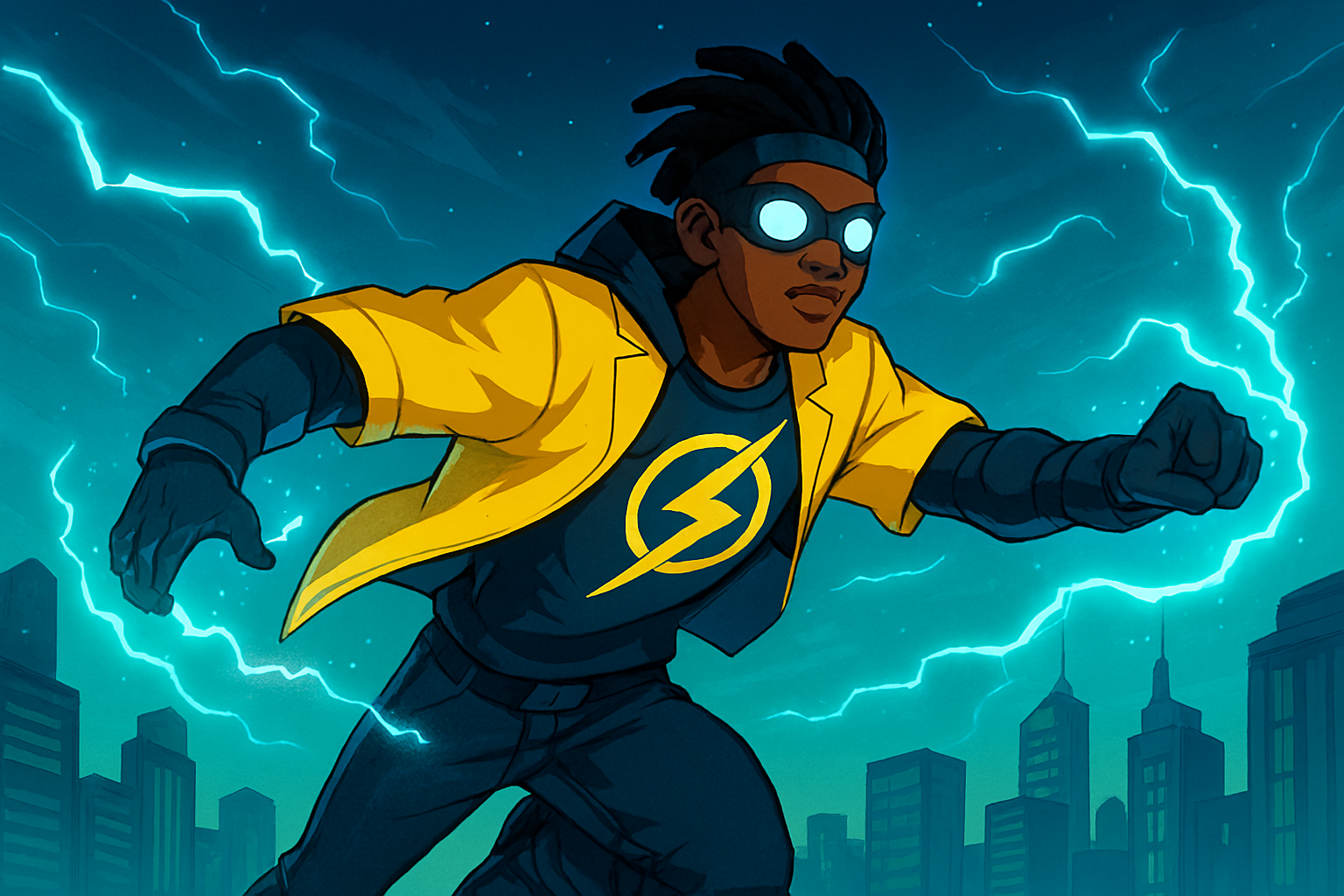
Forget the perfect, infallible hero. Static Shock’s genius began with its protagonist, Virgil Ovid Hawkins. He wasn’t a billionaire, an alien, or a mythological demigod. He was a brilliant, science-loving Black teenager trying to navigate high school, family pressures, and the messy reality of adolescence. And that was his superpower.
What made Virgil so profoundly relatable was his humanity. He doubted himself. He made mistakes. He got scared. He struggled to balance homework, his social life, and the immense responsibility of his powers. He wasn’t Spider-Man with a quip for every occasion; he was a kid figuring it out in real-time, and we felt every stumble and triumph with him. The show’s writers understood that a hero’s strength isn’t just in their lightning bolts, but in their vulnerability.
This vulnerability was rooted in a beautifully crafted family dynamic. Virgil’s home life wasn’t a backdrop; it was the foundation of his character. His relationship with his father, Robert “Robb” Hawkins, is one of the most authentic and touching father-son portrayals in animation. Robb wasn’t a clueless parent—he was present, tough but loving, and grappling with his own grief over the loss of his wife, Virgil’s mother.
That loss is the show’s emotional core. Virgil’s grief over his mother, who died in gang crossfire, wasn’t a one-off plot point. It was a lingering ache that shaped his empathy, his anger at injustice, and his drive to protect his community. The show handled this trauma with remarkable tenderness, offering poignant conversations about mourning and healing that respected its young audience’s intelligence. In one unforgettable scene, his father apologizes for assuming Virgil was okay, sharing his own long journey of pain—a moment of raw, intergenerational vulnerability rarely seen in cartoons.
This was the secret sauce: Virgil’s powers (electrokinesis and electromagnetic flight) didn’t define him; his family, his grief, his intelligence, and his moral compass did. He was a hero you could imagine living next door to, and that made his larger-than-life struggles feel intensely personal.
More Than “Bad Guys”: Villains as Victims and Social Commentary
Most superhero shows of the era presented a clear dichotomy: Hero vs. Villain. Good vs. Evil. Static Shock dared to ask: “What created the villain?” The answer, more often than not, was a failure of society, family, or the system. The show’s rogues’ gallery wasn’t filled with megalomaniacs seeking world domination; it was filled with broken people from Virgil’s own community, making every conflict a tragic reflection of Dakota City’s social ills.
The “Bang Baby” event—the chemical accident that gave Virgil and dozens of others metahuman abilities—wasn’t just an origin story; it was a narrative device to explore inequality and marginalization. Some, like Virgil, gained incredible powers. Others were cursed with deformities or abilities that ruined their lives. This premise allowed the show to tackle complex themes:
- The System’s Failures: Many villains weren’t inherently evil. Characters like Derek (who became the energy-being “Ebon” minion) or the ice-powered girl abandoned at Christmas were victims first—people twisted by neglect, fear, and a lack of support. They were products of a society that failed to catch them when they fell.
- Bullying and Violence: One of the series’ most chilling and acclaimed episodes, “Jimmy,” dealt directly with school shootings. A heavily bullied boy brings a gun to school, and Static is shot trying to intervene. The episode didn’t sensationalize; it showed the devastating consequences and ended with Virgil breaking the fourth wall to speak directly to kids: “If someone tries to show you a gun… tell a trusted adult. Do your part to spread the peace.” It was powerful, responsible, and decades ahead of its time in addressing real-world trauma.
- The Complexity of “Having Everything”: Even wealth wasn’t a shield. Edwin Alva Jr., the son of a billionaire, became a villain not for money or power, but for his father’s attention. His arc was a tragic poetic justice, ending as a stone statue—finally receiving the desperate care he always craved. The show repeatedly argued that a stable, loving family was the most crucial superpower, one many of its antagonists tragically lacked.
This approach reframed Virgil’s heroism. He wasn’t just fighting criminals; he was fighting systemic issues: poverty, racism, neglect, and the school-to-prison pipeline. In many episodes, his victory wasn’t about punching a villain into submission, but about offering understanding, a second chance, or exposing the root cause of their anger. He saw in his foes distorted mirrors of himself—what he could have become without his father’s guidance and his own moral strength.
Never Shying Away: Racism as a Recurring Theme
While censored compared to its Milestone Comics source material (where Virgil was explicitly targeted for being Black), the animated series still wove racial tension and injustice into its DNA. It never treated racism as a taboo subject, but as a reality of Virgil’s world.
- He was followed by police for “looking suspicious.”
- He faced prejudice from the father of his best friend, Richie.
- The show dedicated entire episodes to exploring racial identity, like when Virgil travels to Africa and confronts his legacy, or in stunning dialogues where his father dismantles a bigot’s coded language with calm, cutting clarity.
By making these experiences part of Virgil’s daily life, Static Shock validated the experiences of its Black viewers and educated others. It presented racism not as a distant historical concept, but as a present-day, systemic force its hero had to navigate both in and out of the costume.
A Style All Its Own: Hip-Hop, Heart, and Visual Flair
Static Shock didn’t look or sound like anything else on the air. While other shows were leaning into angular anime influences or classic Americana, this show breathed early-2000s hip-hop culture. It was a conscious, celebrated identity, not a backdrop.
The aesthetic was pure personality: Virgil’s baggy pants, the vibrant, graffiti-tagged environments of Dakota City, and that iconic, deep purple color palette that made every frame feel electric and modern. The music wasn’t just a soundtrack; it was a character. The themes of rap, hip-hop, and later trap were woven into the show’s DNA, grounding Virgil’s world in a specific, authentic cultural moment.
Think about it: Years before Spider-Man: Into the Spider-Verse was praised for marrying superheroics with hip-hop aesthetics, Virgil Hawkins was already doing it on Saturday mornings. The show understood that Virgil’s environment—the music, the fashion, the slang—was integral to who he was. It made Dakota City feel alive and real, a place with its own rhythm and rules.
Growing Up On Screen: The Evolution of a Series
One of the most rewarding aspects of following Static Shock was watching it visibly mature and improve with each season.
- Seasons 1 & 2: Established the formula. Episodic, heartfelt stories that built Virgil’s world, his rogue’s gallery, and his core moral conflicts. The animation, while charming, could be a bit stiff.
- Seasons 3 & 4: This is where the show leveled up. The animation became noticeably more fluid and dynamic. The stakes got higher, the storytelling more serialized, and the character development deepened. Virgil’s design even changed—his suit evolved, his frame filled out—signaling his growth from a novice into a confident hero. This era deepened the lore, introduced Gear (a powered-up Richie), and gave us some of the series’ most ambitious and emotional arcs.
The Crossover King: Proving His Place in the DC Pantheon
This is where my inner child still loses his mind. Static Shock didn’t exist in a vacuum; it was part of the legendary DC Animated Universe (DCAU). And the show’s creators used this to brilliant effect, not just for cheap thrills, but to prove a point: Virgil Hawkins belonged with the giants.
The crossovers were legendary events:
- Batman: Their team-up was a masterclass in contrast—Batman’s grim professionalism playing off Virgil’s earnest, tech-savvy enthusiasm. The respect Batman showed him was everything.
- The Justice League: The two-part episode where Static has to take on a brainwashed entire Justice League and wins through sheer ingenuity is one of the most empowering moments in cartoon history. It wasn’t about being stronger; it was about being smarter.
- Future Batman, Superman, Green Lantern: These weren’t just cameos; they were full-blown adventures that treated Virgil as an equal. They cemented his status as a rising A-lister in the DCAU.
Every crossover served a narrative purpose: to challenge Virgil, to expand his world, and to show the audience—and the broader DC universe—that this kid from Dakota City had the heart, brains, and power to stand on the same stage as Superman and Batman. For fans, it was a constant, thrilling validation of our hero.
The Bittersweet Legacy: A Masterpiece Left in Limbo
And here’s where the tone shifts. For all its perfection, Static Shock’s story has a frustrating postscript.
The series didn’t get a planned, epic finale. It ended somewhat abruptly with the defeat of Ebon, with most Bang Babies cured. The creators didn’t even know that episode would be the last. It’s a testament to the show’s strength that it still feels satisfying, but it’s a tragedy it never got its proper send-off.
Worse has been its treatment by DC Comics/Warner Bros. since. Despite being a cultural touchstone for a generation and a pioneer in representation, Virgil Hawkins has been staggeringly underutilized. A few brief cameos in Young Justice and Teen Titans Go! feel like lip service to a legacy that deserves so much more.
He had the potential to be DC’s Spider-Man—the relatable, ground-level, young hero who bridges street-level stories and cosmic events. That potential remains largely untapped. There’s a hope that James Gunn’s new DC Universe might finally give Static the live-action platform he deserves, but for now, fans are left with a masterpiece of the past and “what-ifs” for the future.