When developers claim their game world is twice the size of Skyrim, it naturally turns heads. But when Pearl Abyss, the studio behind Crimson Desert, makes that claim, they are backing it up with something far more important than sheer scale: density, diversity, and freedom. According to official statements, the map in Crimson Desert not only surpasses the iconic province of Skyrim in total area—it is also theoretically larger than the sprawling landscapes of Red Dead Redemption 2. However, as any seasoned gamer knows, size alone is meaningless without purpose. What truly sets Crimson Desert apart is its commitment to visual fidelity and seamless exploration. From the moment you step into its world, the horizon stretches endlessly before you, not hidden behind the generic fog used by so many open-world games to mask emptiness. Here, you see distant mountains, bustling towns, and arid wastelands—and most importantly, you can actually go there. No level gates, no artificial barriers. The entire world is open from the start, inviting you to test your mettle against its five distinct regions, each with its own identity, dangers, and secrets. In this article, we will break down every known region of Crimson Desert—from the pastoral hills of Herdand to the mechanical marvels of Delia and the lawless sands that give the game its name.
The Five Regions of Crimson Desert: A World of Contrasts
Pearl Abyss has structured the world of Crimson Desert around five primary regions, each meticulously crafted to offer a distinct visual identity, cultural backdrop, and gameplay experience. Unlike many open-world games that rely on palette swaps and repetitive assets, Crimson Desert promises genuine variety—environments that feel handcrafted rather than procedurally stitched together. Let us explore each region in detail, starting with the place where your journey begins.
Herdand: The Bucolic Starting Point
Herdand serves as the game’s introductory region, and from everything shown so far, it is designed to ease players into the world while still offering depth for those who wish to explore. Described as pastoral and reminiscent of the English countryside, Herdand features rolling pastures, gentle rivers, wooded areas, and sprawling mountain views. It is a land of tranquility—at least on the surface.
But do not mistake serenity for safety. Even in this seemingly peaceful region, danger lurks. Bandit camps, wild animals, and the occasional roaming monster ensure that players remain vigilant. Herdand functions as the game’s tutorial ground, teaching the fundamentals of combat, traversal, and interaction. Yet, true to the game’s design philosophy, it also hides secrets. Treasure maps, hidden caves, and unmarked points of interest reward those who stray from the beaten path.
The region’s architecture reflects its cultural identity: stone bridges, wooden mills, and modest villages dot the landscape. If you have played The Witcher 3‘s White Orchard or Skyrim‘s Falkreath hold, you will find familiar comfort here—but with the visual fidelity and density that modern hardware allows.

Palum: The Frozen Homeland of the Greymane Clan
To the north lies Palum, a region of snow-capped mountains, frozen lakes, and bitter winds. This is the ancestral homeland of the Greymane clan, the very clan led by the protagonist, Cliff. As such, Palum carries significant narrative weight. It is not merely a frozen wasteland to traverse; it is a land with history, loss, and the promise of restoration.
Palum’s environment presents unique gameplay challenges. Snowstorms can reduce visibility, icy terrain affects movement, and the cold itself may function as a environmental hazard—though Pearl Abyss has yet to confirm survival mechanics like temperature management. What we do know is that Palum houses ancient ruins, hidden passages within glaciers, and creatures adapted to the harsh climate. The Yeti boss, glimpsed in trailers, likely calls this region home.
For fans of Norse-inspired aesthetics, Palum delivers. Wooden longhouses, carved runestones, and towering pine forests buried in snow create an atmosphere thick with melancholy and mystery. It is here that Cliff’s personal journey intersects with the larger conflict engulfing the continent.
Denos: The Heart of Power and Conflict
If Palum represents the past, Denos represents the present—the political and military epicenter of the continent. This region is defined by its imposing castles, fortified cities, and sprawling military camps. Denos is where armies march, where factions vie for control, and where the player will encounter some of the game’s most intense human combat.
Unlike the organic landscapes of Herdand and Palum, Denos bears the mark of civilization. Cobblestone roads connect walled settlements, watchtowers stand guard over strategic passes, and the architecture leans toward the medieval European aesthetic—think Game of Thrones‘ King’s Landing or Dark Souls‘ Anor Londo, but rendered with Pearl Abyss’s proprietary engine.
Combat in Denos shifts focus from monster hunting to faction warfare. Castle sieges, duels with rival knights, and infiltration missions against heavily guarded fortresses populate this region. The developers have emphasized that faction choices here have tangible consequences. Assist one faction in retaking a city, and you will see civilians return, shops open, and the balance of power shift. Neglect or oppose another, and entire areas may remain hostile or fall into ruin.
Delia: Where Science Defies Fantasy
Now we arrive at the region that has sparked the most curiosity and excitement: Delia. If you have followed Crimson Desert‘s trailers and wondered about the sudden appearance of robots, flying machines, and laser puzzles, Delia is your answer. This region serves as the continent’s center of science and technology, and it deliberately breaks from the medieval fantasy mold established elsewhere.
Delia is steampunk, it is Renaissance engineering run amok, and it is utterly distinct. Here, you will find mechanical pterodactyls patrolling the skies, clockwork sentinels guarding ancient laboratories, and floating ruins held aloft by forgotten technologies. The region’s architecture combines brass, glass, and intricate gearwork with stone and marble—a visual feast for players who appreciate the Bioshock or Dishonored schools of design.
But Delia is not just window dressing. It fundamentally alters gameplay. The puzzles here require manipulation of lasers, repositioning of geometric blocks, and activation of ancient mechanisms—mechanics that evoke The Legend of Zelda: Tears of the Kingdom‘s most inventive shrines. Combat also evolves, as players face mechanical opponents with entirely different attack patterns than the organic enemies found elsewhere.
Perhaps most intriguingly, Delia hints at the game’s deeper lore. The technology here connects to the Abyss—a mysterious dimension central to the story. Portals to this Abyss exist within Delia’s floating ruins, and traversing them leads to encounters and revelations that may redefine your understanding of the world.
The Crimson Desert: Lawless, Arid, and Full of Mystery
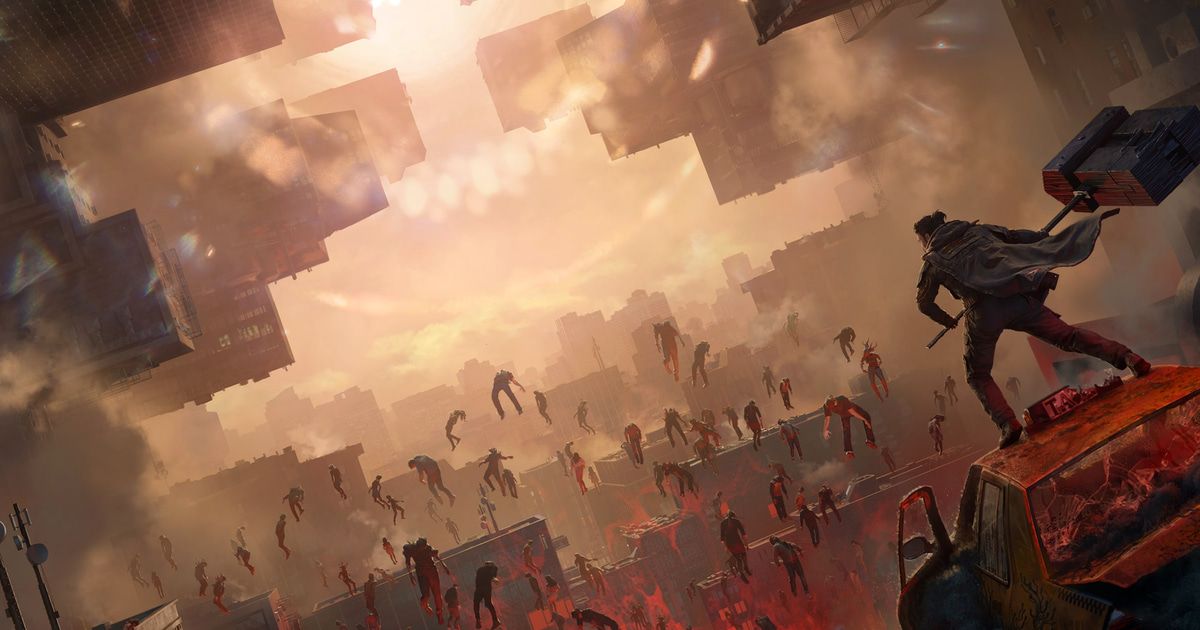
Finally, we reach the region that lends the game its name: the Crimson Desert itself. This arid expanse occupies the southern or central portion of the map—details remain vague—and stands in stark contrast to every other region. Where Herdand is green, Palum is white, Denos is gray, and Delia is brass, the Crimson Desert is… red. Not literally blood-soaked, though the name carries connotations of violence and loss, but rather characterized by rusty sands, rock formations stained by minerals, and an oppressive heat that shimmers on the horizon.
The Crimson Desert is lawless. Factions here are transient, settlements are makeshift, and survival depends entirely on strength and cunning. Bandit clans roam the dunes, ancient ruins half-buried in sand promise treasure and terror, and creatures adapted to this harsh environment stalk travelers who stray too far from known paths.
Yet the desert holds more than danger. According to Pearl Abyss, this region is “full of mystery”—a phrase that suggests major narrative revelations await those who brave its expanse. Given the game’s title, it is reasonable to assume that the Crimson Desert holds the key to the central conflict, the truth about the Abyss, or the fate of the Greymane clan.
Exploration here differs from other regions. Visibility fluctuates with sandstorms. Landmarks shift or become obscured. And the creatures you encounter—giant serpents made of pure energy, mechanical constructs half-submerged in sand, perhaps even something entirely unforeseen—challenge not only your combat skills but also your perception of the world.
Exploration Without Limits: The Freedom to Roam
One of the most refreshing aspects of Crimson Desert‘s map design is the absence of level gating. From the moment you gain control, every region is theoretically accessible. Want to ride straight into the Crimson Desert at level one? Go ahead. Feel like investigating Delia’s robots before you understand their purpose? No one stops you.
Of course, accessibility does not mean survivability. The developers have made clear that while you can go anywhere, you may not survive everywhere. High-level enemies, environmental hazards, and complex puzzles ensure that exploration remains challenging. But the freedom to try, to fail, and to learn is entirely in your hands.
This design philosophy extends to how the world reveals itself. Pearl Abyss has explicitly rejected the Ubisoft model of icon-cluttered maps. You will not see hundreds of markers for collectibles you do not care about. Instead, the world invites organic discovery. Treasure maps function like those in Red Dead Redemption 2, requiring you to interpret visual clues. Secret doors hide behind waterfalls or within unassuming rock faces. Puzzles scattered across the landscape reward observation and ingenuity.
Beyond the Horizon: Sky, Abyss, and Verticality
The Crimson Desert map extends beyond terra firma. The sky itself is a playground, filled with floating ruins, airborne enemies, and portals leading to the Abyss. Vertical exploration plays a significant role, with mechanics that evolve as you progress.
Early traversal relies on traditional methods: horses, climbing, and careful navigation. But as you acquire artifacts and abilities, movement becomes increasingly fantastic. Gliders let you soar from high peaks. Grappling hooks attach to any surface, enabling Spider-Man-style swinging. Double jumps, teleports, and even flight on the back of a dragon transform how you interact with the world.
This progression from grounded to godlike mirrors the game’s overall design. You earn your freedom. You master the mechanics. And eventually, you move across the map in ways that would make Just Cause‘s Rico Rodriguez jealous.
The vertical dimension of Crimson Desert transforms exploration from a horizontal trek into a multilayered journey through interconnected spaces. What makes this system particularly compelling is how the game encourages players to constantly shift their perspective, scanning not just the horizon but also the skies above and the chasms below. Floating ruins drift at varying altitudes, some tethered to the ground by chains of energy while others drift freely, requiring precise timing and mastery of traversal tools to reach. The grappling hook becomes an extension of the player’s intent, capable of arresting a fall mid-air or launching Cliff toward a distant outcrop with satisfying momentum. Combined with the glider that deploys instantly during freefall, players can chain together movements that feel less like rigid mechanics and more like an improvised dance with the environment itself.
The Abyss functions as both a narrative destination and a physical space that exists parallel to the overworld, accessible through portals hidden across the five regions. Unlike traditional dungeons that feel disconnected from the main map, the Abyss maintains a tangible relationship with the locations above, with its architecture often mirroring or distorting the structures found in the surface world. Entering the Abyss changes not just the visual palette but the very rules of engagement, as gravity loosens its grip in some areas while tightening dangerously in others, and enemies emerge from shadows that seem to breathe. This dimensional layer effectively doubles the explorable space without simply copying and pasting assets, offering veterans who have memorized the surface map an entirely new playground where familiar landmarks become unrecognizable and danger wears an unfamiliar face.
The Map as a Living System
Perhaps the most ambitious aspect of Crimson Desert‘s map is its responsiveness to player actions. Faction missions, reconstruction efforts, and narrative choices visibly alter the landscape. Help a faction retake a city, and that city becomes a safe haven with functioning shops. Clear an enemy fortress, and the surrounding area falls under new control. Rebuild the Greymane clan’s holdings, and you watch a village grow from sparse outpost to thriving community.
This dynamic world reinforces the central theme of restoration. Cliff’s journey is not just about personal survival—it is about rebuilding what was lost. And the map reflects that journey, evolving alongside the player.