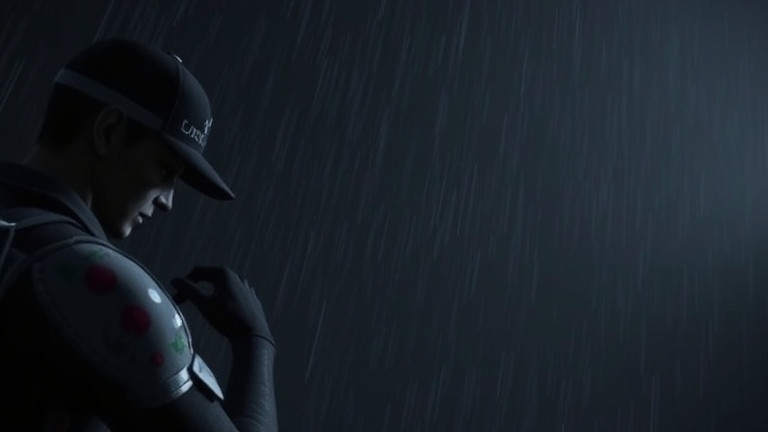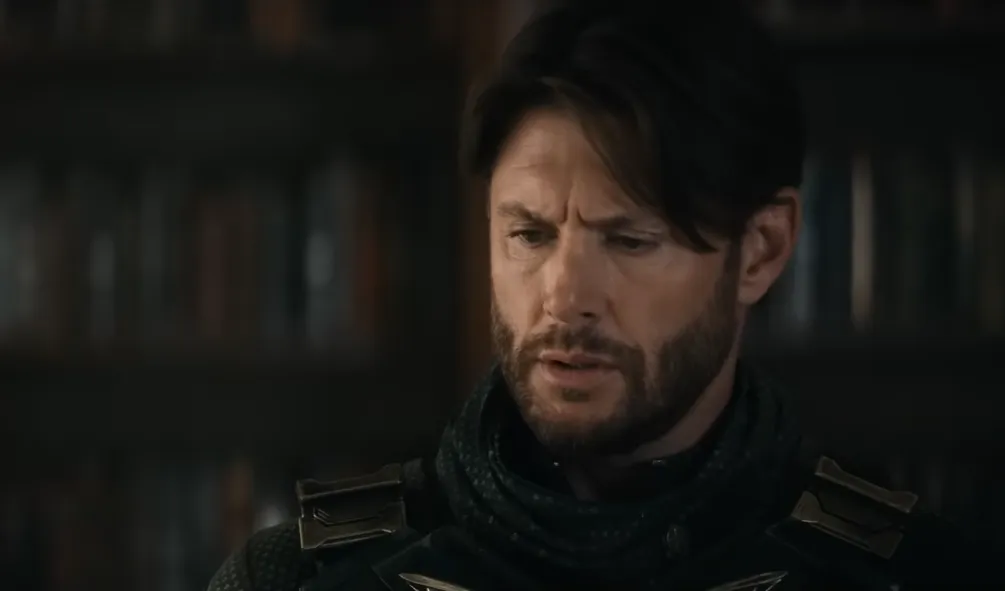
When Amazona’s The Boys premiered in 2019, it felt like a violent, acidic breath of fresh air in a superhero-saturated market. Unlike the polished heroism of the MCU or the grim-but-glorious stylization of Zack Snyder’s Watchmen adaptation, The Boys offered something genuinely disruptive: a world where superheroes weren’t just flawed—they were narcissistic, corporate-owned psychopaths. But after multiple seasons, the series finds itself at a strange crossroads. What began as a sharp takedown of celebrity culture, military-industrial complexes, and blind fandom has slowly morphed into a repetitive, self-parodying spectacle. The show’s once-intelligent deconstruction of the hero myth has given way to gratuitous gore, political strawmanning, and shock value without substance—raising the question: has The Boys become the very thing it set out to destroy?
The Watchmen Shadow: What The Boys Inherited (and Forgot)
Alan Moore and Dave Gibbons’ Watchmen (1986) wasn’t just a comic book—it was a literary earthquake. For the first time, superheroes were neither virtuous nor aspirational. They were broken, arrogant, government-linked, and in some cases, genuinely monstrous. Moore’s genius lay in nuance: Rorschach was a fascist, but he was also principled. Ozymandias committed mass murder, but his logic was terrifyingly coherent. The story didn’t pick a side—it exposed the rot within every ideology.
The Boys initially carried that torch. Its critique of hero-as-product was brilliant: Vought International monetizing trauma, Homelander as a narcissistic celebrity, and the supes as walking HR violations. That was fresh.
But somewhere along the way, the series abandoned ambiguity. Instead of asking “What would power do to anyone?”, it started asking “How disgusting can we make this scene?” The result? A show that now feels less like Watchmen and more like a grotesque cartoon wearing Watchmen’s skin.
The Political Polarization Problem: When Satire Becomes Preaching
Here’s where The Boys stumbles hardest. The series has become aggressively, simplistically political—but not in a smart way. Homelander’s followers are portrayed as brainless fascists. Starlight’s crew are presented as morally flawless resisters. There’s no gray area, no self-criticism, no tension of ideas.

blockquoteblockquoteblockquoteblockquoteblockquoteWhy this backfires: Great political satire—think Animal Farm or Veep—shows the hypocrisy on all sides. The Boys now uses its plot armor to validate its writers’ own convictions rather than to challenge the audience.
When a show reduces complex sociopolitical dynamics to “good guys vs. bad guys,” it stops being satire. It becomes propaganda with better special effects. And viewers notice. The result is fatigue: you’re not entertained or challenged. You’re just lectured.
Desensitization to Violence: Why Shocking Scenes No Longer Shock
Robert McKee, in his legendary screenwriting guide Story, warns about audience desensitization. The first time you see someone shot, you’re shaken. The second time, less so. By the tenth time, it’s wallpaper.
The Boys has ignored this rule entirely. Each season escalates the gore: exploding heads, genital mutilation, live burials. But instead of raising stakes, it flattens them. By Season 4, a character’s death or a brutal murder elicits nothing more than a shrug. When everything is grotesque, nothing is.
Compare this to early seasons: Homelander lasering a crowd in a boardroom was genuinely unsettling. Now? The show piles on absurd violence so thickly that it becomes numbing—like a fast-food meal of shock that leaves you empty halfway through.
blockquoteblockquoteblockquoteblockquoteblockquoteKey takeaway: Audiences build tolerance. A show that only escalates violence without escalating emotional or thematic complexity will eventually bore its own fanbase.
The “Quimera” Effect: When a Show Becomes a Parody of Itself
The original text uses a perfect metaphor: The Boys has become a “quimera” (chimera) of itself—a hybrid monster made from its own leftover parts. The show now recycles the same themes:
- Corporate greed (repeated)
- Political corruption (repeated)
- Homelander’s mommy issues (over-repeated)
- Exploding bodies (endlessly repeated)
Instead of inventing new narrative threads, the show spins in place. Season 4 introduced characters like Kimiko learning to speak via “therapy and TikTok”—a concept so bizarre and unearned that it felt like a parody written by a content farm, not a prestige drama.
This creative stagnation is dangerous. It signals that the writers are no longer deconstructing superhero tropes—they’re just repeating them with more blood.
The Game of Thrones Warning: A Final Season in Freefall
Let’s address the elephant in the room: The Boys is pacing toward a finale that could rival Game of Thrones’ infamous collapse.
Why? Three reasons:
- Lost sense of danger – Main characters survive impossible odds due to plot armor, not logic. Tension evaporates.
- Filler content – Episodes feel stretched to justify another season (and more Amazon Prime subscriptions).
- Shock over substance – The show prioritizes viral clips over coherent storytelling.
If The Boys ends without delivering a thematically satisfying conclusion—if it resolves its arcs with rushed battles and hollow monologues—it will be remembered not as a great satire but as a cautionary tale.
Can The Boys Be Saved?
Yes—but only if it remembers what made it great.
- Bring back moral ambiguity. Let Starlight be wrong sometimes. Let a Homelander supporter make a valid point. That’s not endorsement; that’s drama.
- De-escalate violence strategically. Save the gore for moments that matter. Not every scene needs a bloody punchline.
- Stop preaching. Start questioning. Audiences don’t need a sermon; they need a mirror.
The Boys still has time to course-correct. But if Season 5 chooses clicks over craft, it won’t just be a bad season—it’ll be proof that the show’s creators lost the same battle they once mocked Vought for fighting.