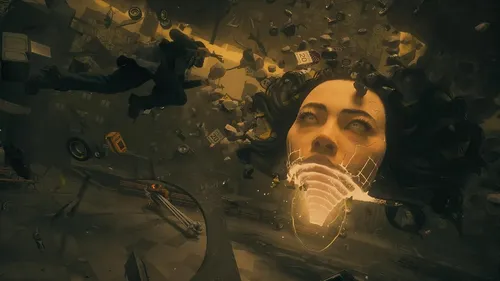
The Animate Presents: ALIEN STAGE Panel at Anime Expo 2026 delivered a major revelation for fans of the independently produced sci-fi music drama: an anime adaptation of Vivinos’ and Qmeng’s Alien Stage multimedia project is officially in production. The announcement, made on Thursday during the high-profile panel, marks a significant leap for a franchise that began as a small-scale YouTube sensation and has since evolved into a sprawling transmedia universe encompassing music videos, short webcomics, and now a spin-off series. For the passionate global audience that has followed the brutal, emotionally resonant story of human contestants forced to sing for their survival under alien rule, this adaptation represents both a validation of the project’s artistic ambitions and a promise of expanded storytelling on a larger canvas.
What Is the Alien Stage Multimedia Project?
Alien Stage is a sci-fi music drama that originally debuted as a 12-episode series on YouTube, airing from September 2022 to June 2025. Produced by the studio LICO, the project was created by the creative duo Vivinos and Qmeng, who built a haunting world where humanity has been subjugated by alien overlords. In this dystopian setting, humans are considered property, and the ultimate entertainment spectacle is a reality singing competition called Alien Stage, where contestants—regardless of their personal bonds of love, hate, or something more extreme—must battle to survive, with only one victor emerging from each round. The series quickly garnered a dedicated following for its striking visual style, emotionally charged musical performances, and its unflinching exploration of power, exploitation, and human resilience.
Key Details of the Anime Adaptation Announcement
The announcement at Anime Expo 2026 confirmed that the anime adaptation, currently titled Alien Stage The Animation, is now in active production. While specific details regarding the episode count, release window, and streaming platform have yet to be disclosed, the confirmation itself is a landmark moment for the franchise. The panel, presented by Animate, one of Japan’s leading retailers of anime and pop culture merchandise, signals strong institutional backing for the project. LICO, the original production studio behind the YouTube series, is also attached to the anime adaptation, ensuring continuity in the distinctive visual and narrative identity that has defined Alien Stage since its inception.
From YouTube Sensation to Transmedia Franchise
The original Alien Stage series, which concluded its 12-episode run in June 2025, was itself a remarkable achievement in independent animated storytelling. Each episode functioned as a music video, blending original songs with narrative progression and character development. The series built a complex lore around its central competition, exploring themes of faith, oppression, and the commodification of art and life. The synopsis provided by the project’s official description sets the stage: humans once lived as if Earth was the center of the universe, some embracing religion and believing God would deliver them from suffering. But after humanity was enslaved by aliens, no one spoke of God any longer. This grim premise underpins every performance in the Alien Stage, where the stakes are literally life and death.
The franchise has expanded well beyond the original series. A spin-off titled Zombie Stage launched on June 26, offering a new narrative thread within the same universe. Additionally, a series of short webcomics has been published through Patreon and X (formerly Twitter) since March 2023, deepening the world and providing backstory for characters and events only hinted at in the main series. This multi-platform approach has allowed Vivinos and Qmeng to cultivate a deeply engaged community that actively follows the story across formats, making the franchise particularly well-suited for a full-scale anime adaptation that can unify these narrative strands.

The Creative Forces Behind Alien Stage
Vivinos and Qmeng are the visionary creators who conceived and developed Alien Stage from its earliest conceptual stages. Their partnership has produced a work that feels distinctly personal yet universally resonant—a story about the erasure of faith, the brutality of enforced competition, and the indomitable human spirit that persists even under the most dehumanizing conditions. The original YouTube series demonstrated a remarkable command of visual storytelling, with each episode delivering a compact, emotionally devastating narrative set to original music. The involvement of LICO as the production studio for both the original series and the new anime adaptation suggests a commitment to preserving the artistic integrity and stylistic signatures that have become the franchise’s hallmark.
What the Anime Adaptation Means for the Franchise
For existing fans, the anime adaptation represents an opportunity to experience the story of Alien Stage with higher production values, broader distribution, and potentially expanded narrative content. The transition from a self-published YouTube series to a formally produced anime typically involves a larger team, more resources, and wider reach—all of which can deepen the storytelling and elevate the visual and musical elements that fans already treasure. For newcomers, the anime will serve as an accessible entry point into a richly constructed world that might otherwise feel daunting to approach through fragmented webcomics and a completed YouTube series. The official X account, @Anime_ALNST, will likely serve as the primary channel for future updates, including casting announcements, trailer releases, and broadcast details.
A Deeper Look at the World of Alien Stage
The narrative foundation of Alien Stage is one of the most compelling aspects of the franchise. The premise—that humans, once the dominant species on Earth, have been reduced to property under an alien regime—inverts the typical space exploration narrative. Instead of humanity reaching for the stars, the stars have come to claim humanity. The Alien Stage competition itself is a chilling reflection of how oppressive systems co-opt art and entertainment as instruments of control. Contestants are not volunteers; they are property entered into the entertainment industry by their alien sponsors, who flaunt their investments while the humans fight for their lives through song. The requirement that only one victor can emerge from each round, regardless of the relationship between the opponents, ensures that every performance is laden with emotional and moral weight.
This structure allows the series to explore profound questions about agency, love, sacrifice, and the nature of artistic expression under coercion. Music, in the world of Alien Stage, is both a weapon and a refuge—a means of survival and a last vestige of humanity. The original 12-episode series used its music video format to deliver these themes with immediacy and emotional power, and the upcoming anime adaptation has the potential to expand this vision with longer episodes, more intricate character arcs, and a more detailed exploration of the alien society that has enslaved humanity.
Industry Context: Why This Adaptation Matters
The adaptation of Alien Stage arrives at a time when the anime industry is increasingly looking to successful independent and digital-first properties for new content. The rise of global streaming platforms has lowered barriers for creators like Vivinos and Qmeng, who can build an international audience without traditional distribution channels. The success of Alien Stage on YouTube—a platform where it competed for attention with countless other independent animations—demonstrates the power of strong storytelling and distinctive visual identity in capturing audience loyalty. The decision by Animate and LICO to invest in a formal anime adaptation reflects a broader industry recognition that the most innovative and emotionally resonant stories are increasingly emerging from outside the traditional studio system.
Furthermore, the transmedia nature of the Alien Stage franchise—spanning YouTube episodes, webcomics, and a spin-off series—mirrors the consumption habits of modern audiences who engage with stories across multiple platforms. The anime adaptation can serve as a central hub that ties these experiences together, offering a definitive version of the story that rewards longtime followers while remaining accessible to first-time viewers.
How the Anime Adaptation Could Expand the Story
While the original 12-episode YouTube series told a complete narrative arc, the transition to a full anime production opens several possibilities for expansion. The anime format typically allows for longer episodes—standard anime runtimes of 22-24 minutes per episode compared to the shorter music video format of the original series—which would enable deeper character development, more intricate world-building, and additional subplots that were only hinted at in the webcomics. The spin-off Zombie Stage, which began in June 2025, suggests that the creative team is actively expanding the universe, and the anime adaptation could incorporate elements from that series or draw on the extensive lore established in the Patreon-exclusive webcomics.
There is also the question of how the anime will handle the musical core of Alien Stage. The original series was built around original songs that were integral to its narrative and emotional impact. The anime adaptation will need to either re-record these songs with higher production values, commission new music for expanded scenes, or find a way to preserve the raw, intimate quality of the original performances while scaling up the production. Whichever approach the team takes, music will remain the beating heart of the franchise, and the anime will be judged largely on how effectively it channels the same emotional intensity that made the YouTube series so compelling.
What Are the Key Themes in Alien Stage?
At its core, Alien Stage is a story about the loss of faith and the search for meaning in a world where old certainties have been shattered. The synopsis explicitly states that after humanity was enslaved by aliens, no one spoke of God any longer. This theological void is filled by the brutal logic of the Alien Stage competition, where survival replaces salvation and sponsors replace deities. The human contestants are caught between their need to live and their desire to maintain their humanity—a tension that drives every performance. The series also interrogates the ethics of entertainment, asking uncomfortable questions about the audience’s role in spectacles that exploit suffering. These themes are not merely philosophical asides; they are woven into the very fabric of the competition, ensuring that every episode carries both narrative and thematic weight.
For many fans, the emotional power of Alien Stage lies in its willingness to let characters fail, suffer, and make impossible choices. The rule that only one victor can emerge from each round creates a zero-sum dynamic that forces relationships to fracture under pressure. Love, hatred, and other extreme emotions become tactical liabilities or strategic advantages, and the series does not flinch from the consequences. This emotional authenticity, combined with the striking visual aesthetic and original music, has earned Alien Stage a reputation as one of the most distinctive and affecting independent animated projects of recent years.

Future Prospects for the Alien Stage Franchise
The announcement of the anime adaptation is likely just the beginning of a new phase for the franchise. With the spin-off Zombie Stage already in motion and the webcomics continuing to expand the lore, Vivinos and Qmeng are clearly thinking long-term about the world they have created. The involvement of Animate in the panel presentation suggests strong commercial interest, and the anime adaptation will almost certainly be accompanied by merchandise, potential soundtrack releases, and possibly even localization for international markets beyond the original English and Korean-speaking audiences.
The official listing for Alien Stage The Animation on MyAnimeList indicates that the project is being tracked and anticipated by the anime community, which bodes well for its visibility upon release. For a franchise that began as a passion project on YouTube, the journey to a formal anime adaptation is a testament to the power of independent creation in the digital age and a reminder that compelling stories, told with conviction and artistry, can find their audience regardless of the platform.
As production continues, fans can expect updates through the official X account, @Anime_ALNST, which will serve as the primary source for news on casting, trailers, and release schedules. The anime adaptation of Alien Stage is poised to introduce one of the most original and emotionally potent science fiction narratives of recent years to a much wider audience, and the anticipation surrounding its release reflects the deep connection that viewers have already formed with this world and its characters.