Every discussion about Control Resonant starts with the same line: Jesse Faden is missing. The official statements say she’s not playable. The trailers show Dylan in the lead. The community has accepted that the sequel sidelines the original protagonist. But this reading misses what the game actually does with her. The “Jesse is absent” framing is technically true and completely misleading. She is not on the screen as a controllable character. She is everywhere else — in the systems, the lore, the mechanics, and the emotional core of the story. The question isn’t “where is Jesse,” but “why is everyone looking in the wrong place.”
What Everyone Gets Wrong About Jesse’s Role
The surface-level narrative is simple: Jesse woke Dylan from a seven-year coma, told him to run, and vanished. Players take that at face value. They assume she’s either gone for good or will appear only in a cutscene at the end. The game even reinforces this through dialogue — Emily Pope calls her missing, and the FBC operates without her.
I'm sorry I can't explain everything, but trust this: every time you see my face, I'm closer than you think.
But Control Resonant is a Remedy game. Nothing is surface level.
The dimensional faults — those massive glowing images of Jesse scattered across Manhattan — are not just optional side content. They are the primary way Dylan gains his traversal abilities. The West Incursion Zone fault grants gravity shift, letting Dylan cling to walls and ceilings. The Evacuation Zone fault unlocks the reach ability, allowing him to grapple across the city. Every single one of these progression gates is tied to Jesse’s image. She is not a passive memory. She is the mechanism by which Dylan becomes powerful.
The Dimensional Faults: Her Handprints Everywhere
There are at least seven dimensional faults in the game, one per zone. Each one triggers when Dylan approaches a towering projection of Jesse. Completing them doesn’t just unlock abilities — it also reveals environmental lore about the Patterning and how Jesse might be connected to it. The art director Elmary Retamero confirmed that the Resonants are former persons of power who became focal points of the Patterning. Jesse is the most powerful person of power in the Remedy universe. The implication is impossible to ignore: she is actively shaping these faults, perhaps even creating them as guideposts for Dylan.

The game never spells this out. It doesn’t need to. The visual language is unmistakable. Jesse’s face is the icon for every fault. When Dylan completes one, he gains a piece of her power. This is not absence. This is a silent partnership.
The Hotline and the Board: She’s Still Running the Show
The Hotline object of power returns in Control Resonant. In the first game, it let Jesse communicate with the Board and former Director Trench. Here, Dylan uses it — and the voice on the other end is unmistakably Jesse’s. She speaks in cryptic, directive sentences. “You need to see the whole picture,” she says at one point. “I can’t be where you are. But I can be in the gaps.”
These gaps are the gameplay spaces between zones. The Hotline conversations are missable if players don’t explore thoroughly, but they contain the bulk of Jesse’s narrative presence. She discusses the Patterning, the Hiss, and the Mold as if she has seen what comes next. Her tone is not defeated. It is calculating. She is working a separate angle.
The Board also speaks differently about Jesse in Resonant. They reference her as “the former director” but also as “the one who chose to step outside.” That phrasing — “chose” — matters. It implies agency, not disappearance.
The Lore You’re Overlooking
Scattered throughout Manhattan are FBC field reports that detail Jesse’s movements after the Oldest House outbreak. One document, found in the Central zone, describes her visiting an abandoned subway station three days before the game’s start. She left behind a handwritten note: “The Patterning is not the enemy. The Deserter was a warning. Dylan needs to understand what comes next.”
Another report, in the Underpass zone, states that Jesse requisitioned a portable Hotline terminal from the Lake House facility two weeks before her disappearance. She was researching something called “OOP parallels” — Objects of Power that resonate across realities. This is a direct callback to the slide projector from Ordinary and the multiverse implications of Alan Wake 2.
These documents are easy to miss. Most players focus on combat and progression. But they paint a clear picture: Jesse is not lost. She is running an operation.
Why the “Missing” Narrative Is a Setup
Remedy’s storytelling relies on misdirection. In Control, Jesse was looking for Dylan the entire game, only to find he had turned against her. In Alan Wake 2, Saga Anderson spent the first half of the game believing Wake was a ghost, only to discover he was trapped in a dimension she could enter. The pattern is consistent: the character everyone thinks is gone is actually the key.
The same applies here. Jesse’s “missing” status is a narrative device that lets Dylan stand on his own while setting up a reveal. The game’s ending — without spoiling it — does not resolve her arc. It leaves a looping, recursive thread that connects to the Dark Place, the Board, and the coming Remedy crossover. This is not a coincidence. Jesse is being positioned as the connective tissue for the next chapter of the connected universe.
The common advice — “Jesse is not playable, accept her absence” — is fine for managing expectations. But it’s terrible for understanding the game. Players who ignore the dimensional faults, skip the Hotline calls, and don’t read the field reports will conclude that Jesse is irrelevant. They will miss the entire subtext of how Control Resonant is structured.
The One Detail That Changes Everything
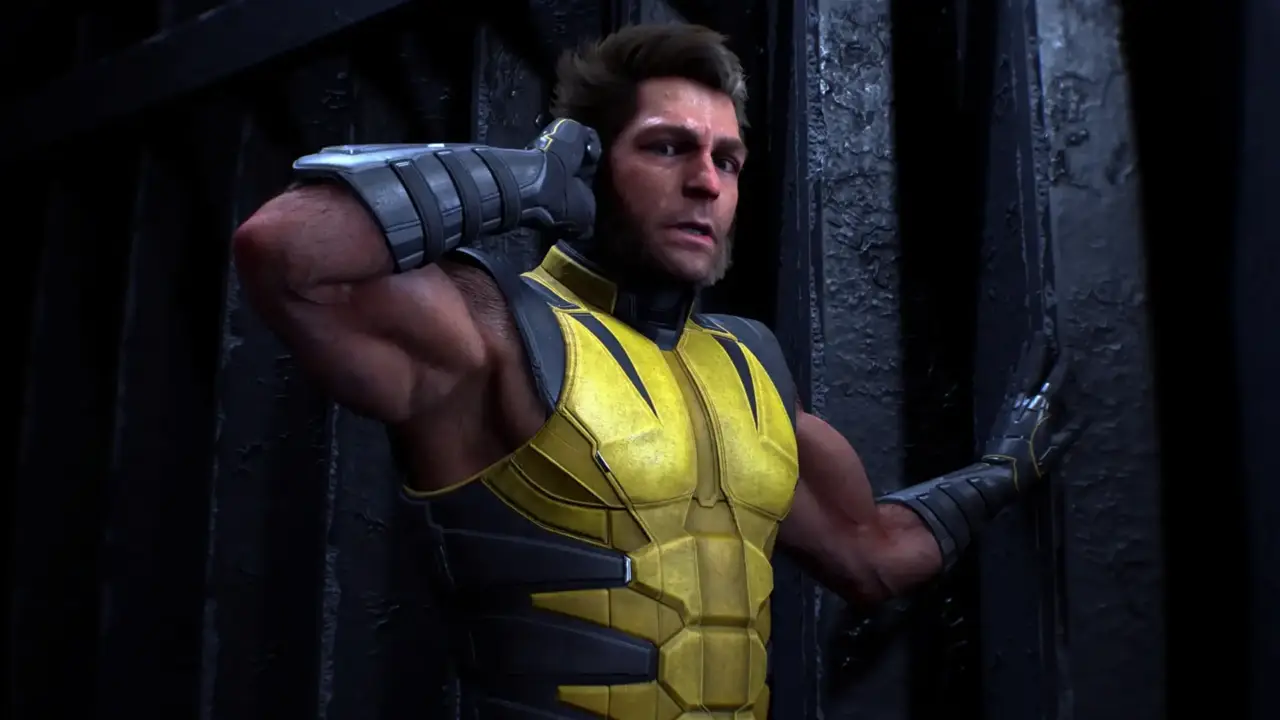
Here is a piece that almost no guide mentions: In the West Incursion Zone, after completing the gravity shift fault, return to the parking garage rooftop where the fault began. There is a small computer terminal hidden behind a ventilation shaft. When activated, it plays an audio log from Jesse. She says: “Dylan, if you’re hearing this, you’ve already finished the first test. There are six more. I’m sorry I can’t explain everything. The Patterning has ears. But trust this: every time you see my face, I’m closer than you think.”
This log is time-stamped to the same date as the game’s prologue. Jesse was in that parking garage minutes before Dylan arrived. She set the fault herself. She is not missing. She is leading.
- Is Jesse Faden truly missing in Control Resonant?No, Jesse Faden is not missing; she is actively guiding Dylan through dimensional faults and her presence shapes the game.
- How does Jesse Faden affect gameplay in Control Resonant?Her image appears in dimensional faults that unlock traversal abilities for Dylan, and she leaves audio logs guiding him.