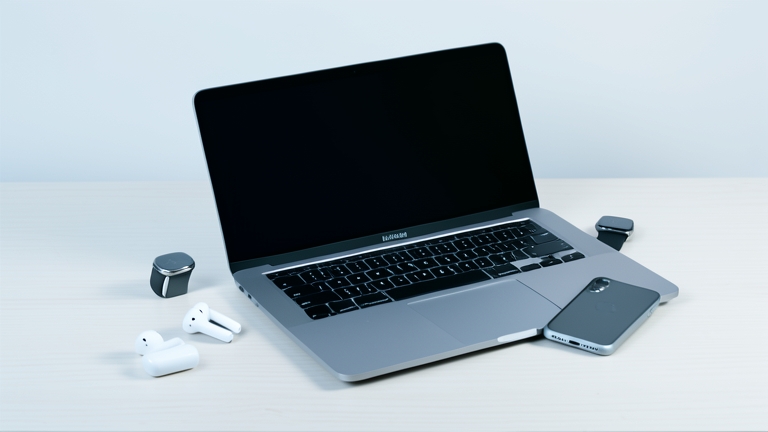
Apple’s pricing strategy has long followed a predictable rhythm: launch premium products at a high price point, hold that line stubbornly, and only relent when competitive pressure or inventory cycles force a shift. That rhythm has now accelerated dramatically. Across the entire product ecosystem — AirPods, MacBooks, Apple Watches, iPhones, and accessories — a wave of aggressive discounts has created an opportunity for buyers who have been waiting for the right moment. The question is no longer whether deals exist, but which ones represent genuine value and which are simply noise.
The AirPods Pro 3 Discount at 25% Off Signals a Shift in Premium Audio Pricing
The most immediately striking deal is the 25% reduction on AirPods Pro 3. Priced at $190 compared to its regular $249, this is not a minor clearance markdown. It is a meaningful price cut on one of Apple’s newest premium audio products. For consumers who have hesitated at the $250 threshold, this discount changes the value equation considerably. The AirPods Pro 3 offers active noise cancellation, spatial audio, a customizable fit, and deep integration with the Apple ecosystem. At $190, it begins to compete more directly with mid-range alternatives from Sony, Bose, and Sennheiser, while retaining the seamless pairing and Find My integration that Apple users expect.
What makes this discount particularly notable is its timing. The AirPods Pro 3 was released relatively recently, and a 25% cut this early in its lifecycle suggests either aggressive retailer competition or an intentional strategy to capture market share ahead of the holiday shopping season. For buyers, this means the product is not yet close to being replaced, so the discount is not a clearance sale on outdated technology. It is a genuine opportunity to purchase a current-generation flagship at a price that feels more like a mid-cycle promotion.
AirPods Max 2 Drops $120 and Becomes a More Serious Contender in Over-Ear Audio
The AirPods Max 2 has always occupied a peculiar position in Apple’s lineup. It is undeniably premium, with exceptional build quality, outstanding noise cancellation, and a design that feels more like a luxury accessory than a utilitarian headphone. But its $549 launch price placed it well above competitors offering comparable or even superior audio performance. The new price of $429, a drop of $120, changes that dynamic significantly. At this level, the AirPods Max 2 becomes a more rational choice for audiophiles and Apple loyalists who were previously unwilling to pay the premium. All five color options were available at the discounted price, which is unusual for Apple deals that often restrict discounts to less popular configurations.
The key question for buyers is whether the AirPods Max 2 remains current for the foreseeable future. Given that Apple has not announced a successor, and the product has received recent firmware updates, it is reasonable to assume that this generation will remain the primary over-ear offering for at least another year. A $120 discount on a product that is not about to be refreshed makes the purchase far more defensible. For anyone who has considered the AirPods Max but found the price prohibitive, this is the most compelling opportunity to buy new rather than waiting for a refurbished unit.

AirTag 2 at Near-Record Low Prices Makes Multi-Unit Purchases More Attractive
Not every Apple deal involves hundreds of dollars. The AirTag 2 has quietly become one of the most useful accessories in the ecosystem, and its current pricing reflects that. Single units are available for $24 from major retailers, with excellent-condition open-box units reportedly reaching as low as $20. The four-pack is listed at $89, down from $99. These are near-record low prices for the current-generation tracker.
The significance of these discounts becomes clearer when considering how AirTags are typically used. A single tracker is rarely enough. Buyers often need one for keys, another for a backpack, one for luggage, and possibly more for bicycles, tools, or pet collars. A $5 to $9 per-unit discount becomes meaningful when multiplied across four or five purchases. For those who have been waiting to equip multiple items, there is little reason to delay.
The M5 MacBook Air at $1,099 Through Apple’s Refurbished Store Offers a Smarter Path to Value
One of the most interesting deals comes not from a third-party retailer but from Apple’s own Certified Refurbished store. The 13-inch M5 MacBook Air with 16GB of memory and 512GB of storage is listed at $1,099, compared to $1,299 new. That is a $200 discount on a product that has the manufacturer’s warranty, a 14-day return policy, and eligibility for AppleCare. For buyers who are comfortable with refurbished hardware, this is a compelling option because the risk is significantly lower than buying second-hand from an individual.
Why Certified Refurbished Hardware Deserves More Attention
The distinction between Apple’s official refurbished program and a used laptop from an online marketplace is substantial. Apple performs a rigorous refurbishment process that includes replacing the battery and outer shell, testing all components, and installing any necessary firmware updates. The result is a product that looks and performs like new, but costs less. For budget-conscious buyers who want the reliability of a new device without paying full price, this is often the best path. The catch is availability. Refurbished inventory is limited and popular configurations sell out quickly. Anyone interested in the M5 MacBook Air at this price should act promptly.
M5 Pro MacBook Pro Discounts of Up to $400 Reflect Professional Workstation Needs
For professional users, the M5 Pro MacBook Pro deals are the most significant. A 14-inch configuration with 24GB of memory and 2TB of storage is listed at $2,599 instead of $2,999. Another with 48GB of RAM and 1TB of storage is available at $2,699, down from $3,099. Both represent $400 discounts on machines that are already expensive but are essential tools for developers, video editors, researchers, and designers.
The question for professional buyers is not whether the discount is good — it clearly is — but whether the configuration matches their actual workflow. A machine with 48GB of RAM may be overkill for a graphic designer but essential for a machine learning engineer or a 3D animator. The best deal is not always the one with the largest percentage discount; it is the one that provides the right performance without paying for unnecessary capacity. Professional users should compare their memory and storage needs against the discounted configurations before committing.
Apple Watch Series 11 Returns to $100 Off With Multiple Purchasing Paths
The Apple Watch Series 11 has returned to a familiar discount pattern: $100 off the standard price. The 42mm model is $299 instead of $399, and the 46mm model is $329 instead of $429. Additionally, an excellent-condition open-box Jet Black 42mm model is available for approximately $253.99. This creates three distinct purchasing paths for buyers.
New buyers can choose between the smaller and larger models based on preference and wrist size. Price-sensitive buyers can consider the open-box option, which may offer slightly lower savings but comes with the peace of mind of a major retailer return policy. The key is understanding the difference between new, refurbished, and open-box categories. Open-box products have typically been returned, inspected, and repackaged. They may have minor cosmetic imperfections but function identically to new units. For some buyers, a $45 difference is worth accepting slight wear. For others, the sealed-box experience is worth the premium.
Refurbished and Renewed iPhones Offer a Different Kind of Value Proposition
The article also highlights savings on refurbished and renewed iPhones. Premium renewed iPhone 17 Pro models with 1TB of storage are listed at $1,279, compared to $1,499 new. Refurbished iPhone 16 models start from $699, and higher-capacity iPhone 16 Pro Max units offer substantial savings compared to newer iPhone 17-series hardware. This creates an important decision point for buyers.
Do You Need the Newest Generation or the Best Value?
Technology marketing aggressively pushes consumers toward the latest model. But for many people, a previous-generation flagship remains extremely capable. If the camera system, processing power, battery life, and software support of an iPhone 16 Pro Max meet the buyer’s needs, paying significantly less for a refurbished unit can be a smarter financial decision than purchasing the newest model at full price. The strongest purchase is often not the newest product. It is the product whose capabilities still exceed what the owner actually needs.

Accessory Deals From Twelve South and Anker Show How Small Purchases Add Up
The sales period extends beyond Apple-branded hardware. Twelve South accessories, including a Find My-equipped USB-C charger and the Curve Nano MagSafe stand, are included in the roundup. Anker’s 45W Nano Smart Display charger is available for approximately $25.99, with a bundle including a USB-C cable for $29.99. The charger supports up to 45W output and includes a display for charging information. The cable supports up to 240W charging and 480Mb/s data transfer.
These deals may seem less exciting than a MacBook discount, but accessories quietly become one of the most expensive parts of building a technology ecosystem. Chargers disappear, cables break, travel requires duplicates, and desks need permanent charging stations. Buying reliable accessories during a legitimate sale makes more financial sense than repeatedly purchasing cheap replacements. For anyone expanding their Apple ecosystem, these are practical additions that complement the larger purchases.
The Broader Market Signal: Multiple Categories Discounted Simultaneously
The most interesting aspect of this sales wave is not any single discount but the fact that reductions are appearing across multiple product categories at the same time. This creates a different kind of market signal. Consumers are not seeing one retailer clearing old inventory. They are seeing competition across headphones, laptops, watches, smartphones, trackers, and accessories. When several categories become cheaper simultaneously, buyers begin comparing the entire ecosystem rather than a single device. That can increase consumer spending, but it also increases competition between retailers who know that once a buyer starts building an ecosystem, that buyer may return for more products later.
A discounted MacBook can lead to an AirPods purchase. A discounted Apple Watch can encourage an iPhone upgrade. An inexpensive AirTag can introduce a consumer to Apple’s wider device network. This is why pricing strategy matters beyond the individual transaction. The modern technology market is ecosystem-driven. Companies are not only selling hardware; they are selling convenience, interoperability, and familiarity. And they are selling the promise that every device will work better when surrounded by other devices from the same company.
What Buyers Should Consider Before Clicking Purchase
Despite the excitement, buyers should not become hypnotized by percentage discounts. A product marked 25% off is not automatically a better purchase than a product discounted by only 10%. The first question should always be whether the buyer needs the product. The second should be whether the configuration is appropriate. The third should be whether a newer model is likely to arrive soon. And only then should the size of the discount become the deciding factor.
Consumers should also treat major discount events as opportunities for research, not emotional triggers. Compare configurations, check previous pricing, study the warranty, look at the return policy, and calculate whether the product will still meet your needs several years from now. The strongest deal is the one you will not regret after the sale ends.
How to Use Simple Technical Checks to Track Whether a Discount Is Really Worth It
For users who monitor prices or want to build their own simple research workflow, basic command-line tools can help organize product information and compare offers. A simple CSV file can be created with product names, regular prices, and sale prices. The contents can then be reviewed and sorted to identify the largest absolute discounts. These commands will not tell you whether you personally need a product, but they can help remove emotion from the purchasing process. That matters because the biggest danger during a major sale is not missing a discount. It is buying something unnecessary simply because the discount made it feel urgent.
The bottom line is straightforward. This collection of discounts offers something for nearly every type of Apple buyer. Someone looking for affordable wireless earbuds can focus on AirPods 4. A premium audio buyer can consider the discounted AirPods Pro 3 or AirPods Max 2. Professionals can explore the M5 and M5 Pro MacBook offers. Budget-conscious buyers can investigate refurbished hardware, while ecosystem users can pick up AirTags, chargers, and accessories at reduced prices. But a discount should never replace research. The price may be temporary. The product will remain with you much longer. Before clicking the purchase button, compare the new price with historical pricing, verify the seller, understand whether the item is new or open-box, check the warranty, and ask the most important question of all: Will this product still be the right choice when the excitement of the discount is gone?