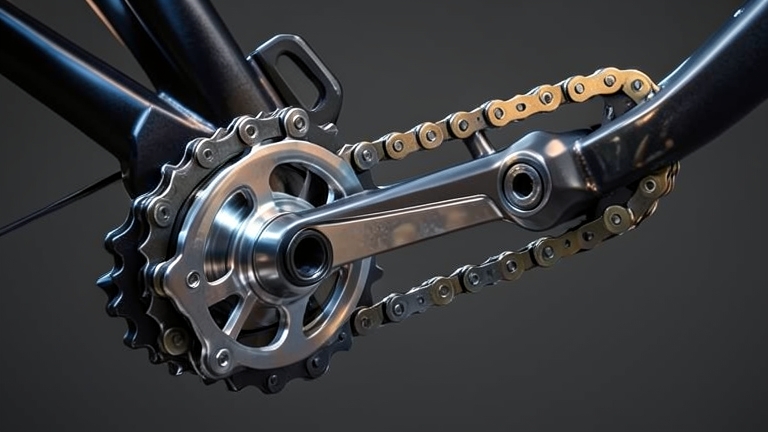
The e-bike drivetrain landscape is on the verge of a significant shift, and the Avinox MG Concept, unveiled at Eurobike, is the latest signal that the era of the traditional chain and derailleur may finally be drawing to a close. Avinox, already known for its mid-drive motors, has taken the wraps off a radical concept that reimagines the entire drivetrain as a fully integrated, electronically controlled system. While still very much a concept, the MG (likely standing for “Motor Gearbox”) unit promises gear changes in under a tenth of a second, a 520-percent gear ratio range, mechanical anti-theft locking, and even a reverse gear. The implications for e-mountain bikes, cargo bikes, and the broader cycling industry are substantial, but the path from a trade show concept to a production-ready product is fraught with technical and commercial challenges. This article provides a comprehensive analysis of the Avinox MG Concept, its technology, its partners, and its place in the evolving e-bike drivetrain ecosystem.
The Avinox MG Concept: A New Breed of Integrated Drivetrain
What Avinox presented at Eurobike was not a finished product but a concept, a design study intended to showcase the direction the company is heading. It is crucial to manage expectations: neither the aesthetic design of the drive unit nor the integrated motors are representative of what a final production version might look like. With that caveat firmly in place, the technical details that have been disclosed are nothing short of ambitious.
The core of the MG Concept is a virtual gearbox. This is not a physical gearbox with gears that shift into place, but a software-defined system that selects the optimal gear ratio from a continuously variable range. Avinox claims a maximum gear ratio range of 520 percent. This figure is important because it sets the MG Concept squarely between established and emerging competitors. For context, the Pinion MGU (Motor Gearbox Unit) offers a 600-percent range, while the Valeo Cyclee and Intradrive GD8 systems offer less. The 520-percent range positions the Avinox system as a premium solution that sacrifices a small amount of ultimate range for what the company claims will be superior smoothness, speed of shifting, and overall integration.
What is the gear ratio range of the Avinox MG Concept?
The Avinox MG Concept offers a maximum gear ratio range of 520 percent. This means the system can provide a gear that is 5.2 times higher or lower than the lowest available gear. This range is narrower than the 600 percent offered by the Pinion MGU but wider than solutions such as the Valeo Cyclee and Intradrive GD8, positioning it as a competitive middle-ground option for high-performance e-bikes.
How the Virtual Gearbox Works: Speed, Load, and Customization
The gear-changing process itself is one of the most impressive claims. Avinox states that the system can execute a gear change in less than 0.1 seconds. This is instantaneous by any standard, and critically, it can be done both when the bike is stationary and when it is under load. The latter is particularly significant for e-mountain biking, where riders frequently need to shift gears while applying high torque to the pedals on steep, technical climbs. Avinox says the system can handle gear changes smoothly even when the rider is applying up to 300 Newton-metres of torque to the pedals. This is an extraordinarily high figure, suggesting the system is designed for the most demanding trail conditions.

The shift lever itself offers flexibility. It can change exactly one gear at a time, or it can skip multiple gears in a single actuation. This is a feature familiar from high-end mechanical and electronic derailleurs, but in a virtual gearbox, it opens up possibilities for automated shifting strategies that can adapt to the terrain in real time.
One of the most intriguing aspects is the degree of customization. Avinox indicates that if specific gears are defined, the ratio of the individual gear ratios, the step size, and the number of gears can be adjusted as desired. This essentially means that the rider—or more likely, the bike manufacturer—can tune the drivetrain’s behavior to match the specific use case. A downhill e-mountain bike might have a wider spread with fewer steps, while a touring bike might have a narrower spread with more, closer ratios. The automatic mode, however, promises to handle all of this seamlessly, selecting the appropriate gear ratio across the entire range without rider input.
Beyond Shifting: Anti-Theft, Recuperation, and Reverse Gear
The Avinox MG Concept is not just about shifting gears. It introduces several features that could fundamentally change how e-bikes are used and secured.
Mechanical Locking for Anti-Theft
Avinox has announced that the system will be capable of mechanical locking. Once the drive unit is locked, the cranks cannot be moved. This would render the bike impossible to ride, even without assistance. While a determined thief could still carry the bike away, they could not ride off on it, which eliminates a large category of opportunistic theft. This is a significant upgrade over traditional locks and even electronic wheel locks, as it directly locks the drivetrain at its source.
Energy Recovery: Regenerative Braking
The company is also exploring energy recovery, or regenerative braking. This would mean that when the rider lets the e-bike coast or applies the brakes, the kinetic energy generated could be recovered via the system and fed back into the battery. This is a feature that could extend range on long descents, but the details remain vague. At the trade show, the feature was only teased. Several critical questions remain unanswered: How long or steep does a suitable descent need to be? How long does a braking manoeuvre need to last? What percentage of the kinetic energy can actually be recovered? In the context of e-bikes, the weight and speed are much lower than in electric cars, making the efficiency of regenerative braking a significant engineering challenge. Until Avinox provides concrete data, this feature should be regarded as a promising but unproven concept.
Reverse Gear: A Niche but Important Feature
Avinox has also implemented a reverse gear. Technically, it works. However, the immediate skepticism around this feature stems from the partners with whom Avinox jointly presented the MG Concept at Eurobike. Without exception, those partners showcased full-suspension e-mountain bikes. As anyone who has ever ridden an e-MTB knows, a reverse gear on a two-wheeled bike is of very limited utility. Where a reverse gear genuinely adds value is on three- and four-wheeled e-cargo bikes, which are heavy and difficult to maneuver in tight spaces. It is possible that Avinox is developing this feature for a future cargo bike application, or it may simply be a technical demonstration of the system’s capabilities. Either way, its presence on an e-MTB concept raises questions about the product’s primary target market.
The Quest for Silence: Acoustic Engineering in the Gearbox
One of the often-overlooked aspects of e-bike drivetrains is noise. A loud, whining motor or clunky gearbox can significantly detract from the riding experience, especially on pristine trails. Avinox promises to develop an exceptionally quiet drive unit. This is a bold claim, as integrating a motor, gearbox, and locking mechanism into a single unit typically generates a cacophony of mechanical noises. The company will need to invest heavily in acoustic damping, gear geometry optimization, and housing design to achieve true silence. The first production models will ultimately reveal whether this promise is kept, but the emphasis on noise reduction is a smart strategic move that addresses a genuine pain point for many e-bike riders.
Who Is Avinox Working With? The Partner Ecosystem
The credibility of any new drivetrain system hinges on the partners who are willing to build bikes around it. Avinox has assembled a quintet of prestigious e-bike manufacturers for the MG Concept’s debut: Canyon, Commencal, Forbidden, Mondraker, and Megamo. All five already offer models featuring Avinox’s mid-drive motors, so the relationship is established. For the MG Concept, they have created designs for full-suspension e-mountain bikes, optionally fitted with either a belt or a chain.
The choice of partner brands is telling. These are not mass-market commuter bike brands; they are performance-oriented, premium manufacturers. This suggests that Avinox is targeting the high end of the e-MTB market first, where early adopters are willing to pay a premium for cutting-edge technology. The fact that all five partners chose full-suspension e-MTBs for the concept also reinforces the suspicion that the reverse gear, while technically present, is not the main selling point for this particular iteration.
The Belt and Chain Question
In most of the concept bikes, additional tension pulleys were fitted to prevent the belt or chain from coming off during riding. This is a standard solution for belt-driven bikes, but for chains, it introduces additional friction and complexity. Avinox emphasizes that the MG Concept features a straight chain path, which means chains could indeed be used more frequently in the future. This opens the door to using extremely robust specialist chains, such as the Enduo from New Motion Labs, which are designed for high torque and durability. The ability to use a chain, a belt, or even a shaft drive gives bike manufacturers flexibility in designing their bikes, and it signals that Avinox is not locking its system into a single drivetrain topology.

Comparative Analysis: Avinox MG vs. Pinion MGU vs. Valeo Cyclee vs. Intradrive GD8
To understand where the Avinox MG Concept fits, it is useful to place it alongside the current and emerging competition. The e-bike drivetrain market is undergoing a rapid consolidation around integrated motor-gearbox units, and Avinox is entering a field with several well-funded competitors.
- Pinion MGU: The benchmark for integrated gearbox systems. Offers a 600-percent range, a physical gearbox with six or nine gears, and a proven track record. Pinion has a head start in terms of production and real-world testing. Avinox’s 520-percent range is a clear concession, but the virtual gearbox offers faster shifting and more customization.
- Valeo Cyclee: A 48-volt system with a continuously variable transmission. It offers a 380-percent range and is focused on urban and touring bikes. Avinox outperforms it on range and is targeting a more performance-oriented segment.
- Intradrive GD8: An 8-speed gearbox integrated into the rear hub or motor. It offers a 300-percent range and is designed for simplicity and cost-effectiveness. Avinox is clearly a more premium, higher-performance alternative.
The key differentiator for Avinox is the combination of a 520-percent range, sub-0.1-second shifts under load, mechanical locking, and the promise of extreme quietness. If Avinox can deliver on all these fronts, it will have a genuinely compelling product. However, the company is starting from a concept stage, while Pinion is already in production. The race to market will be critical.
Technical Challenges and Open Questions
Several critical technical questions remain unanswered, and they will determine whether the MG Concept becomes a reality or remains a trade show curiosity.
Durability and Reliability
An integrated motor-gearbox unit is a highly stressed component. It must withstand the full torque of the motor and the rider, operate in wet and muddy conditions, and survive thousands of gear changes. The mechanical locking mechanism adds another potential failure point. Avinox has not yet disclosed any durability testing data. For a premium e-MTB system, a lifespan of at least 10,000 to 20,000 kilometers is expected. The company will need to provide evidence that the system can meet these standards.
Weight and Integration
The MG Concept unit, with its motor, gearbox, locking mechanism, and potential regenerative braking components, is likely to be heavier than a traditional mid-drive motor and external gearbox combination. The five partner bikes all used full-suspension frames, which have more space for integration, but weight remains a critical factor for e-MTB performance. Avinox has not released weight figures, and this will be a key specification when production details emerge.
Software and User Interface
The virtual gearbox is entirely software-driven. This means that the user interface—how the rider interacts with the system, how the automatic mode behaves, and how customization is accessed—will be a major factor in user satisfaction. A poorly designed interface could ruin an otherwise excellent mechanical system. Avinox will need to develop a companion app or handlebar display that is intuitive and responsive.
Recuperation Efficiency
As noted, the regenerative braking feature is only teased. The efficiency of energy recovery on an e-bike is inherently limited by the physics of the system. E-bikes are light and have relatively low kinetic energy compared to cars. Recovering even 10-15 percent of that energy on a typical descent would be considered excellent. Avinox needs to provide specific data on when and how recuperation works, or the feature risks being dismissed as a marketing gimmick.
Market Implications and Strategic Significance
The Avinox MG Concept is more than just a new product; it is a statement of intent. The company is signaling that it wants to move beyond being a motor supplier and become a complete drivetrain solution provider. This is a strategy that mirrors what Bosch, Shimano, and Brose have done, but Avinox is taking it a step further by integrating the gearbox directly.
For bike manufacturers, the Avinox system offers a way to differentiate their products. A bike with an Avinox MG drivetrain can be marketed as having a cutting-edge, silent, and highly customizable drivetrain with anti-theft protection. The partners—Canyon, Commencal, Forbidden, Mondraker, and Megamo—are all brands that compete on innovation and performance. They are the ideal launch partners for a system that aspires to be a premium option.
For the industry as a whole, the Avinox MG Concept accelerates the trend toward fully integrated, software-defined drivetrains. The era of the external chain and derailleur on high-end e-bikes is drawing to a close. The question is no longer whether integrated gearboxes will become the standard, but which company will lead the transition.

What to Watch For in the Coming Months
Several developments will indicate whether the Avinox MG Concept is on track for production. First, watch for the release of technical specifications, particularly weight, efficiency, and durability data. Second, look for expansion of the partner list beyond the initial five, especially into the cargo bike and commuter segments, where features like reverse gear and mechanical locking have more direct utility. Third, pay attention to any announcements about production timelines and pricing. If Avinox can bring the MG system to market within 12 to 18 months at a competitive price point, it could become a major player. If delays mount or specifications fall short of the promises, the concept may remain just that—a concept.
The e-bike industry is watching closely. The Avinox MG Concept is a bold and ambitious project that, if executed well, could redefine what riders expect from their drivetrain. For now, it is exactly what the company says it is: a concept. But it is a concept with the backing of five major bike brands, a clear technical vision, and a set of features that could genuinely improve the riding experience. The next 18 months will be decisive.