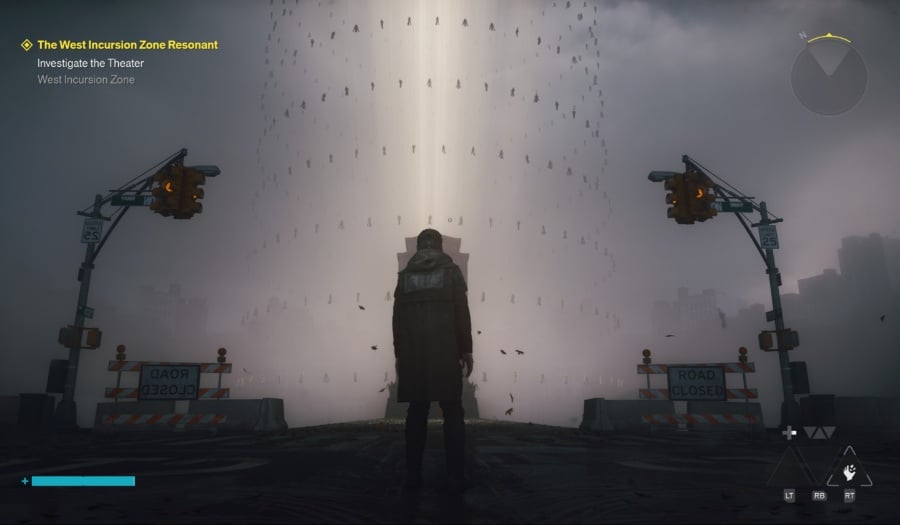
After hundreds of hours of side quests, marker-cluttered maps, and procedurally generated filler, many players have begun to ask a simple question: what happened to the art of the well-placed shot? The open-world revolution, for all its ambition, has diluted the core of the first-person shooter. The best linear shooters offer a counterbalance—tightly crafted corridors, curated enemy encounters, and gunplay that rewards precision rather than persistence. If open-world fatigue has set in, the answer may not lie in avoiding shooters altogether, but in rediscovering the pure, refined shooting that linear design makes possible.
What Are Linear Shooters and Why Do They Matter Now?
Linear shooters are games that guide players through a predetermined sequence of levels, arenas, or corridors, with minimal deviation. Rather than offering a vast sandbox, they focus on a curated experience: each room, each enemy placement, each weapon spawn is deliberately orchestrated to create a specific rhythm of combat. This design philosophy matters today because the gaming industry has spent over a decade chasing the horizon of infinite freedom, and many players have grown weary of the result. The question “What is a linear shooter?” can be answered simply: it is a game where the path forward is clear, and the challenge lies not in where to go but in how to shoot. The payoff is a refined feedback loop between player input, weapon behavior, and enemy reaction—a loop that open-world games often sacrifice for scale.
The Historical Foundation of Refined Shooting
The lineage of linear shooters runs deep. Doom (1993) set the template: a linear labyrinth of rooms and hallways, each encounter a puzzle of movement, ammunition management, and target prioritization. Every weapon had a distinct role, and the game’s level design ensured that no two firefights played out the same way despite the linear structure. Half-Life (1998) elevated this concept by weaving narrative into the linear spaces, using scripted sequences and environmental storytelling to drive the player forward without cutscenes breaking the flow of combat. Both titles demonstrated that linearity is not a limitation but a tool for crafting intensity.
As the industry moved toward open-world design in the 2010s—driven by the commercial success of franchises like Far Cry, The Elder Scrolls, and Grand Theft Auto—the linear shooter became a niche. Yet the games that continued to embrace linearity refined the craft further. Titanfall 2 (2016), for instance, delivered a single-player campaign that wove tight corridor combat with vertical mobility and giant mech battles, all within a strictly linear framework. Its “Effect and Cause” level remains a masterclass in mechanic-first linear design. Similarly, DOOM Eternal (2020) doubled down on arena-based encounters, stripping away any pretense of exploration to focus entirely on a combat loop that demanded constant weapon switching, resource management, and aggressive movement. These games prove that linear shooters have not only survived but evolved.
The Mechanics of Refined Shooting: Precision, Feedback, and Flow
What makes shooting feel refined in a linear context? Three interconnected elements: precision, feedback, and flow.

Precision
In a linear shooter, every bullet matters. The designer knows exactly where the player will be, what enemies they face, and what environmental constraints exist. This allows weapon balancing to be tuned with surgical specificity. The spread pattern of a shotgun in Half-Life 2 was calibrated to the tight corridors of Ravenholm; the crosshair bloom in Call of Duty 4’s campaign matched the engagement distances of its set-piece moments. Open-world games struggle to achieve this level of precision because a weapon must function equally well in a wide field, a narrow alley, and a vertical cliffside. Linear shooters sidestep this compromise, enabling weapon mechanics that feel responsive and predictable.
Feedback
Feedback encompasses every sensory cue that tells the player their shot landed effectively: hit sounds, impact particles, enemy stagger animations, controller vibration, and damage numbers. In linear shooters, the feedback loop is short and intense. DOOM Eternal uses a “glory kill” system that rewards aggressive closing of distance, while Metro Exodus (though semi-open) relies on the weighty sound of a modified Kalashnikov echoing through tunnels. The density of feedback per encounter is higher because the encounter itself is denser. In an open-world game, a single sniper shot may travel hundreds of meters; the feedback is delayed and diluted. Linear shooters compress the sensory reward into a rapid cadence, reinforcing the satisfaction of each pull of the trigger.
Flow
Flow—the state of deep focus and enjoyment—is easier to achieve in linear shooters because the designer controls the pacing. The classic rhythm is tension (exploration, silence), release (combat), and recovery (brief downtime). Games like Wolfenstein: The New Order alternate between stealth corridors and open firefights, varying the pace without breaking momentum. Open-world games, by contrast, often force the player into long traversal phases that interrupt flow, or they rely on random encounters that can feel arbitrary. The linear shooter guarantees a curated flow state, which is why many players report higher levels of engagement per hour in these games.
How Linear Design Enhances Gunplay
The structural advantages of linear design manifest directly in how weapons feel. Because the development team knows the exact context of each combat situation, they can create weapons that serve specific tactical roles rather than being generically effective. In Call of Duty: Modern Warfare 2 (2009), the “No Russian” level placed the player in an airport terminal with a machine gun; the recoil pattern and magazine size were tuned to that environment’s engagement distances and enemy density. In an open-world game, the same weapon would have to account for everything from sniping across a valley to clearing a room, resulting in a compromise where no encounter feels perfectly calibrated.
Level geometry in linear shooters also reinforces gunplay. Corridors create natural chokepoints, forcing players to manage angles and cover. Open spaces in Halo: Combat Evolved were not actually open—they were carefully bounded arenas with shield recharge stations and weapon pickups. The original Halo’s “The Silent Cartographer” level is a perfect example: a linear path through a beach, a structure, and underground tunnels, all with encounter triggers designed to test grenade placement and assault rifle burst control. The shooting experience was shaped by the space itself, a synergy that open-world games rarely achieve at the same resolution.
Modern Linearity in an Open-World Era: Games That Defy the Trend
Despite the market dominance of open-world shooters, several recent titles have reaffirmed the value of linear design. Resident Evil Village (2021) is technically not a shooter in the purest sense, but its first-person combat relies on linear corridors and weapon upgrades that feel tailored to each area. Bright Memory: Infinite (2021) offers a blisteringly short linear campaign that condenses fluid gunplay and melee into a two-hour spectacle. Ion Fury (2019) resurrected the Build Engine from the 1990s to deliver a fully linear shooter with handcrafted levels and a weapon roster that rewards mastery.
Even within the Far Cry series—the archetype of open-world shooters—the linear missions often receive the highest praise. The scripted escapes and fortress assaults in Far Cry 3 are remembered more vividly than the open-world filler. This suggests that players instinctively respond to the clarity and intensity of linear design. The industry has begun to take note: Call of Duty continues to invest heavily in its linear campaigns, and Microsoft acquired id Software (the studio behind DOOM and Quake) in part to keep the linear shooter lineage alive.
The Strategic Case for Linear Shooters in Today’s Market
From a publishing perspective, linear shooters offer distinct advantages. Development budgets are lower because level sizes are smaller and asset reuse is more predictable. Quality assurance is simpler because testers can run the same encounter multiple times. Narrative integration becomes tighter because the story can be paced alongside the combat. For a publisher like Electronic Arts or Activision Blizzard, a linear shooter can be a profitable mid-tier product that fills release schedules without the risk of a 100-hour open-world game that might fail to sustain player retention beyond the first weekend.
Moreover, linear shooters are well-suited to subscription services such as Xbox Game Pass and PC Game Pass. Their shorter completion times (typically six to twelve hours) mean that subscribers can finish them within a month, reducing the need for long-term engagement metrics. A game like The Medium or Singularity (both linear shooters with strong atmospheres) can act as a palate cleanser between larger titles. Analytics from Steam user reviews consistently show that linear shooters receive higher satisfaction scores when compared to open-world shooters in the same price bracket, likely because expectations are better managed and the experience is more consistent.
Featured Snippet Answer: Why Do Linear Shooters Deliver Better Gunplay?
Linear shooters deliver better gunplay because every variable—enemy placement, distance, cover, weapon behavior, pacing—is controlled by the designer. This enables a level of tuning that open-world games cannot match, where each encounter can be balanced to push the player’s skills without frustration. The result is a tighter feedback loop, higher precision, and a curated flow state that amplifies the satisfaction of shooting.
The Future of Refined Shooting
The gaming landscape is cyclical. The open-world boom of the 2010s is showing signs of fatigue, with players increasingly seeking focused, authored experiences. Linear shooters are positioned to benefit from this shift. New technologies like ray tracing and NVIDIA DLSS allow smaller linear games to achieve visual fidelity that rivals large open worlds, closing the graphics gap. Meanwhile, independent studios are reviving classic shooter mechanics in titles like Prodeus and CULTIC, proving that the demand for refined shooting is not a nostalgic niche but a core audience with strong purchasing intent.
For the player tired of clearing bandit camps for the hundredth time, the best linear shooters offer a respite—a return to the fundamentals that made first-person shooters compelling in the first place. The corridor is not a limitation; it is a promise. Every corner turned, every enemy encountered, every shot fired has been placed there with purpose. In an age of infinite possibility, sometimes the most satisfying path is the one that leads straight ahead.