BlazBlue Entropy Effect X represents a collaborative effort from developers 91Act, Astrolabe, and Arc System Works to refine and expand upon the original Entropy Effect formula. This action roguelike attempts to weave the intricate lore of the BlazBlue fighting game series into a more accessible package while delivering the challenging, run-based gameplay that defines the genre. Available on Nintendo Switch, PlayStation 5, and Xbox Series X, the title enters a crowded field alongside established favorites like Dead Cells and Astral Ascent, aiming to carve out its own niche with a distinct cast and mechanical depth.
A Narrative Attempted, If Not Fully Realized
The developers have made a concerted effort to tie BlazBlue Entropy Effect X more directly to its source material. Players assume the role of Ace, an amnesiac researcher working under the enigmatic Dr. Mercurius—a character whose feline features and dual tails will be familiar to fans of Professor Kokonoe Mercury. Their mission, as part of the DBS Project, is to venture into the mysterious Boundary to recover Shards of Possibility. This framework provides a narrative throughline that was less pronounced in the original game, offering a clearer, if still abstract, motivation for the repeated runs through ever-shifting environments.
Despite this improved integration, the story remains a point of contention. For players unfamiliar with the dense mythology of the BlazBlue universe, the connections and character motivations can feel opaque and confounding. Even for series veterans, the narrative in Entropy Effect X functions more as atmospheric backdrop than a driving, compelling force. It adds flavor and context but doesn’t significantly enhance the core gameplay loop or provide the emotional weight that might elevate the experience beyond its genre staples. The effort to create a more coherent narrative is acknowledged, but its execution lands as an interesting addition rather than a transformative element.
Core Gameplay and the Roguelike Loop
At its heart, BlazBlue Entropy Effect X follows a familiar roguelike structure. Each run begins with selecting an avatar from the unlocked roster of BlazBlue characters. The player then navigates through a series of small, self-contained combat arenas, clearing all enemies in one before proceeding to the next. The progression mirrors titles like Astral Ascent, where success grants a choice of buffs, upgrades, or new abilities, alongside selecting the path forward through various room types—including shops, rest areas, and challenge rooms that offer power at a cost.
Character Balance and Viability
A significant aspect of the gameplay revolves around the roster and its inherent balance—or occasional lack thereof. Certain characters stand out as disproportionately powerful, creating a meta that can overshadow the rest of the cast. Noel Vermillion, for instance, proves exceptionally strong even without significant upgrades, offering a reliable and potent option from the outset. Ragna the Bloodedge’s effectiveness skyrockets when players invest in his universal abilities, while the high-skill-cap Hakumen becomes a dominant force once his complex playstyle is mastered.
This imbalance means that while many characters are technically viable with specific builds, the path of least resistance often leads back to a handful of top-tier picks. This can reduce the incentive to experiment with the full roster, potentially shortening the game’s long-term appeal for those seeking optimized runs over exploratory variety. The game’s progression system, which includes inheritance abilities that persist across failures, does encourage long-term development of all characters, but the immediate power disparity is palpable.
Mechanical Depth and the Learning Curve
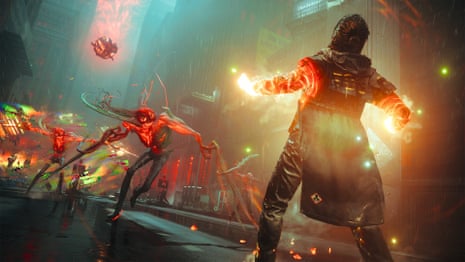
Where BlazBlue Entropy Effect X truly shines is in its potential for mechanical mastery and combo-driven combat. The game inherits the spirit of its fighting game origins, translating complex inputs and character-specific techniques into the roguelike format. Successfully chaining abilities, managing cooldowns, and exploiting enemy weaknesses can lead to moments of exhilarating fluidity, where players feel unstoppable as they tear through rooms of adversaries.
A Steep Onboarding Process
This depth, however, comes with a significant barrier to entry. The game has been criticized for its opaque explanation of systems. Icons, status effects, and upgrade descriptions are often presented with minimal context, expecting players to either possess prior knowledge or learn through trial and error. The text explaining perks and bonuses at the end of areas is frequently insufficient, leaving players to decipher the practical implications of their choices. This lack of clarity can make the initial hours frustrating, as the foundational understanding necessary for strategic building must be pieced together through repeated play rather than guided instruction.
Once this hurdle is overcome, the game opens up considerably. Players who dedicate the time to understand the synergies between abilities, character-specific mechanics, and item effects will find a rich and rewarding system that supports deep customization and powerful, synergistic builds. The joy of devising a strategy that turns a previously challenging character into a powerhouse is a core reward of the genre, and Entropy Effect X delivers on that promise for persistent players.
Technical Performance and Platform Considerations
The multi-platform release of BlazBlue Entropy Effect X brings with it questions of optimal performance. On the Nintendo Switch, the game runs adequately for the most part, maintaining stable frame rates during standard combat encounters. However, some technical issues have been noted that may affect the experience. Players have reported occasional visual glitches, such as misplaced environmental assets like fluorescent green boxes appearing in event rooms. More concerning are instances of lag, particularly during specific boss fights like the encounter with Arakune, which can disrupt the precise timing required for effective combat.
Interface and Accessibility
Another point of contention on the Switch, especially in handheld mode, is the user interface. Text size and icon clarity can be challenging to parse on the smaller screen, potentially impacting the player’s ability to make quick, informed decisions during a run. This is a notable drawback for a game that already struggles with explaining its systems, as vital information can be difficult to read. While these issues seem addressable via future patches, they currently represent a compromise for players choosing the portable version over its console counterparts on PS5 and Xbox Series X, where such interface problems are less pronounced.
Positioning Within the Genre
BlazBlue Entropy Effect X enters a competitive landscape defined by exceptional titles. Its success hinges on how well it leverages its unique assets—the BlazBlue license and fighting game mechanics—to differentiate itself. For fans of the series, the opportunity to play as beloved characters like Taokaka, Hakumen, and Ragna in a new context is a significant draw. The game is packed with references, aesthetic touches, and audio cues that will resonate with long-time followers, creating a sense of familiarity within an unfamiliar genre framework.
For general roguelike enthusiasts without prior attachment to BlazBlue, the appeal is more squarely based on the core gameplay loop. Here, the game presents a solid, if not revolutionary, experience. The combat is satisfying, the progression systems offer meaningful long-term goals, and the variety of characters provides different ways to engage with the challenges. It may lack the seamless polish and immediate accessibility of genre giants like Dead Cells, but it compensates with a distinct mechanical identity rooted in combo-based action.
The Verdict on Longevity and Content
In terms of sheer content, BlazBlue Entropy Effect X offers considerable value for players invested in mastery. Maxing out every character, unlocking all abilities, and experimenting with diverse builds represents a substantial time commitment. The inheritance system ensures that even failed runs contribute to overall progress, softening the sting of defeat and encouraging persistence. This design is effective at mitigating frustration and promoting a “just one more run” mentality that is crucial for any successful roguelike.
The structural repetition of clearing small enemy rooms can, over time, begin to feel formulaic. While the enemy varieties and room layouts change, the fundamental objective rarely deviates. The inclusion of boss fights and special event rooms provides necessary peaks in the gameplay rhythm, but the moment-to-moment exploration and discovery elements found in some peers are less emphasized here in favor of pure combat execution.
BlazBlue Entropy Effect X stands as a competent and often engaging entry in the action roguelike genre. It successfully transplants the spirit and characters of a beloved fighting series into a new format, offering deep, combo-driven combat for those willing to climb its steep learning curve. Its narrative ambitions, while improved, remain secondary to the gameplay, and technical hiccups on certain platforms slightly mar the experience. For fans of BlazBlue, it’s a fascinating adaptation worth exploring. For devotees of challenging, build-crafting roguelikes, it presents a solid, character-action-focused alternative with its own unique flavor, proving that even within well-trodden genres, a strong identity and dedicated execution can carve out a worthwhile space.