After a decade and a half of nostalgia cycles, the arcade racing genre has finally produced a title that does not merely nod to the past but openly declares itself a direct spiritual successor. Heatwarped, a forthcoming street racing game, is being positioned as a deliberate, unabashed, and mechanically faithful clone of Need for Speed Underground 2. The game’s reveal, accompanied by a single image of a neon-lit cityscape and a terse description promising a new street racing story defined by night-time aesthetics, has already ignited fierce debate among the racing community. The central question is no longer whether the market wants another Underground 2, but whether a game that so explicitly copies a 2004 masterpiece can find its own identity—or whether identity matters at all when the original formula remains so potent.
What Is Heatwarped and Why Is It Being Called a Direct Need for Speed Underground 2 Clone?
Heatwarped is an upcoming independent street racing game developed by a small team that has publicly stated its intent to recreate the look, feel, and progression system of EA’s 2004 classic Need for Speed Underground 2. The game will be set in a single large city, where players engage in night-time illegal street races, earn currency to buy performance upgrades, and visually customize their cars with a wide range of body kits, vinyls, and neon lighting. The developers have described the project as a “love letter” to the era when street racing games prioritized atmospheric immersion, copious car modification, and a sense of night-time urban culture.
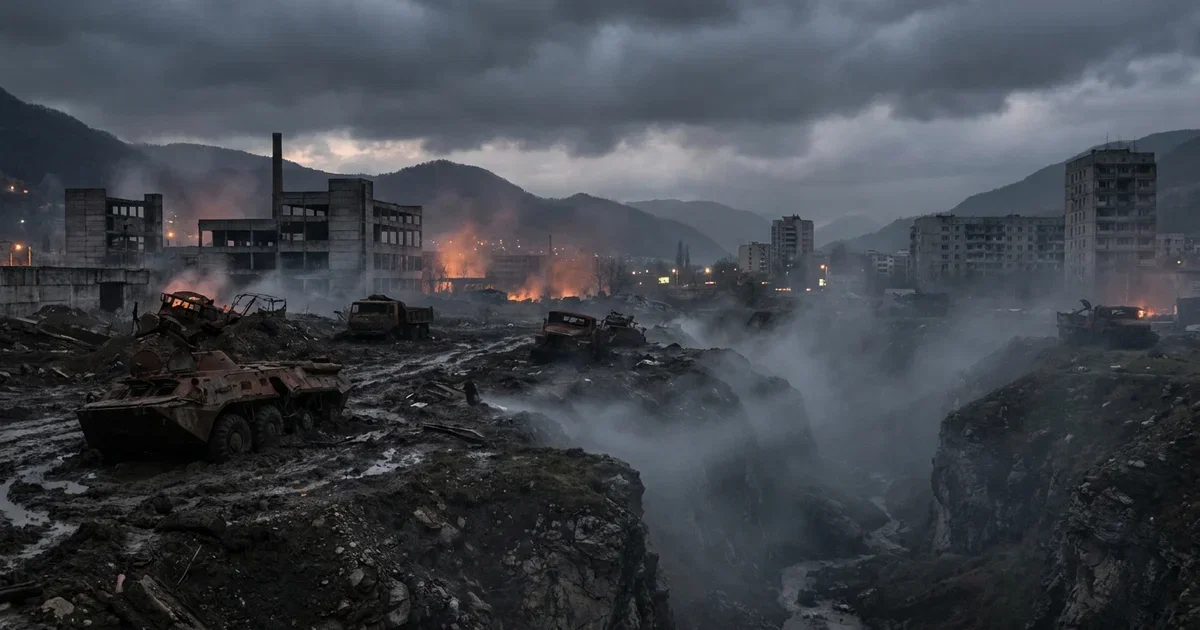
According to the official materials, the title “Heatwarped” reflects the game’s core thematic tension: the heat of the engine, the heat of the police chase, and the warped sense of time and space that occurs during high-speed night runs. The single released screenshot shows a highway interchange at dusk, with a heavily modified sports car surrounded by trailing neon light streaks, reminiscent of the iconic cover art and in-game aesthetic of Underground 2. The game’s narrative hook, as described in the press blurb, is that “in a new city, a new street racing story will begin, where night races are charged with the aesthetics and atmosphere of an already distant past.” This phrasing deliberately conflates the game’s in-world setting with the player’s real-world nostalgia for the early 2000s.
The Direct Comparison: How Heatwarped Mirrors Need for Speed Underground 2
To understand why Heatwarped is being labeled a “direct clone,” one must examine the specific gameplay pillars that defined Need for Speed Underground 2. The 2004 title introduced a persistent open world (Bayview or the fictional city of “Coast City” in some versions), a day-and-night cycle, a dynamic police pursuit system, and a deep visual customization system that allowed players to change every body panel, tint windows, add underglow, and apply thousands of decals. Heatwarped appears to replicate each of these features almost beat-for-beat.
- Open-world city: Like Bayview, Heatwarped’s unnamed city is designed to be navigated freely between races, with hidden shortcuts, parking garages, and meet-up points.
- Night-only racing: The game’s races occur exclusively at night, mirroring the original’s emphasis on after-dark underground culture.
- Performance upgrades: Players purchase parts from dedicated shops, with specific tiers of engine, suspension, and nitrous upgrades.
- Visual customization: The screenshot shows a car with a wide body kit, custom paint, and neon underglow. The press materials confirm “hundreds of visual parts.”
- Police chases: While not shown in the teaser, the developers have confirmed on social media that police vehicles will pursue the player during races and free roam, with a heat level system similar to the original.
The game’s visual style is also a deliberate throwback. The textures appear to have a slight grain, the lighting is warm and saturated, and the UI (to the extent it is visible) uses early-2000s-inspired fonts. This is not a modern reinterpretation; it is a near-total recreation of the original’s aesthetic.
Why the Street Racing Genre Has Been Waiting for a Clone
The release of a game that so overtly mimics a 2004 title speaks to a deep, long-standing gap in the market. After the peak of the street racing craze in the mid-2000s, the genre was overtaken by open-world arcade racers like Burnout Paradise, simulation-focused titles like Forza Motorsport and Gran Turismo, and the open-world crime games that absorbed elements of street racing (the Grand Theft Auto series). EA itself moved away from the Underground formula with Need for Speed: Most Wanted (2005) and then Carbon (2006), before eventually pivoting to the ill-fated Need for Speed reboot in 2015 and the more recent Unbound (2022), which used a cartoonish visual style that divided the fanbase.
What the original Underground 2 offered was a specific combination: a sense of earnest, non-ironic street culture, a deep customization system that was both aesthetic and mechanical, and a progression loop that felt like a real rise through an underground racing scene. No modern AAA title has fully replicated that. Forza Horizon is too polished and festival-oriented. The Crew series is too sprawling and lacks the intimate night atmosphere. Need for Speed Heat (2019) came closest, but its police system was controversial and its visual customization was toned down compared to the 2004 classic.
Heatwarped, then, is answering a demand that has been vocalized on forums, Reddit, and YouTube for years: “I want a game that is literally just Need for Speed Underground 2 with modern graphics and better physics.” The developers have listened. The question is whether they can execute without the resources of a major publisher.
What Are the Key Differences Between Heatwarped and Need for Speed Underground 2?
Although the game is being marketed as a direct clone, there are inevitable differences born from the 20-year gap, the shift in technology, and the independent development context. Here are the most significant distinctions:
- Indie scale: Heatwarped is developed by a small team, likely fewer than 20 people, compared to the hundreds who worked on the EA title. This means the city will be smaller, with fewer races and less voice acting. The game may rely on procedural generation or repetitive track layouts.
- Physics model: The original Underground 2 used a physics system that was arcadey but with a sense of weight. Heatwarped’s physics are unknown, but early footage suggests a more drifting-oriented, almost “traction stylized” handling that may feel closer to Initial D arcade games than to the original.
- Modern hardware: The game is built for modern PCs and consoles, meaning higher resolution textures, dynamic lighting, and potential for 60 FPS on multiple platforms. The original had a locked 30 FPS on consoles.
- Licensing: The original game featured a licensed soundtrack (including tracks from The Doors, Fat Joe, and Rob Zombie) and licensed car brands (Nissan, Toyota, Mitsubishi, etc.). Heatwarped, as an indie game, will likely use fictional car models with generic names, or only a handful of licensed vehicles. This is a major potential drawback for authenticity.
- Online features: Heatwarped is expected to have online multiplayer, possibly a persistent world with up to 16 players, whereas the original had only split-screen and LAN multiplayer.
These differences could either make the game feel like a respectful homage or a hollow imitation. The lack of licensed cars, in particular, is a critical issue. Part of the appeal of Underground 2 was driving a real Nissan Skyline R34 or a Toyota Supra with custom body kits. If Heatwarped uses facsimiles, the immersion may break.
Featured Snippet: How Does Heatwarped Compare to Other Modern Street Racing Games?
Heatwarped distinguishes itself from modern street racing games by deliberately rejecting the trends of the last decade. While Forza Horizon 5 emphasizes a festival atmosphere, a vast map, and a broad range of vehicle types, Heatwarped focuses on a single city, night-only racing, and a deep customization system that is purely visual and performance-oriented. Whereas Need for Speed Unbound introduced cartoonish effects and a cel-shaded style, Heatwarped returns to the gritty, realistic aesthetic of the early 2000s. The game also eschews the open-world crime elements of Grand Theft Auto Online, instead narrowing the experience to pure racing and car culture. In essence, Heatwarped is a precision tool for a specific audience that wants one thing: a faithful recreation of Need for Speed Underground 2 with modern graphics and gameplay polish.
The Market Context: Why a Direct Clone Matters Now
The announcement of Heatwarped comes at a time when the racing game market is paradoxically both saturated and underserved. The arcade racing segment is dominated by the Forza Horizon series, which has become a massive cross-genre blockbuster, but its tone is optimistic, colorful, and accessible to all ages. The underground street racing niche, with its darker themes, risk-taking, and rebellious culture, has been largely abandoned by AAA publishers. The last major attempt was Need for Speed Heat in 2019, which received mixed reviews and was followed by the divisive Unbound.
Meanwhile, the indie space has seen a resurgence of nostalgia-driven projects. Games like Trash Hollow (a clone of the 1999 classic Midtown Madness), Night Runners (a homage to Initial D and Tokyo Xtreme Racer), and now Heatwarped are directly targeting the emotional core of players who grew up in the early 2000s. These developers are not trying to innovate; they are trying to recreate. And for a segment of the market, that is exactly what they want.
Financial viability is a question. The budget for a game like Heatwarped is likely modest, and the team can rely on crowdfunding or early access sales. The game has already generated significant buzz on social media, with thousands of users sharing the screenshot and debating its merits. If the developers can deliver a polished, bug-free experience with a solid physics engine and a decent number of cars, even if they are unlicensed, the game could become a cult hit. The risk is that the community’s expectations are impossibly high. The original Underground 2 is remembered with rose-tinted glasses; any deviation from the formula could be met with harsh criticism.
What Are the Risks of Making a Direct Clone?
There are several reasons why a direct clone strategy is difficult to pull off successfully. First, the original game’s success was partially due to its novelty at the time. The combination of open-world, wide customization, and police chases was groundbreaking. Today, that formula is well understood, and simply replicating it might feel derivative rather than nostalgic. Second, the licensing issue is a real barrier. The absence of real cars and real music, which were integral to the original’s atmosphere, could make the game feel like a cheap imitation. Third, the indie team may lack the resources to create a city that feels alive with traffic, pedestrians, and dynamic events. The original Bayview had a certain density that was remarkable for its time; recreating that with modern fidelity is a massive undertaking.
Another risk is legal. EA has historically been protective of its intellectual property. While the concept of a street racing game is not copyrightable, and the game’s title “Heatwarped” is distinct, the close similarity in gameplay, UI layout, and even visual style could invite a lawsuit. The developers have been careful to avoid direct copying of assets, but the line between homage and infringement is thin. The community will watch closely for any legal action.
Technical and Design Analysis: What Heatwarped’s City and Night System Reveal
The sole screenshot, while limited, offers several clues about the game’s design philosophy. The image shows a two-lane highway with a barrier on the left and a city skyline in the background. The lighting is warm, dominated by orange streetlights and cool blue neon from the car. The car itself is a fictional design that resembles a Nissan 350Z with a widebody kit. The road appears wet, suggesting a post-rain environment, which was a staple of the original game’s atmosphere. The sky is a deep blue, indicating that it is well after sunset.
This leads to a key technical point: the rendering of night-time scenes in modern games is far more complex than in 2004. Heatwarped will need to balance dynamic lighting, reflections, and shadows to create the same mood without performance issues. The screenshot shows a high level of detail, with volumetric light cones and realistic reflections on the wet road. If the game can maintain this level of visual fidelity during gameplay, it will be a significant achievement for an indie title.
The city layout is also hinted at: the highway interchange suggests a map that is divided into districts, each with a different aesthetic (industrial, downtown, suburban). This is typical of the genre, but the game’s small team may limit the number of distinct areas. The developers have not yet revealed the size of the map, but based on the scale of the screenshot, the city could be roughly the size of the original Bayview, which was about 2 square miles. For a small team, that is a manageable scope.
Anticipated Player Questions: What Platforms Will Heatwarped Launch On?
As of the announcement, the developers have confirmed that Heatwarped will be released on PC via Steam, with planned console ports for PlayStation 5 and Xbox Series X|S. No last-generation versions (PS4, Xbox One) have been announced. The game is built on Unreal Engine 5, which allows for advanced lighting and physics, but also requires modern hardware. An early access version is expected in late 2026, with a full release in 2028. The developers have stated that they want to avoid the “broken launch” problem that has plagued many indie racing games, so they will prioritize stability and polish over speed.
The Broader Industry Implications: Is the Nostalgia-Clone Model Sustainable?
Heatwarped is not an isolated phenomenon. The gaming industry is seeing a wave of “clone” projects that target very specific, long-abandoned genres. There are clones of Star Wars: Rogue Squadron, Tony Hawk’s Pro Skater, and Burnout 3. The strategy works because the original games are often unavailable due to licensing issues (cars, music, or IP rights) and because the fanbases are vocal and willing to pay for a modern equivalent. However, the sustainability of this model is questionable. The success of a clone depends on execution and on the community’s tolerance for a lower budget. Many clones have failed due to poor physics, bad optimization, or lack of content.
For Heatwarped, the outcome will likely set a precedent. If it succeeds, it could encourage more developers to clone other classic racing games, such as Midnight Club 3 or Juiced. If it fails, it may confirm that the magic of the original cannot be replicated without the original team’s resources and vision. The game’s launch will be a test case for the entire indie nostalgia-racing movement.
What the Future of Street Racing Games Could Look Like
Looking ahead, Heatwarped’s release could accelerate a trend toward niche, passion-driven projects that serve specific micro-communities. The AAA racing industry has become increasingly risk-averse, focusing on live-service models, battle passes, and cross-genre blends. The indie space, conversely, is becoming more specialized. We may see a bifurcation where the market is split between massive, semi-sim open-world racers (like Forza Horizon) and smaller, faithful recreations of classic arcade games. Heatwarped sits squarely in the latter camp.
The developers have also hinted at mod support, which could be a game-changer. If the game allows for custom cars, tracks, and music, the community could expand the game’s lifespan far beyond its initial content. The original Underground 2 still has an active modding community that creates new cars and tracks, but those mods are limited by the game’s engine. A modern, mod-friendly game could become the definitive platform for street racing enthusiasts.
Ultimately, Heatwarped is a bold bet on the enduring power of a specific era of gaming. It is a reminder that nostalgia is not just about remembering a game; it is about wanting to feel the same way again. Whether the game delivers that feeling will depend on the team’s ability to capture the essence of Need for Speed Underground 2 while also making it playable on modern hardware. The stakes are high, but the potential reward—a revitalized genre and a loyal fanbase—is equally high. The street racing world is watching, and soon, the engine will roar to life.