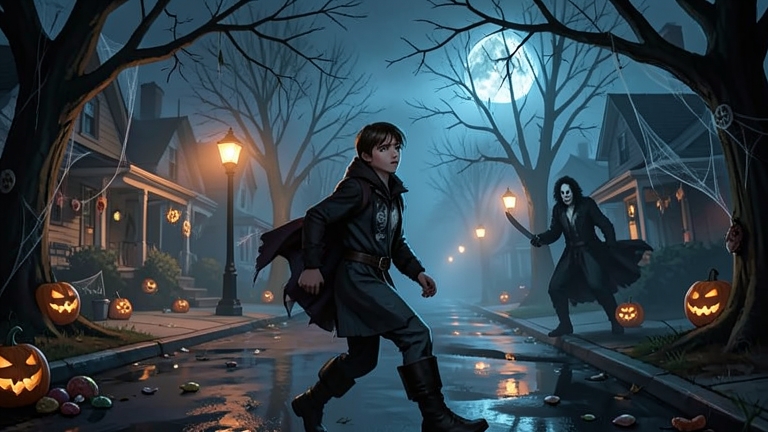
In a decision that has sent ripples through the gaming community, Halloween: The Game, the asymmetric horror title developed by IllFonic, has been refused classification by the Australian Classification Board. The ruling effectively bars the game from sale in both Australia and New Zealand, marking yet another instance of the region’s stringent content regulations clashing with the creative ambitions of game developers. The refusal, confirmed by IllFonic on social media, was not prompted by the game’s iconic villain, Michael Myers, or its depiction of violence, but rather by the presence of what the board deemed a controlled substance. Reports suggest that cannabis, used in the game as a gameplay buff for players controlling Michael Myers, triggered the refusal. This decision raises significant questions about the consistency and application of Australia’s classification standards, the economic impact on developers, and the broader cultural tensions between creative expression and regulatory frameworks. This article explores the details of the ban, its implications for IllFonic and the gaming industry, and the historical context of Australia’s contentious relationship with video game content.
Why Was Halloween: The Game Banned in Australia and New Zealand?
The decision to refuse classification for Halloween: The Game has been attributed not to the game’s violence or horror elements, but specifically to the depiction of a controlled substance. IllFonic confirmed in a statement that the refusal “was not based on the presence of the iconic slasher, Michael Myers, or the outstanding kills that can be performed in the game, but rather the presence of a controlled substance.” The substance in question is widely believed to be cannabis, which reportedly provides players controlling Michael Myers with a gameplay buff. While IllFonic has not explicitly confirmed this detail, multiple reports point to the drug’s inclusion as the decisive factor. The Australian Classification Board’s public register has not yet listed the refusal, leaving some technical details unconfirmed, but IllFonic’s public acknowledgment leaves little doubt about the board’s reasoning. The ban applies to both physical and digital sales, effectively preventing players in Australia and New Zealand from accessing the game through any legitimate channel.
The Gameplay Context: Cannabis as a Mechanic in Halloween: The Game
In Halloween: The Game, players take on the roles of either Michael Myers or his victims in a tense, asymmetric multiplayer experience. The inclusion of cannabis as a gameplay element is reportedly designed to provide a buff to players controlling Michael Myers, potentially enhancing his abilities or altering the dynamics of the hunt. While such mechanics are not uncommon in video games—many titles feature power-ups or enhancements tied to in-game items—the depiction of an actual controlled substance in a game set in the modern era appears to have crossed a line for the Australian Classification Board. The board’s sensitivity to drug depictions is well-documented, and even minor or mechanical uses of illicit substances have previously led to rating refusals or forced modifications. For IllFonic, the decision represents a significant setback, as the studio had presumably designed the game with the expectation that such elements would be acceptable under the board’s guidelines.
The Australian Classification Board’s Stance on Drug Depictions
Australia’s classification system has long been among the most stringent in the Western world, with a particular focus on depictions of drugs, violence, and sexual content. The board’s guidelines explicitly prohibit the depiction of drug use that is “detailed, realistic, or related to incentives or rewards.” In practice, this means that even incidental or mechanical depictions of illicit substances can result in a refused classification. The board has previously refused ratings for games that depict drug use in ways that could be interpreted as glamorizing or encouraging such behavior. This stance reflects broader societal attitudes in Australia, where drug policy is generally conservative, and the government has been active in regulating content that might normalize or trivialize drug use. However, critics argue that the board’s approach is often inconsistent and overly punitive, applying strict standards to games that would be deemed acceptable in other media, such as films or literature.
Historical Precedents: Games Refused Classification in Australia
The refusal of Halloween: The Game is far from an isolated incident. Australia’s Classification Board has a long history of refusing ratings for games that include content deemed inappropriate under its guidelines. In 2024, Hunter x Hunter Nen x Impact was refused classification due to “implied sexual violence,” a decision that drew criticism from fans and developers alike. Similarly, in 2021, Disco Elysium: A Final Cut was initially refused classification in Australia before being released on consoles after the developers made adjustments to the game’s content. Other notable examples include the 2018 ban of We Happy Few over the depiction of drug use, and the 2014 refusal of South Park: The Stick of Truth for its portrayal of abortion and other controversial themes. These cases underscore the challenges faced by developers seeking to release games in Australia, where the classification system can introduce significant uncertainty and risk.
What is particularly striking about the Halloween: The Game ban is that it occurs against the backdrop of a broader relaxation of Australia’s classification standards for video games. In 2013, Australia introduced an R18+ rating for games, allowing for more mature content to be legally sold in the country. However, the board’s approach to drug depictions has remained restrictive, with the guidelines still prohibiting any content that “promotes or encourages” drug use. This creates a tension between the desire to expand the scope of permissible content and the continued enforcement of strict standards on specific issues.
The Impact of the Ban on IllFonic and the Game’s Launch
The refusal of classification is a significant blow to IllFonic, which has invested substantial resources in the development of Halloween: The Game. The studio confirmed that the decision means it “cannot sell the physical or digital product in both Australia and New Zealand,” effectively excluding two significant markets from the game’s launch. While Australia and New Zealand are not among the largest video game markets globally, they represent important territories for publishers, particularly for titles with strong English-speaking audiences. The ban also raises questions about the game’s September launch schedule, as IllFonic has not yet indicated whether it plans to alter the game for the Australian and New Zealand markets or simply forgo distribution in those regions.
For a studio like IllFonic, known for its work on asymmetric horror titles such as Friday the 13th: The Game and Predator: Hunting Grounds, the inability to release in Australia and New Zealand represents both a financial and reputational setback. The studio had likely anticipated that the game’s horror elements would be the primary focus of regulatory scrutiny, not the inclusion of a gameplay mechanic involving cannabis. The decision serves as a reminder of the unpredictable nature of content regulation and the risks inherent in developing games for global distribution.
What Does the Ban Mean for Halloween: The Game’s Future?
The future of Halloween: The Game in Australia and New Zealand remains uncertain. IllFonic has not yet announced whether it plans to modify the game to meet the Classification Board’s requirements or whether it will challenge the decision. The studio could choose to remove or alter the cannabis-related content, potentially making the game eligible for classification. However, such a change would require significant development effort and could affect the game’s design and balance. Alternatively, IllFonic could decide to accept the ban and focus on other markets, accepting the loss of revenue from the Australian and New Zealand territories.
The ban also raises questions about the game’s digital distribution. Platforms such as Steam, the PlayStation Store, and the Xbox Store typically comply with regional classification requirements, meaning that Australian and New Zealand players will not be able to purchase the game through official channels. However, players may still seek to import physical copies or access the game through region-switching or other workarounds, though these methods often violate platform terms of service and may not be viable for the average consumer. For IllFonic, the priority will likely be to ensure that the game’s global launch proceeds as planned while evaluating its options for the affected regions.
The Broader Implications for the Gaming Industry
The ban on Halloween: The Game highlights the challenges that developers face in navigating the complex landscape of international content regulation. While the Australian Classification Board’s standards are among the strictest, other countries also maintain content restrictions that can affect game distribution. China, for example, imposes strict limitations on depictions of violence, gore, and political content, while Germany has historically been sensitive to Nazi symbolism and violence in games. For developers, this creates a challenging environment where a single game may need to be adjusted for multiple markets or risk being banned entirely.
The inconsistency of classification decisions is also a concern. Developers often struggle to predict whether their games will be approved, particularly when the board’s guidelines are open to interpretation. The refusal of Halloween: The Game for drug depictions stands in contrast to the approval of other games that include similar content, suggesting that the board’s decisions may not always be predictable. This uncertainty can discourage investment in game development and create a chilling effect on creative expression. The gaming industry has long called for greater clarity and consistency in classification standards, arguing that the current system is ill-suited to the complexities of modern game content.
Consumer Reactions and the Debate Over Censorship
The ban on Halloween: The Game has sparked significant debate among players and industry observers, with many criticizing the Australian Classification Board’s decision as overly restrictive and out of step with modern gaming culture. Fans of the Halloween franchise and the asymmetric horror genre have expressed disappointment that they will be unable to legally access the game, with some calling for the government to reform the classification system. The debate touches on broader questions of censorship, artistic freedom, and the role of government in regulating entertainment content. Proponents of the ban argue that the classification system serves an important purpose in protecting consumers, particularly younger players, from harmful content. However, critics contend that the board’s approach is paternalistic and fails to account for the maturity of the audience or the context in which content is presented.
In the case of Halloween: The Game, the inclusion of cannabis as a gameplay mechanic is arguably a minor element that does not glorify or encourage drug use. The mechanic is reportedly designed to enhance gameplay rather than to make a statement about drug culture. The board’s decision to refuse classification over this element suggests a zero-tolerance approach that may not reflect the actual risks associated with the content. This has led some to question whether the board’s guidelines are fit for purpose in an era when video games are increasingly recognized as a mature and legitimate form of artistic expression.
New Zealand’s Alignment with Australian Classification Decisions
It is worth noting that the ban applies to both Australia and New Zealand, reflecting the close alignment between the two countries’ classification systems. New Zealand’s classification board often follows the lead of its Australian counterpart, particularly in cases where a game has been refused classification in Australia. This means that even if IllFonic were able to secure a classification in New Zealand independently, the game’s market opportunity in the region would be significantly limited due to the smaller size of the market. The alignment between the two countries’ systems creates a situation where a decision by the Australian board can effectively eliminate a game’s legal distribution channels in the broader region, underscoring the influence of Australia’s classification standards on the Pacific gaming market.
For IllFonic, the dual ban represents a compounded challenge, as the studio now faces the prospect of excluding both countries from its distribution strategy. The alignment also highlights the importance of engaging with both classification boards early in the development process to identify potential issues and address them before they become insurmountable. However, even with proactive engagement, the unpredictability of classification decisions means that developers can never be entirely certain that their games will be approved.
Lessons for Developers and the Future of Content Regulation
The ban on Halloween: The Game offers several lessons for developers seeking to release games in Australia and other regulated markets. First, it underscores the importance of understanding local content regulations and tailoring game content to meet the requirements of key markets. Developers should consider conducting internal reviews of their games against classification guidelines and seeking legal advice when necessary. Second, it highlights the value of engaging with classification boards during the development process to identify potential issues and address them proactively. Third, it suggests that developers should have contingency plans in place for markets where classification may be uncertain, including the possibility of modifying content or forgoing distribution altogether.
At a broader level, the ban raises questions about the future of content regulation in the digital age. As video games become increasingly globalized and interactive, traditional classification frameworks may struggle to keep pace with the complexity of game content. There is a growing recognition that classification systems need to be more flexible and responsive to the realities of game development, while still maintaining protections for consumers. The conversation around Halloween: The Game and similar cases may ultimately contribute to a reevaluation of how video games are classified and regulated, ensuring that the system supports both creative expression and consumer protection.
As the gaming industry continues to evolve, developers, regulators, and players will need to navigate the tensions between artistic freedom and societal norms. The ban on Halloween: The Game is a reminder that these tensions remain unresolved, and that the path forward requires dialogue, collaboration, and a willingness to adapt to changing circumstances. For now, Australian and New Zealand fans of the Halloween franchise will have to wait and see whether IllFonic can find a way to bring the game to their shores, or whether they will need to rely on alternative means to experience the title.