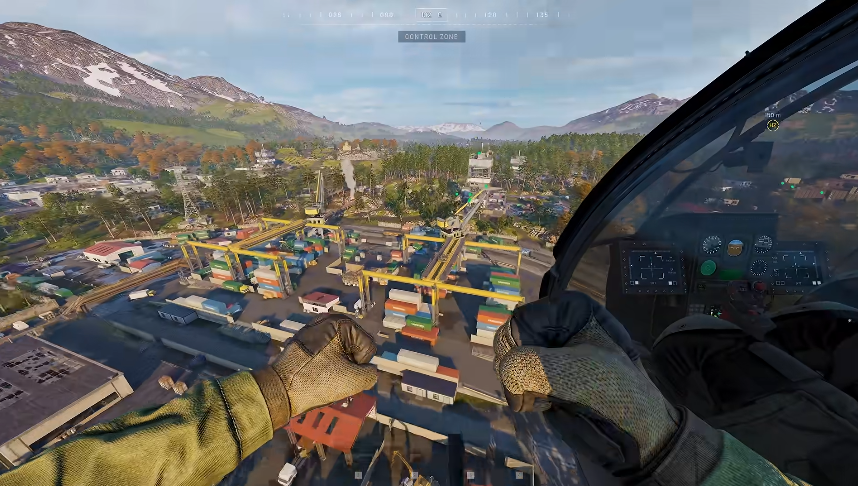
Everyone says the Large Hammer in WARDOGS is just a melee weapon. A fallback for when you’re out of ammo. Something you swing when the shooting stops and the enemy closes the distance. That’s the common wisdom, and it’s not entirely wrong. But it’s also incomplete, and in some situations, treating the Large Hammer as a simple melee tool will get you killed.
The Large Hammer is a support tool first and a weapon second. That distinction matters more than most players realize, especially in a game where coordination and positioning decide fights before the first shot is fired. So let’s break down what the Large Hammer actually does, why the conventional advice misses the point, and when you should be carrying it over other options.
The Hammer’s Actual Role in WARDOGS
WARDOGS is a tactical shooter with a heavy emphasis on teamwork. It’s not a game where individual skill trumps everything; it’s a game where the squad that communicates and uses its tools correctly wins. The Large Hammer fits into that philosophy as a utility item that happens to look like a weapon.
Its primary function is environmental destruction. That’s it. That’s the thing most advice glosses over. The hammer can break down barriers, knock holes in walls, and open up sightlines that wouldn’t otherwise exist. In a game where map control is everything, being able to create new angles or deny enemy positions is a force multiplier that no amount of rifle skill can replicate.
Think about a typical scenario. You’re pinned down in a corridor, and the enemy has a fortified position at the end. Your teammates are trading fire, but nobody can push because the angle is too narrow. The Large Hammer lets you punch a hole in the wall beside you, flank the position, and break the stalemate. That’s not a melee weapon. That’s a tactical tool.
The hammer also has a defensive application. You can use it to reinforce positions, block doorways, or create cover where none exists. It’s not as fast as deploying a proper barricade, but it doesn’t require a separate inventory slot, and it doesn’t run out of charges. As long as you have the hammer, you have the ability to shape the battlefield.
Why the “It’s Just Melee” Advice Falls Short
The common advice treats the hammer as a last resort. Something you pull out when you’ve exhausted every other option. That framing is backwards. The hammer is most effective when used proactively, not reactively.
If you’re only swinging it when an enemy is in your face, you’re using it wrong. The hammer’s swing speed is slow, its damage is respectable but not exceptional, and its range is short. In a straight melee fight, you’ll lose to a player with a knife or a faster weapon. The hammer isn’t designed for duels. It’s designed for breaking things, and breaking things is a pre-combat action.
The other problem with the “last resort” mindset is that it ignores the hammer’s utility outside of combat entirely. You can use it to open supply crates faster, clear debris from pathways, and create shortcuts that shave seconds off your rotation times. In a game where timing matters, those seconds add up. A squad that moves efficiently because one member carries the hammer will consistently outpace a squad that doesn’t.
There’s also a psychological component. A player visibly carrying a Large Hammer changes how the enemy plays. They know you can break through cover. They know you can open new angles. That uncertainty forces them to play more conservatively, and a conservative enemy is easier to outmaneuver. You don’t need to actually use the hammer to benefit from it. Just having it on your back alters the dynamic.
When the Hammer Is the Wrong Choice
Now, the hammer isn’t universally useful. There are situations where it’s a liability, and the advice to treat it as a fallback weapon is wrong in a different direction. If you’re playing a role that requires you to be in the thick of combat at all times, carrying a hammer means giving up a slot that could hold something more directly useful.
The game’s closed beta showed this clearly. Players who ran the hammer as their secondary tool often found themselves at a disadvantage in close-quarters fights. The hammer’s slow swing time means you’re vulnerable during the animation, and against a competent enemy with a shotgun or SMG, you’ll lose the exchange more often than not. If your squad already has someone handling environmental destruction, carrying a second hammer is redundant.

There’s also the weight factor. The hammer slows you down. Not by a massive amount, but enough that you’ll feel it when you’re trying to sprint across open ground or chase down a fleeing enemy. In a game where movement speed can be the difference between life and death, that penalty is real. If your playstyle relies on mobility, the hammer is actively working against you.
The key is understanding your role in the squad. If you’re the support player, the one who’s expected to open routes and create opportunities, the hammer is a good choice. If you’re the entry fragger, the one who’s supposed to be first through the door, you’re better off with something that doesn’t compromise your combat effectiveness.
One Detail Most Players Miss
Here’s something that isn’t in the standard advice: the hammer’s destruction mechanic interacts with the game’s physics system in a way that most players don’t exploit. When you break a wall or barrier, the debris doesn’t just disappear. It becomes physical objects that can be used as cover, can block enemy movement, and can even cause damage if they fall on someone.
This means the hammer isn’t just creating a hole. It’s creating chaos. A well-placed swing can collapse a ceiling section, bury an enemy position, or create a barrier that splits the enemy team in half. These aren’t things you’ll pull off every game, but when they happen, they win rounds. The hammer rewards players who think about the environment, not just the enemy.
Another detail: the hammer can be used to disrupt enemy gadgets. If you see an enemy deploy a shield or a turret, a quick hammer swing can break it before it becomes a problem. This is a reactive use that’s actually effective, unlike the melee advice. You’re not swinging at players; you’re swinging at their equipment. It’s faster than shooting the gadget, and it doesn’t waste ammunition.
The Setup That Makes the Hammer Work
If you’re convinced the hammer is worth carrying, you need to build around it. Your primary weapon should be something with good mid-range performance, since the hammer handles close-range utility. A rifle or an SMG with decent damage falloff works well. Your other support tool should cover whatever the hammer doesn’t, whether that’s healing, ammo resupply, or reconnaissance.
The hammer also works best in specific game modes. Objective-based modes, where map control and positioning matter, are where it shines. In pure deathmatch, it’s a wasted slot. Know the mode you’re playing, and adjust your loadout accordingly.
Communication is essential. A hammer player who isn’t telling their squad what they’re doing is a hammer player who’s wasting everyone’s time. Call out when you’re about to break a wall. Tell your teammates where the new sightline is. Coordinate pushes around the destruction you’re creating. The hammer is a team tool, and it only works when the team is on the same page.
The Bottom Line
The Large Hammer in WARDOGS is not a melee weapon. It’s a support tool that happens to be shaped like one. The common advice to treat it as a fallback is incomplete because it ignores the hammer’s real value: environmental destruction that creates tactical options no other tool provides. If you’re carrying the hammer, you should be breaking things, shaping the map, and creating opportunities for your team. That’s the job. That’s what the hammer is for.
The melee aspect is a bonus, not the purpose. Yes, you can swing it at enemies, and yes, it will hurt them. But if you’re in a position where you’re relying on the hammer as a weapon, something has already gone wrong. You’re out of position, out of ammo, or out of options. The hammer gets you out of those situations, but it doesn’t win them.
So the next time someone tells you the Large Hammer is just a melee weapon, you know better. It’s a tool. It’s a support item. It’s a way to change the battlefield in your favor. And that’s far more valuable than any melee swing.
There’s one more edge case worth considering. In the game’s current build, a bug with a Windows security update from August 12th caused kernel-level processes to crash for many players, including the anti-cheat system. Some players found that disabling the process named input x64.sys, an RGB-related process, stopped the crashes entirely. It’s a workaround, not a fix, and it won’t apply to everyone. But if the hammer’s destruction effects trigger a crash on your system, it’s worth checking your event viewer for that specific process before you give up on the tool entirely. The hammer is a game-changer when it works, but no tool is worth a system instability.


/i.s3.glbimg.com/v1/AUTH_08fbf48bc0524877943fe86e43087e7a/internal_photos/bs/2026/Y/y/eloBAuRYqsg3YH6XQqQQ/imagem-2026-09-10-200407901.png "WARDOGS Early Access: Why “Just Wait for Full Release”")