You’ve seen the trailers. Dark, brooding, dripping with vampire-gothic atmosphere. A half-human hybrid screaming into a storm. Combat that looks weighty. Choices that seem to matter. The Blood of Dawnwalker looks like the next great RPG. But trailers are lies wrapped in marketing budgets. The real question isn’t whether the game looks good. It’s whether it plays good enough to survive a murderous release window and a jaded player base that has seen this promise before. And frankly, there are red flags. Lots of them.
Here is the hard truth: strong trailers do not save a game that trips over its own ambitions. And The Blood of Dawnwalker has ambitions that could sink it. Let’s get into the non-obvious reasons this vampire RPG might crash before it even gets its teeth into the market.
The $70 Price Tag on an Unproven IP
Let’s start with the elephant in the room that everyone is tip-toeing around. This is a new studio — Rebel Wolves — and they are pricing The Blood of Dawnwalker at $70. Not $60. Not $50, which would be the smart play for a first outing. Seventy dollars, full AAA flagship pricing.
You know what else cost $70 at launch? Elden Ring. Baldur’s Gate 3. Tears of the Kingdom. Games with decades of studio trust and proven track records. The Blood of Dawnwalker has none of that. It has a gorgeous art direction and a trailer with good music. That’s not enough.
The Portuguese analysis video mentions this exact point. “Preço do jogo tá um pouco elevado para uma IP nova.” Translation: the price is too high for a new IP. The presenter compares it to Phantom Blade Zero, which launched at $60. Smart move. But Rebel Wolves is betting that the quality will speak for itself. That bet can backfire when gamers wait for a sale instead of buying day one. And day one sales determine whether a new franchise lives or dies.
The Combat Identity Crisis
Here’s where it gets messy. The Blood of Dawnwalker offers both omniblock and omniatack, plus an optional directional combat system. What does that mean? You can play it like a traditional action RPG where your character auto-aims sword swings and blocks. Or you can turn on manual direction controls, like Kingdom Come: Deliverance did.
On paper, that sounds inclusive. But in practice, it’s a design compromise that pleases nobody.
The source material reveals that the development team made this option reactionary. Players complained about the directional combat in early trailers, so Rebel Wolves added a toggle. That’s a reactive decision, not a confident one. Great games commit to a combat philosophy. Dark Souls doesn’t let you toggle off the stamina system. Sekiro doesn’t offer an auto-parry mode. When you offer a choice between easy mode and hard mode, the game loses its identity. It becomes everything to everyone, which means it’s nothing to anyone.
The community is already split. Some want the challenge of directional swings. Others just want to mash buttons. No matter which camp wins, half the players will feel underserved from minute one.
The Time Mechanic That Punishes Exploration
Every side quest is your main quest.
That is not hyperbole. The Blood of Dawnwalker uses a time mechanic where every mission you take progresses the in-game calendar. There is no grinding. No farming side content for fun. You make a choice, time moves forward, and the consequences stack.
This sounds fresh. But it also sounds like a nightmare for completionists and open-world lovers.
The source material confirms that the game encourages you to “just roll with it” after bad choices. The developers explicitly want you to accept failure as part of the narrative. That is a bold design decision. And it will alienate a large portion of the RPG audience. Players who love to explore every cave, talk to every NPC, and min-max their build are going to feel punished. Every moment spent wandering could be a moment that costs them a better ending.
There is a reason most RPGs don’t do this. Because gamers hate feeling rushed. And a game with a ticking clock, even a generous one, creates anxiety. The Blood of Dawnwalker might be a fantastic narrative experience for people who love tension. But mass-market success depends on broad appeal. And broad appeal does not love artificial deadlines.
Locked Regional Difficulties: A Double-Edged Sword
The game locks enemy levels based on when you first enter a region. Enter an area at level 5? The enemies stay at level 5 forever. Come back at level 20? Still level 5. This prevents the classic RPG problem of outleveling content. But it also removes the satisfaction of returning to an early zone and feeling like a god.
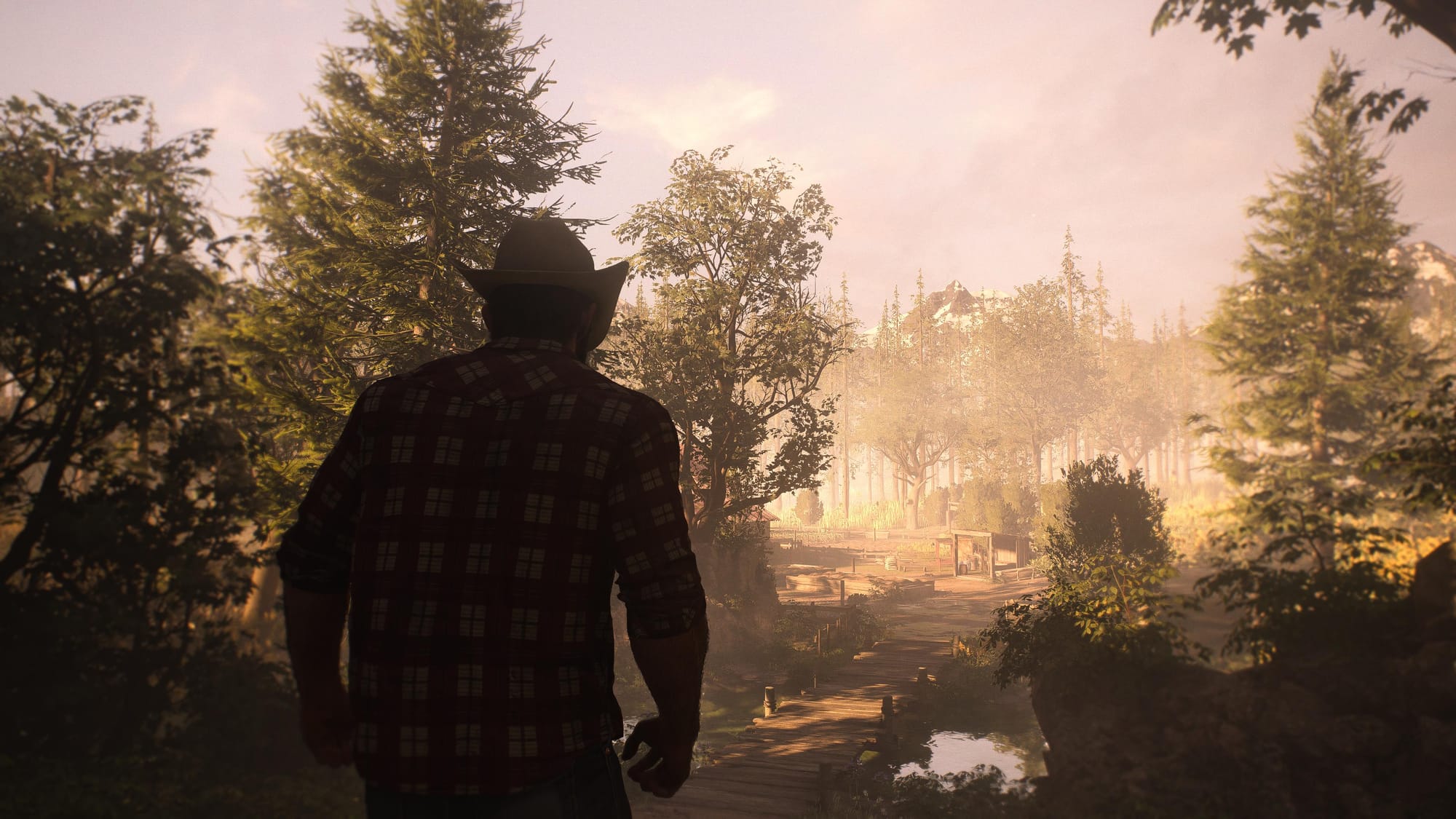
The source material calls this a “min-max difficulty system” that gives you freedom. Freedom, yes. But also a lack of tangible progression. Part of what makes open worlds rewarding is the power fantasy. You level up, you craft better gear, and you smoke enemies that once wrecked you. The Blood of Dawnwalker takes that away. You never get to feel unstoppable because the difficulty is locked to your entry point.
That might work for a survival horror game. For an action RPG with vampire powers? It risks making combat feel flat.
Dynamic Weather: More Than Cosmetic, But Is It Meaningful?
Dynamic weather affects gameplay in The Blood of Dawnwalker. Fog reduces visibility for both you and enemies. Rain might affect movement or sound. The source material highlights this as a selling point.
Great. But here is the problem: dynamic weather systems that actually change gameplay are incredibly hard to balance. They either become a nuisance (permanent rain draining stamina) or a trivial gimmick that players ignore. Very few games have pulled this off. Breath of the Wild did it well because weather had clear, predictable effects (lightning, slipping). But even there, players could cheese the system.
The Blood of Dawnwalker is a grounded 14th century European setting. Realistic weather. That means fog, rain, snow, maybe storms. None of those are novel. Players have seen them in a hundred games. Unless the weather interacts with the core vampire mechanics — like fog weakening your enemies but also hiding them from you, or rain washing away blood trails — it will feel like a checkbox feature.
Trailers show fog. They show moody rain. But that is cinema, not gameplay. The real test is whether the weather makes combat decisions harder or just annoys you.
50 to 70 Hours. But Not All of It Matters.
Internal testing suggests a 50 to 70 hour playthrough. But the source material also says you cannot see everything in one run because of branching choices. That means the content is front-loaded with replayability.
Here is the trap: 50 hours is a lot for a linear-ish game with time pressure. Many players will not even finish one playthrough. The average player drops games after 20 hours. Asking for 50 to 70 hours, with the threat of missing content, is a huge ask for a new IP.
And the game has no mini-games. No card games, no fishing, no Gwent clone. The source material says the stakes are too high for leisure. That is a thematic choice. But it also means the only activities are combat, exploration, and dialogue. That can lead to fatigue.
A game with no downtime can burn players out faster than a game with a silly card game or a horse race. Relaxation is not filler. It is pacing.
New Studio, First AAA Attempt
Rebel Wolves is a fresh studio. They have ex-Witcher developers, yes. But a team name does not guarantee a smooth launch. The Blood of Dawnwalker is their debut title. First games from new studios often suffer from scope creep, optimization issues, or story holes.
The source material does not talk about technical performance, but we can infer. If they are already fighting backlash over combat and price, other problems will emerge. Open worlds on new engines are notoriously buggy. Expect frame drops, pop-in, and maybe a day-one patch that changes half the combat system again.
History tells us that ambitious debuts rarely hit all their marks. Hell, even experienced studios stumble. A new team with a $70 price tag and a controversial time mechanic? That is a high-wire act without a net.
The Marketing Paradox
The Blood of Dawnwalker trailers are good. Really good. But they lean heavily on atmosphere and emotion. They show a protagonist suffering. They show beautiful environments. They do not show systems. They do not show the time mechanic in action. They do not show how the weather affects combat.
Why? Because those systems are hard to sell in a 90-second clip. Trailers sell fantasy. But the long tail of a game’s success is systems. If the systems are divisive, the trailers become a liability. Players buy in on the hype, then refund after three hours because the timer stressed them out or the combat felt wonky.
This is a classic trap. Marketing makes promises. Gameplay has to deliver. If they don’t match, the game flops.
The Crowded Release Window
The source material mentions a “conturbadíssima” release date — a very turbulent one. The Blood of Dawnwalker is launching in a month packed with other major titles. Those other games are established franchises with loyal fanbases.
When money is tight, gamers choose the safe bet. A new $70 IP with a risky time mechanic is not a safe bet. It will be the first game cut from a shopping list. No amount of gorgeous trailers can fix timing.
One Edge Case Most People Miss
Here is a nuance that most analysis ignores: the game’s entire narrative depends on you caring about rescuing your family. If the writing fails to make you emotionally invested in those characters, the time mechanic loses its punch. It becomes just a pointless clock.
Conversely, if the writing is good, the time pressure becomes emotionally punishing. That might be great for art. But for sales? Emotional exhaustion is not fun for everyone.

And that is the final risk. The Blood of Dawnwalker might be too focused on its own vision to notice that a large part of its audience just wants to have fun. Not to feel anxious. Not to get locked out of content. Not to feel responsible for every consequence.
Trailers show a hero. Systems show a hostage situation. And if the hostage is not someone you care about, you will just put the game down and play something else.


/i.s3.glbimg.com/v1/AUTH_08fbf48bc0524877943fe86e43087e7a/internal_photos/bs/2026/Y/y/eloBAuRYqsg3YH6XQqQQ/imagem-2026-09-10-200407901.png "WARDOGS Early Access: Why “Just Wait for Full Release”")