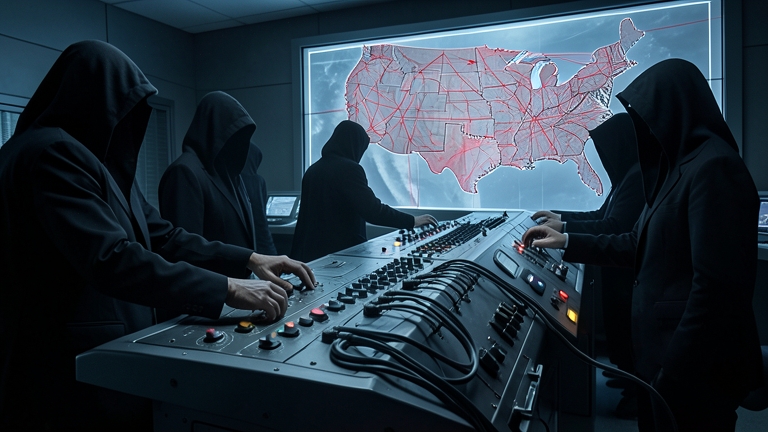
The idea that a sprawling coalition of government agencies, technology platforms, and academic researchers has systematically conspired to silence conservative voices online did not originate in the halls of power. For years, it was a defining narrative of the right-wing information sphere, a story told on fringe websites, in podcast echo chambers, and across社交媒体 accounts dedicated to exposing an alleged hidden hand. Today, that same concept has been repurposed and legitimized, moving from the digital periphery to the center of United States policy debates. Understanding how the “censorship-industrial complexaa” made this journey is essential for anyone who wants to grasp the current trajectory of free speech, platform governance, and democratic institutions themselves. This transformation did not happen by accident. It was the result of a sustained, strategic campaign to reframe content moderation as a form of political repression, a campaign that has now achieved its most tangible victory by embedding its core claims into the machinery of government.
The Origins of the Censorship-Industrial Complex Concept
The term itself, now a fixture of political discourse, was not invented by a government official or a think tank scholar. It emerged organically from online communities that felt aggrieved by what they perceived as unfair treatment by major technology companies. The central claim is straightforward: a “censorship-industrial complex” describes a network of government, tech, and research groups collaborating to suppress conservative online speech. In its earliest form, this was fodder for blogs, forum threads, and YouTube channels that documented instances of content removal, account suspensions, and algorithmic demotion, framing each action as evidence of a coordinated ideological purge.
Critics of this framing have long argued that what the censorship-industrial complex narrative describes is not a conspiracy but the routine, if imperfect, operation of content moderation at scale. Platforms like Facebook, Twitter, and YouTube, they note, have always had terms of service that prohibit harassment, hate speech, and misinformation. Academic researchers, meanwhile, study these platforms to understand the spread of harmful content and the efficacy of enforcement measures. Government agencies may engage with platforms on issues of national security, election integrity, or public health. The key question, which remains hotly contested, is whether these activities amount to a coordinated suppression of political speech or a legitimate, if flawed, effort to maintain a functional public square.
What matters for understanding current US policy is not the truth of the accusation but its political utility. The narrative offered a powerful, emotionally resonant explanation for a range of grievances: the sense that conservative voices were being silenced, that mainstream media had lost its authority, and that the tech industry was run by a liberal elite hostile to traditional values. This story could be told and retold across the internet, accumulating evidence with each new moderation decision that seemed to target a right-wing figure.
The Journey from Online Fringe to Policy Mainstream
The transition from internet conspiracy theory to policy framework did not happen overnight. It required a sophisticated infrastructure of advocacy groups, legal challenges, and political entrepreneurship. A critical turning point came when the narrative began to be adopted by elected officials who could amplify it to a national audience. Congressional hearings on platform censorship, initially focused on bipartisan concerns about algorithmic bias and data privacy, became increasingly partisan arenas where the censorship-industrial complex was invoked as a self-evident reality.
Legislative proposals began to reflect the idea directly. Bills aimed at reforming Section 230 of the Communications Decency Act, the legal provision that shields platforms from liability for user-generated content, were framed as necessary measures to break up the censorship monopoly. The argument was that platforms had abused their immunity to engage in viewpoint discrimination, and that without legal consequences, they would continue to operate as tools of a partisan censorship machine. This line of reasoning gained significant traction within the Republican Party, becoming a central plank of its technology policy platform.
The Biden administration, initially focused on other priorities, found itself forced to respond as the narrative generated a series of high-profile controversies. Legal battles erupted over whether the government had coerced platforms into removing certain content, particularly around COVID-19 misinformation and election security. Court cases, most notably Murthy v. Missouri, directly tested the claim that the federal government had crossed a constitutional line by pressuring social media companies to suppress disfavored speech. While the Supreme Court ultimately ruled that the plaintiffs lacked standing to bring the case, the litigation itself served to mainstream the underlying accusation, granting it a veneer of legal credibility it had previously lacked.
The Role of the Trump Administration in Normalizing the Idea
No single factor accelerated the adoption of the censorship-industrial complex concept more than the presidency of Donald Trump. Trump himself was a prolific and combative user of social media, and his own suspensions from Twitter and Facebook after the January 6, 2021, attack on the US Capitol became the most powerful pieces of evidence for the theory. His removal was not just a personal grievance; it was framed as proof that the platforms would silence any conservative who threatened the established order. The business deal that followed, the creation of Truth Social, was explicitly built on the promise of a platform free from the censorship-industrial complex, turning the idea into a commercial venture.
During his 2024 campaign, Trump promised to dismantle what he called the censorship regime, vowing to ban federal agencies from coordinating with tech companies on content moderation. Upon returning to office, his administration took executive action to translate that promise into policy. The conversation hosted by MIT Technology Review on August 13, 2026, explored exactly this trajectory: how a set of ideas that began in the margins of the internet became the official policy doctrine of the US government. The discussion focused on the mechanisms of this transfer, the actors who facilitated it, and the profound implications for how democracy and the internet interact.
How the Censorship-Industrial Complex Argument Works as a Political Tool
To understand its power, one must examine the architecture of the argument itself. The censorship-industrial complex narrative relies on a series of interconnected claims that are difficult to disprove because they are designed to be self-reinforcing. First, it posits that any moderation of conservative content is evidence of bias, not of a violation of platform rules. Second, it asserts that the government is secretly directing this moderation, even when the communication between officials and platforms is public and transparent. Third, it argues that academic research into misinformation and hate speech is a smokescreen for a partisan political project.
Each of these claims creates a framework that is resistant to contradictory evidence. If a platform removes a post that clearly violates its policies against hate speech, the response is that the policy itself was selectively enforced. If government officials deny any coordination, the response is that they are lying or that the coordination is too subtle to be documented. If a study shows that conservatives were not systematically targeted, the response is that the study was conducted by biased researchers. This epistemological closure, where every counterargument is reinterpreted as confirmation of the theory, is a hallmark of conspiracy thinking. But it also makes the narrative exceptionally useful for political mobilization.
The policy implications of this framework are far-reaching. If the government is indeed part of a censorship network, then the appropriate response is to sever all ties between agencies and platforms, to investigate and punish the individuals involved, and to restructure the legal environment in which platforms operate. This is precisely the agenda that the Trump administration pursued. Executive orders prohibited federal agencies from engaging in what was termed “censorship coordination.” The Federal Communications Commission was directed to rewrite Section 230 to eliminate the protections that the censorship-industrial complex was said to have exploited. The Department of Justice launched investigations into tech companies and academic researchers, treating content moderation decisions as potential violations of civil rights.
What the Censorship-Industrial Complex Means for Democracy
The adoption of this framework as US policy has immediate and tangible consequences for democratic governance. A central function of government in the digital age has been to work with private platforms to protect elections from foreign interference, to combat the spread of dangerous health misinformation, and to prevent the incitement of violence. When these collaborative efforts are redefined as censorship, the entire apparatus of public-private cooperation is dismantled. The result may be a freer internet in the narrow sense that less content is removed, but it may also be a more dangerous internet where harmful material proliferates without any coordinated response.
The impact on academic research is equally profound. Misinformation studies, which had already been subjected to intense political pressure, were directly targeted by the new policy framework. Funding sources were scrutinized, researchers were subpoenaed, and universities were warned that their collaborations with platforms could be investigated as part of the alleged censorship network. This chilling effect has already driven some of the most prominent researchers out of the field, fearing legal and professional consequences. The long-term result may be a significant gap in our understanding of how information spreads online and how to counter falsehoods that threaten public health and democratic processes.
For technology companies, the situation is a strategic dilemma. In the pre-Trump era, platforms were criticized from the left for not moderating enough and from the right for moderating too much. The new policy environment removes the ambiguity of that position. Under the censorship-industrial complex doctrine, any moderation of conservative content is presumptively suspect. Companies face a choice: either moderate aggressively and risk legal retaliation from the federal government, or moderate minimally and weather the consequences of a more toxic and misinformation-prone platform environment. The evidence so far suggests that most major platforms have chosen the latter path, adopting a posture of cautious permissiveness that avoids antagonizing the administration.
Key Mechanisms in the Alleged Censorship Network
To understand the policy response, it is necessary to examine the specific mechanisms that proponents of the censorship-industrial complex claim are at work. The narrative identifies three primary nodes of coordination: government agencies, technology platforms, and academic research institutions. Each is said to play a distinct role in the broader system of suppression.
- Government agencies: Particularly the Department of Homeland Security, the Cybersecurity and Infrastructure Security Agency, and the FBI, are accused of pressuring platforms to remove content that is critical of government policy, especially around elections and public health. The claim is that these agencies used their authority to flag content not for lawful reasons but to enact political censorship.
- Technology platforms: Companies like Meta, Google, and X (formerly Twitter) are portrayed as willing participants in the censorship network, driven by the ideological commitments of their workforces and the desire to curry favor with regulators. Their content moderation systems, including automated flagging and algorithmic promotion, are cast as instruments of political control.
- Academic research institutions: Universities and research groups that study misinformation and online extremism are presented as providing intellectual cover for censorship. Their findings, the narrative claims, are used to justify the removal of content that is politically inconvenient, and their policy recommendations are designed to expand the scope of suppression under the guise of public health or election security.
The interaction between these three nodes is the core of the alleged conspiracy. Government agencies provide signals about what content is dangerous, platforms enforce those signals through their moderation systems, and academics provide the evidence base that legitimizes the entire enterprise. Proponents of the censorship-industrial complex theory point to leaked emails, internal documents, and public statements as evidence that this coordination is real and deliberate. Skeptics respond that what is being described is simply the normal operation of governance in a networked world, where information sharing between public and private actors is routine and, in many cases, legally mandated.
The Legal and Constitutional Dimensions
The censorship-industrial complex narrative raises profound constitutional questions, most centrally about the First Amendment. The US Constitution prohibits the government from abridging the freedom of speech, but it does not prohibit private companies from setting their own rules for content on their platforms. The key legal issue is whether government pressure on platforms to remove content constitutes state action, which would be subject to constitutional challenge. The Supreme Court’s decision in Murthy v. Missouri did not resolve this question definitively; it ruled on procedural grounds, leaving the substantive constitutional question for another case.
The Trump administration’s response was to bypass the constitutional ambiguity by acting through executive power. Rather than rely on the courts to define the limits of permissible government-platform interaction, it simply prohibited such interaction entirely for a wide range of content types. This approach has its own legal vulnerabilities, and lawsuits challenging the executive orders have already been filed, arguing that the government has a legitimate interest in working with platforms to protect national security and public health. The resolution of these legal battles will define the boundaries of government speech in the digital era for years to come.
Global Echoes of the Censorship-Industrial Complex Idea
While the censorship-industrial complex narrative is most developed in the United States, its influence is not confined to American borders. The idea has been exported to other countries, where it resonates with authoritarian and populist movements that seek to discredit independent media, civil society, and international technology companies. In Europe, politicians on the far right have adopted similar language, accusing the European Union and American tech platforms of collaborating to suppress nationalist and conservative viewpoints. In Brazil, India, and Hungary, the same framing has been used to justify crackdowns on digital platforms and to advance legislation that mirrors the US approach to Section 230 reform.
The global spread of this idea presents a significant challenge for technology companies that operate across multiple jurisdictions. A policy of minimal moderation that satisfies the US administration may violate the tougher content standards of the European Union’s Digital Services Act. Conversely, a policy that complies with European law may be cited as evidence of the censorship-industrial complex by US critics. Platforms are forced into a fragmented regulatory landscape where compliance with one regime is seen as a violation of another. This fragmentation is itself a strategic goal for some proponents of the censorship-industrial complex narrative, who view the weakening of global content governance norms as a victory for national sovereignty.
Strategic Implications for Technology Companies
For technology companies, the emergence of the censorship-industrial complex as official US policy represents one of the most significant political risks they have ever faced. The core of their business model for the past two decades has been built on a degree of trust: trust from users that the platform is a safe and reliable space, trust from advertisers that their brands will not appear alongside offensive content, and trust from regulators that the company is acting responsibly. The accusation that they are part of a vast censorship conspiracy undermines all three forms of trust.
The strategic response from the major platforms has been cautious and defensive. Public statements emphasize a commitment to free expression and a desire to be neutral arbiters of speech. Internal moderation policies have been relaxed in areas that were previously priorities, particularly around political content and election misinformation. Investment in trust and safety teams, which had grown rapidly in the aftermath of the 2020 election and the COVID-19 pandemic, has been cut or redirected. The message from the C-suite is clear: in the current political environment, the safest course of action is to moderate as little as possible, even if that means allowing harmful content to spread.
This defensive posture carries its own risks. A permissive platform environment can drive away users and advertisers who are concerned about toxicity and misinformation. It can also create space for foreign influence operations, hate groups, and other actors who thrive in low-moderation environments. The long-term health of the platforms, and of the digital advertising ecosystem that funds so much of the internet, depends on maintaining a balance between freedom and safety. The censorship-industrial complex policy framework makes that balance extraordinarily difficult to achieve.
What Are the Long-Term Consequences for Internet Governance?
The question that the MIT Technology Review conversation sought to answer, and the question that policymakers, executives, and citizens must now confront, is what happens when an idea born in the online fringe becomes the basis for national policy. One possible outcome is a permanent fragmentation of the internet, where different countries enforce radically different content standards and where global platforms are unable to operate coherently across borders. Another is a return to a more libertarian model of minimal governance, where platforms abdicate most of their moderation responsibilities and the public square becomes increasingly chaotic and polarized. A third possibility is a political backlash, where the excesses of the censorship-industrial complex policy prompt a renewed demand for regulation that is designed to protect both free expression and public safety.
The trajectory of this story is not predetermined. It will be shaped by the outcome of legal challenges, by the decisions of technology executives, by the behavior of political actors, and by the reactions of users themselves. What is already clear is that the journey of the censorship-industrial complex from the edges of the internet to the center of US policy is one of the most consequential developments in the history of digital governance. It is a case study in how ideas move, how power is exercised, and how the infrastructure of public discourse is being rebuilt in real time. The conversation that took place on August 13, 2026, captured a moment in this ongoing transformation, a moment when the line between conspiracy theory and official policy had been crossed, and when the implications for democracy and the internet had become impossible to ignore. The task ahead is to understand those implications with clarity and to build institutions that can navigate the new landscape without sacrificing either freedom or the shared foundation of truth on which democracy depends.