The bankruptcy of the Accell Group, the Dutch parent company behind some of Europe’s most storied bicycle brands, has sent shockwaves through the cycling industry. For owners of Haibike and Ghost e-bikes — two premium German brands under the Accell umbrella — the sudden insolvency raises immediate and pressing questions about warranty coverage, spare parts availability, and the long-term viability of their investment. The collapse, formalized by the Amsterdam Insolvency Court on 11th August 2026, marks one of the most dramatic reversals in cycling industry history, transforming a pandemic-era boom story into a cautionary tale of overproduction, debt, and strategic missteps.
What the Accell Group Bankruptcy Means for Haibike and Ghost E-Bike Owners
If you currently own a Haibike or Ghost e-bike, the most straightforward advice is to hope nothing breaks in the immediate future. That may sound flippant, but it reflects the unfortunate reality that warranty claims on certain components could become significantly more complicated now that the manufacturer has entered bankruptcy proceedings.
Your first point of contact remains the dealer from whom you purchased the bike. They are obligated to handle warranty-covered repairs, including issues with the e-bike drive system. Crucially, component suppliers such as Bosch and Shimano have already confirmed that they will continue supplying retailers with necessary parts and service support as normal. This means that drive unit, battery, and display issues should be resolvable through standard channels.
The situation becomes considerably more difficult when dealing with brand-specific parts — components that are unique to Haibike or Ghost and not shared across the industry. The frame is the most obvious example. Custom stems, handlebars, rear racks, mudguards, and proprietary fittings also fall into this category. The manufacturer traditionally provides the warranty for these items. Whether the bankruptcy administrator will honour those contractual guarantees depends entirely on the financial resources available during the proceedings.
If you purchased a bike directly from the manufacturer rather than through a dealer, your position is even more precarious. You automatically become an unsecured creditor in the bankruptcy process. Practically speaking, this means your warranty claim will queue behind the tax authorities and other secured creditors. The likelihood of recovering the full value of a replacement frame or component under these circumstances is low.

The Parent Company Collapse: Six Accell Entities Declared Insolvent
What Accell Germany feared has now materialised in the Netherlands. On 11th August 2026, the Amsterdam Insolvency Court declared six Accell companies insolvent, listing them in the Dutch bankruptcy register:
- Accell Duitsland B.V.
- Accell Global B.V.
- Accell Group B.V.
- Accell Group Europe B.V.
- Accell Group Holding B.V.
- Accell Nederland B.V.
Of particular significance are Accell Group Holding B.V., the parent entity, and Accell Nederland B.V., which houses brands including Batavus, Koga, Sparta, Babboe, and XLC. The bankruptcy declaration came just six days after the Amsterdam court had granted the group a stay of payment — an emergency measure that proved insufficient to stem the deterioration.
The scale of the collapse is substantial. According to consistent media reports, the Accell Group employed approximately 2,000 people across 15 countries, with at least 340 workers in the Netherlands alone. The Dutch trade union FNV described the bankruptcy as devastating. However, the court-appointed bankruptcy administrators plan to keep business operations running temporarily while engaging in discussions with key suppliers. The immediate priority is determining whether — and how quickly — Accell can resume supplying retailers with bicycles and parts.
International Subsidiaries Chart Independent Courses
As an international holding company, the Accell Group brought together several European brands under one corporate roof. With the parent company in distress, subsidiaries have begun taking independent action. Accell Germany moved quickly to file its own bankruptcy proceedings. Similarly, Lapierre in France and Raleigh in the United Kingdom have pursued approaches aimed at separating from the Dutch parent and continuing operations independently.
Not all subsidiaries have been able to chart a path to survival. The Finnish brand Tunturi was forced to file for bankruptcy, marking a particularly poignant loss given its long history in the Nordic cycling market. The divergent fates of these subsidiaries highlight how local management, creditor relationships, and market conditions can dramatically influence outcomes even within the same corporate group.
How the Financial Crisis at Accell Unfolded
The roots of the current crisis extend back several years, and timing played a central role. In the summer of 2022, a consortium led by the US private equity firm Kohlberg Kravis Roberts (KKR) acquired a majority stake in Accell. The acquisition occurred during what appeared to be favourable market conditions. Like other bicycle manufacturers, Accell had experienced a surge in demand driven by the COVID-19 pandemic, as consumers worldwide turned to cycling for transportation, recreation, and fitness.
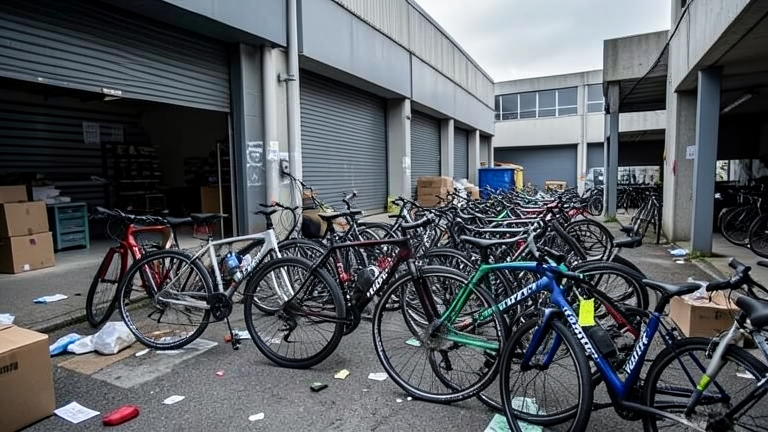
The trouble began late in 2022, when orders unexpectedly and dramatically plummeted. By that point, however, Accell had already placed substantial orders with its Asian and European suppliers based on the pandemic-era demand trajectory. The finished bicycles began arriving in large batches — but there were no longer enough buyers willing to purchase them at the expected prices.
The scale of the inventory problem was staggering. By the end of 2023, Accell’s warehouses held approximately 340,000 unsold units. Sales slowed to a trickle, often requiring painful discounts that eroded profit margins. For the 2024 financial year, turnover fell by 22 per cent to just over one billion euros. The combination of collapsing margins, debt servicing costs from the KKR takeover, and a belated reduction in production volumes created a downward spiral from which the industry giant could not escape.
Financial Restructuring Efforts Fail
Financial restructuring measures introduced throughout 2024 and 2025 failed to achieve the hoped-for turnaround. The situation worsened significantly in 2024 when Babboe-branded electric cargo bikes were found to have serious safety shortcomings. The resulting recall of certain models cost Accell approximately 50 million euros by July 2024, according to reports. Beyond the direct financial hit, the recall inflicted severe reputational damage that further undermined consumer and retailer confidence in the group.
Warehouses Consolidated, Factories Sold or Closed
The first signs of a fundamental economic crisis became visible as Accell shrank its logistics footprint from 85 warehouses worldwide to just 28. The group sold its production facilities in Turkey. The factory in Heerenveen, the last remaining production site in the Netherlands, closed in the summer of 2025. Production shifted to Hungary and France, but these moves proved insufficient to stabilise the finances.
In the spring of 2026, Accell sold the Van Nicholas and Nishiki brands — a clear sign that the group was shedding assets in a desperate bid for liquidity. Just how dire the situation had become was revealed by a document obtained by the British journal Bikebiz in early 2026. Under the code name “Project Horizon,” the document showed that Accell was secretly seeking to raise 95 million euros in emergency capital. Of this amount, 30 million euros was intended to secure short-term liquidity, while approximately 65 million euros would be held in reserve to address critical supply chain bottlenecks. The plan also called for reducing office staff by 40 per cent and cutting the model range by up to 51 per cent. Publicly, however, the company continued to project confidence, announcing that it was on the “Ride to Win” strategy.
Production Halted at the Hungarian Plant
The European main production facility in Tószeg, Hungary, has stopped manufacturing bicycles. It is now considered certain that no bikes are currently rolling off the production line there. Reports indicate that the workforce may have already been given notice, though this cannot be independently verified. In the 2025 calendar year, the Tószeg plant was expected to manufacture almost 300,000 bicycles, 98.5 per cent of which were likely e-bikes. The cessation of production at this facility represents a significant blow to Accell’s ability to fulfil orders and generate revenue during the bankruptcy process.
The Dutech Takeover That Collapsed at the Last Moment
Until the end of July 2026, the Accell Group appeared to have found a lifeline. The Tri Star Group, a Chinese subsidiary of the Singapore-based technology conglomerate Dutech, was poised to acquire the company. Tri Star had already established a significant presence in the German cycling market. In 2023, the Shanghai-based company acquired Prophete and Cycle Union. Two years later, it purchased the bankrupt cargo bike manufacturer Onomotion in Berlin. In February 2026, Sprick Cycle GmbH came under the same ownership, which also brought the Sprick Rowery production facility in Poland into the fold. Tri Star additionally held shares in Blubrake, the Italian supplier of anti-lock braking systems for bicycles.
Brands such as Prophete, Kreidler, Rabeneick, Rex, and VSF Fahrradmanufaktur were therefore already backed by Dr Johnny Liu, a US citizen of Chinese origin who controls the Tri Star Group. The German Federal Cartel Office gave its approval for the Dutech-Accell merger in early July 2026, concluding that the combination would not threaten competitive diversity in either the complete bicycle and e-bike market or the accessories segment.
Industry insiders expected the deal to be finalised in early August 2026. Then, without warning, the takeover fell through. Neither Dutech nor Accell has publicly disclosed the reason for the collapse. The impact on Accell’s financial position was immediate. By 5th August, just days after the deal’s failure, the group was already considering the bankruptcy filings that would be formally submitted less than a week later.
Quanta Capital Emerges as a Potential Buyer
In a development that offers a glimmer of hope for Haibike, Ghost, and other Accell brands, a new prospective buyer has emerged. Quanta Capital, a Dublin-based investment and asset management firm headed by Mel Sutcliff, has confirmed its interest in acquiring parts of the Accell Group. Sutcliff is a well-known figure in the cycling industry — a former professional cyclist from Ireland who later built Eurocycles into one of Ireland’s most recognisable bicycle retail brands. Using the capital from that success, he acquired Raleigh Ireland and founded the Eurotrek Raleigh Ireland Group, which became the largest bicycle distributor in Ireland. In 2016, Sutcliff sold the company to Raleigh and the Accell Group.
The symmetry is notable. A decade after selling to Accell, Sutcliff may now return to acquire assets from the same group under radically different circumstances. Quanta Capital and Sutcliff have officially confirmed their intentions to The Times newspaper. They are currently reviewing a purchase offer submitted by the court-appointed bankruptcy administrators and working to raise the necessary capital. The outcome of these negotiations will play a decisive role in determining whether Haibike, Ghost, and other Accell brands can continue operating under new ownership or whether they will face liquidation.
The coming weeks will be critical. The bankruptcy administrators are balancing the need to maintain business operations with the legal obligations of the insolvency process. For the thousands of employees, the hundreds of retailers who stock these brands, and the tens of thousands of riders who own Accell-group bikes, the question is no longer whether the company can survive in its current form — but what form the eventual rescue or restructuring will take, and which brands will emerge on the other side.