When a studio assembles talent from Naughty Dog, Infinity Ward, and Bungie, the industry takes notice. That’s No Moon, the Los Angeles-based developer founded by veterans of those iconic studios, has spent the early 2020s operating under a shroud of secrecy. That silence ended at Summer Game Fest 2026, where the studio unveiled its debut project — a single-player, narrative-driven reimagining of Smilegate’s massively popular multiplayer shooter Crossfire. What the team revealed goes far beyond a simple franchise extension. This is a calculated attempt to redefine the very mechanics of cover-based shooting, a genre staple that has remained largely static for nearly two decades.
The game, described internally as a “tactical action-adventure,” carries the familiar DNA of narrative-driven blockbusters like The Last of Us and Gears of War. But according to chief creative officer and co-founder Taylor Kurosaki and game director Jacob Minkoff, the studio’s primary ambition is to overhaul how players interact with cover in a third-person shooter. Instead of the clearly marked chest-high walls and snap-to-cover prompts that have defined the genre since the mid-2000s, That’s No Moon is betting on an “adaptive cover” system that treats every rock, slope, and piece of debris as a potential defensive position. It is a shift from designed combat arenas to something far more organic, and the implications for player agency and encounter design are significant.
The Smilegate Partnership and Creative Freedom
While Crossfire remains a dominant force in Asian markets — particularly China and South Korea — its presence in the West has been limited. Remedy Entertainment delivered a single-player campaign for Crossfire X in 2022, but the broader online service was eventually discontinued. This mixed history presented That’s No Moon with an unexpected advantage: a recognizable brand with minimal Western baggage, combined with a publisher willing to grant substantial creative control.
“We see this arrangement we have with publisher Smilegate as a similar relationship between Sony and Naughty Dog, with how the publisher is giving trust to our vision,” Kurosaki explained during a studio visit. “We’re very comfortable with the sort of partnership we have with Smilegate, we’re energized by it, and at the end of the day, we want to make a game where the gameplay and the narrative are inextricably linked to one another. That’s been our north star from day one.”
This level of creative latitude is rare in the video game industry, particularly when a Western studio takes on an established Eastern intellectual property. The comparison to Sony’s relationship with Naughty Dog is deliberate and revealing — it signals that Smilegate is not simply licensing its brand for a contract project, but investing in a long-term creative vision that could reshape how the franchise is perceived globally.
A War Story Told Through Two Protagonists
The new Crossfire shifts the action to a third-person perspective and introduces a dual-protagonist structure. Players will control Layla and Cross, two characters from opposing sides of a conflict, portrayed by Claudia Doumit and Ricky Whittle respectively. The narrative forces these unlikely allies to cooperate against a mysterious, corrupting threat that transforms both friend and foe into something monstrous. The setup is classic war-genre storytelling with a horror-inflected twist, and it provides the emotional and dramatic foundation for the gameplay systems that sit at the center of the experience.
“War is a very singular pressure to put on characters, and we then get to reveal their true nature,” Kurosaki said, drawing on his extensive experience with narrative-driven action games. “That genre has a sense of adventure, and we love the sense of playing in a contiguous space, where you’ll navigate where they’ll go to reach a destination, and then, of course, when you’re at the top, you can look back down to where you started, and it’s all there.”
The game employs a single, connected world map rather than isolated levels. This design choice reinforces the sense of a cohesive, traversable battlefield and allows the player to measure their progress physically. It is a structure that prioritizes spatial storytelling, where the environment itself becomes a record of the journey.
How the Adaptive Cover System Works
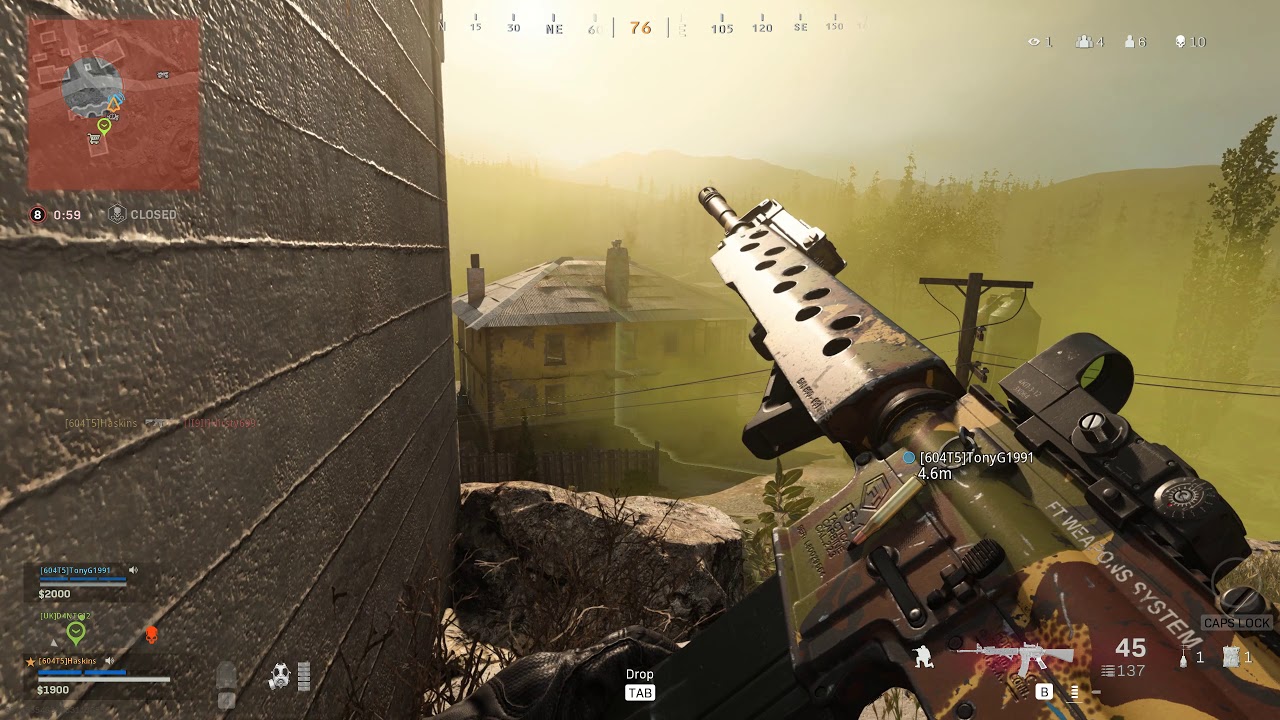
The core innovation of That’s No Moon’s Crossfire is its adaptive cover system, a direct response to what the developers see as the stagnation of traditional cover-based shooting. In most modern shooters, cover is clearly signposted: rectangular barriers, waist-high walls, and large objects designed specifically for the player to snap behind. These are what Minkoff calls “rectilinear” shooters — spaces built around obvious, geometry-driven combat solutions.
What is the adaptive cover system in That’s No Moon’s Crossfire? It is a dynamic system that allows players to use the natural terrain and environmental geometry as cover, rather than relying on pre-placed, rectangular obstacles. The player’s character will automatically adjust their posture, stance, and positioning to fit the contours of the environment — crouching behind a low ridge, leaning around a jagged rock formation, or pressing flat against an uneven slope. The system eliminates the need for snap-to-cover mechanics in favor of continuous, contextual movement that responds to the player’s position in real time.
Minkoff traced the origins of this system to his long-standing interest in advanced animation technology. “I am kind of a SIGGRAPH nerd, and I like reading the papers and seeing all the new videos they release about the new tech coming out,” he said. “Like 12 years ago, I’d seen a video on phase function neural networks, which was a new method of using motion matching for animation, and the whole pitch was that it would allow you to have a third-person character action game where the character was able to navigate incredibly complex environments.”
The arrival of Unreal Engine 5’s Nanite and Lumen systems provided the missing piece. Nanite enables the rendering of extremely detailed geometry without performance compromises, while Lumen handles dynamic, realistic lighting. Together, they allow the developers to create environments dense with organic detail — forests with uneven ground, rocky outcrops, ruined urban landscapes with irregular debris — and trust that the player character can navigate them convincingly.
“And then I saw the Unreal Engine 5 was providing the rendering technology to create incredibly complex organic environments, and those two things together made me feel that there’s this technology that will allow us to make characters navigate the environment in a much more realistic way, and those pieces together generated the concept of adaptive cover,” Minkoff continued. “It wasn’t something that I knew this game was going to be from the start, but these goals of creating more natural, more biomechanically realistic simulation characters that move in more real environments that feel and look more real. I’ve always wanted to be part of a game that does that, for me it’s a continuation of that goal of trying to make the most innovative art that pushes the medium forward.”
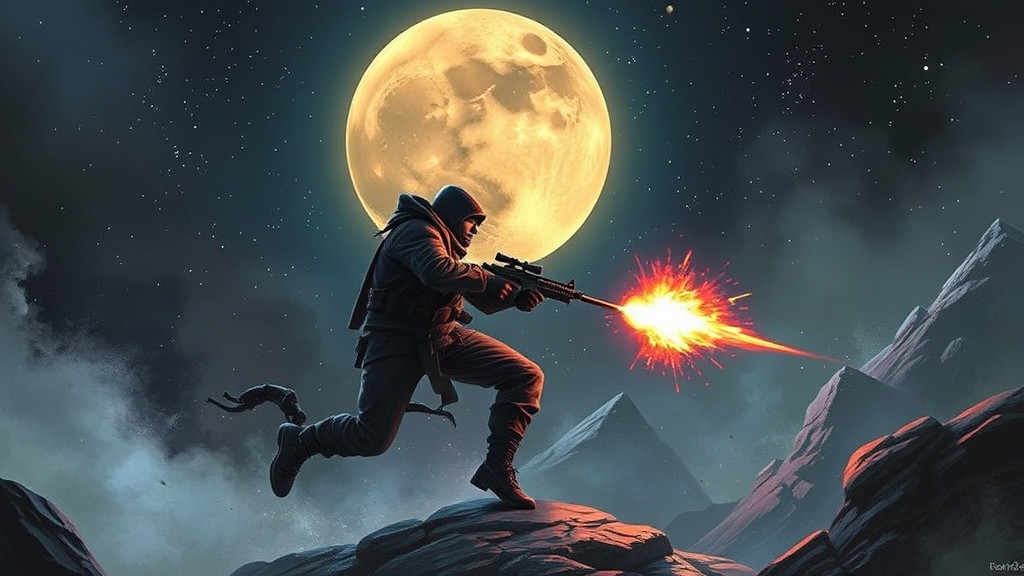
The result is a system that demands a different kind of spatial awareness from the player. Much as Death Stranding asks players to carefully consider their footing on treacherous terrain, Crossfire requires a similar mindfulness during combat. The player must read the environment, identify viable protective positions, and move into them with an understanding of how their character will adapt. The animations shift dynamically: a character will lower their center of gravity behind a short wall, angle their body against a sloped surface, or expose only the minimum necessary profile when peeking around an irregular corner. This creates encounters that feel less like solving a puzzle with pre-designed solutions and more like genuine tactical improvisation.
Survival-Lite Mechanics and Resource Pressure
The combat is further shaped by survival-lite elements and resource management drawn from games like The Last of Us and Escape from Tarkov. Players must manage limited ammunition, medical supplies, and equipment, which forces them to consider whether engagement is even necessary. Not every encounter must end in a firefight, and the adaptive cover system supports this by making stealth and evasion more viable. The environment provides options — a dense thicket for concealment, a shadowed ravine for retreat, a collapsed structure for an ambush — and the player is empowered to choose their approach.
This combination of adaptive movement and resource pressure creates a feedback loop where the player’s tactical decisions carry real weight. Choosing the wrong position can leave a character exposed, and burning through ammunition on a poorly positioned fight can have consequences that ripple through subsequent encounters. The system rewards careful observation and patience, qualities that are often undervalued in action-heavy shooters.
Redefining the Genre’s Visual Language
Beyond the gameplay implications, the adaptive cover system also changes how combat encounters are visually staged. In traditional cover shooters, the level design often telegraphs the developer’s intended approach — a row of barriers suggests a firefight, a wide-open space warns of danger. Crossfire abandons this visual vocabulary. Because cover is derived from the natural environment, no two encounters look the same, and the player cannot rely on pattern recognition to predict where they should position themselves. This introduces a welcome unpredictability that keeps each combat engagement fresh and demands genuine adaptation rather than muscle memory.
The environmental detail enabled by Unreal Engine 5 also serves a narrative purpose. The connected world map tells a story through its geography — a battlefield that has been fought over, scarred by explosions, littered with wreckage. The player’s movement through this space, finding cover in craters, behind overturned vehicles, and against crumbling walls, reinforces the sense of inhabiting a real, lived-in warzone. The technology is not merely a graphical showcase; it is integral to the game’s identity.
What This Means for the Future of Shooter Design
That’s No Moon is making a bold claim with Crossfire: that the cover-based shooter, one of the most established genres in video games, has room for fundamental innovation. The industry has spent years iterating on the formula established by Gears of War and Uncharted, refining shooting mechanics, narrative integration, and set-piece design, but rarely questioning the underlying assumptions about how players interact with space. By moving away from signposted, rectilinear cover and toward an adaptive, environment-driven system, the studio is challenging a design orthodoxy that has persisted for nearly twenty years.
The early signs are encouraging. Multiple playthroughs during the studio visit revealed a game that offers genuine player choice and emergent gameplay moments that feel unscripted. The adaptive cover system does not simply replace one set of mechanics with another — it changes the rhythm of combat, the way players read environments, and the kinds of decisions they make under pressure. It is the kind of systemic innovation that, if executed with the polish expected from a team of this pedigree, could influence an entire generation of shooters to come.
That’s No Moon is not merely building a game; it is building an argument about where the genre should go next. Whether Crossfire succeeds in that ambition will depend on how well the system holds up across the full length of the campaign and how players adapt to a style of combat that demands more than reflexive aiming and cover-snapping. But for a debut project from a studio composed of industry veterans, the vision is clear, the technology is in place, and the direction is uncommonly confident. The cover-based shooter may be about to get the reinvention it has long needed.