The global smartphone industry is bracing for its first annual contraction since 2023, as a severe and protracted memory chip shortage threatens to reshape the competitive landscape and drive average selling prices higher. According to projections from International Data Corporation (IDC), smartphone manufacturers will ship only 1.1 billion units throughout 2026, a sharp decline of 160 million from the 1.26 billion units recorded in 2025. This represents a negative 13% revision in global shipment estimates, with analysts warning the impact may surpass even the disruptions witnessed during the pandemic.
The Anatomy of the 2026 RAM Crisis
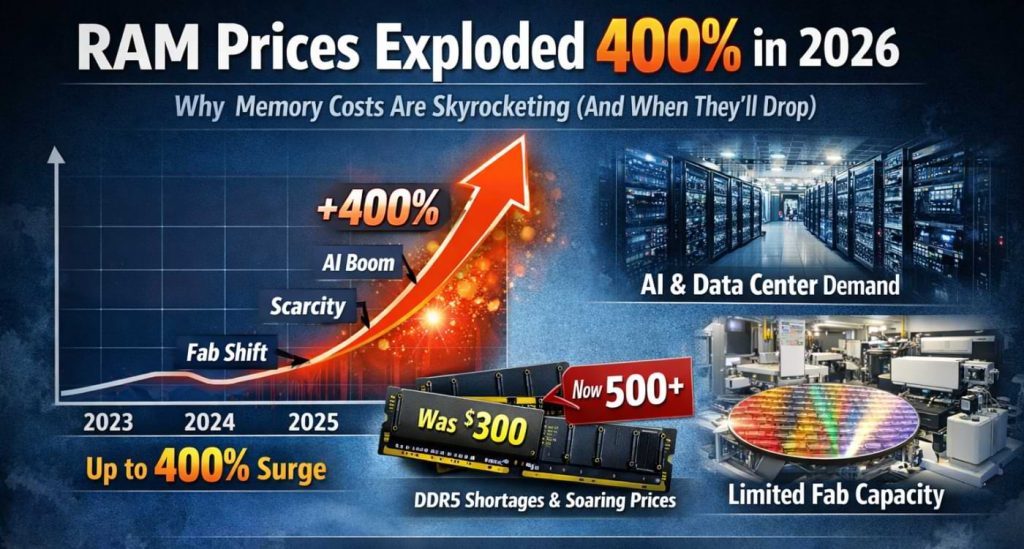
The impending crunch is centered on a global shortage of LPDDR5X memory chips, the high-performance RAM crucial for modern smartphones. This component crisis is not merely a temporary supply chain hiccup but a structural squeeze driven by a perfect storm of factors. Increased demand from other sectors, including artificial intelligence servers, data centers, and next-generation computing, has diverted foundry capacity and raw materials away from mobile DRAM production. Simultaneously, geopolitical tensions and trade policies have further constrained the flow of these essential semiconductors.
Nabila Popal, Senior Research Director at IDC, delivered a stark assessment to Bloomberg, stating, “The days of cheap smartphones are over.” She indicated that the category of devices priced below $100 is practically condemned to disappearance. This segment, which has historically driven volume in emerging markets, will be the hardest hit as manufacturers prioritize allocating scarce, expensive components to higher-margin devices.
Market Impact: A Deeper Cut Than the Pandemic
The projected downturn is significant not just in scale but in duration. Industry analysts have drawn comparisons to previous disruptions, only to find the current crisis more severe. “Tariffs and the pandemic crisis seem like a joke compared to this,” one analyst noted. “The smartphone market will undergo a radical change by the end of this crisis, in terms of size, average selling prices, and competitive landscape. We do not expect the situation to improve before mid-2027.”
This timeline suggests a multi-year period of adjustment, forcing a fundamental recalibration of business models across the industry. The IDC does not foresee any normalization in component availability or pricing before the middle of 2027, indicating that the 2026 shipment figures may represent the beginning of a new, more constrained era for smartphone volume.

Apple’s Fortified Position in a Volatile Market
While no manufacturer is completely immune to the component shortage, Apple is uniquely positioned to navigate the turbulence. The company’s strategy of dominating the premium segment provides critical advantages. Recent reports confirm that Apple is paying double to Samsung for its LPDDR5X memory chips, a fundamental component for the production of the upcoming iPhone 17 lineup. However, Apple’s immense pricing power, brand loyalty, and industry-leading profit margins create a buffer that most competitors lack.
Financial Muscle and Supply Chain Leverage
Apple CEO Tim Cook acknowledged that recent price increases had a “minimal impact” on the company’s gross margin during the 2025 holiday quarter, though a “slightly larger” effect is anticipated in the first quarter of 2026. This admission underscores Apple’s ability to absorb higher component costs in the short term, either by passing them on to consumers who are less price-sensitive or by absorbing them to protect market share.
Furthermore, Apple’s scale and long-term supply agreements give it preferential access to constrained components. Its financial clout allows it to secure capacity by paying premiums and making advanced commitments that smaller manufacturers cannot match. This leverage ensures that, while its costs will rise, its supply will be more secure than that of rivals competing in the mid-range and budget segments.
The Disappearing Budget Segment
The most profound shift will occur at the market’s low end. As Popal’s warning suggests, the sub-$100 smartphone, a key tool for digital inclusion worldwide, faces extinction. Manufacturers in this space operate on razor-thin margins and cannot absorb the doubling or tripling of memory chip costs. Their choices are stark: raise prices dramatically and exit the budget category, or cease production altogether. This will inevitably slow smartphone adoption rates in price-sensitive regions and may widen the digital divide.
Strategic Implications for Android Manufacturers
The crisis presents an existential challenge for many Android OEMs, particularly those heavily reliant on high-volume, low-margin sales. Companies like Xiaomi, Oppo, Vivo, and Transsion, which have built vast empires on affordable devices, must now pivot rapidly. The strategic response will likely involve a forced march upmarket, a consolidation of model lineups to focus on fewer, more profitable devices, and potentially painful market share losses in regions where purchasing power is limited.
Consolidation and a New Competitive Dynamic
The prolonged shortage is expected to accelerate industry consolidation. Weaker players without the financial reserves or component procurement leverage may be forced to merge or exit the market. The competitive landscape post-crisis may feature fewer, but larger and more vertically integrated, companies. This could also strengthen the hand of chipset designers like Qualcomm and MediaTek, as their integrated platforms become even more critical for OEMs seeking stability in component supply.
The crisis also reshuffles the deck regarding innovation. With resources strained, R&D budgets may be trimmed, potentially slowing the pace of hardware innovation in areas not deemed critical. Conversely, it may spur greater optimization in software to maximize performance from limited hardware resources, and a stronger push into services and ecosystems to build revenue streams less dependent on device sales.
Consumer Consequences: Higher Prices and Extended Lifecycles
For consumers worldwide, the RAM shortage will translate directly into higher prices for new devices across all tiers, though the increase will be most acutely felt in the mid-range. The era of getting flagship-level specifications in a $300 phone is likely over, at least for the foreseeable future. Furthermore, device selection may shrink as manufacturers streamline their portfolios.
The Rise of the Secondary Market and Repair
One likely side effect is a bolstered market for refurbished and used smartphones. As new device prices climb, consumers may hold onto their current phones longer, driving demand for battery replacements and other repairs. This trend aligns with growing “right to repair” movements and could encourage manufacturers to support longer software update cycles for older models to maintain customer loyalty in an extended upgrade cycle.
The global smartphone market stands at an inflection point, driven not by consumer demand or a lack of innovation, but by a fundamental constraint in its supply chain. The RAM crisis of 2026 is poised to be a defining event, clearing out the budget segment, testing the financial resilience of giants, and ultimately remaking the industry into one where scale, premium positioning, and supply chain mastery are the only viable paths to survival. As component flows remain tight until 2027, the strategies enacted in the coming months will determine which brands are still standing when the market eventually finds its new equilibrium.