Google I/O 2026 delivered a clear and unambiguous message: the company is fully committed to an artificial intelligence-first future, with search at the very center of that transformation. The keynote, led by CEO Sundar Pichai, was packed with significant announcements, but the single most consequential development was the merging of AI Overviews and AI Mode into a unified, seamless search experience. This integration, combined with the introduction of agentic capabilities directly within search results, marks a fundamental shift in how Google envisions its core product operating in the coming years.
A Unified Search Experience: AI Overviews and AI Mode Become One
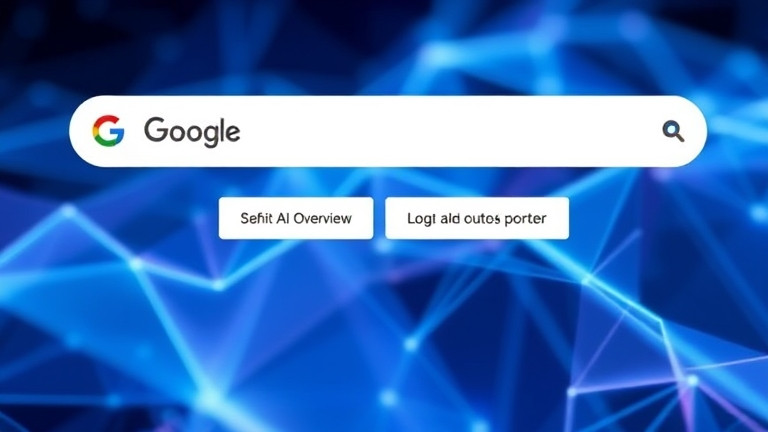
The most immediate change arriving today is the fusion of AI Overviews and AI Mode. Previously, these were distinct features: AI Overviews provided quick, summarized answers at the top of search results, while AI Mode offered a more conversational, chat-like interface for deeper exploration. With the update announced at I/O 2026, these two experiences have been merged into a single, seamless flow. Users can now transition naturally from an AI Overview into a full AI Mode conversation without any interruption. This unified experience is rolling out globally today on both desktop and mobile, and it is powered entirely by the new Gemini 3.5 model, which now underpins the entire Google Search infrastructure. Liz Reid, who leads Google Search, emphasized that this is not a minor tweak but a complete rethinking of the search box itself. The new search box features AI-based autocomplete that anticipates intent more intelligently, and it now accepts file uploads, images, and other media directly as part of the query. The scale of adoption is already substantial, with Reid noting that more than one billion users are now using AI Mode regularly, a milestone that underscores the rapid shift toward conversational search.
Gemini Omni: A Step Toward AGI and Universal Input-Output Models
Demis Hassabis, CEO of Google DeepMind, took the stage to unveil what he described as a major step on the path to artificial general intelligence. Gemini Omni is a new class of world model designed to process any type of input text, images, audio, video, and code and generate any type of output in response. The implications are broad: a single model capable of understanding a scene, answering a question, generating an image, or even writing and executing code based on the same unified understanding of the world. The first version to become available is Gemini Omni Flash, which is being integrated into the Gemini app immediately. This release is coupled with a new commitment to content transparency through Content Credentials Verification, based on the C2PA standard, which will allow users to verify whether an image or piece of media was generated by AI. This is a direct response to growing concerns about synthetic content and misinformation, and it positions Google as taking a proactive stance on content provenance.
Gemini 3.5 Flash and Pro: Speed, Efficiency, and Cost Savings for Enterprises
Alongside the Omni announcement, Google introduced Gemini 3.5 Flash, a model that already outperforms Gemini 3.1 Pro on key benchmarks, particularly in coding and reasoning tasks, while operating at significantly higher speeds. Pichai highlighted the cost efficiency angle, noting that enterprises adopting Gemini 3.5 Flash as their frontier model stand to realize substantial operational savings without sacrificing performance. The model is designed to be a workhorse for production deployments, offering a balance of capability and speed that makes it suitable for high-volume, real-time applications. Looking ahead, Gemini 3.5 Pro is expected to arrive within the next month, promising even greater depth and accuracy for the most demanding use cases.
New Silicon: TPU 8t and TPU 8i Deliver Double the Efficiency
Underpinning these model advances is a new generation of custom silicon. Google introduced the TPU 8t for training and the TPU 8i for inference, both of which offer a claimed doubling of efficiency compared to their predecessors. The TPU 8i is particularly relevant for real-time applications, as it enables models like Gemini Flash to run at speeds previously unattainable. This hardware roadmap is critical for Google’s strategy, as it reduces dependency on external chip suppliers and allows the company to optimize its entire stack from silicon to software. Faster inference also means lower latency for users and lower costs for Google, making it economically feasible to run increasingly sophisticated AI models at scale.
Antigravity 2.0 and the Agentic Web: From Desktop Apps to In-Search Coding
One of the more surprising announcements was the evolution of Antigravity, Google’s experimental AI-powered development environment. Antigravity 2.0, now available globally as a desktop application, is built on Gemini 3.5 Flash and represents a significant leap in capability. During a live demo, the team showcased everything from a simple first-person shooter game to a full image editing application and a multi-user platform, all generated through natural language prompts. The platform now includes a command-line interface, a software development kit, and native language support, making it accessible to a wider range of developers and creators. More importantly, Antigravity is being integrated directly into Google Search through a feature called Agentic Coding, presented by Robby Stein. This allows users to create custom search results pages complete with interactive graphics, or even build entire mini-applications directly within the search interface. For example, a user could build a restaurant reservation tool and share it with friends, all without leaving the search page. This integration represents a major step toward the agentic web, where search is no longer just a source of information but a platform for action. The ability to launch multiple agents from a single search query that work in the background was also demonstrated, with use cases ranging from monitoring news on a specific topic to automating routine research tasks.
Gemini Spark: A Personal AI Assistant Built for the Agentic Era
Building on the Antigravity foundation, Google announced Gemini Spark, a new personal AI assistant designed for the agentic web. Spark is built on Gemini 3.5 Flash and leverages Antigravity to perform complex, multi-step tasks on behalf of the user. The vision is an assistant that can plan a trip, book a reservation, compile a research report, and even generate code snippets, all through a single conversational interface. Spark represents Google’s most direct answer to the question of what a next-generation personal assistant should look like in a world where AI agents can act autonomously.
New Search Modalities: Ask Maps, Ask YouTube, and Docs Live
Google also introduced two new vertical search products that bring conversational AI to specific domains. Ask Maps allows users to search for places using natural language queries, such as “find a quiet café with outdoor seating and good Wi-Fi in downtown Austin,” and receive curated recommendations powered by Gemini. Ask YouTube, slated for a summer launch in the United States, provides a similar capability for video content, enabling users to ask questions about specific moments in videos or find content based on complex criteria. Additionally, Docs Live was unveiled, a feature that allows users to create and edit documents entirely through voice commands. The demo included generating a humorous speech on the fly, showcasing the model’s ability to handle tone, structure, and creative writing in real time.
Agentic Commerce: UCP and Universal Cart Reshape Online Shopping
Perhaps the most commercially significant announcement was the introduction of the Universal Commerce Protocol and Universal Cart. UCP enables AI agents to handle the entire shopping journey, from product discovery to final checkout, entirely within the search or assistant environment. Major partners including Amazon and Microsoft have already signed on, signaling broad industry support. The system will initially roll out in Canada, the United Kingdom, and Australia, with more regions to follow. Universal Cart simplifies the process further by allowing users to make purchases directly from Google, or to seamlessly transfer their cart to the merchant’s own website if they prefer. This removes friction from the shopping process and positions Google as a direct intermediary in e-commerce transactions, a move with significant strategic implications for the retail landscape. The checkout process is handled by AI agents that can compare prices, apply coupons, and negotiate delivery windows, all without the user having to navigate multiple websites.
Content Credentials and Trust in the Age of Generative Media
Throughout the keynote, a recurring theme was the need for trust and transparency in AI-generated content. The adoption of C2PA standards for Content Credentials Verification is a concrete step in this direction. Any image or media generated by Google’s AI tools will carry a cryptographic signature that can be verified by anyone, indicating whether the content was created by a human or by an AI. This is an industry-wide challenge, and Google’s decision to implement C2PA across its ecosystem is a significant move that could set a standard for the rest of the tech industry. It also addresses growing regulatory scrutiny around synthetic media and deepfakes, giving policymakers and users a practical tool for distinguishing authentic content from generated material.
Strategic Implications and the Road Ahead
Google I/O 2026 was not an event about incremental updates. It was a declaration that the company is staking its future on a deeply integrated, AI-native ecosystem. The merger of AI Overviews and AI Mode into a single search experience, the introduction of agentic capabilities, the deployment of world models like Gemini Omni, and the commercialization of AI agents through UCP and Universal Cart all point to a future in which Google is not just a search engine but an AI platform that mediates information, commerce, and creation. The rollout timelines are aggressive, with many features available today or within the next few months. For businesses, developers, and everyday users, the message is clear: the era of static search results is ending, and the era of intelligent, agentic, and conversational search has fully arrived. The strategic bet is that by making AI the foundation of every product, Google can redefine the user experience and maintain its dominance as the gateway to the digital world.