When Fireshine Games announced ITER-8, the gaming community took notice. The publisher has built a reputation for curating innovative titles that push genre boundaries, particularly within the increasingly crowded roguelite space. With established favorites like Balatro and Slay the Spire setting high standards for gameplay depth and replayability, any new entry from a respected publisher carries significant expectations. ITER-8 entered this competitive landscape with a premise that promised strategic combat and procedural generation, but after extensive playtesting, it becomes clear that the execution falls short of what both genre enthusiasts and casual players have come to expect.
The Core Gameplay Loop and Where It Stumbles
ITER-8 presents players with a familiar roguelite structure: navigate through a series of randomly generated encounters, manage resources, and attempt to reach a final boss. The initial tutorial introduces basic mechanics smoothly, and the first hour feels promising. The art style is clean, the interface is intuitive, and the core concept of iterating on builds run after run is clearly communicated. However, this initial polish quickly gives way to fundamental design issues that undermine the entire experience.
Combat Feels Unresponsive and Repetitive
The most immediate and persistent problem with ITER-8 is its combat system. In a genre where tight, responsive controls and meaningful player choice during encounters are paramount, ITER-8’s battles feel sluggish and predetermined. There’s a noticeable input delay between command and action that makes precise timing nearly impossible. This is particularly damaging in a game that ostensibly rewards strategic positioning and ability sequencing. Enemy attack patterns, while visually varied, follow predictable scripts that become tedious after just a few encounters, reducing combat to a routine rather than an engaging challenge.
Procedural Generation Lacks Meaningful Variation
A successful roguelite lives and dies by its procedural generation. Each run should feel distinct, presenting new combinations of challenges and opportunities. ITER-8’s level generation algorithm appears to pull from a surprisingly small pool of room layouts, enemy placements, and event types. By the third or fourth run, players will have seen nearly all the possible configurations, making subsequent attempts feel repetitive rather than exploratory. The “rogue” in roguelite implies unpredictability and adaptation, but ITER-8’s environments offer little of either.
Character Progression and Meta-Game Elements
Beyond the immediate run-to-run gameplay, roguelites typically feature persistent progression systems that allow players to feel a sense of long-term advancement even after failed attempts. ITER-8 implements a standard meta-currency system earned during runs and spent between them on permanent upgrades. On paper, this system should provide a compelling reason to continue playing despite setbacks. In practice, the upgrades feel inconsequential.

Unlocks Fail to Alter Gameplay Significantly
The permanent unlocks available in ITER-8—new starting items, minor stat increases, additional character customization options—are overwhelmingly incremental. They rarely open up new strategic avenues or fundamentally change how a run plays out. This creates a progression treadmill with no satisfying destination. Players grinding for these upgrades will find that their time investment doesn’t translate to a noticeably different or more powerful gameplay experience, which severely dampens the classic “one more run” impulse that defines the best games in this genre.
The Balance Between Challenge and Reward Is Off
Difficulty scaling in roguelites is a delicate art. ITER-8 struggles with this balance, often swinging between frustratingly punishing and disappointingly easy without clear causation. Some runs end abruptly due to seemingly unfair enemy combinations or environmental hazards, while others become trivial after acquiring specific item synergies that the game’s systems don’t appear to account for. This inconsistency removes the player’s sense of agency; success or failure feels more like luck than the result of skill or strategic planning.
Presentation and Technical Performance
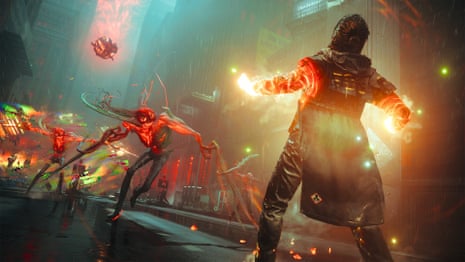
On a purely aesthetic level, ITER-8 is competent. The visual design employs a sleek, sci-fi aesthetic with clean lines and a cohesive color palette. Character and enemy models are well-designed, and special effects during combat are visually distinct. The soundtrack features appropriately tense ambient tracks during exploration and more intense compositions during boss fights. However, these positive elements are marred by technical issues that further detract from the experience.
Encountered Bugs and Performance Hitches
During playtesting, several technical problems emerged that should have been addressed before release. These included occasional framerate stutters during complex combat scenarios, audio that would sometimes cut out or fail to trigger, and, in one instance, a progression-halting bug where a required interactable object failed to spawn. While not game-breaking in every session, these issues contribute to an overall feeling of an unpolished product. In a market where indie titles frequently launch in exceptionally refined states, such technical shortcomings are difficult to overlook.
Comparison to Established Genre Standouts
To understand ITER-8’s shortcomings, it’s useful to contrast it with the titles it inevitably invites comparison to. Games like Balatro and Slay the Spire succeed because they master a simple formula: easy-to-learn, hard-to-master mechanics combined with vast combinatorial possibilities. Every decision in those games carries weight, from card selection to pathing choices. ITER-8, by contrast, presents the player with decisions that often feel illusory. The choice between two branching paths rarely leads to meaningfully different experiences, and item pickups frequently provide stat boosts so minor they’re practically imperceptible.
The Missed Opportunity for Strategic Depth
The foundational idea behind ITER-8—iterative improvement across simulated runs—is solid. The problem lies in the simulation itself. The systems governing combat, item interaction, and enemy behavior are not deep enough to support interesting long-term strategy. There’s no equivalent to building a powerful card synergy in Slay the Spire or constructing a game-breaking hand in Balatro. The most successful runs in ITER-8 are typically the result of stumbling into an overpowered item early on, not through careful planning or adaptive play.
Lack of a Compelling “Hook”
Great roguelites often have a unique central mechanic or twist that defines them. Hades had its narrative integration and godly boons. Dead Cells had its fluid, fast-paced combat and interconnected world. ITER-8 lacks this defining characteristic. It feels like a compilation of genre standards without a unifying vision or innovative spark. It executes on the basic requirements of a roguelite but adds nothing new or memorable to the conversation, leaving it feeling derivative in a field that increasingly rewards innovation.
Potential for Future Updates and Community Response
It’s worth noting that the roguelite genre is one where games can evolve significantly post-launch. Developer support through balance patches, content expansions, and quality-of-life improvements can transform a mediocre release into a beloved classic. Early community forums and discussion boards for ITER-8 reflect a mix of disappointment and cautious optimism. Players acknowledge the game’s flaws but express hope that the developers will listen to feedback and iterate on the core experience.
What ITER-8 Needs to Succeed
For ITER-8 to find a lasting audience, several key areas require attention. First and foremost, the combat system needs a complete overhaul to feel more responsive and strategic. Second, the procedural generation requires a significant expansion of its component parts to create truly unique runs. Third, the meta-progression system must be reworked to offer unlocks that tangibly change gameplay and provide satisfying power spikes. Finally, the technical issues need to be resolved to provide a smooth, bug-free experience. Without these fundamental improvements, ITER-8 is likely to remain a footnote in the catalog of a publisher otherwise known for quality.
The release of ITER-8 serves as a reminder that a respected publisher’s name and a popular genre framework are not guarantees of quality. The game currently exists in a crowded middle ground—not broken enough to be dismissed outright, but not compelling enough to recommend over its numerous, superior competitors. For players new to roguelites, there are far better entry points that more effectively demonstrate the genre’s strengths. For seasoned veterans, ITER-8 offers little they haven’t seen done better elsewhere. Its future now depends entirely on the developer’s commitment to addressing its core deficiencies and fulfilling the potential that its premise initially suggested.